
DISAPPEARING ACT
Designing wardrobes that recede—without sacrificing performance.
There’s a certain luxury in not seeing everything you own. Not because it’s hidden away carelessly, but because it’s been considered so precisely that it dissolves into the architecture. The best storage doesn’t compete with a room. It supports it quietly. In today’s homes where bedrooms double as sanctuaries and offices blur into living spaces — the ability for storage to disappear is less about minimalism, and more about control.
This is where wardrobe design becomes intentional.
Flush, Not Fitted
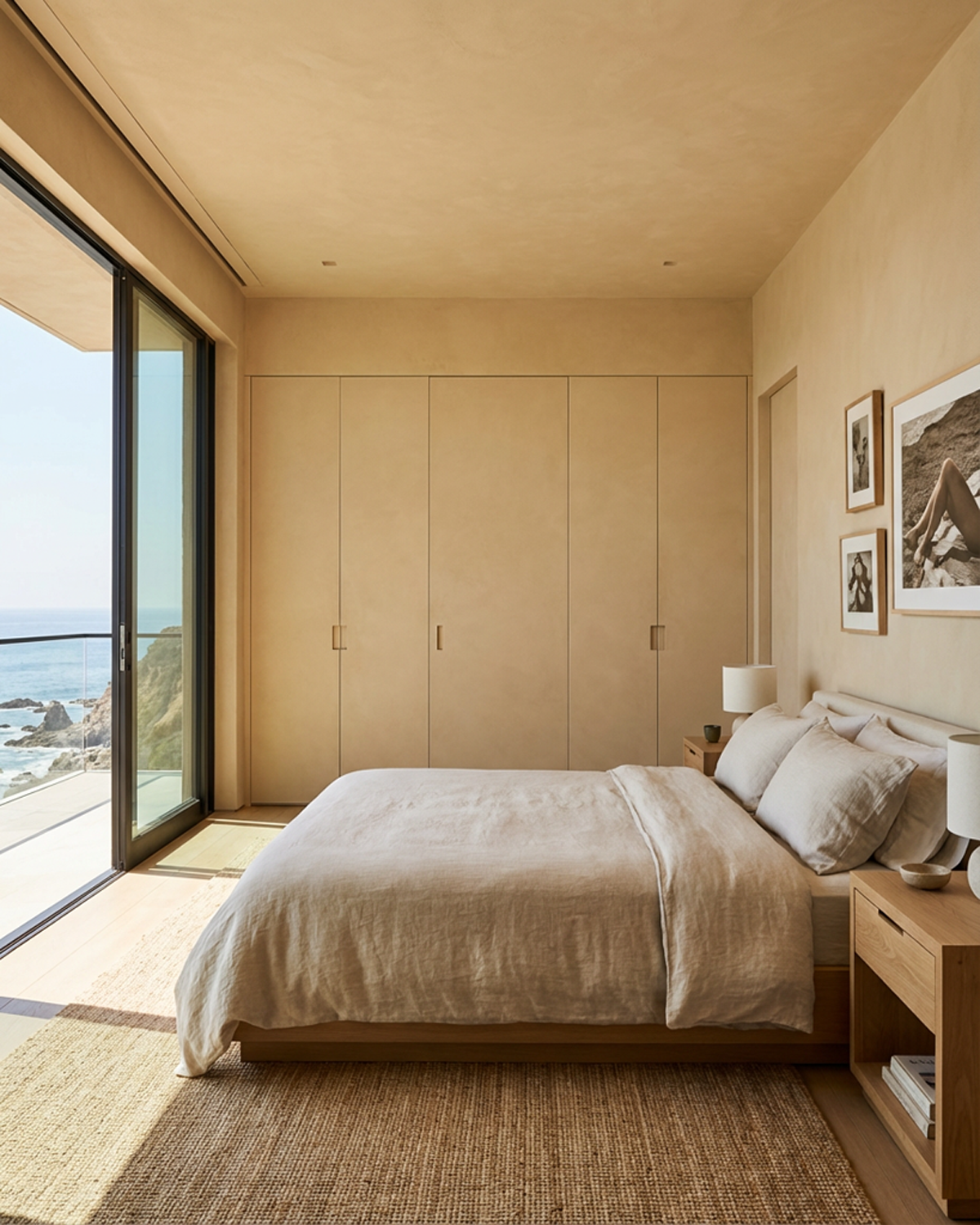
The fastest way to make a wardrobe disappear is to remove any sign that it was ever “added.”
Think:
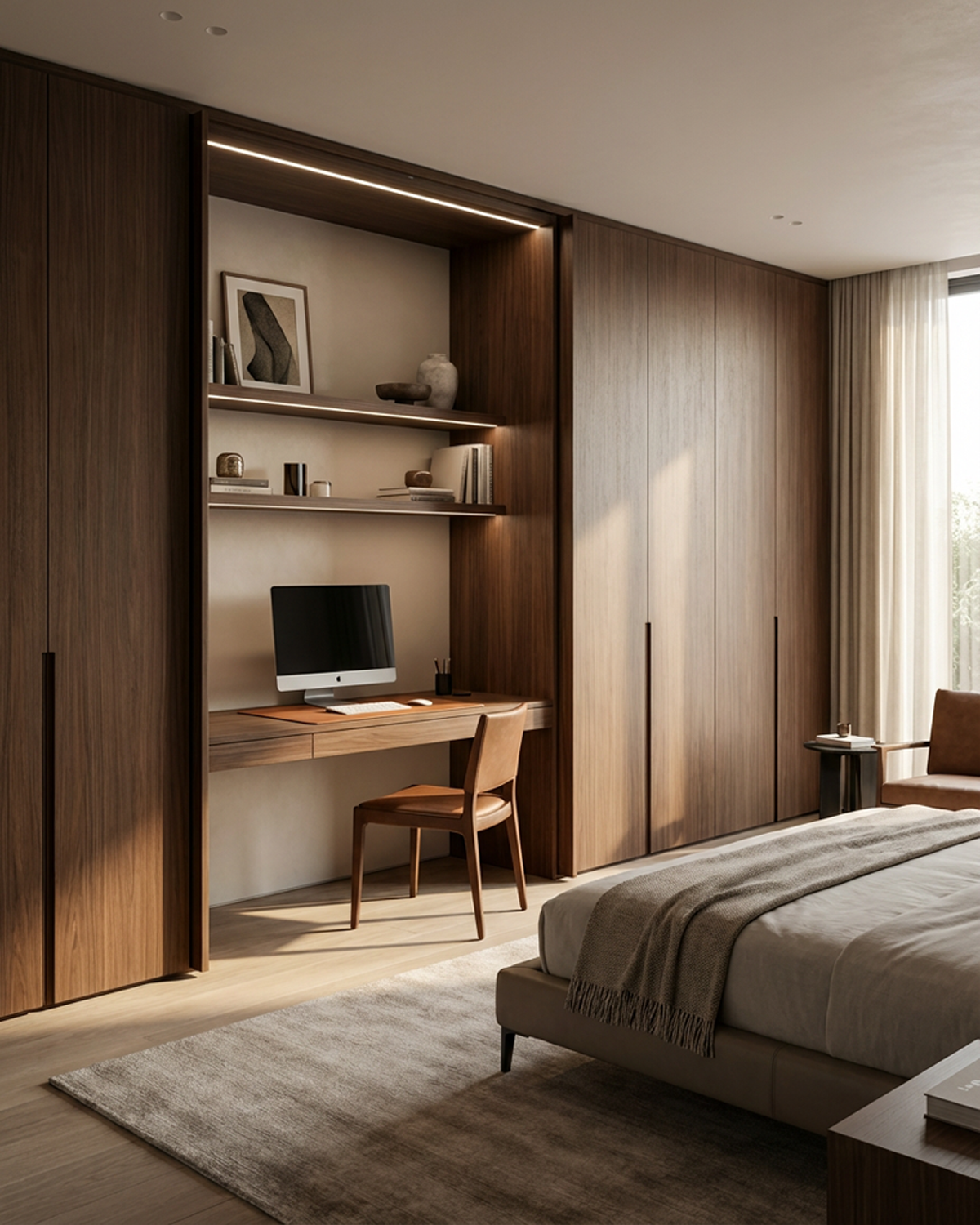
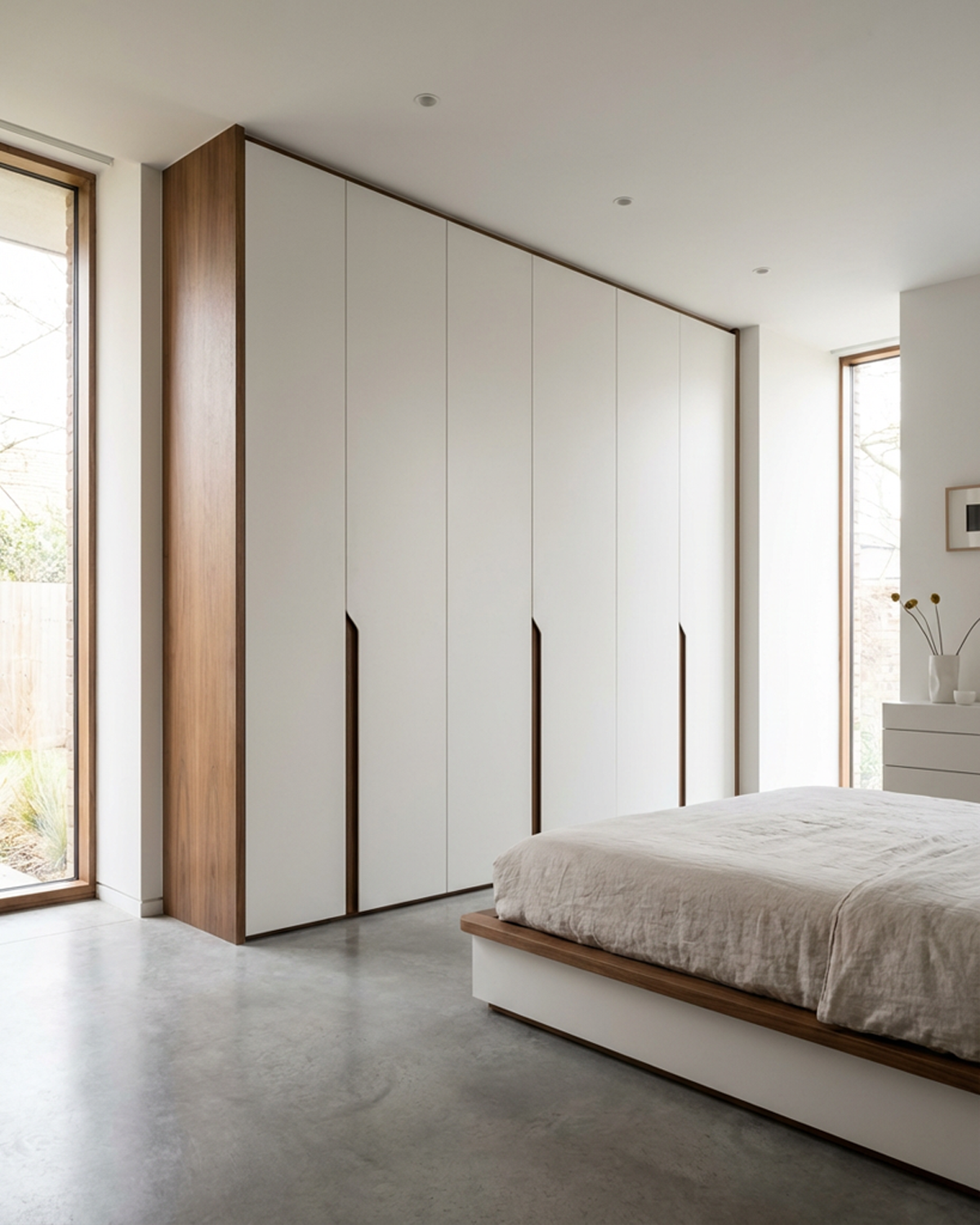
Fully flush panel fronts
Integrated finger pulls or touch-latch systems
Continuous materiality across walls
No shadow lines. No applied trim. No visual interruption.
This is the difference between:
Cabinetry placed in a room
vsStorage that is a part of the room
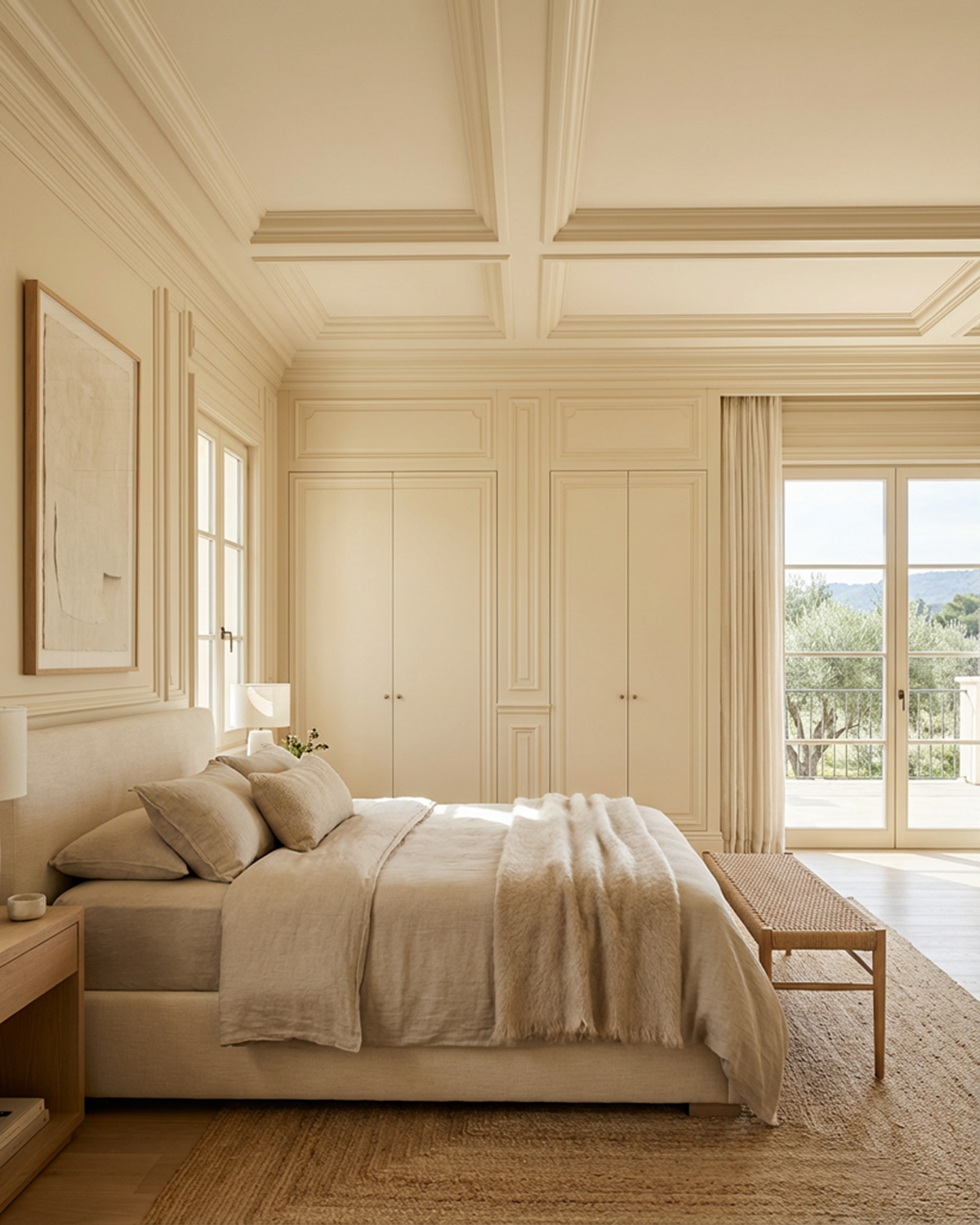
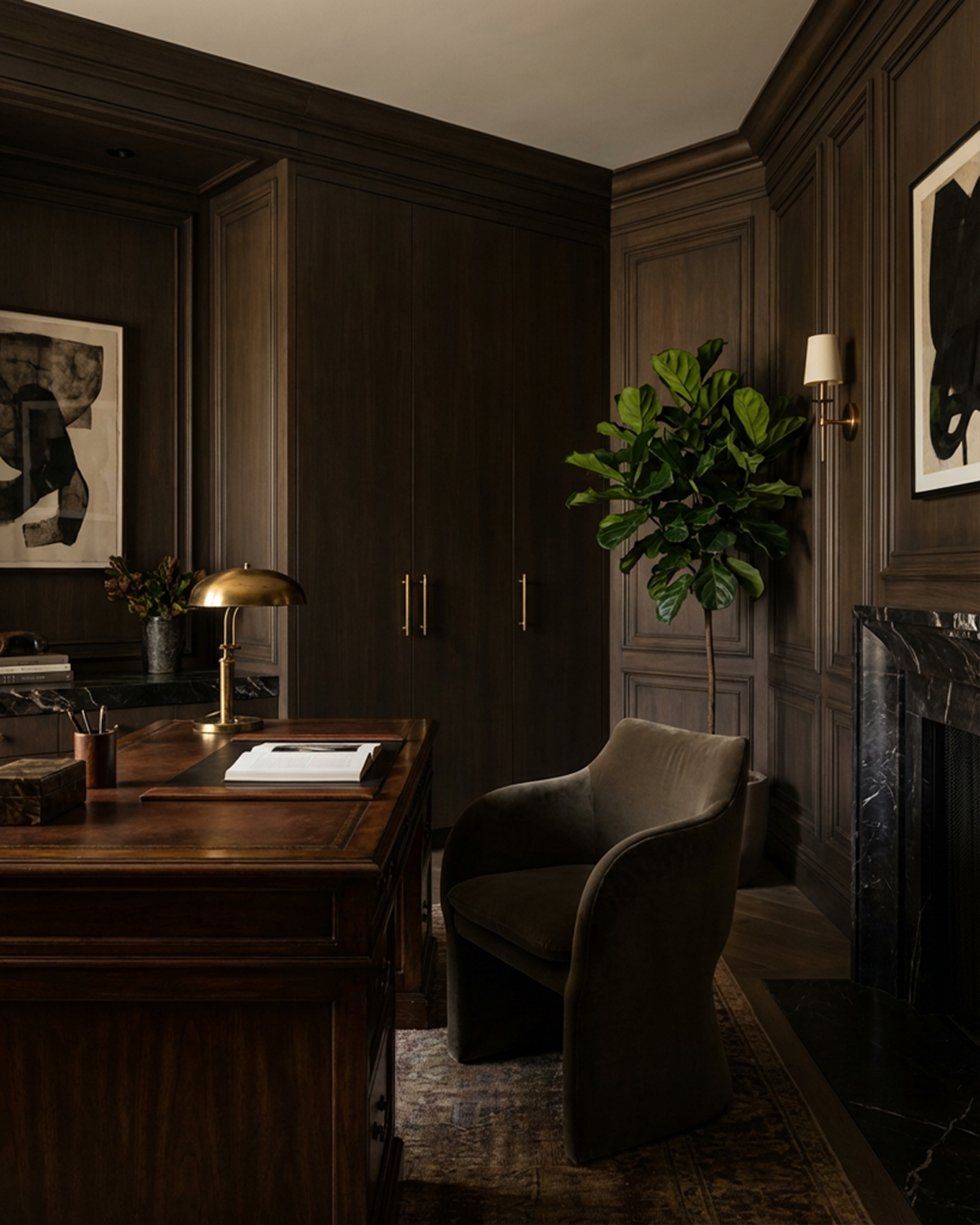
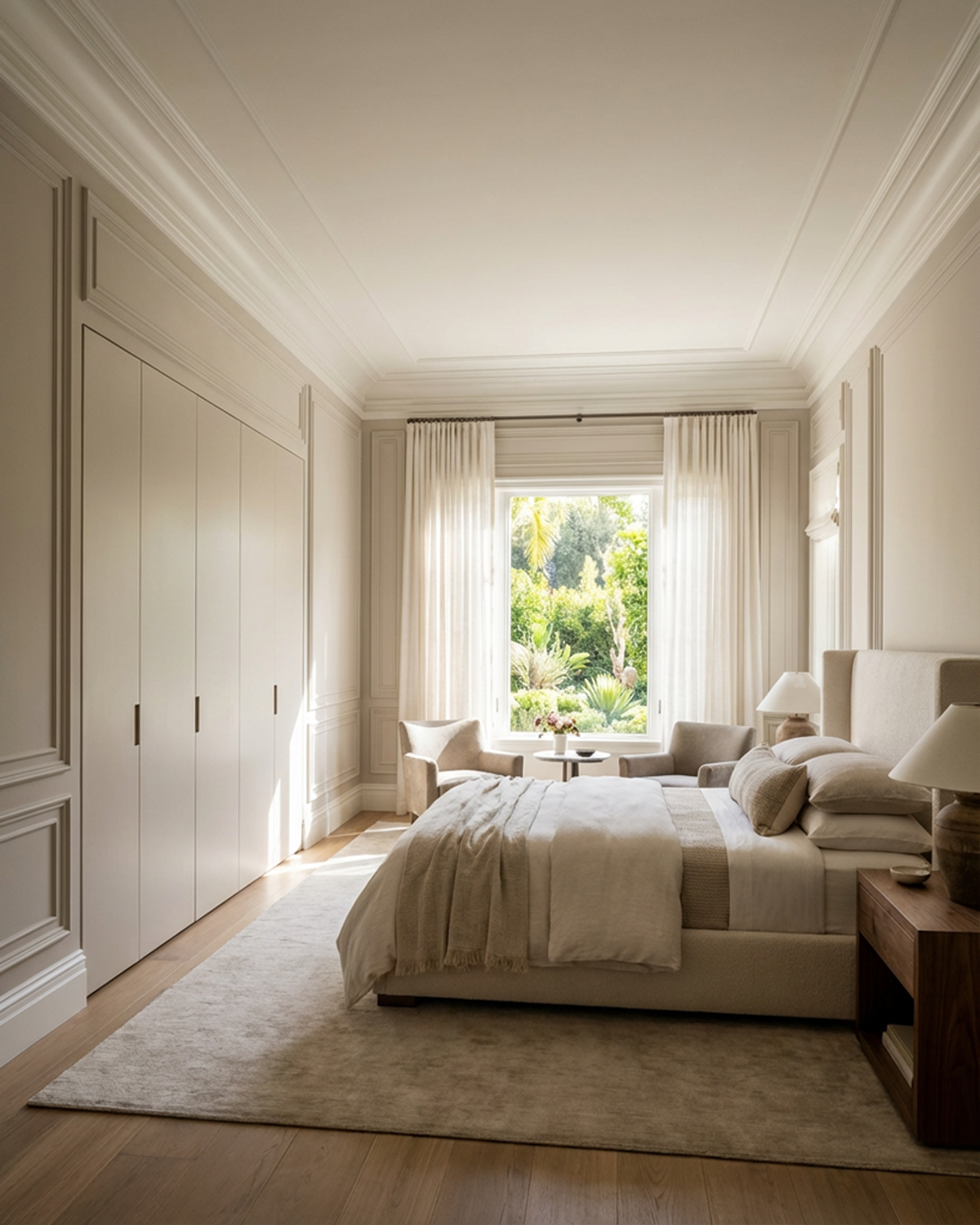
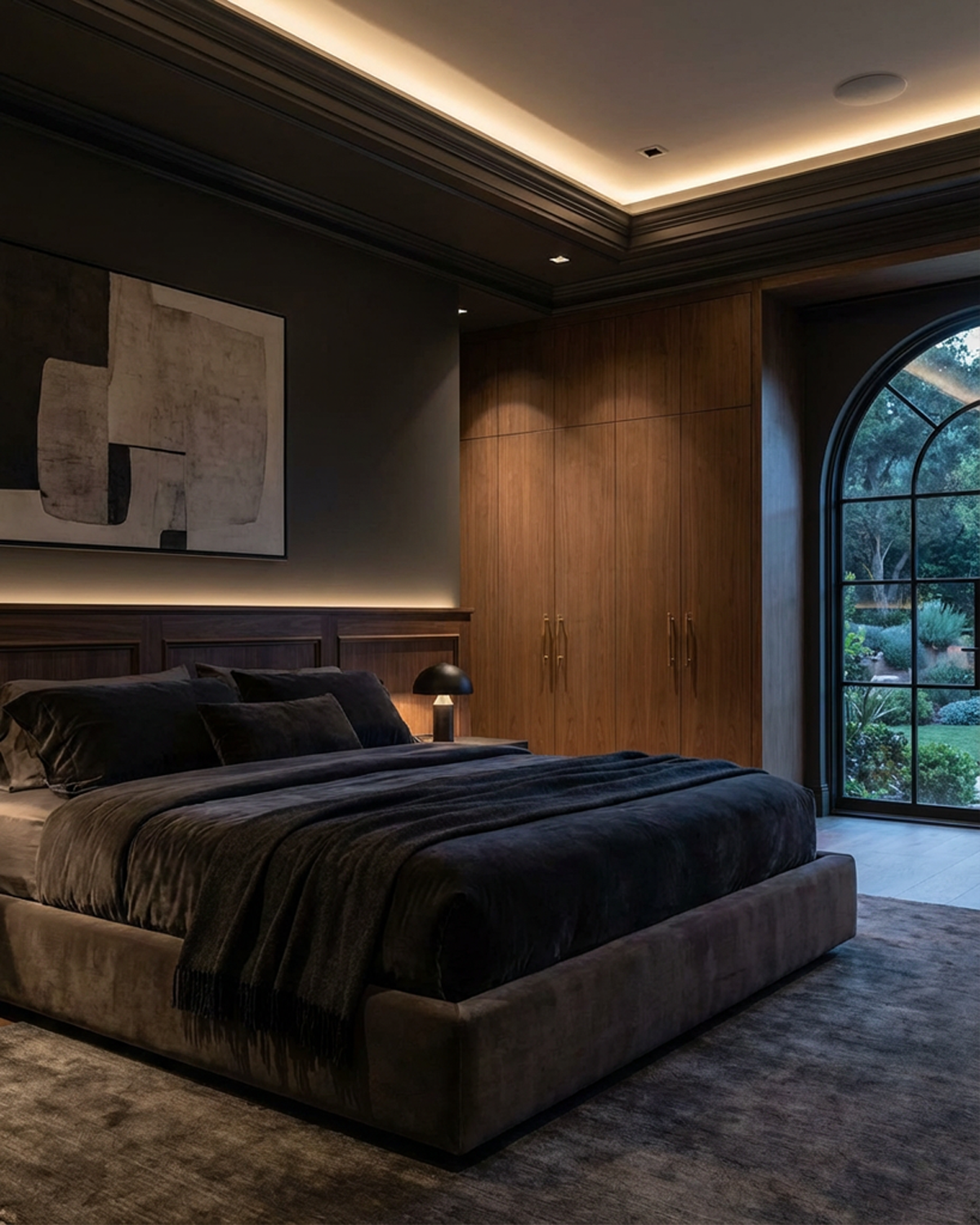
The False Wall Strategy
One of the most powerful moves — and one we see often in hospitality settings — is treating storage as a secondary layer behind the room itself.
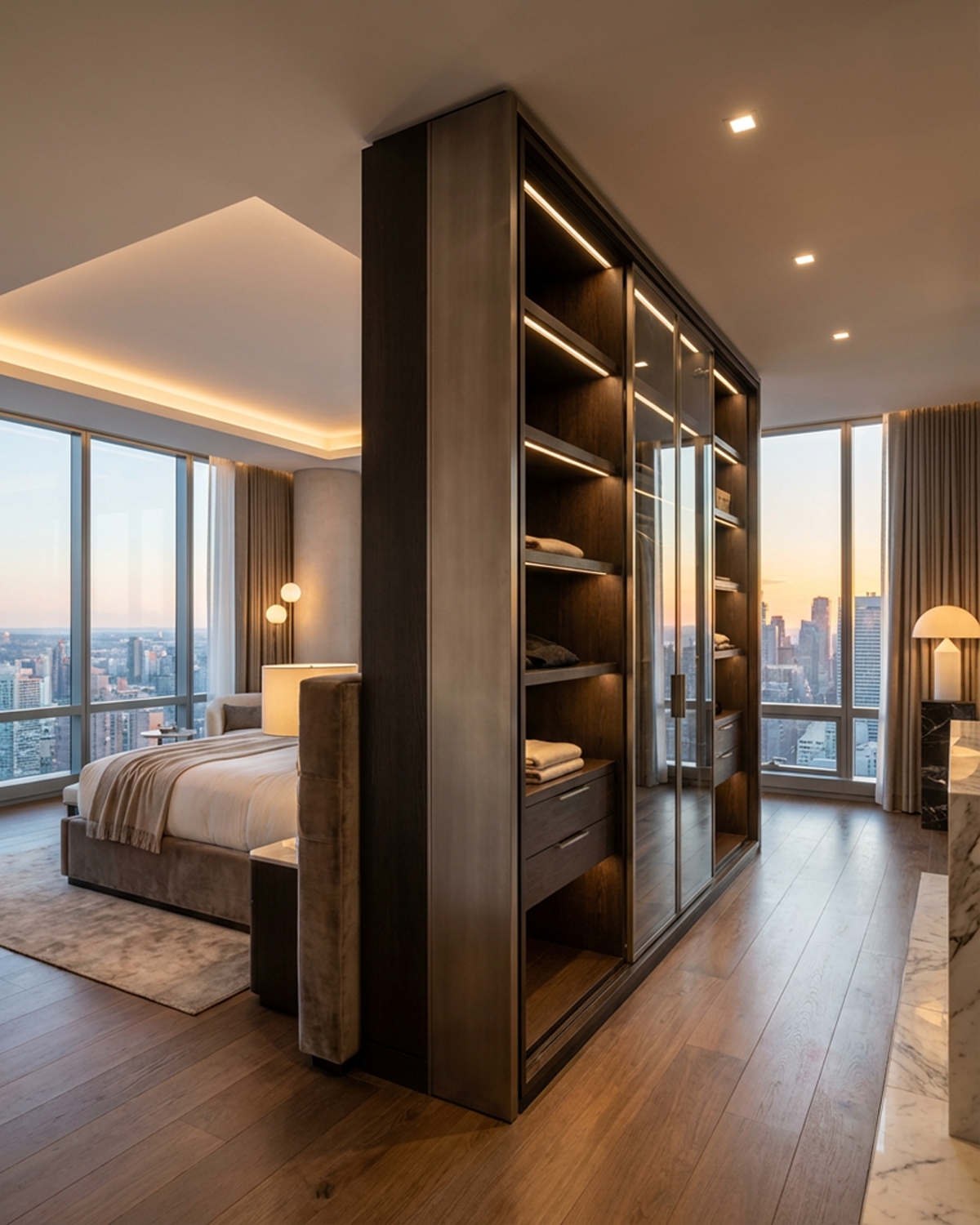
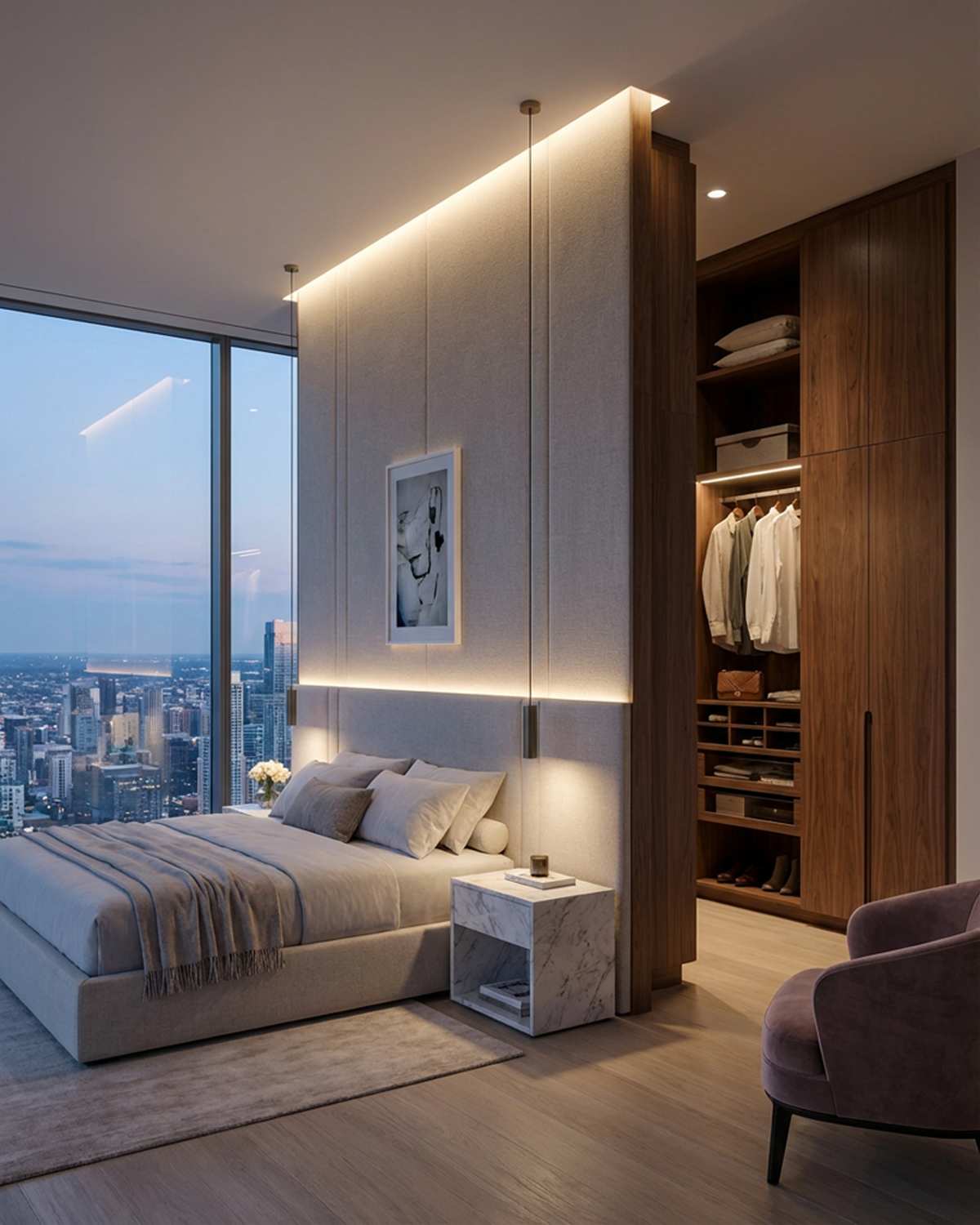
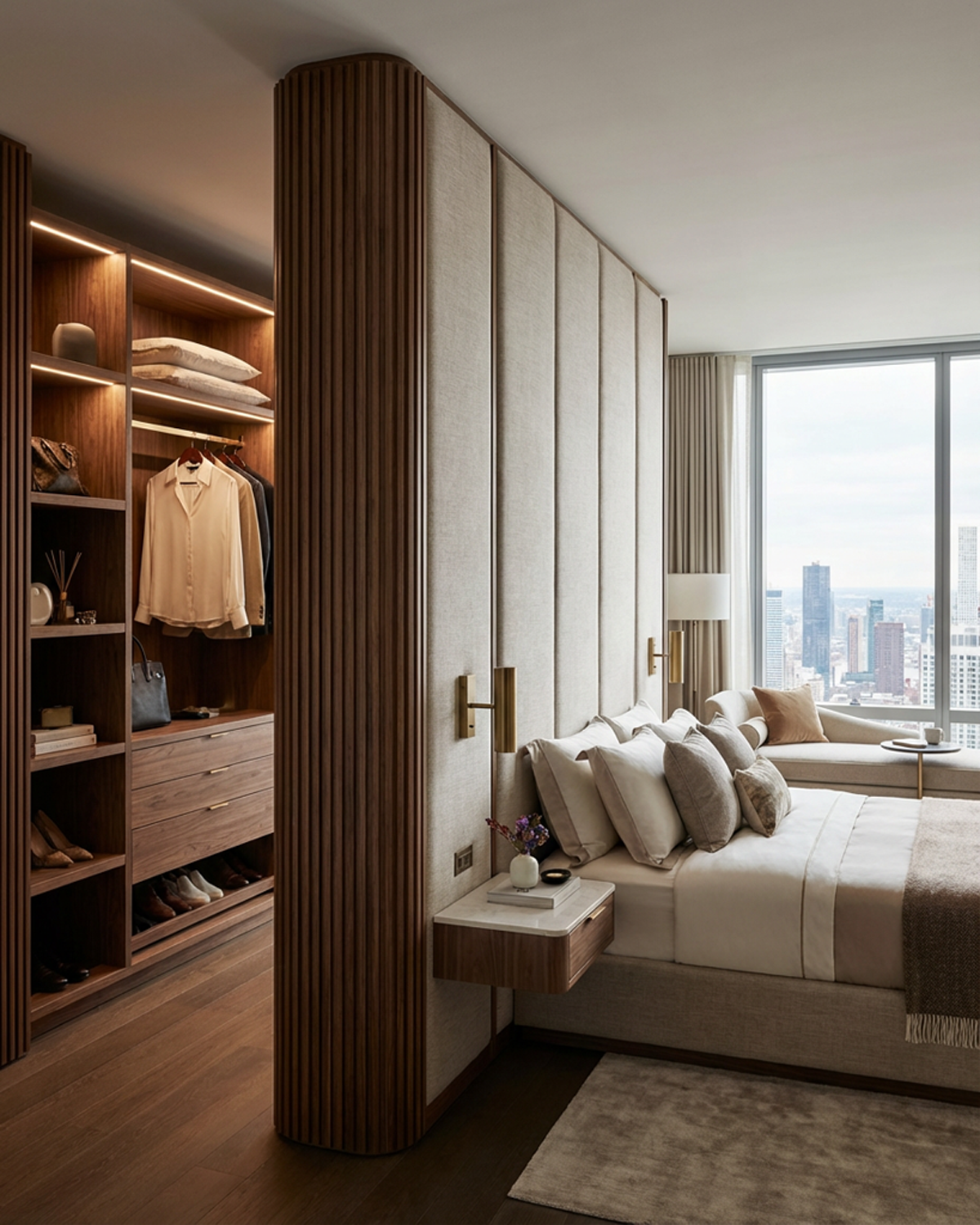
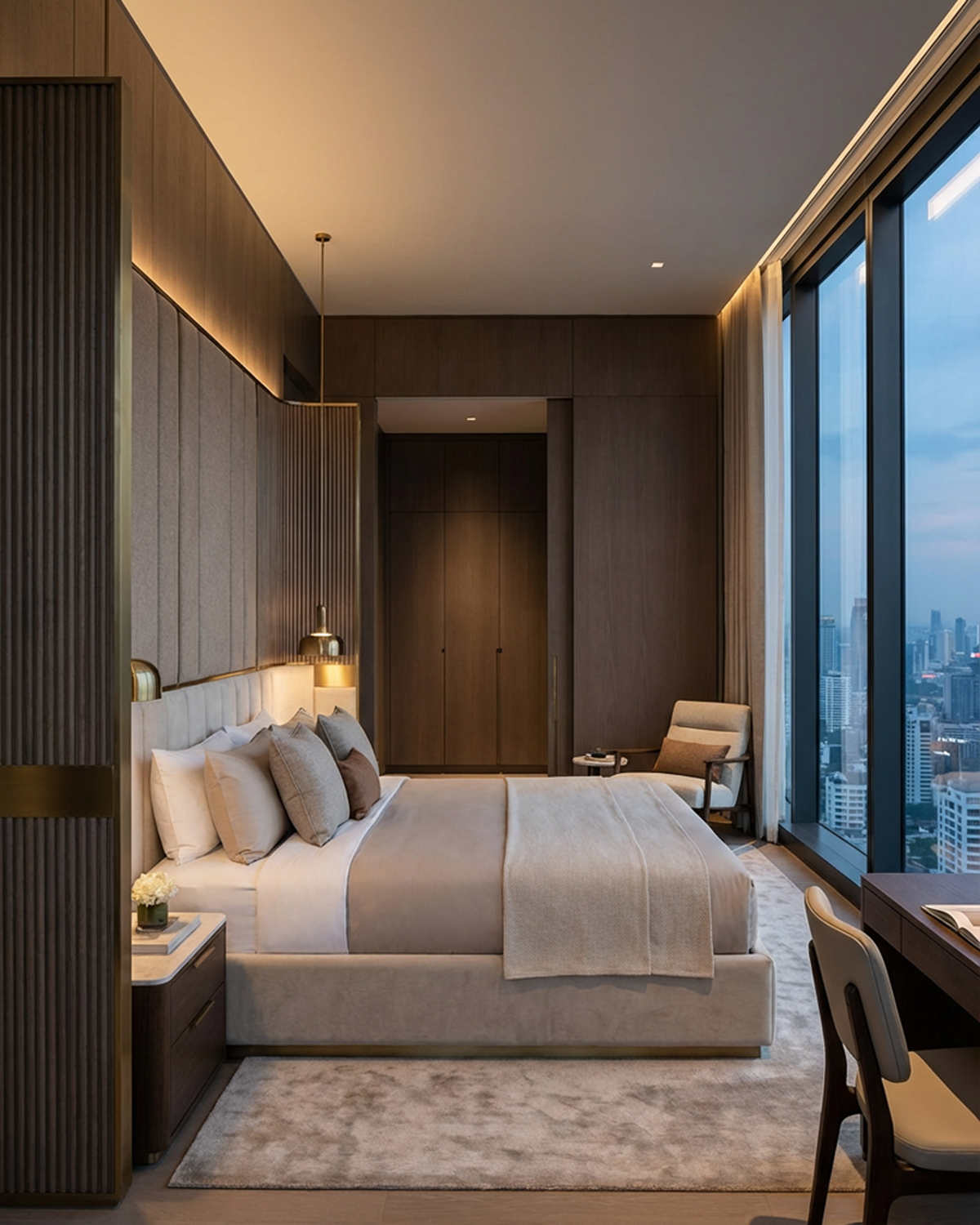
Full-height partitions or headboard walls that house hidden storage behind
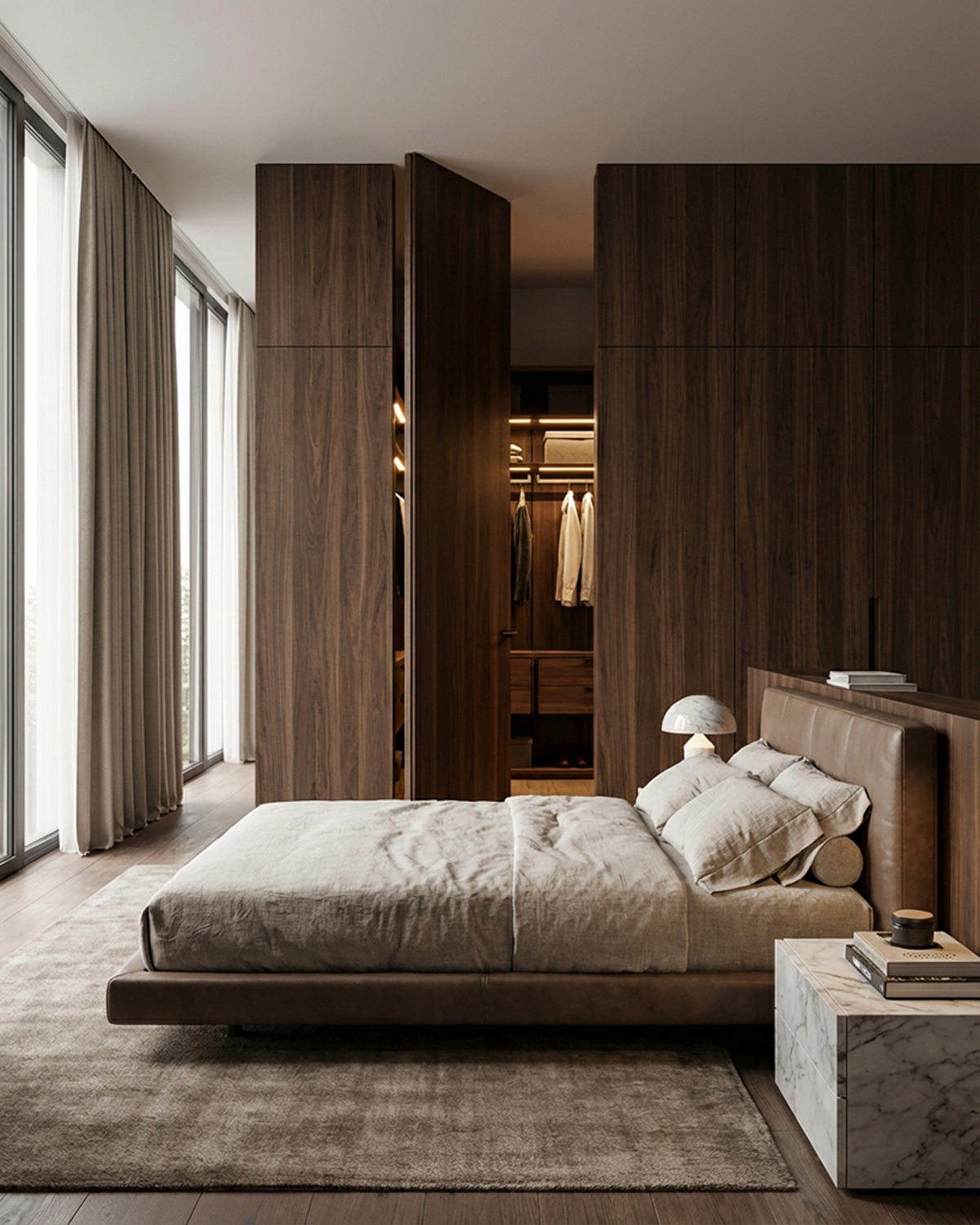
Concealed doors leading to full dressing rooms or panic rooms
Pivot panels that read as millwork, not access points
In bedrooms, this allows the space to read as calm and uninterrupted. In offices, it lets work clutter disappear instantly.
It’s less “closet design” and more spatial editing.
Dual-Purpose Zones
Disappearing storage works best when it earns its footprint twice.
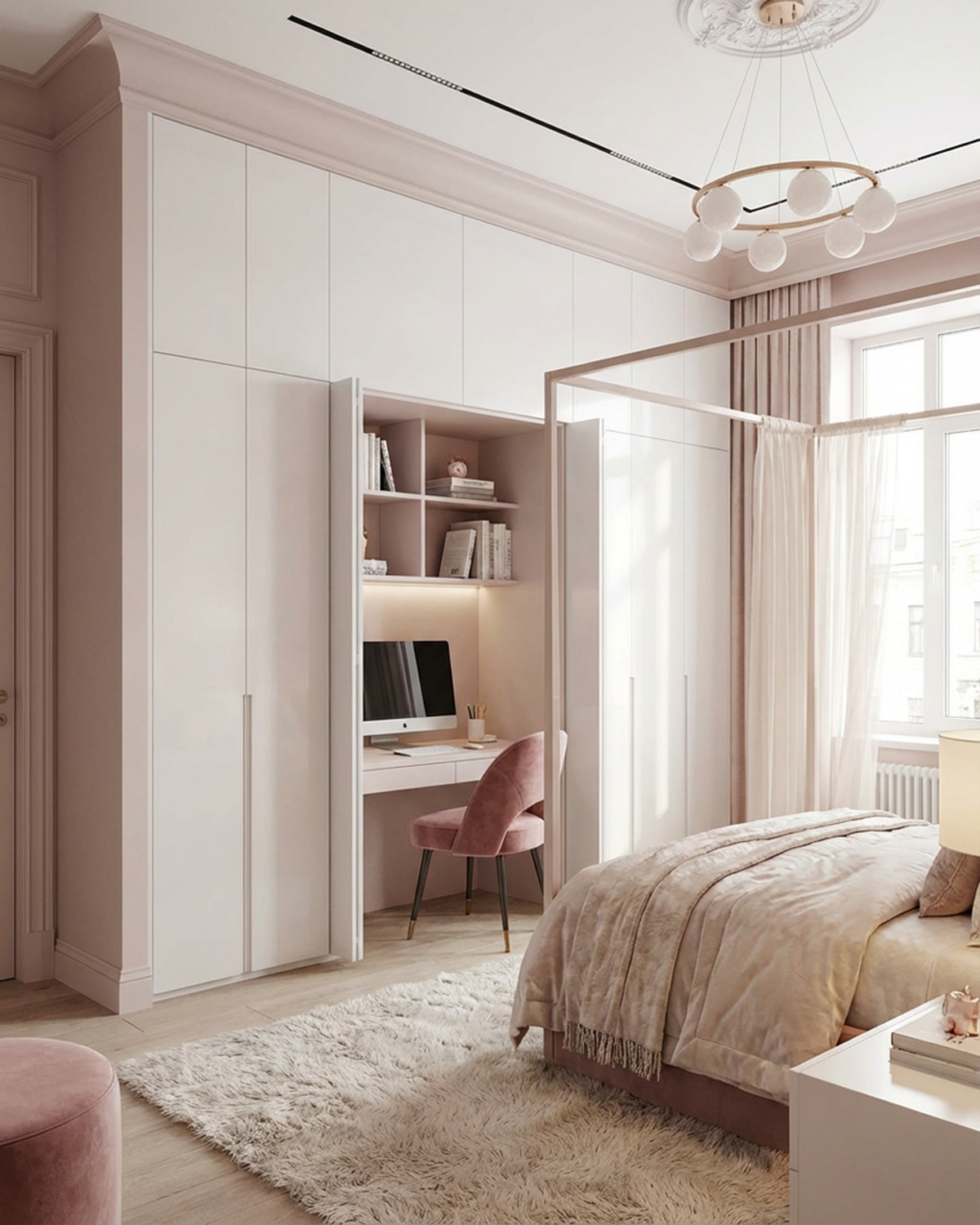
Wardrobes that conceal a full desk setup
Bar cabinets hidden within a closet
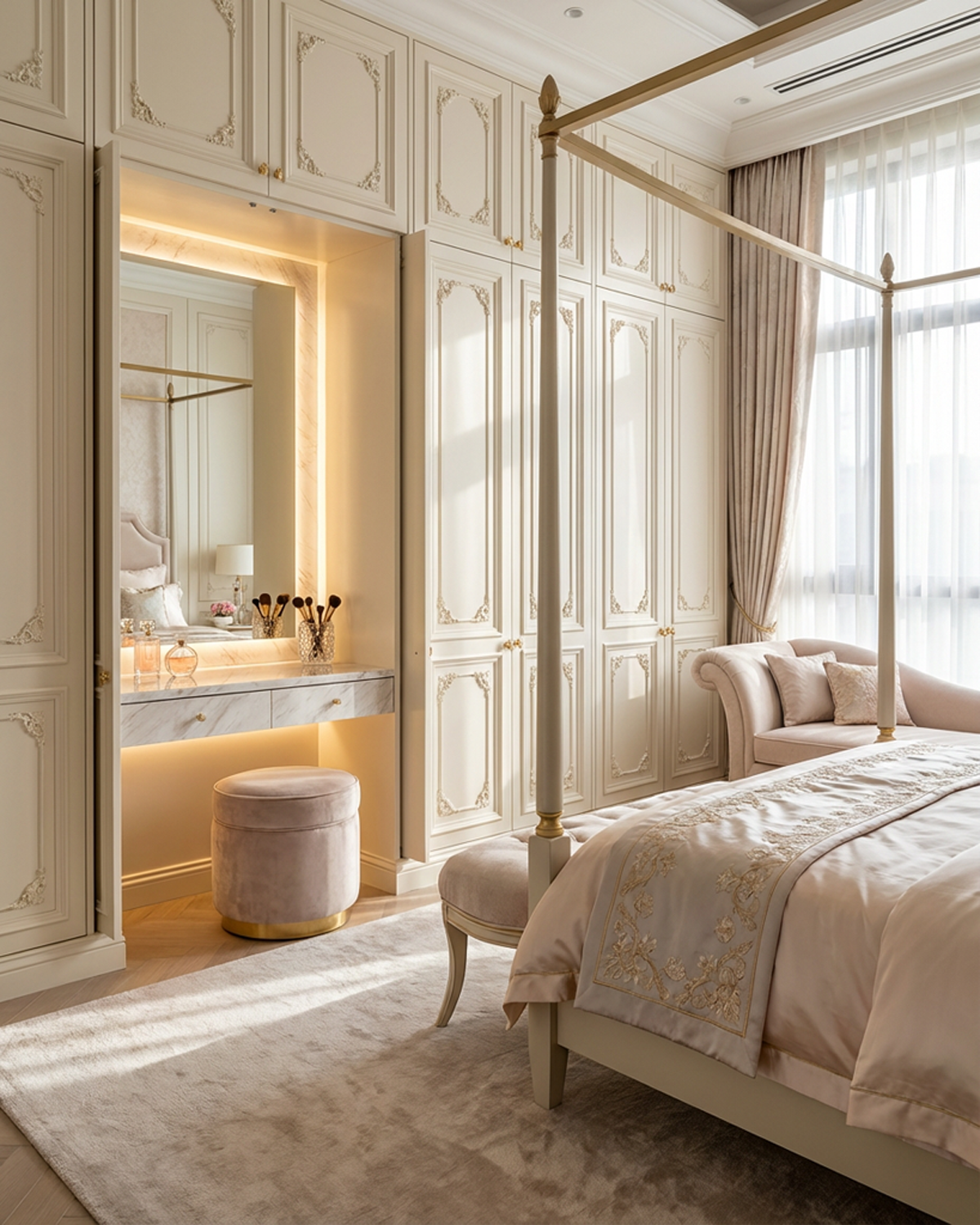
Vanity moments tucked behind pocketing panel doors
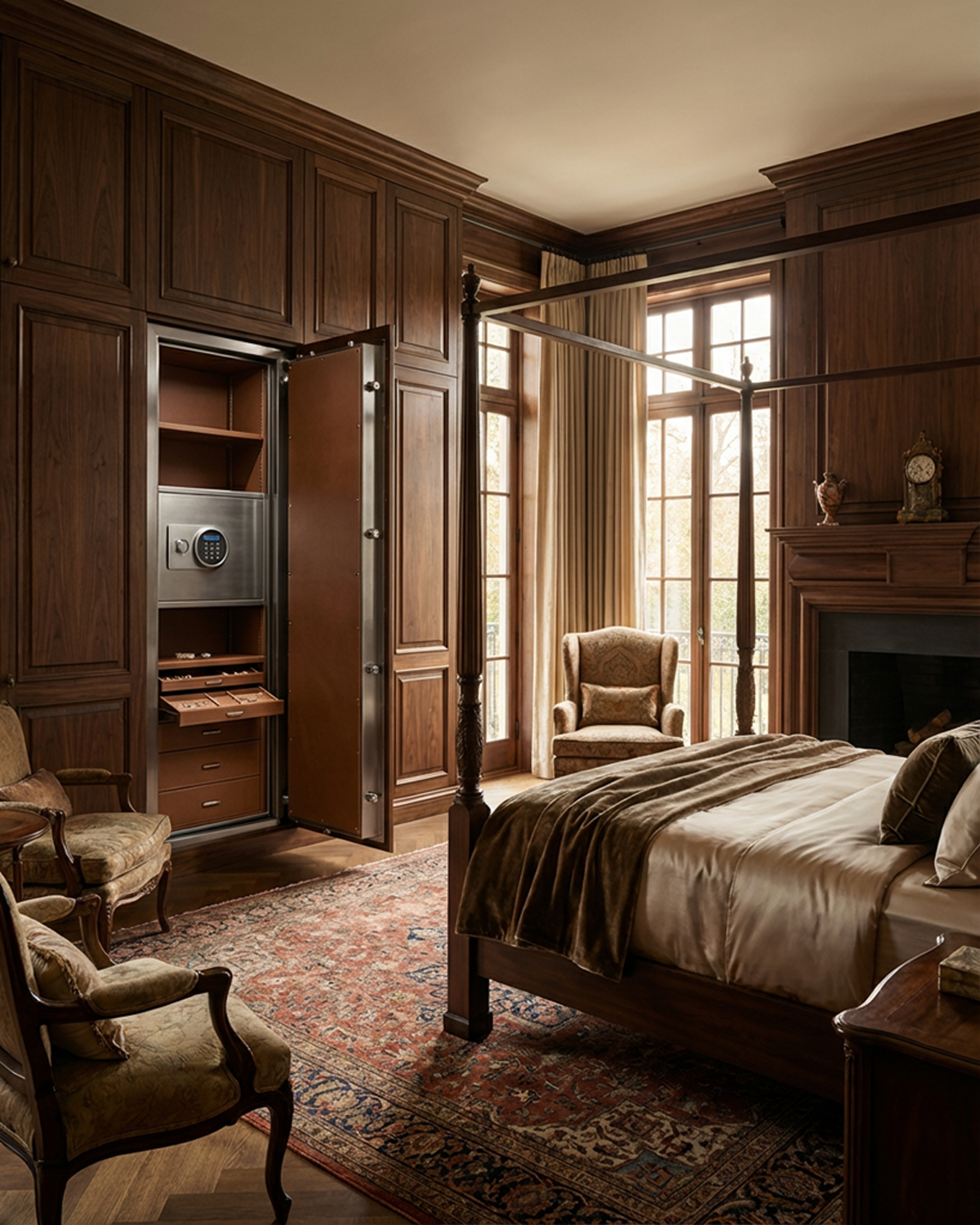
Printer stations, safes, and charging drawers integrated invisibly
The goal isn’t just to hide, it’s to compress function elegantly.
Material Camouflage
If something must be seen, it should still blend.
We often lean into:
Custom-matched paint finishes and mouldings
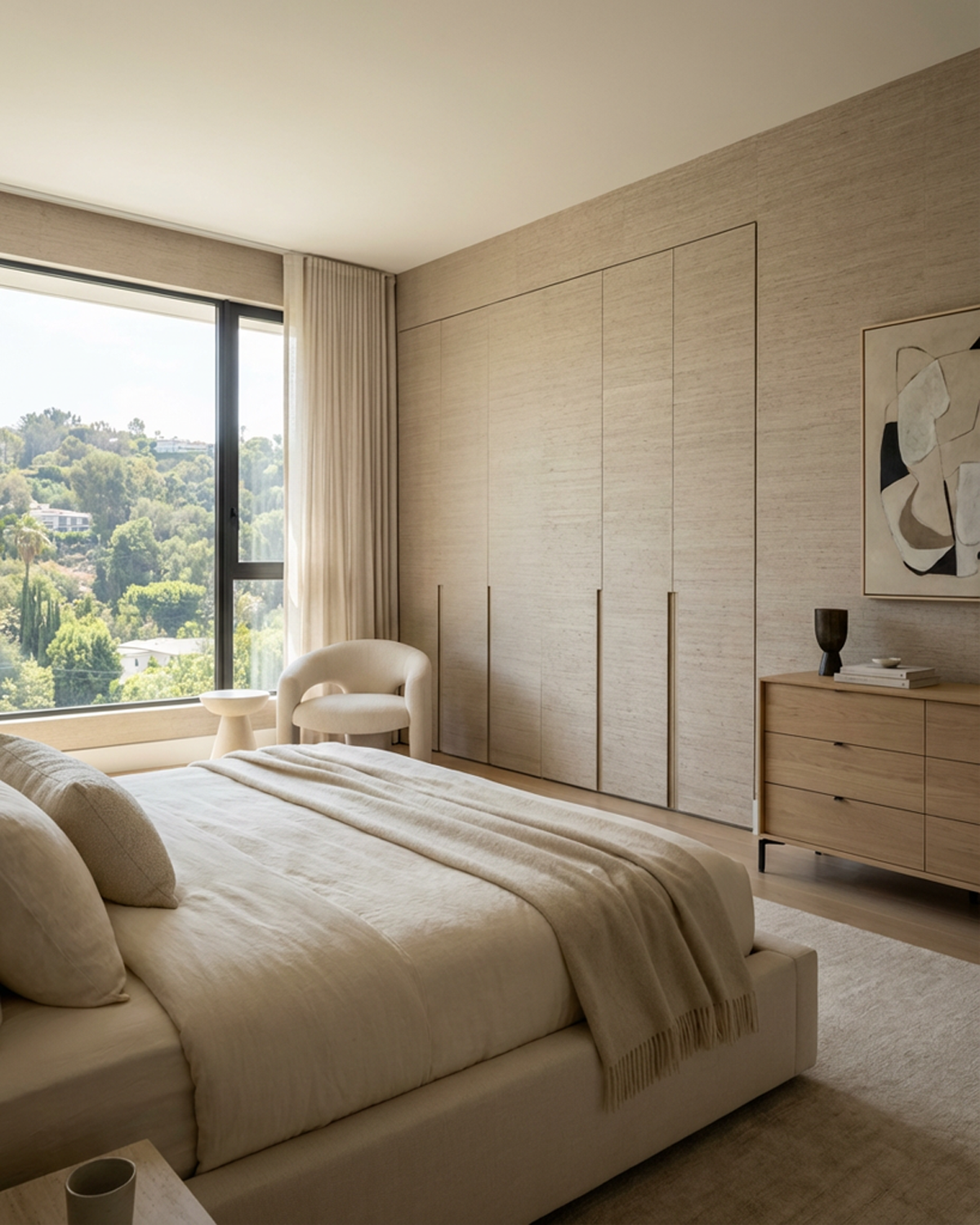
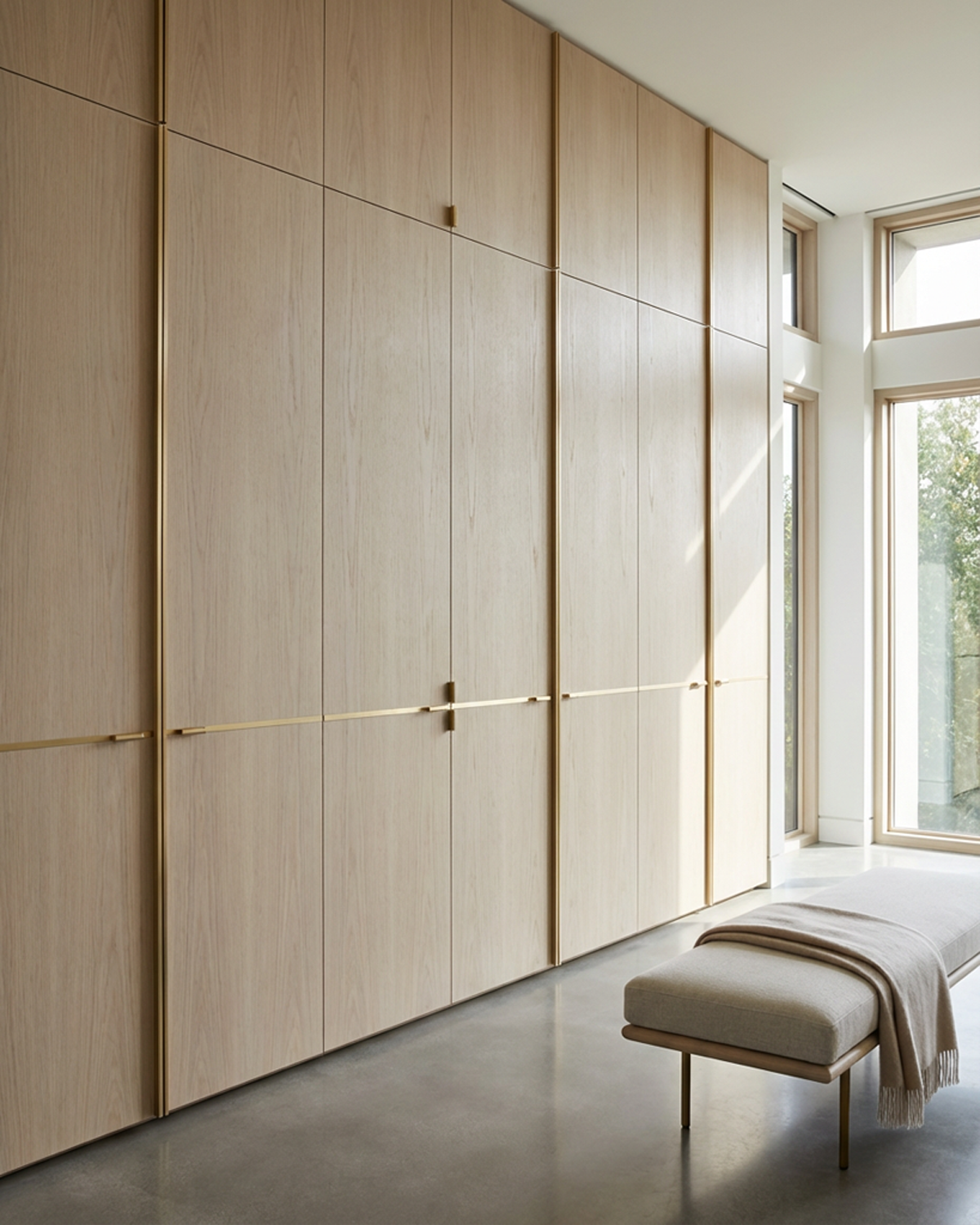
Bleached oak or soft walnut paneling carried wall-to-wall
Fabric-wrapped panels for softness in bedrooms
Plaster or limewash continuity for architectural blending
When the wardrobe shares a language with the room, it stops reading as storage entirely.
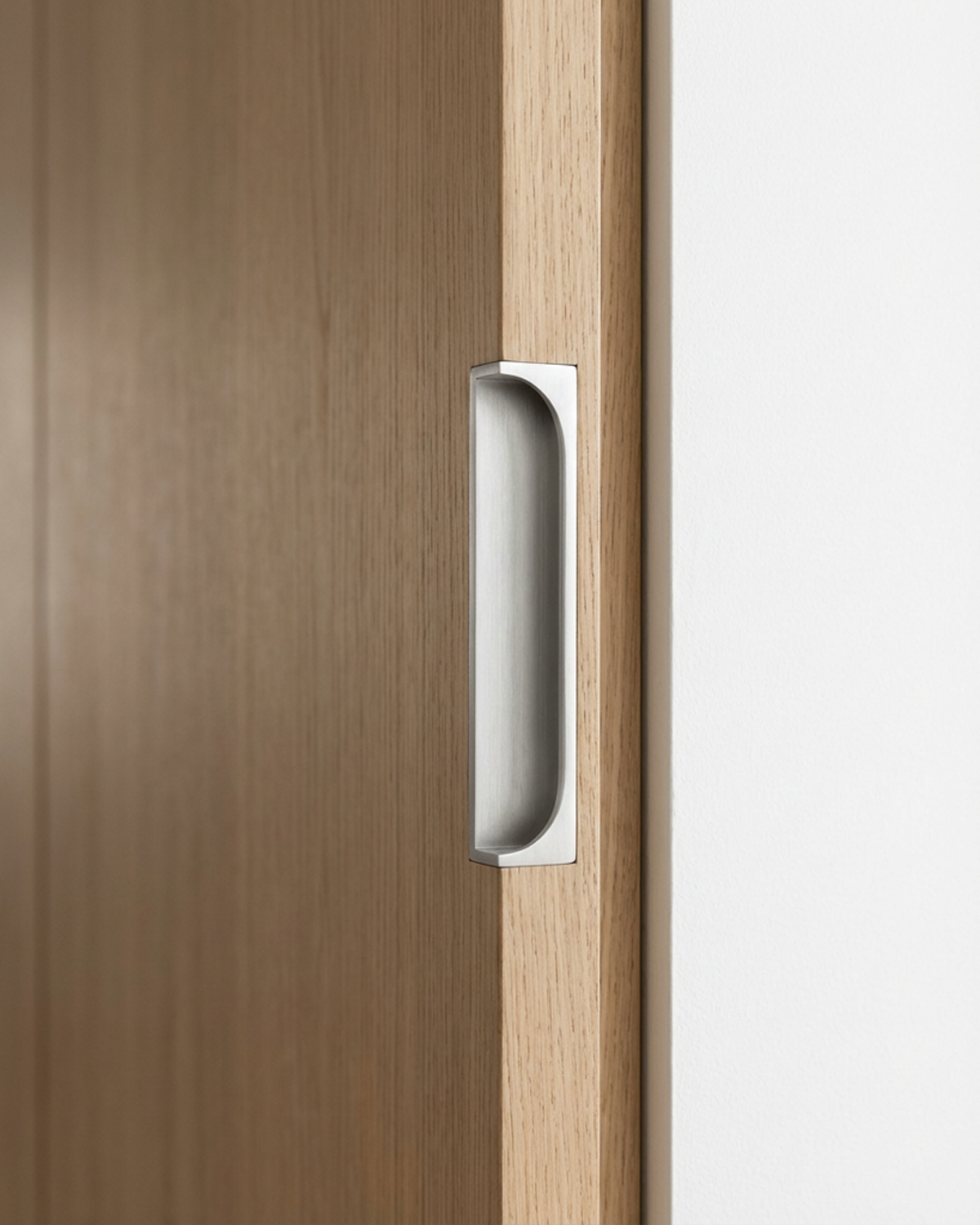
Invisible Hardware
Nothing breaks the illusion faster than the wrong hardware.
Instead:
Push-to-open where appropriate
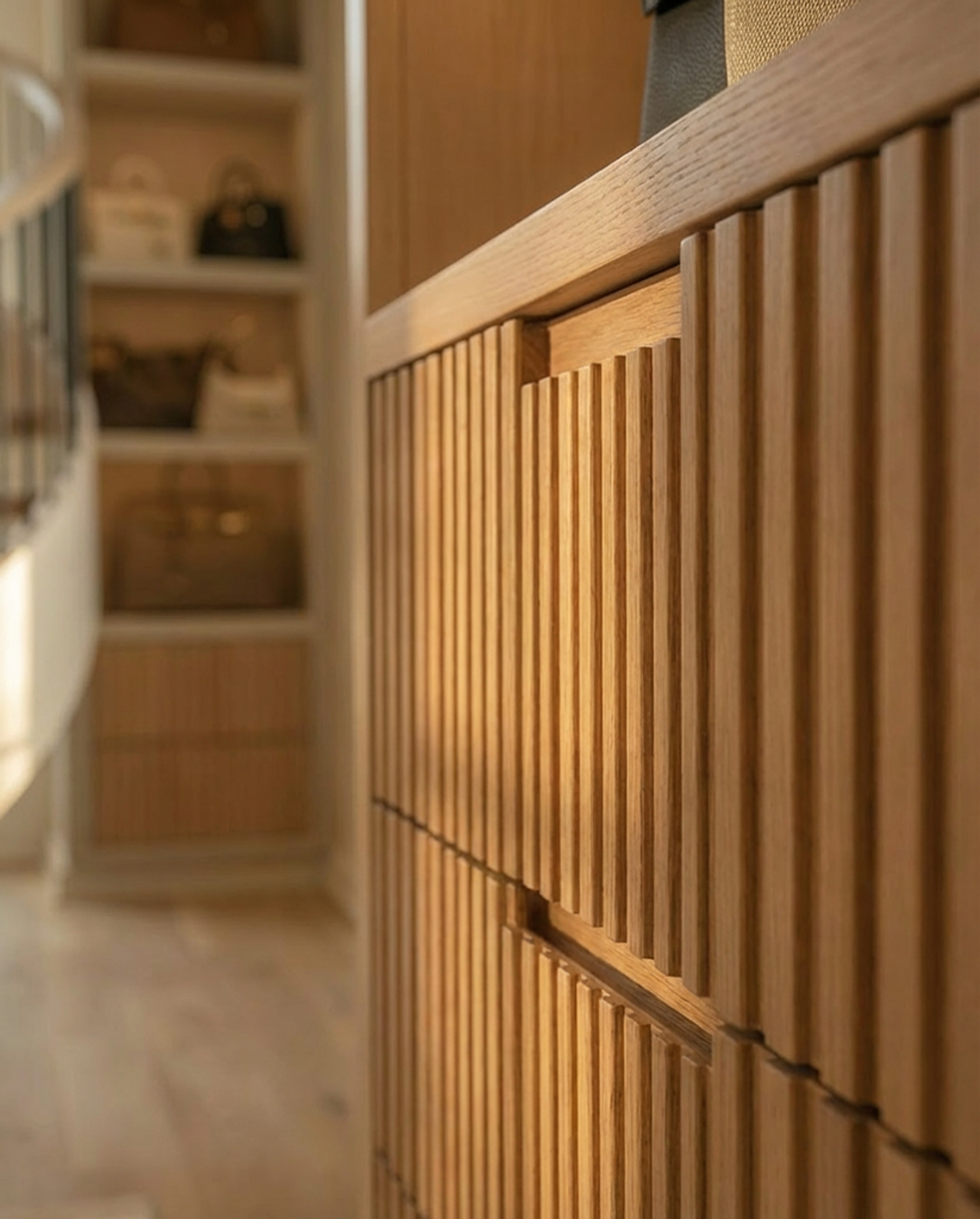
Recessed pulls with shadow detailing
Edge pulls integrated into panel lines
Or hyper-minimal jewelry-like hardware used sparingly and intentionally
The rule: if you notice it immediately, it’s probably too much.
Lighting That Reveals, Then Disappears
A disappearing wardrobe doesn’t mean sacrificing drama.
It just means the drama happens on cue.
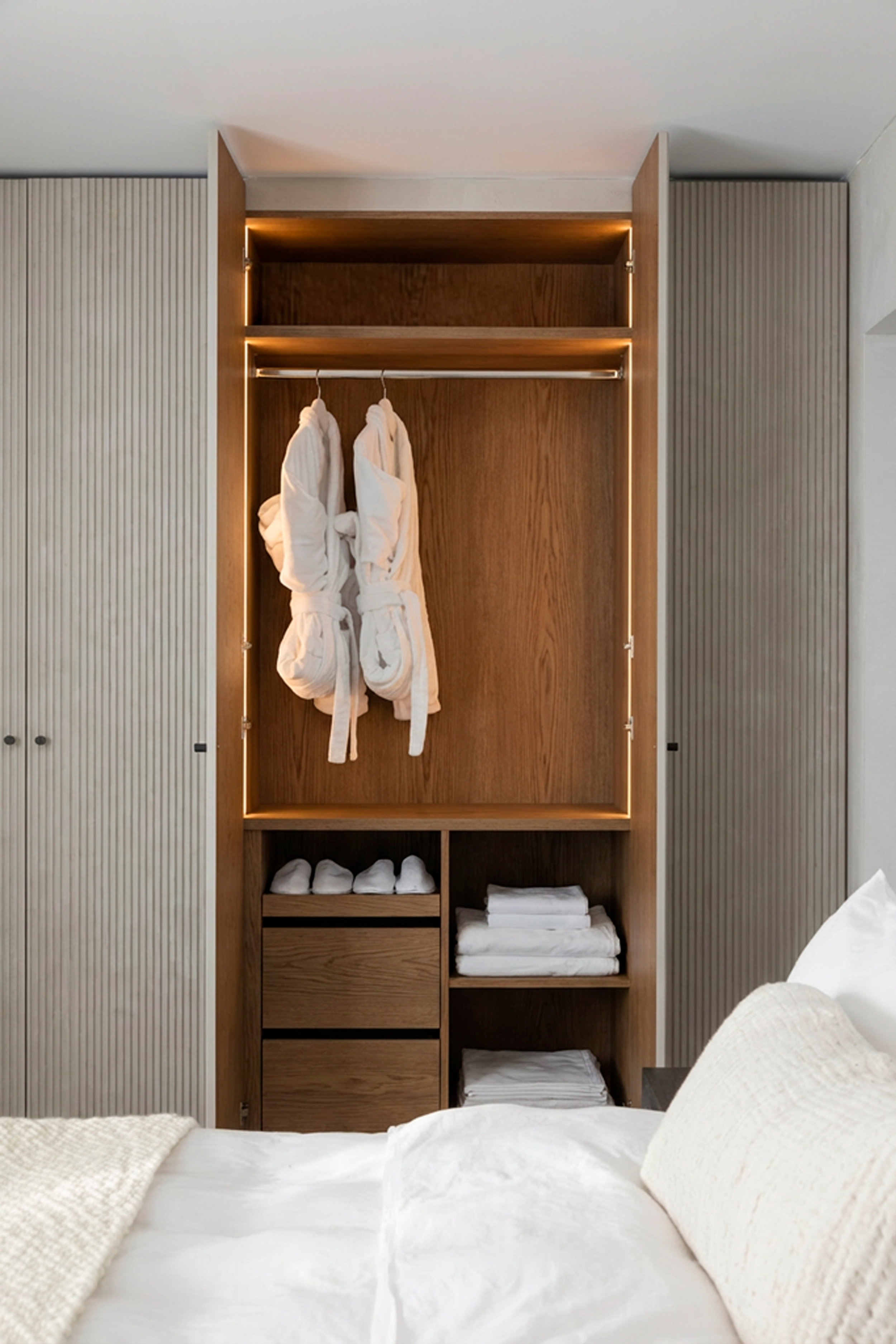
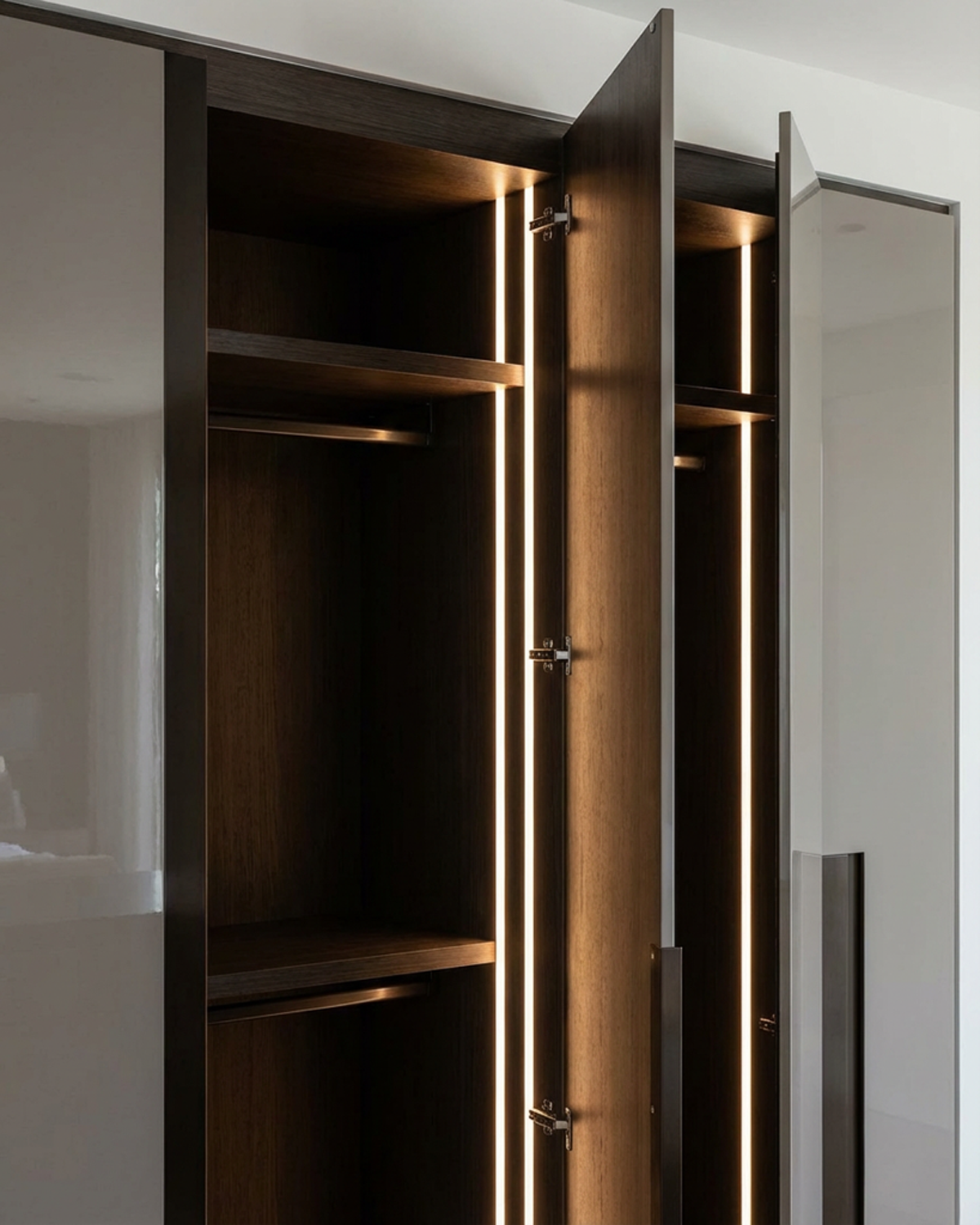
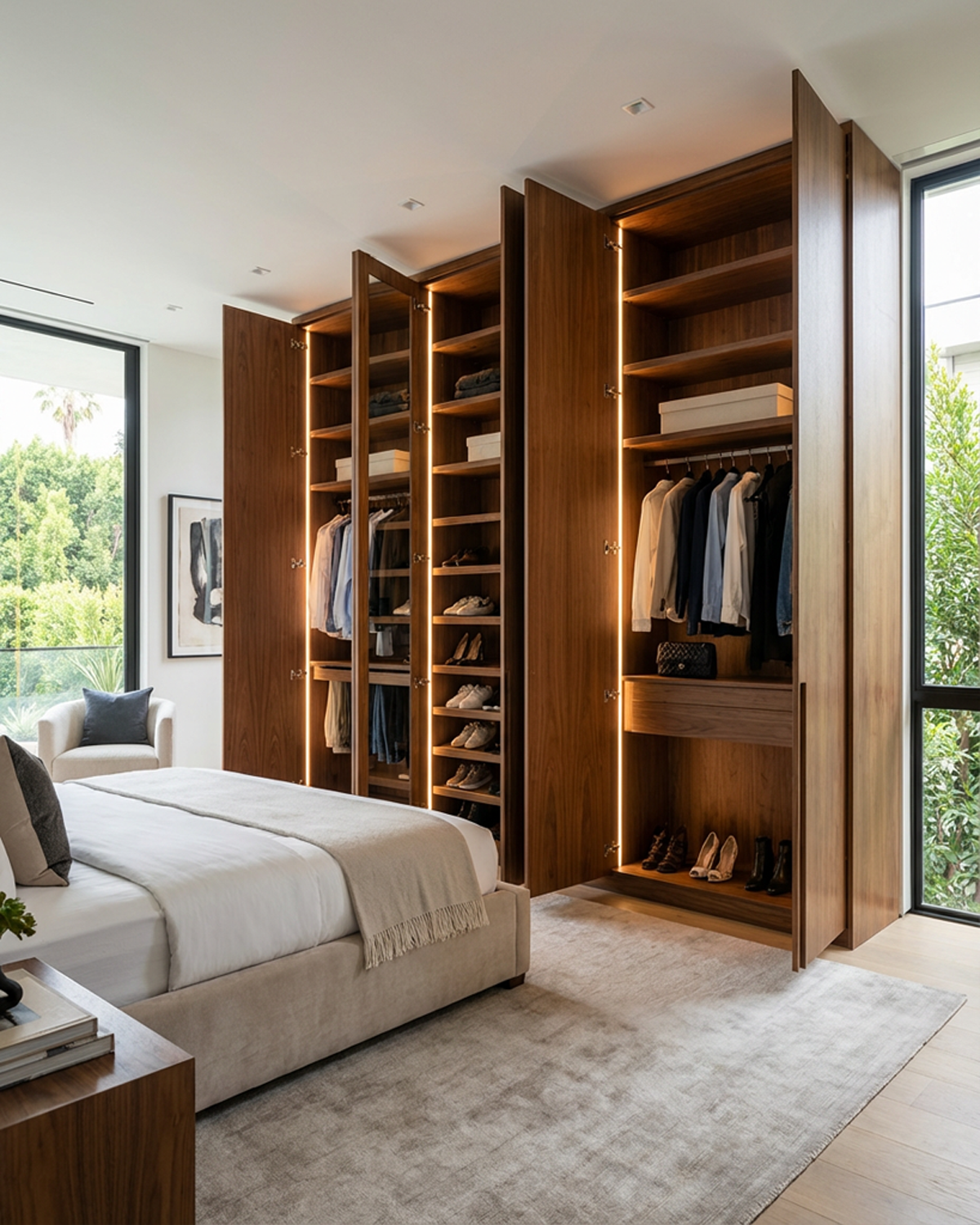
Motion-activated interior lighting
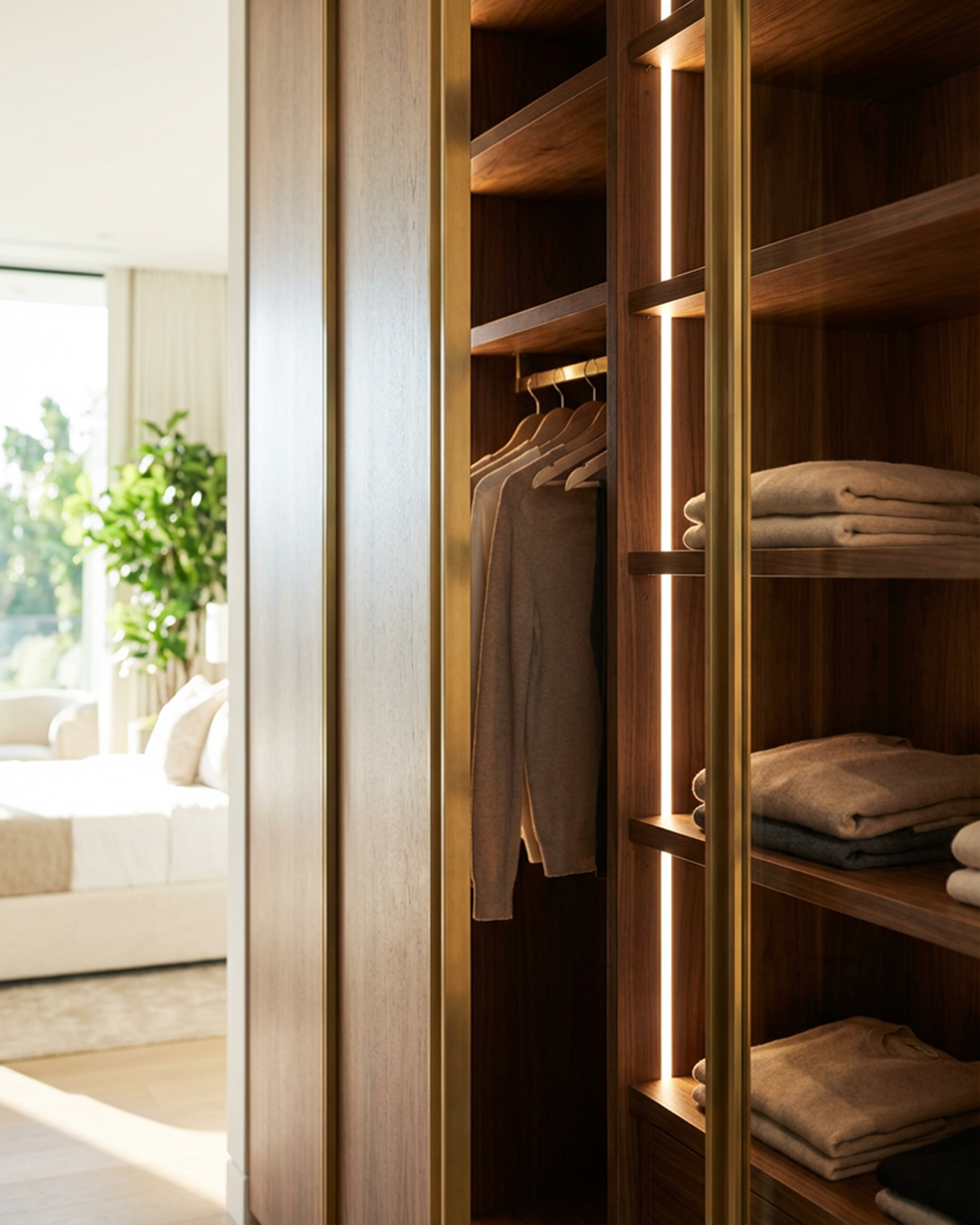
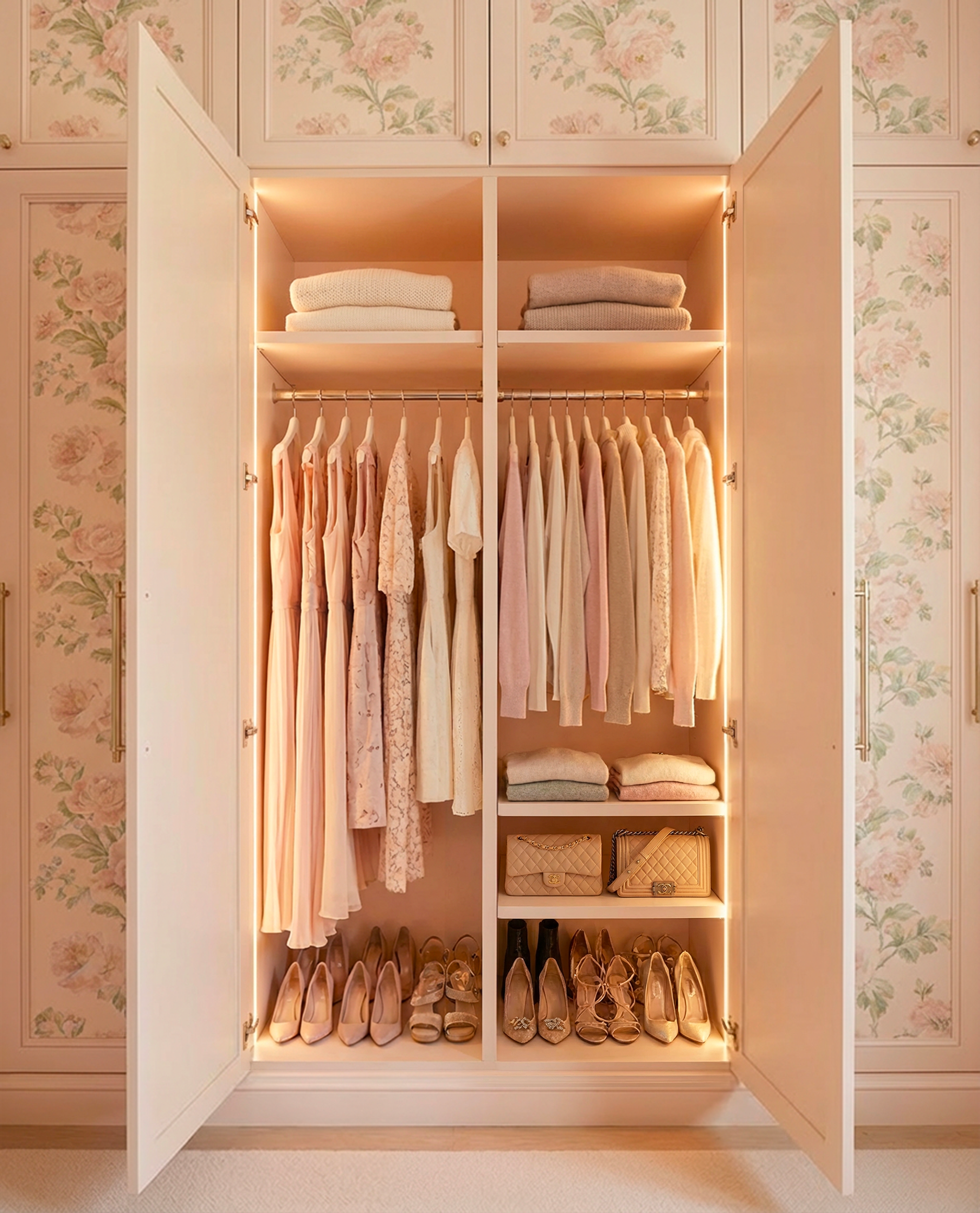
Soft, warm LEDs (2700–3000K) that feel residential, not retail
Vertical illumination in concealed channels
Lighting that fades off when closed—returning the room to calm
The Psychology of Less Visual Noise
Here’s the real reason this approach resonates:
It’s not about hiding things. It’s about controlling what the eye has to process.
When wardrobes disappear:
Bedrooms feel more restful
Offices feel more focused
Living spaces feel more elevated
You’re designing not just storage, but creating mental clarity.
The Takeaway
The most sophisticated wardrobes don’t always have to announce themselves. They recede. They integrate. They wait. And when they do reveal themselves, they do so with precision. Because true luxury isn’t necessarily about having more on display. Sometimes it means having everything beautifully hidden in plain sight.