
SUPERSIZED SPACES
Designing multi-level wardrobes with intention, clarity, and scale.
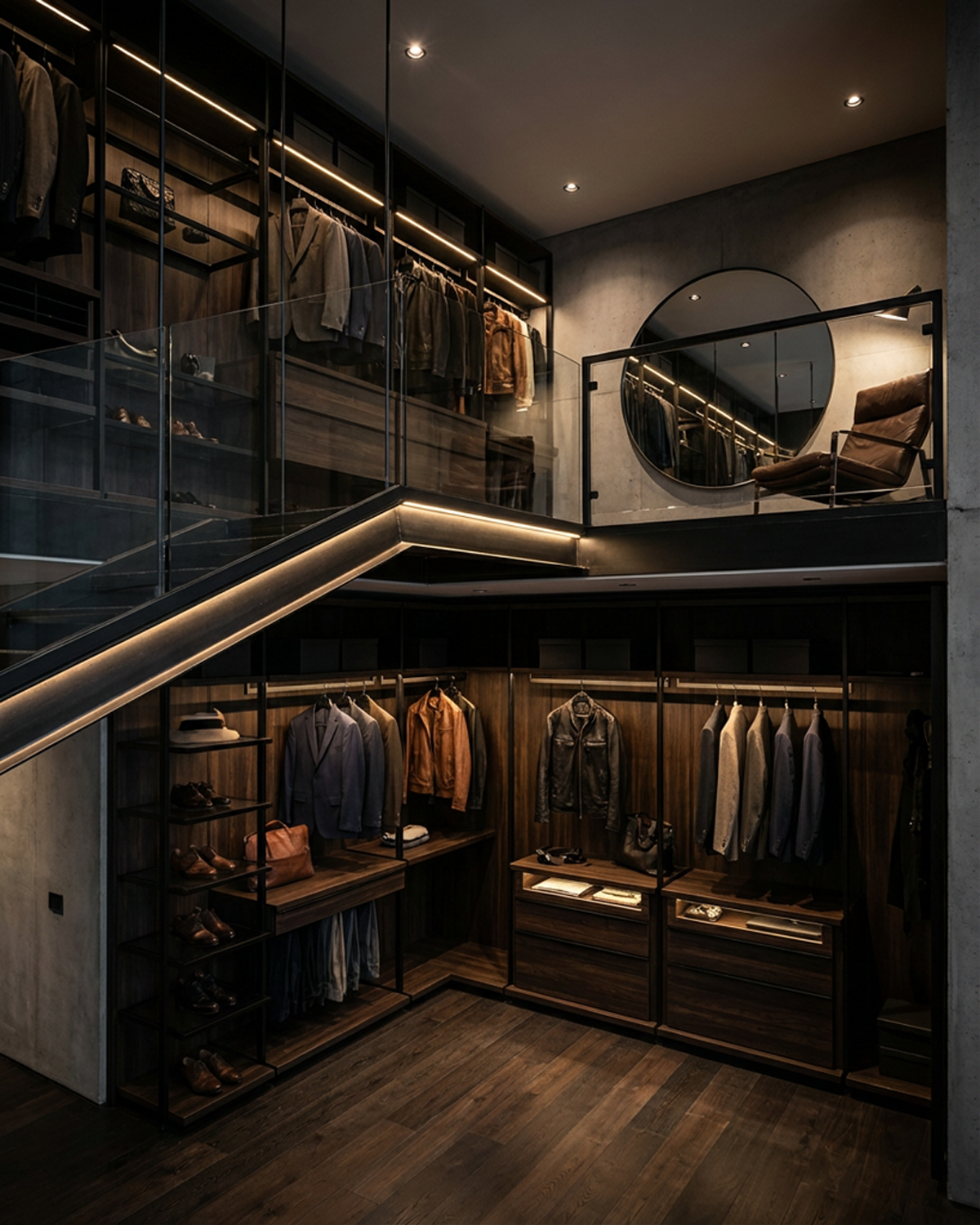
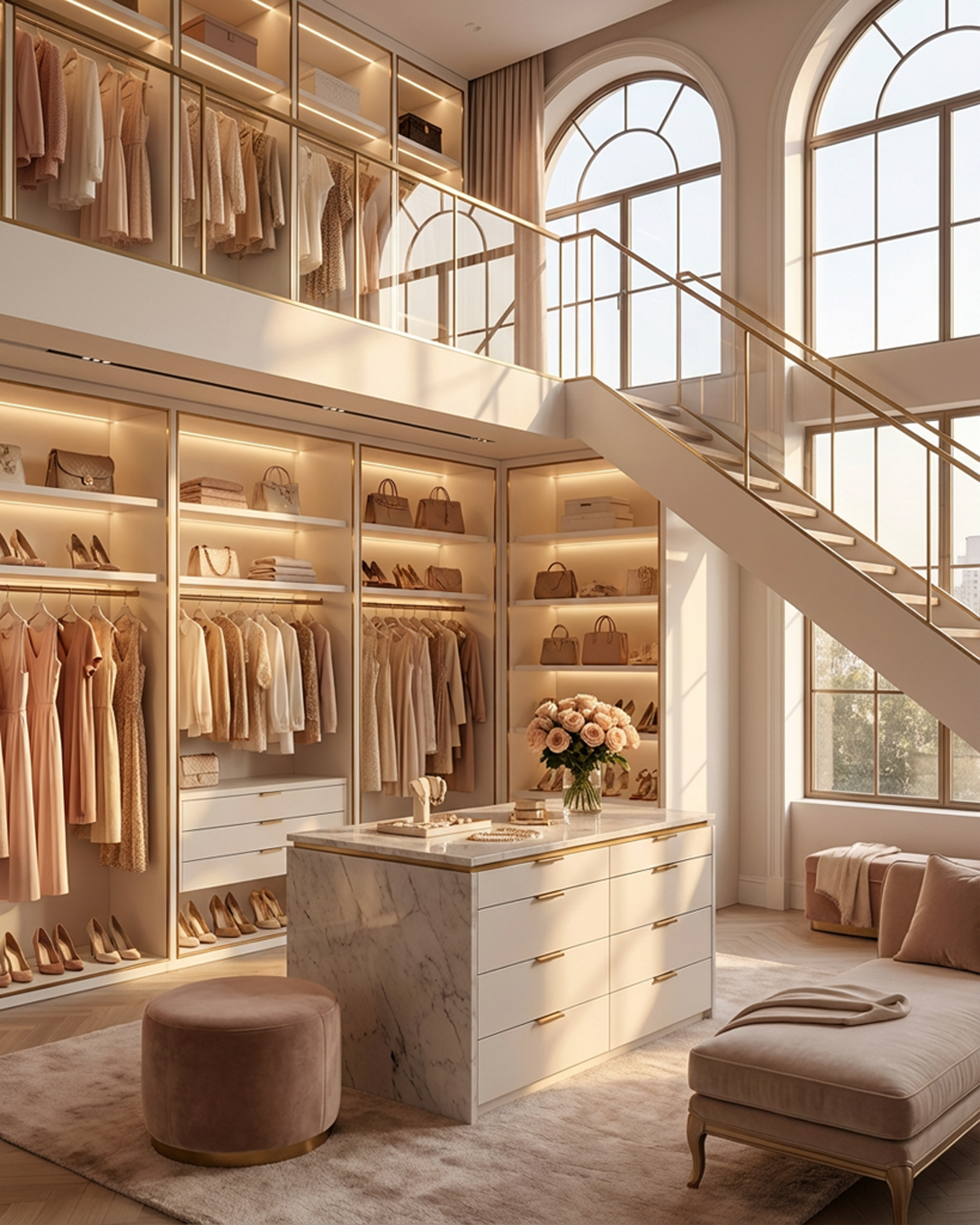
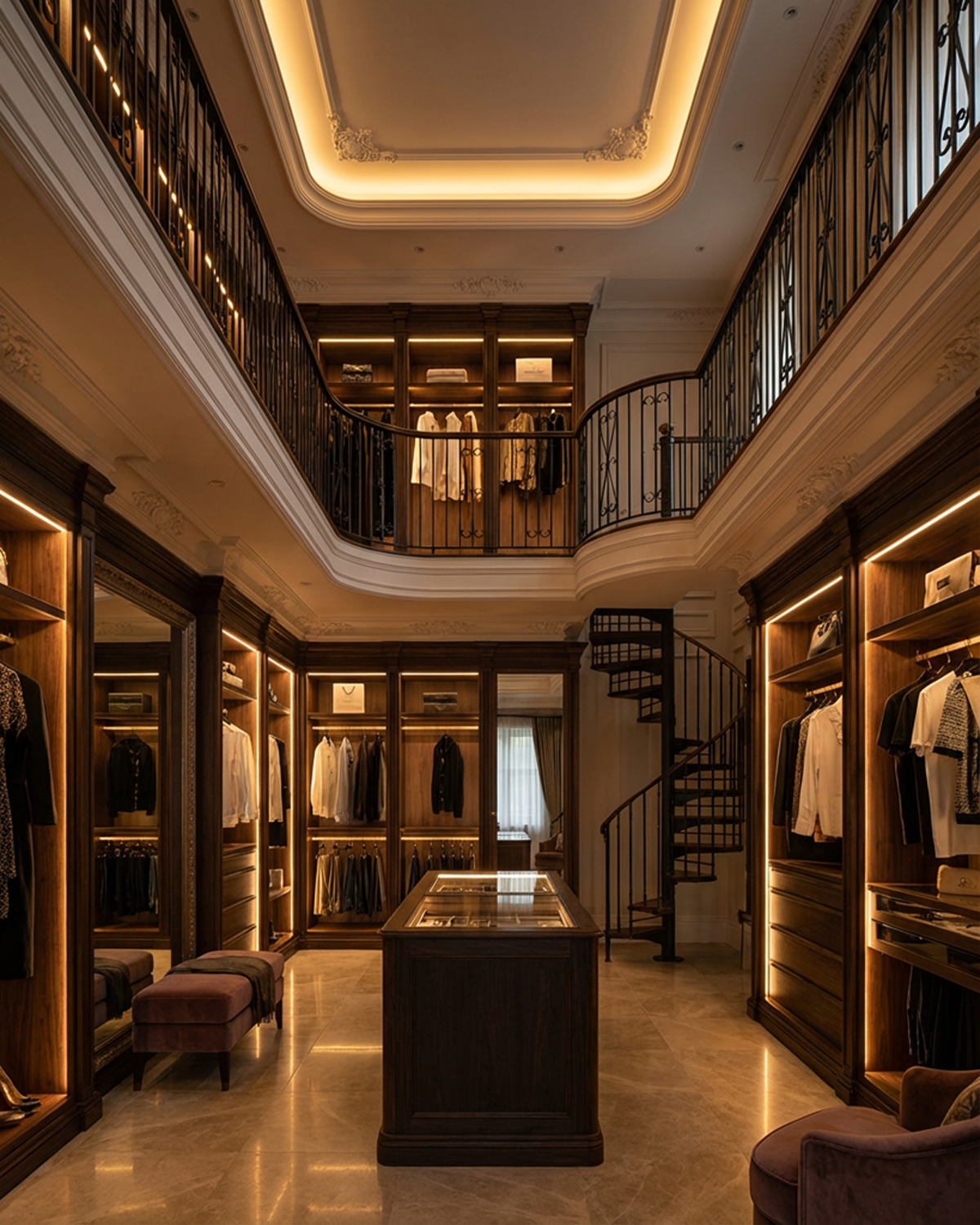
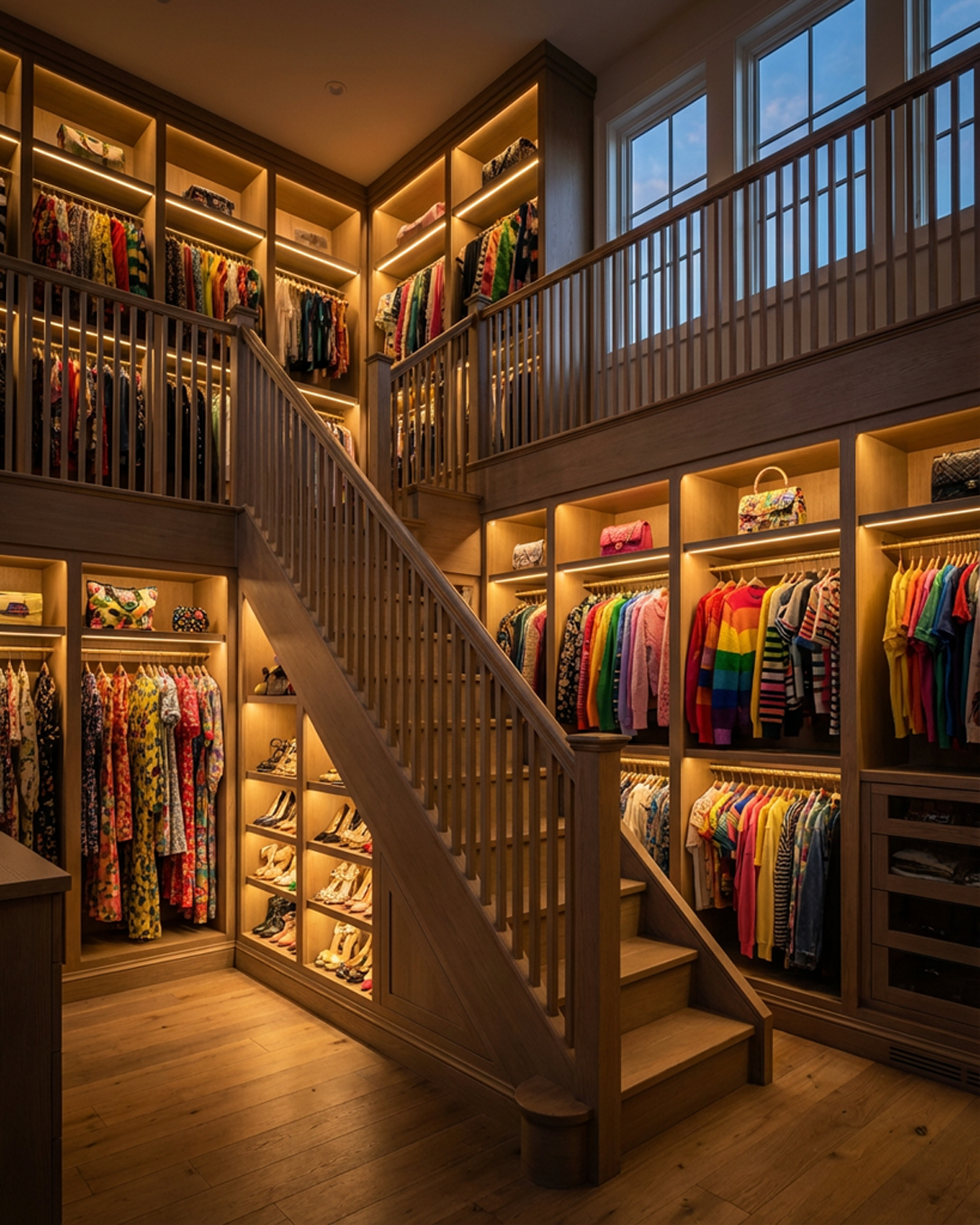
Some closets are rooms. The best ones become part of the architecture.
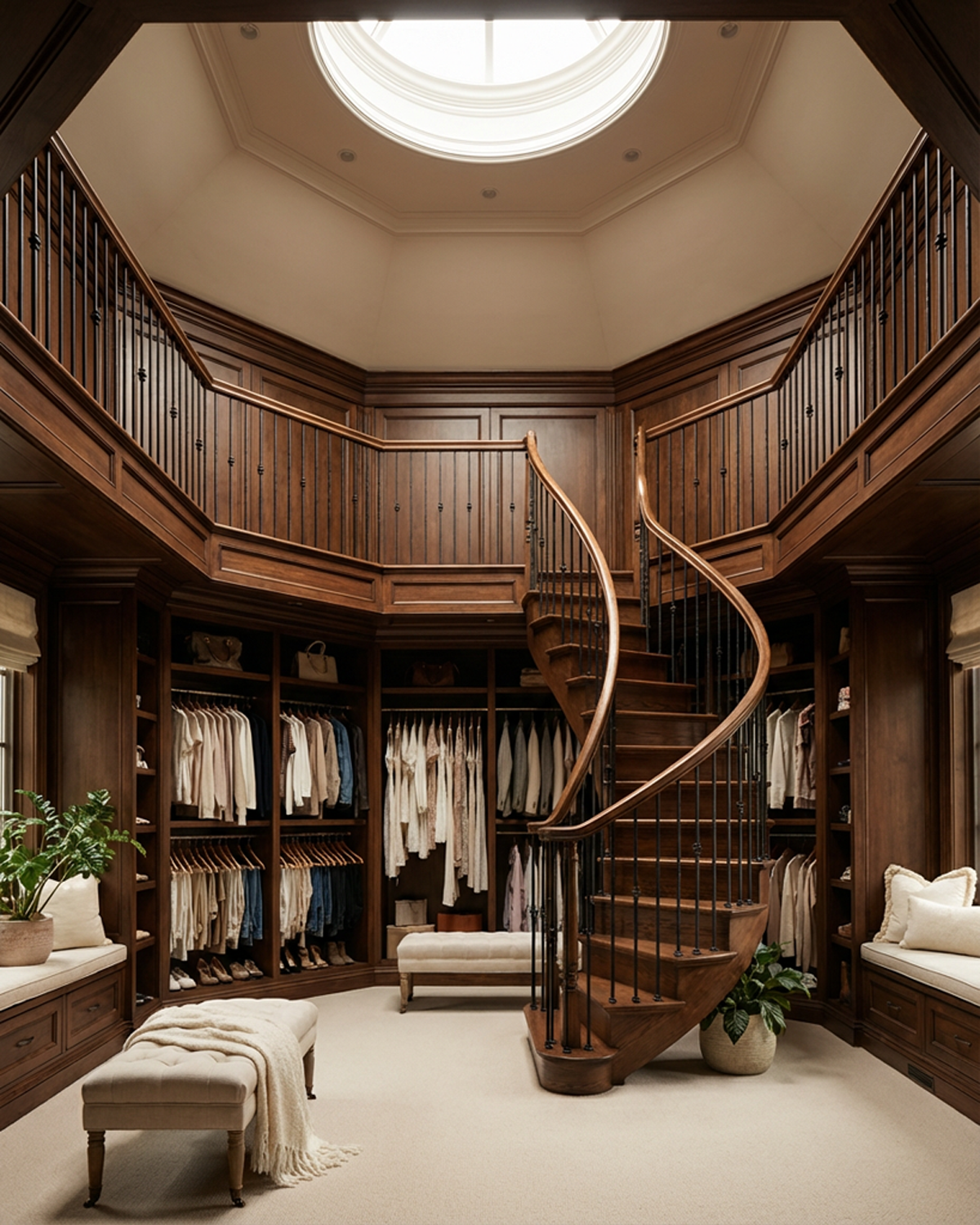
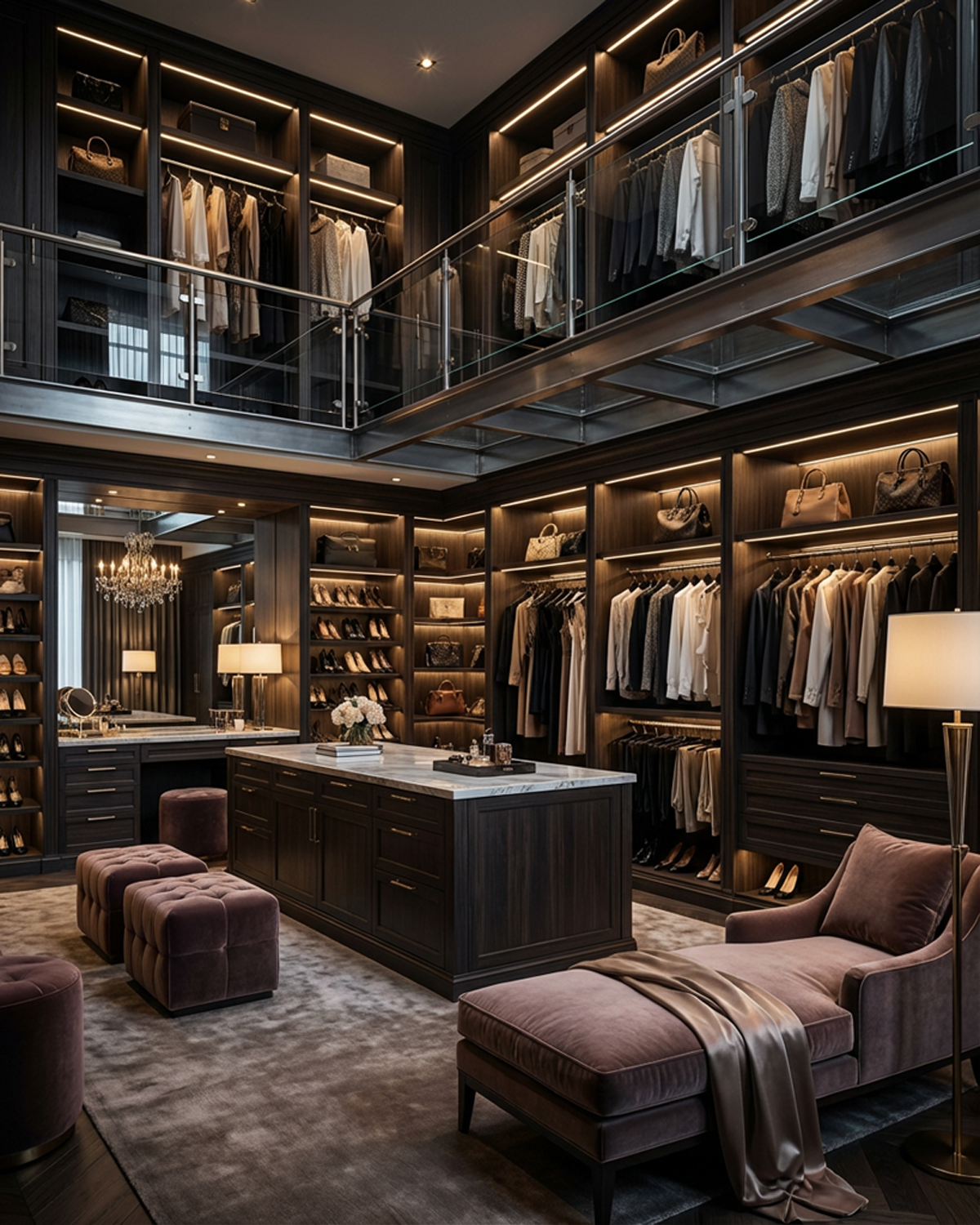
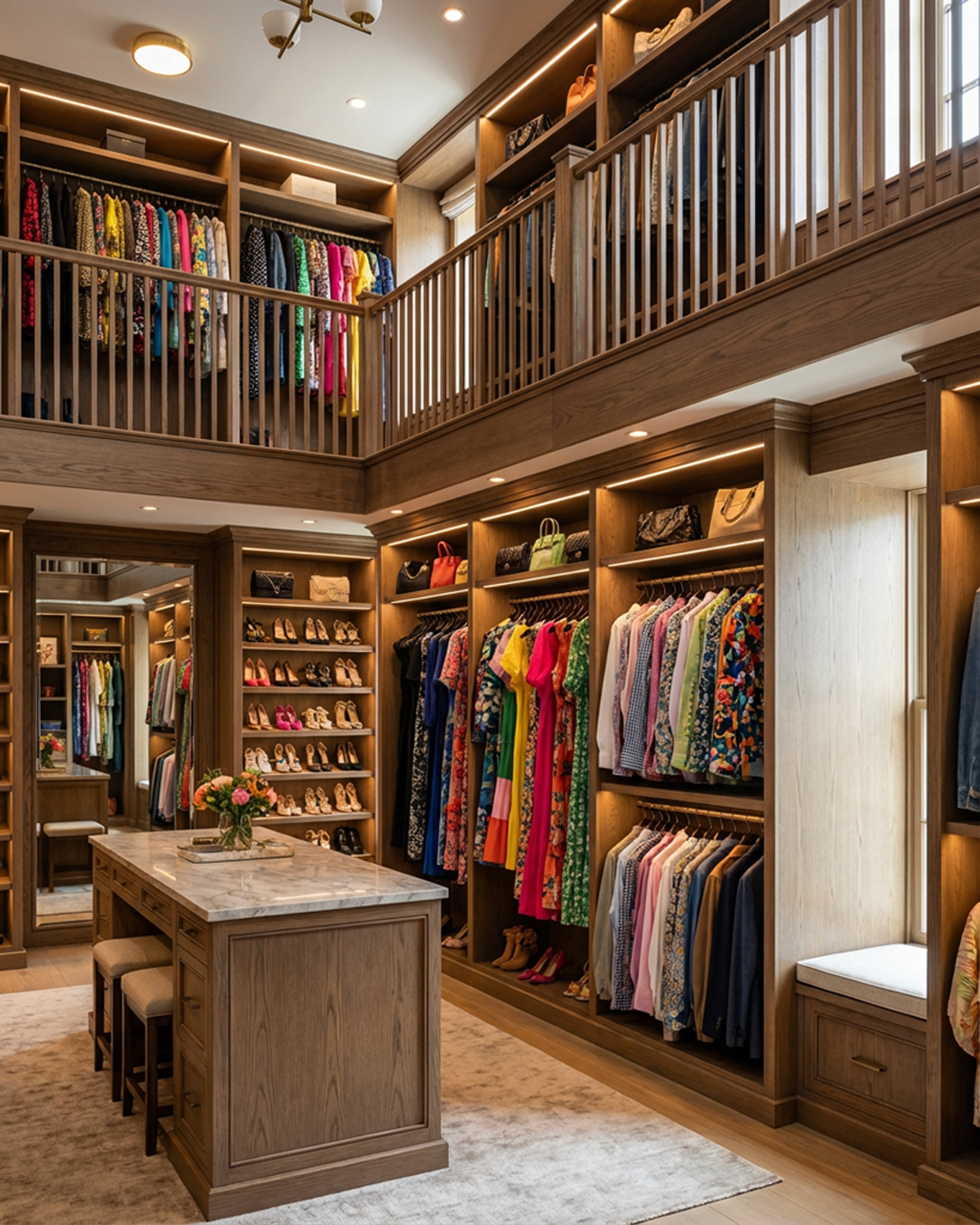
In larger homes, we’re increasingly being asked to design wardrobes that extend beyond a single plane—double-height spaces, mezzanines, rooms connected by staircases or galleries. The instinct is often to fill them.
We take a different approach.
Because scale without structure is just excess.
VERTICALITY AS A STRATEGY
A multi-level closet isn’t always just about having more space.
It’s about using space differently.
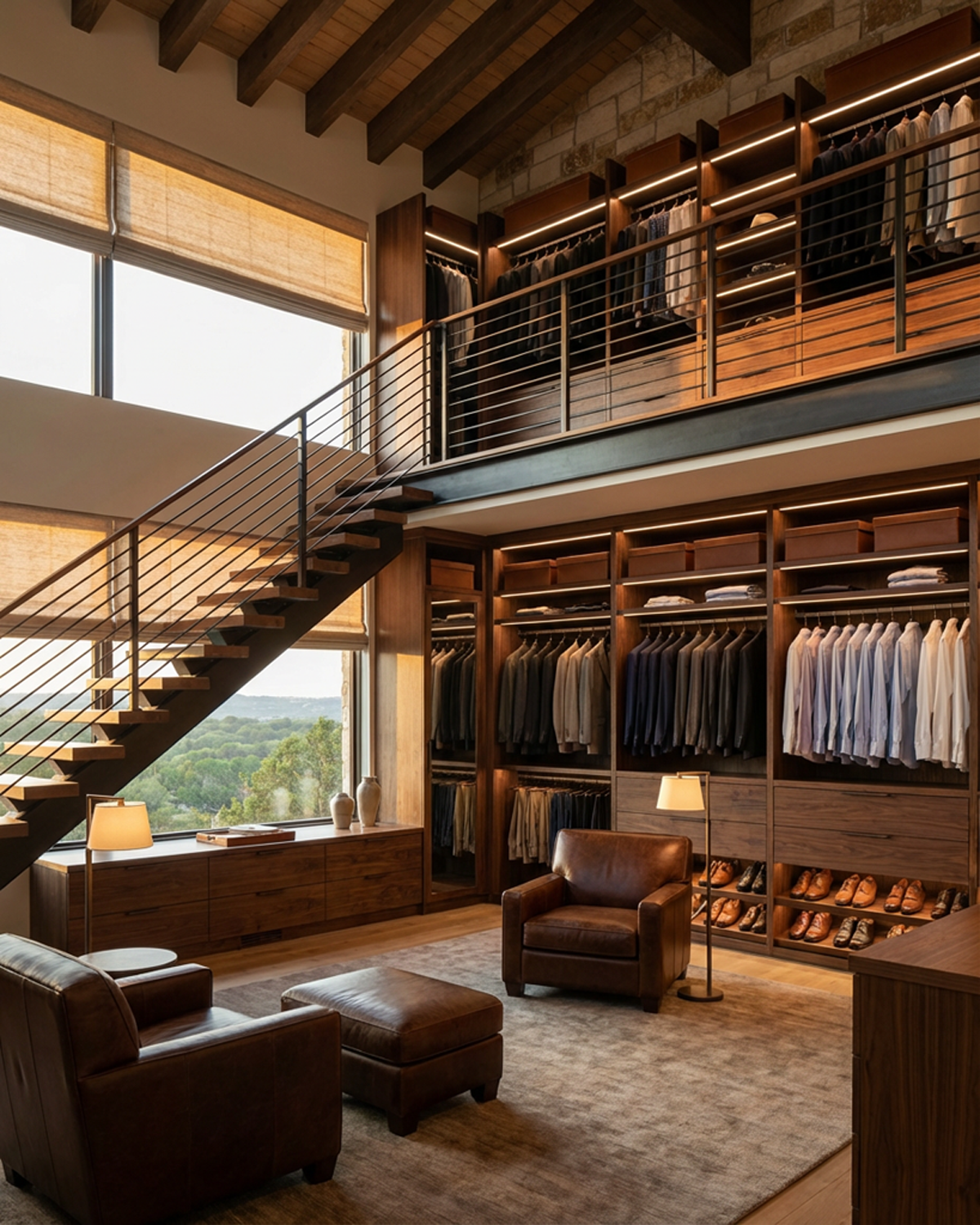
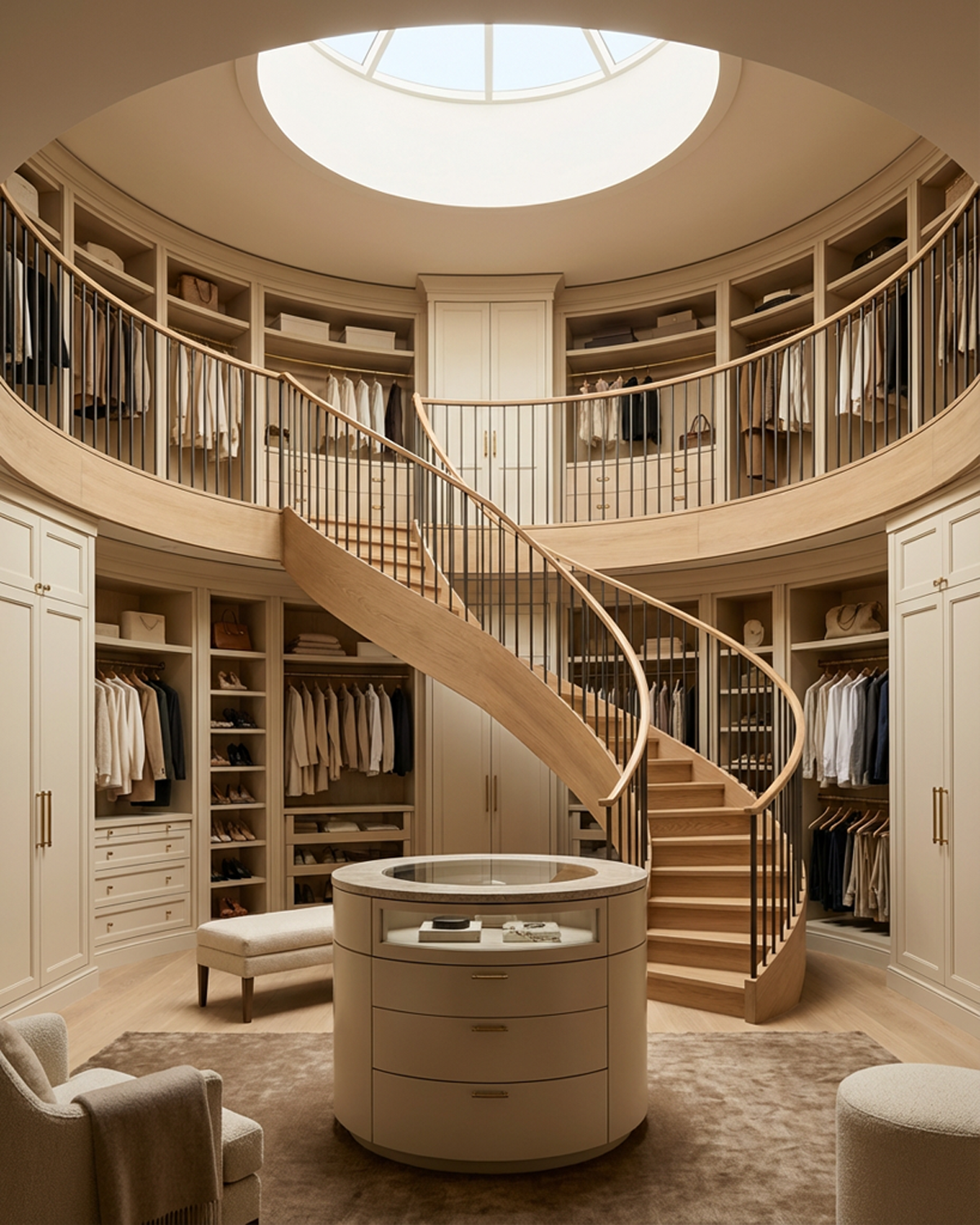
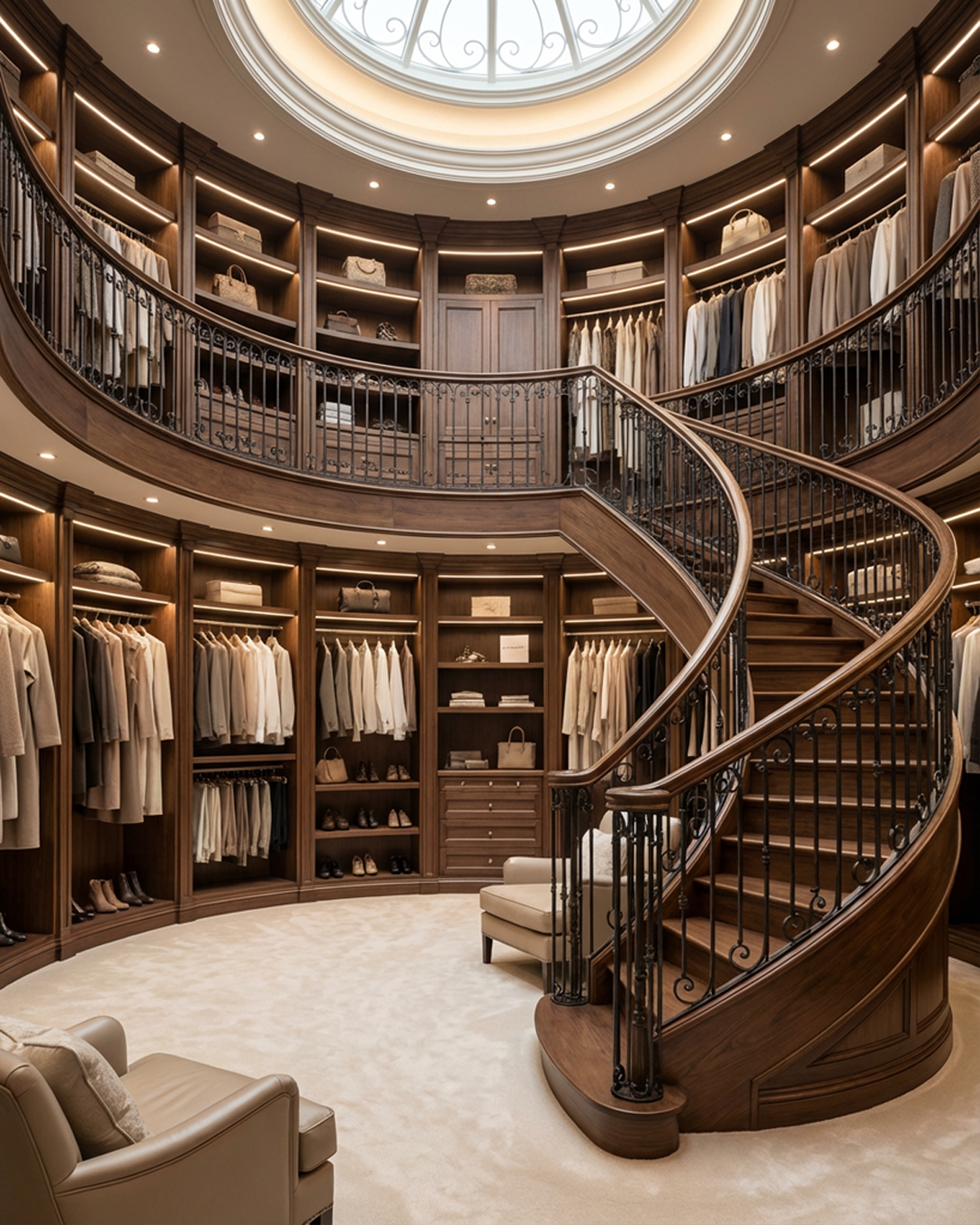
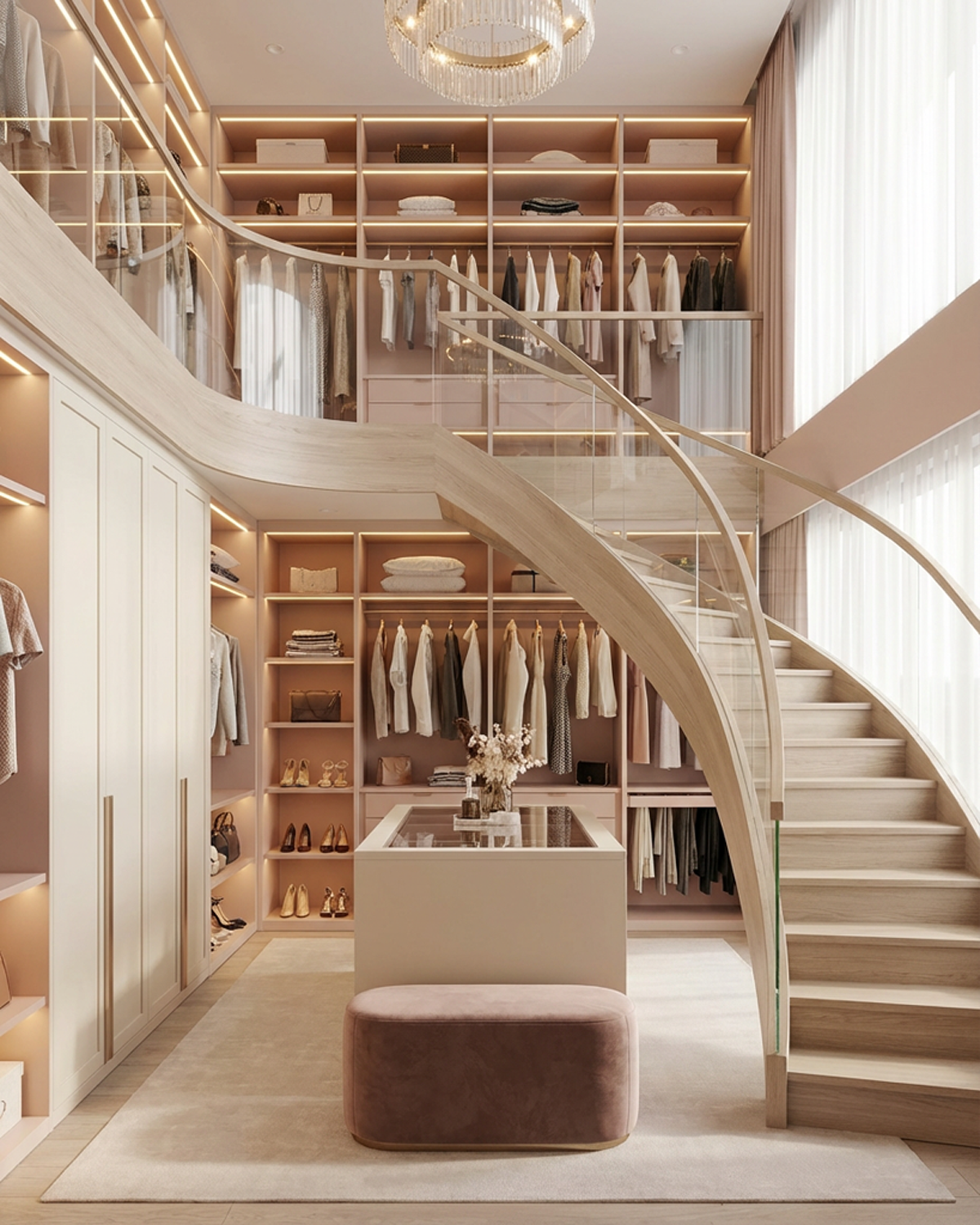
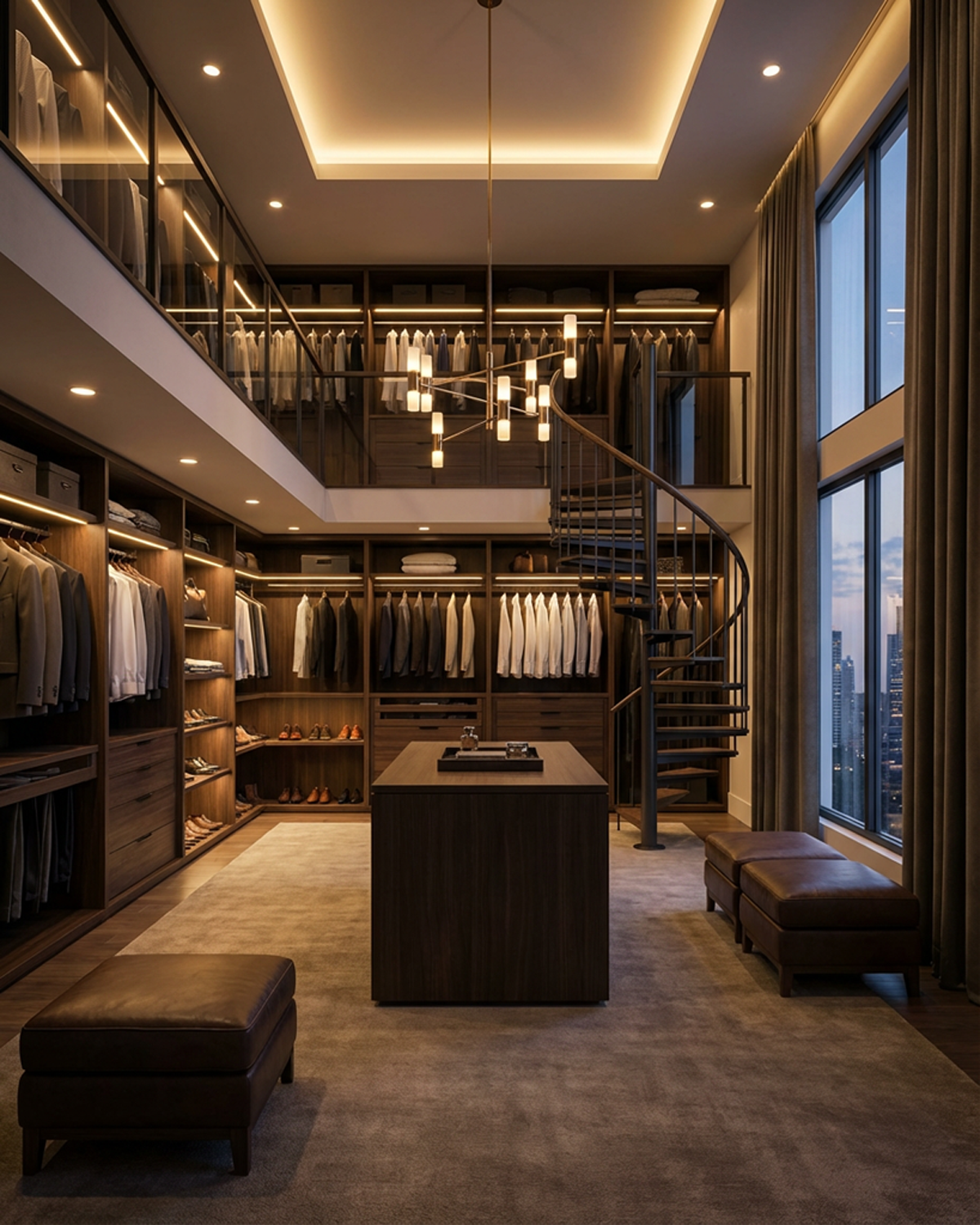
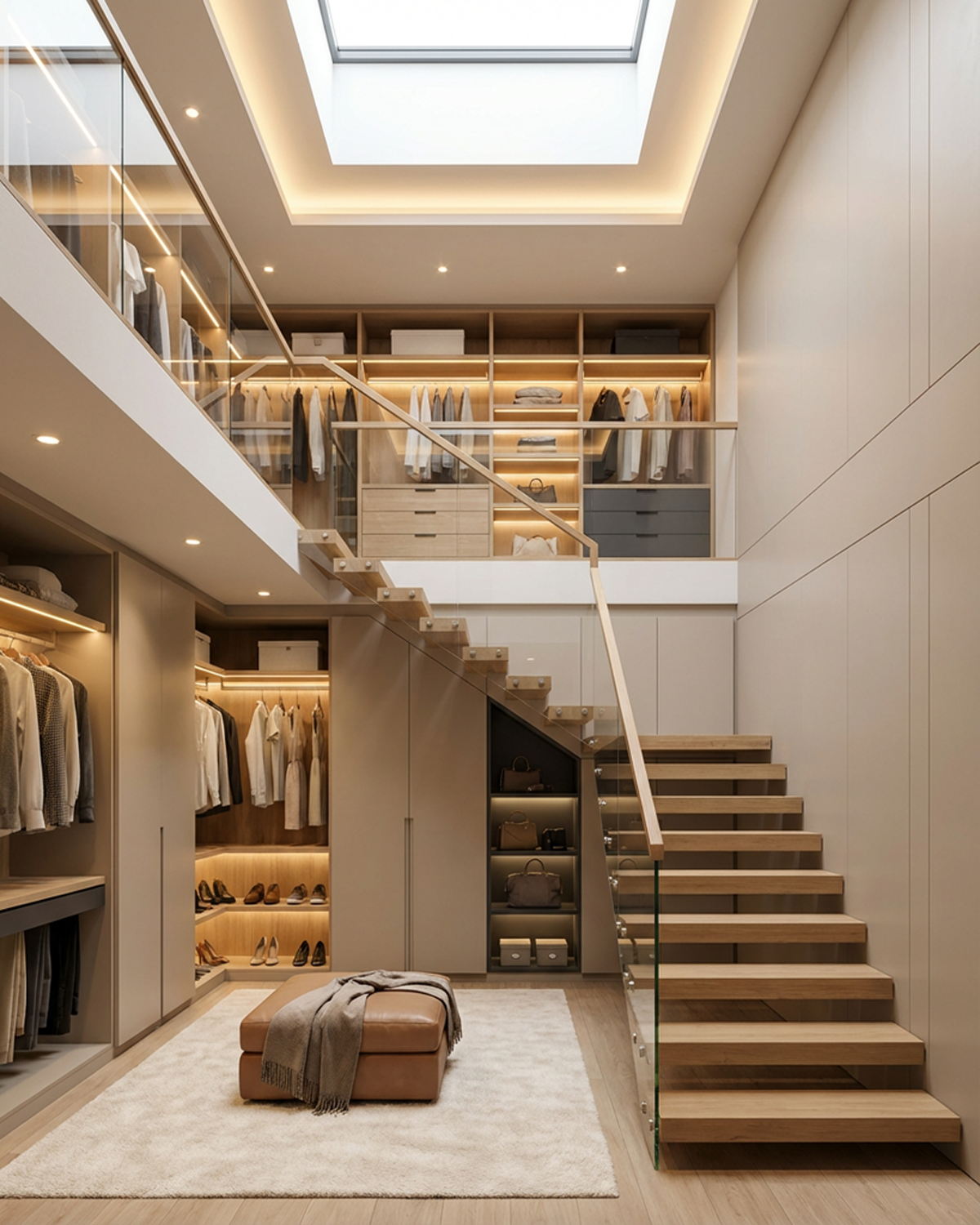
Height allows for separation—not just visually, but functionally. The lower level becomes immediate and intuitive: everyday pieces, current-season dressing, the rhythm of daily use. Above, the wardrobe slows down—occasionwear, seasonal rotations, pieces that require a more deliberate reach.
Instead of everything competing on one level, the wardrobe begins to organize itself vertically.
The result is clarity.
ZONING AT SCALE
In a traditional closet, categories sit side by side.
In a multi-story space, they can live independently.
We often divide these environments into distinct zones:
A primary dressing level for daily use
A secondary level for seasonal or edited collections
Dedicated areas for suiting, couture, or travel
This separation changes the experience entirely. You’re no longer searching across a single crowded plane—you’re moving through a system.
The wardrobe becomes navigable.
MOVEMENT THROUGH THE SPACE
How you move through a closet becomes part of the design.
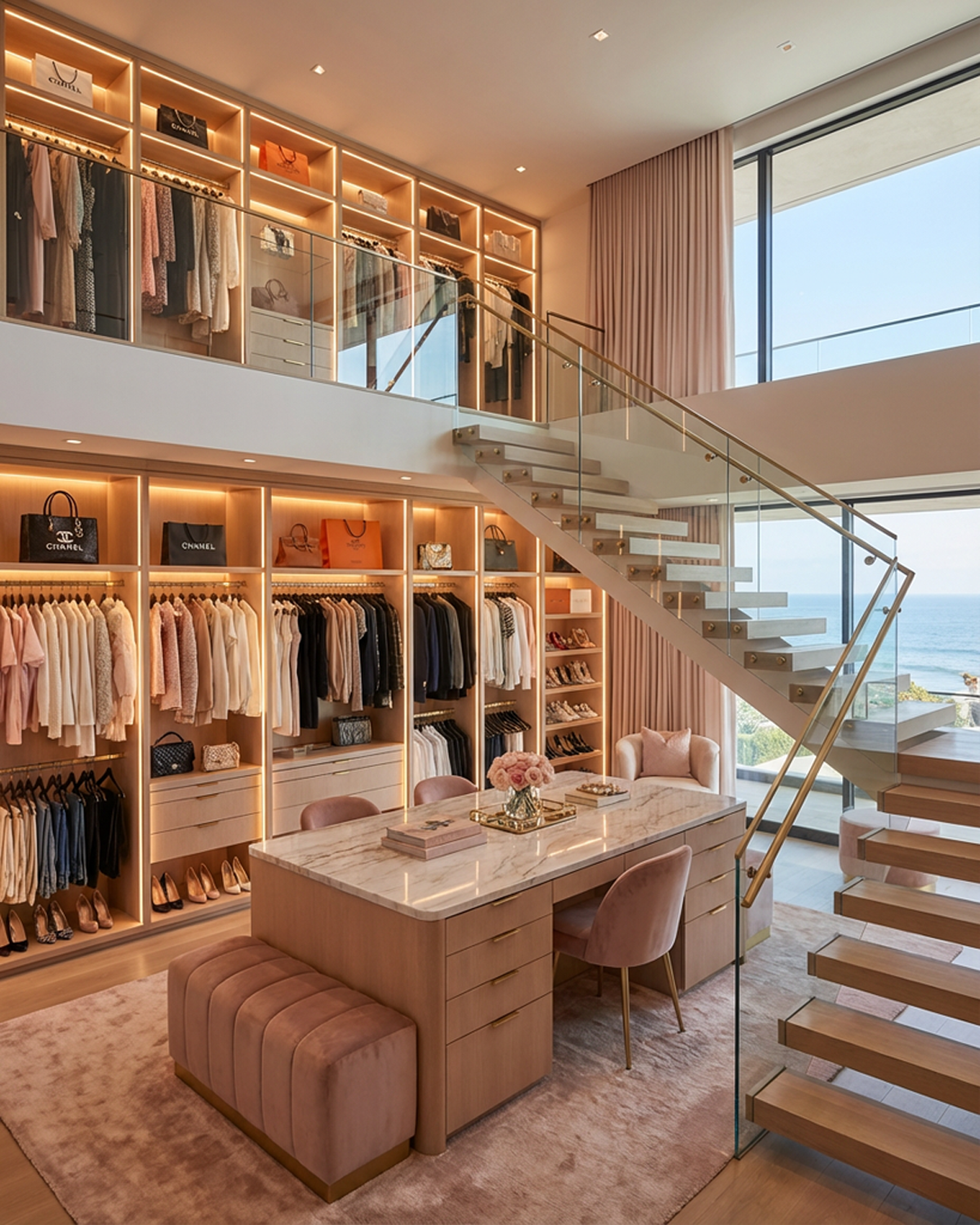
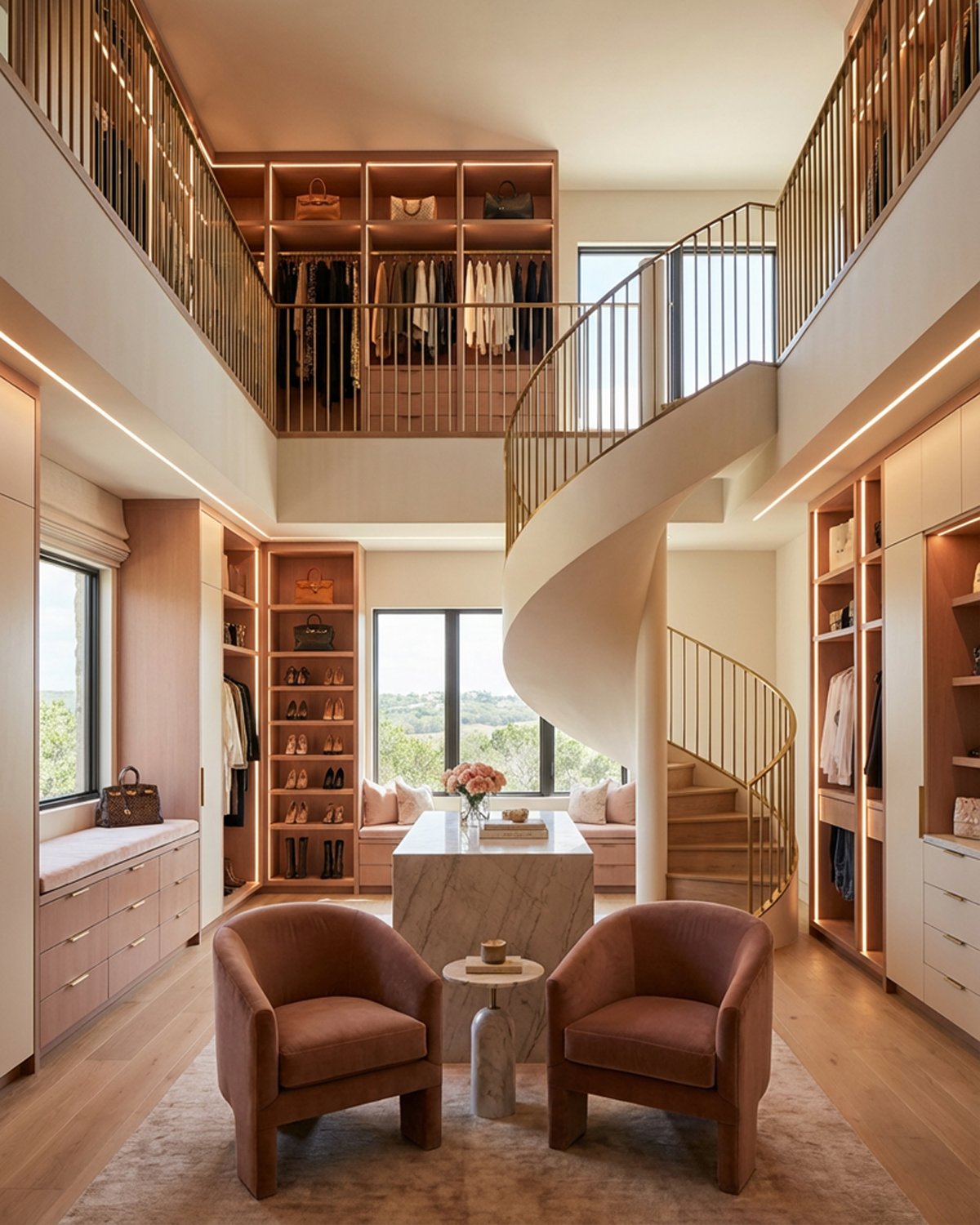
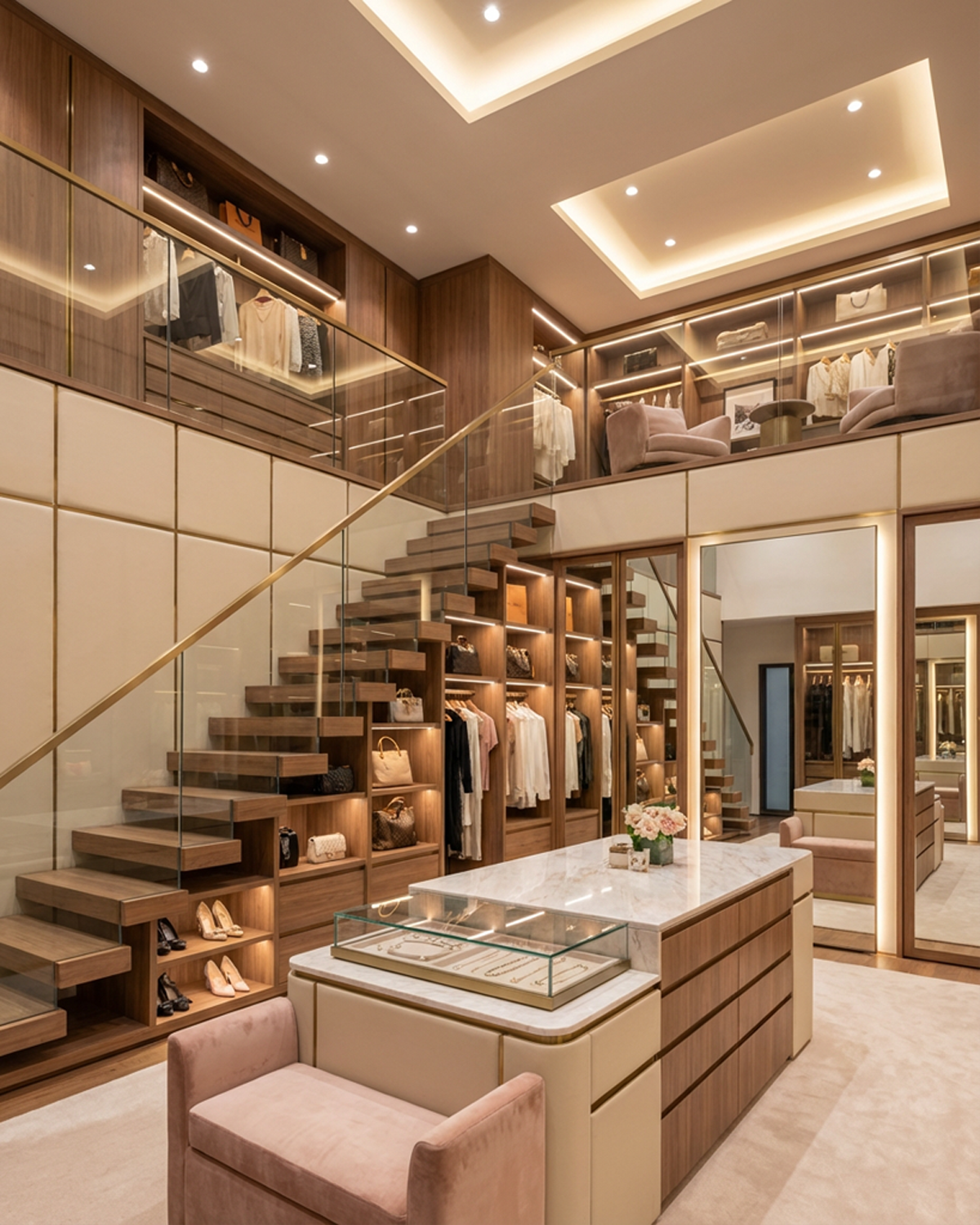
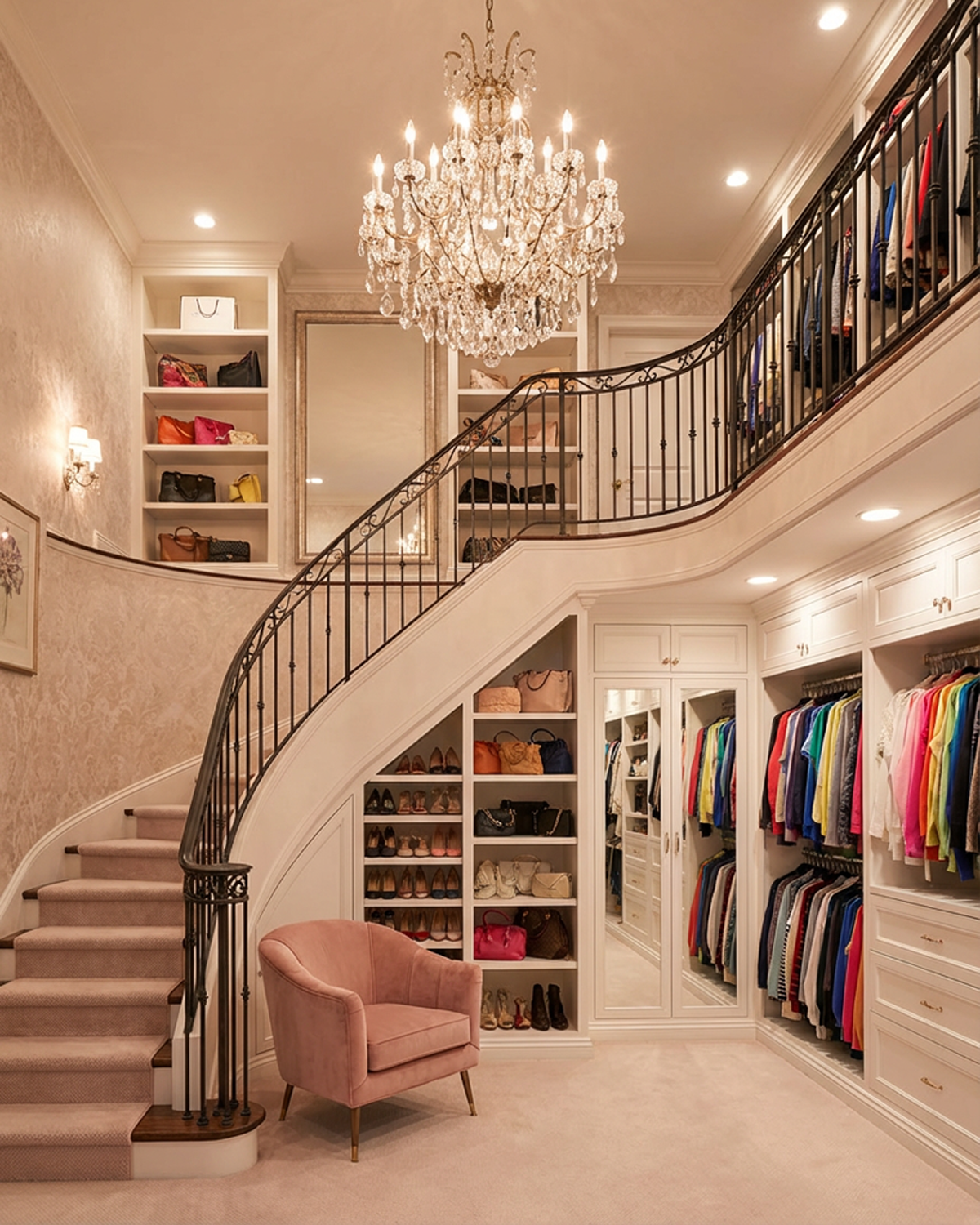
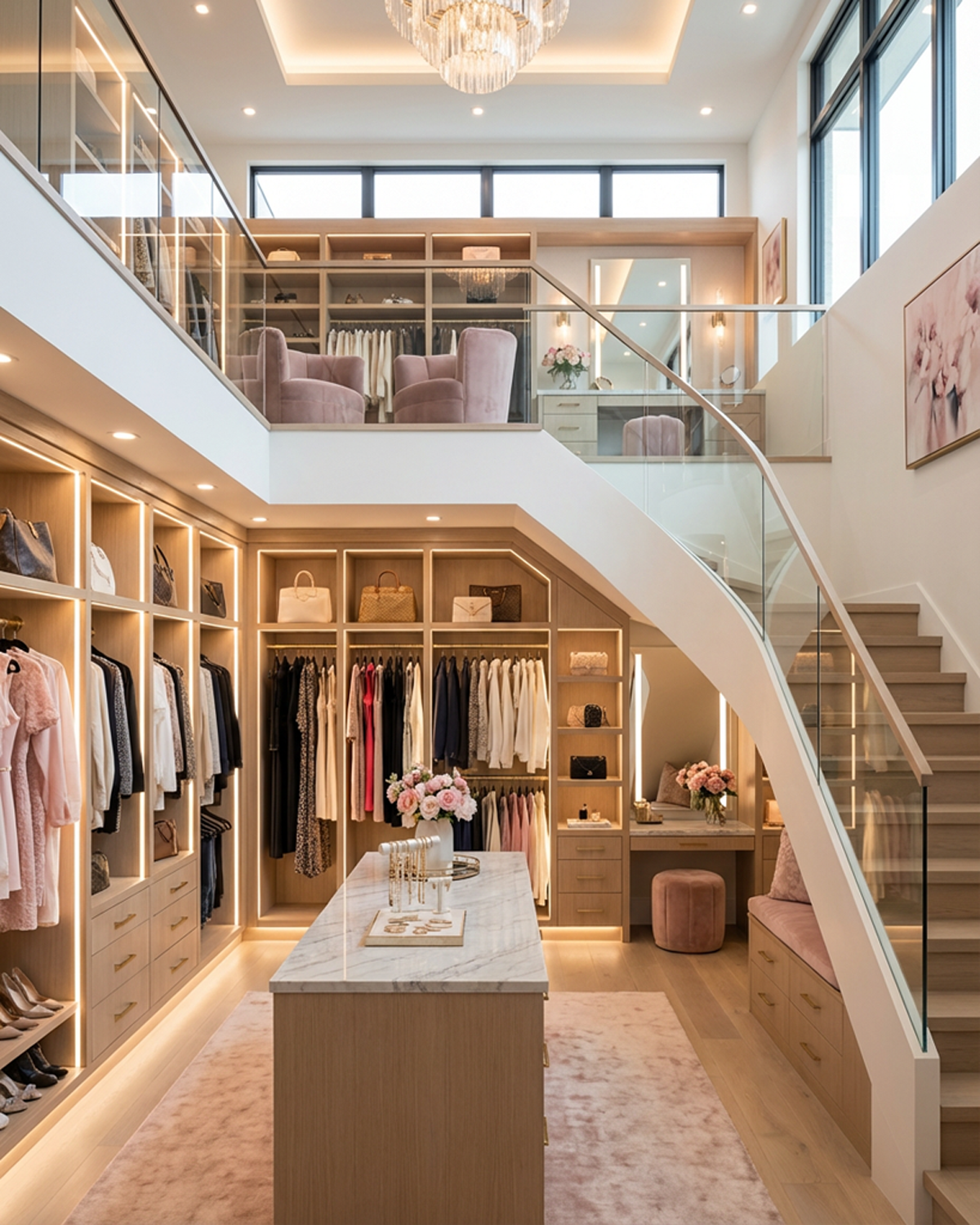
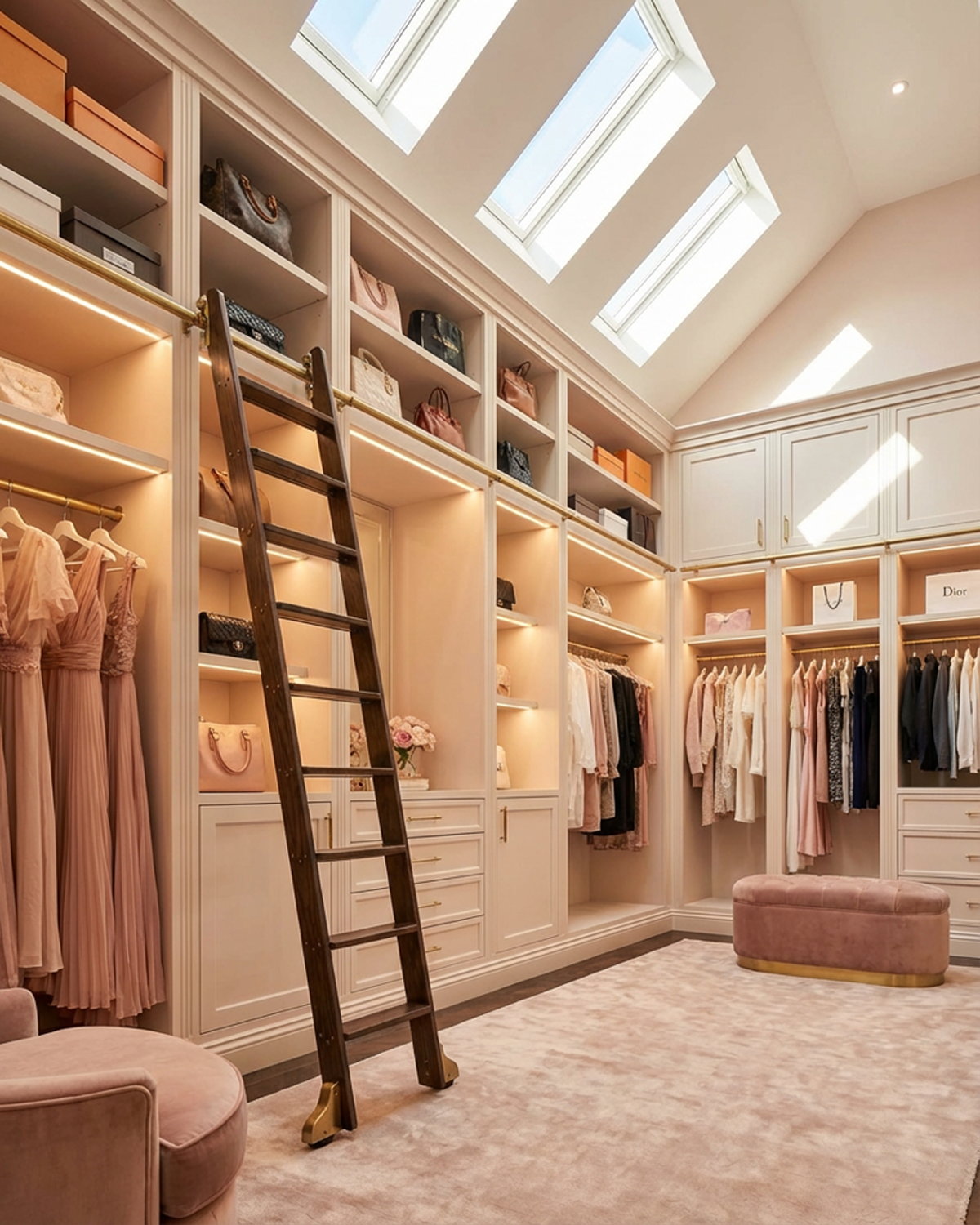
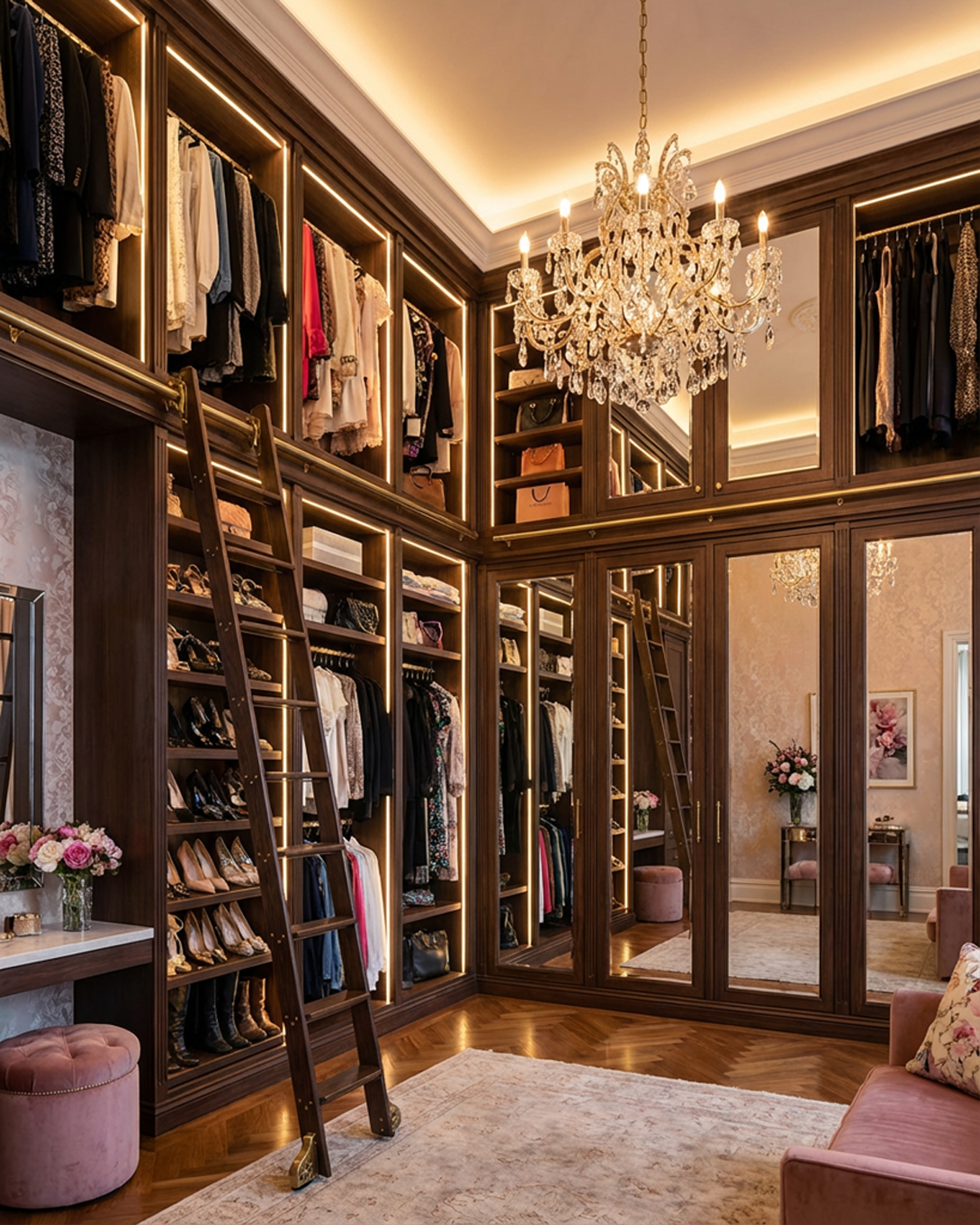
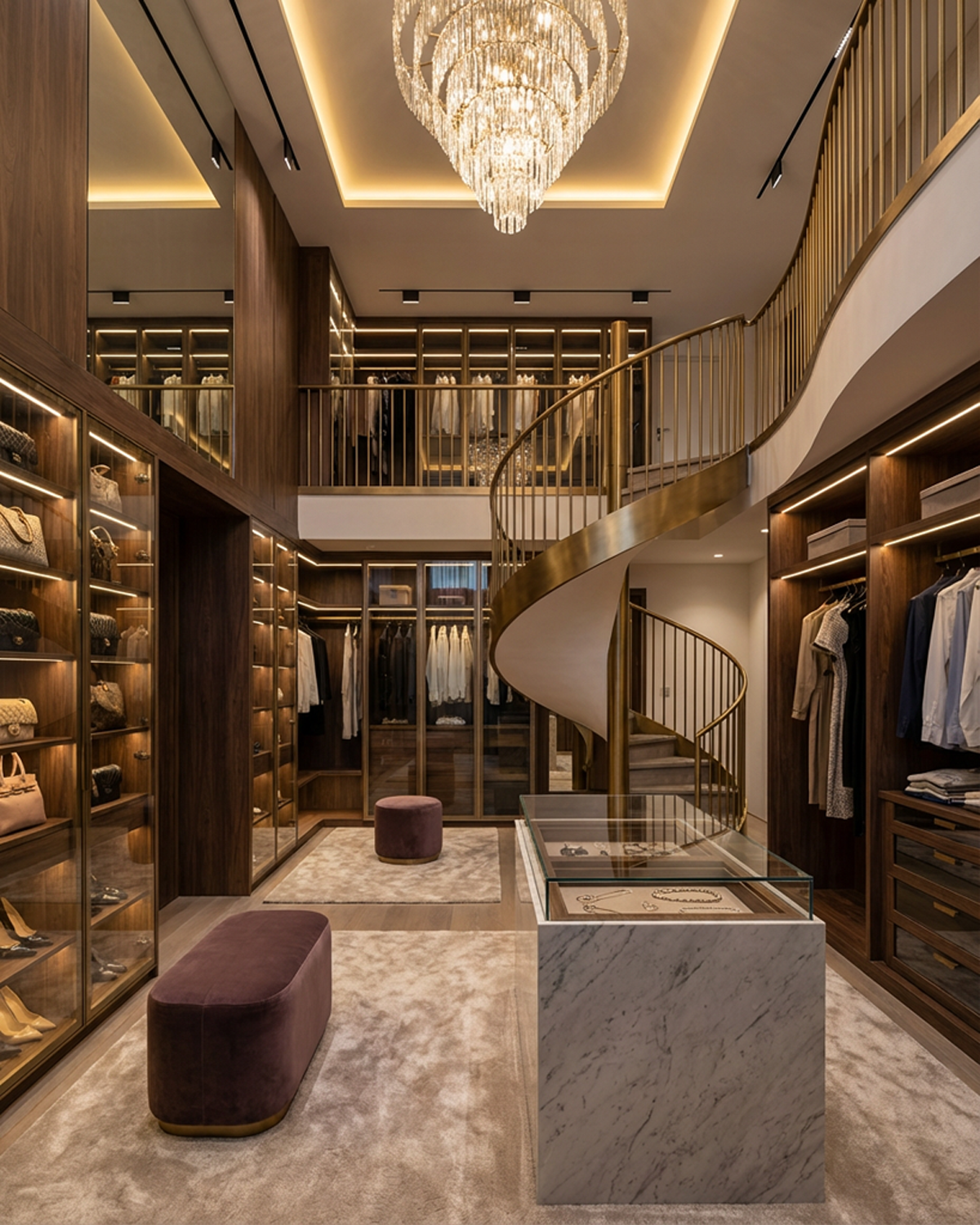
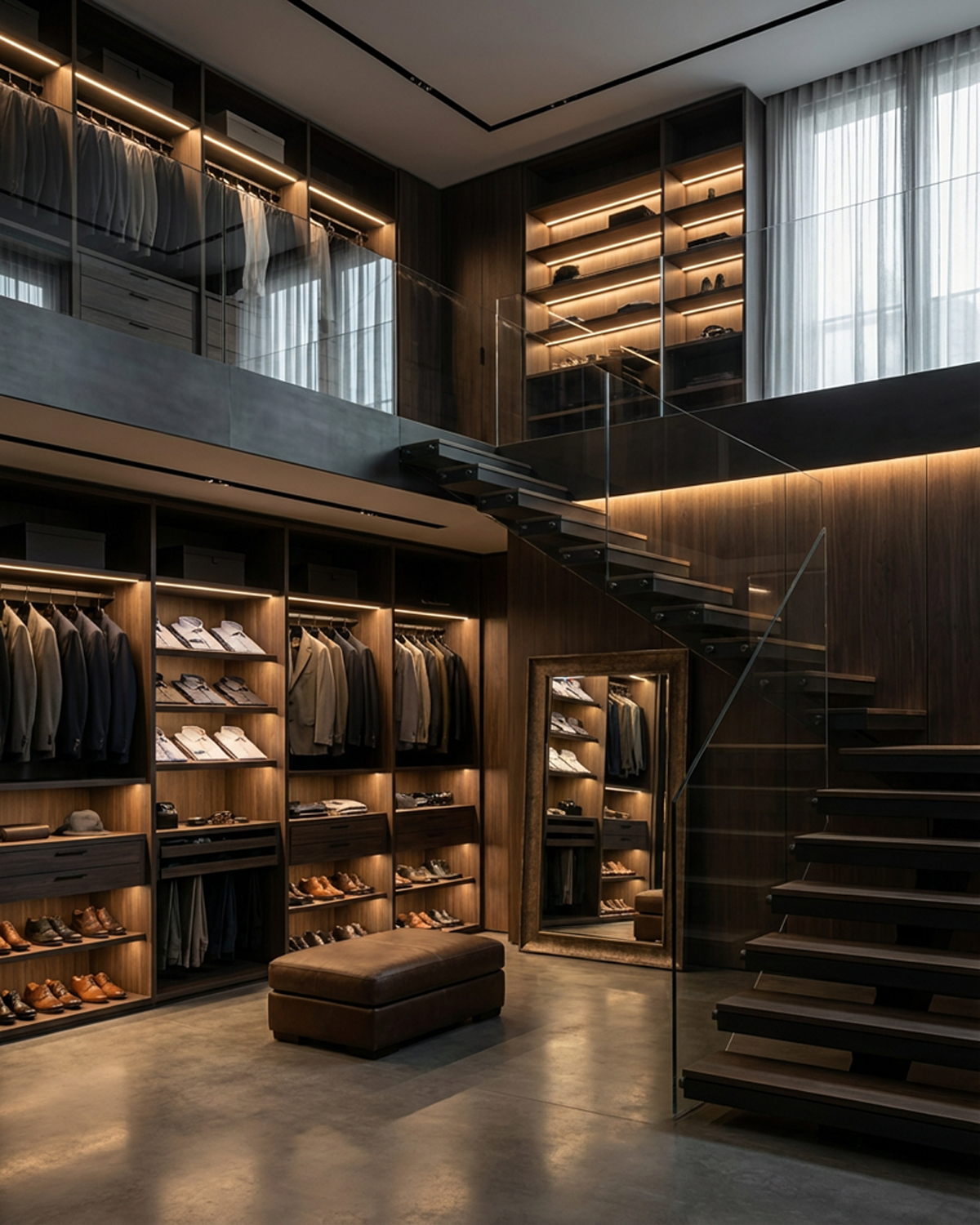
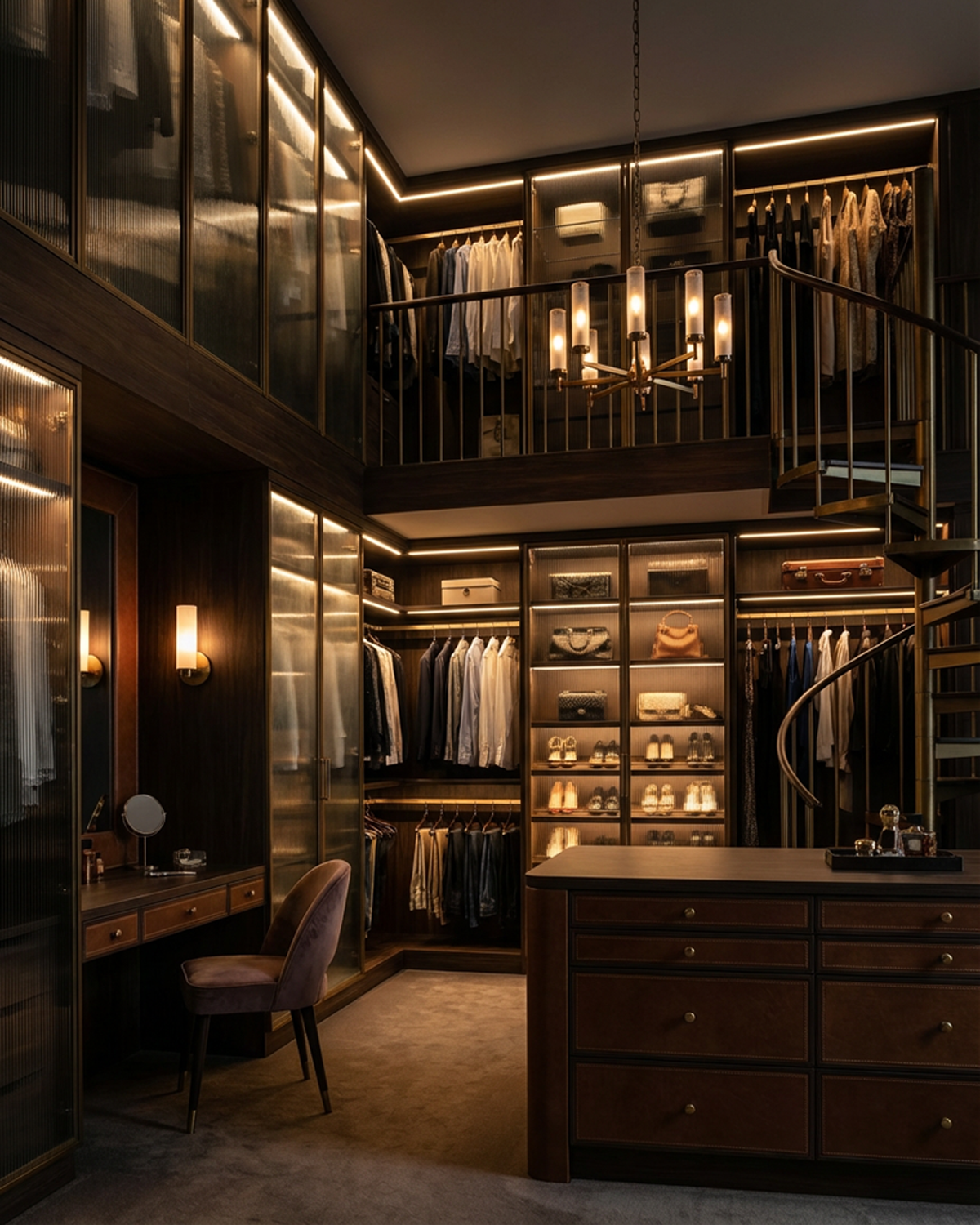
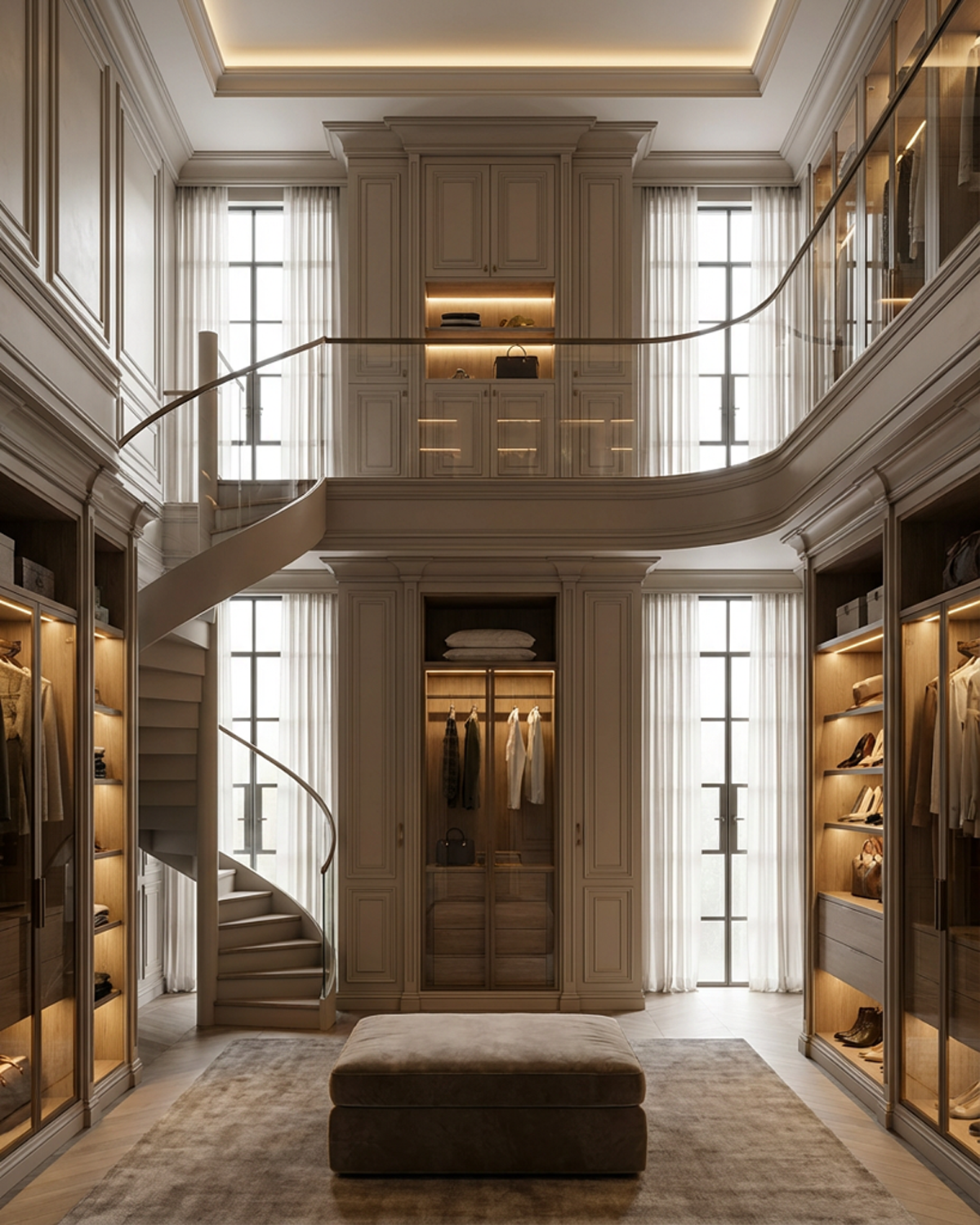
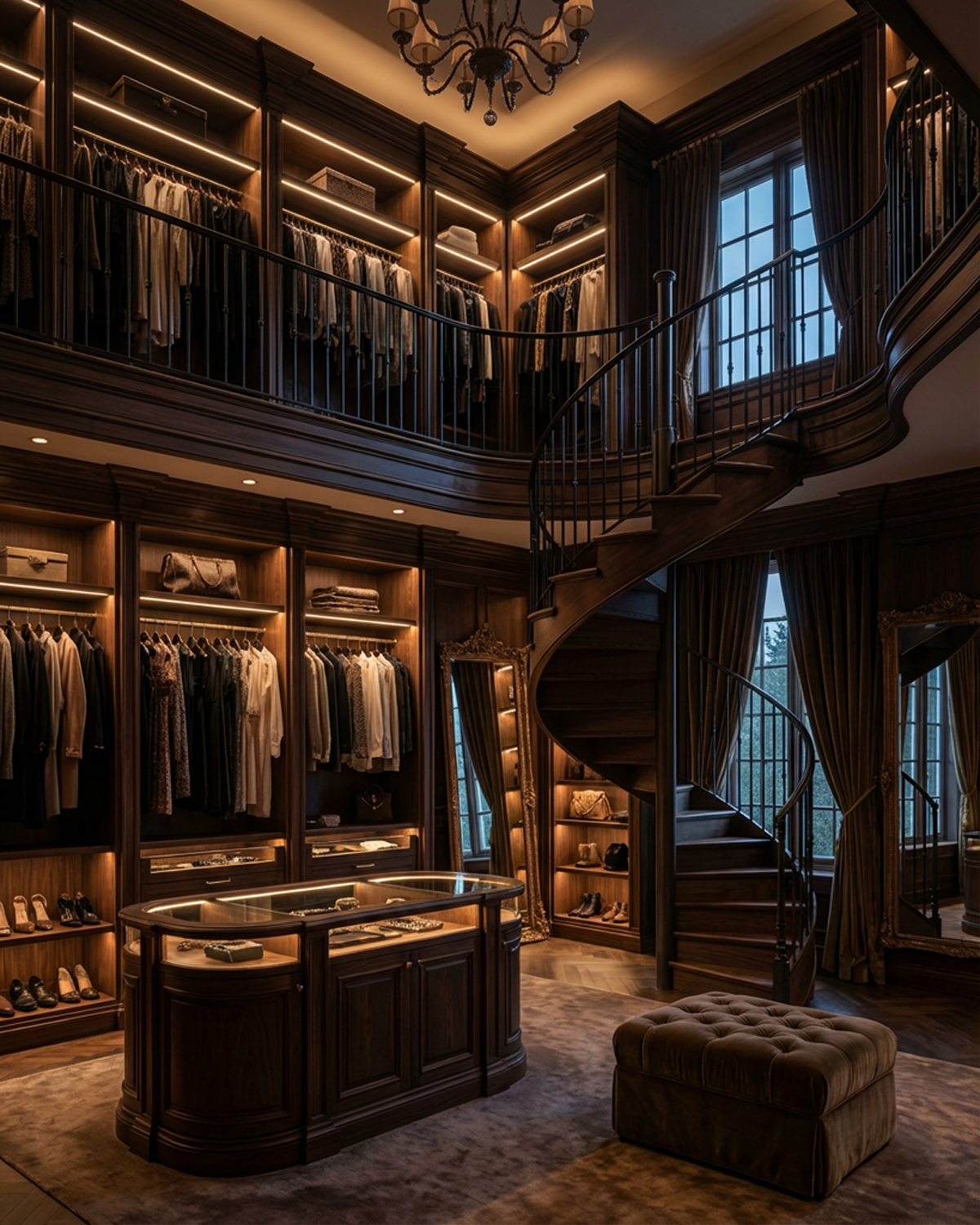
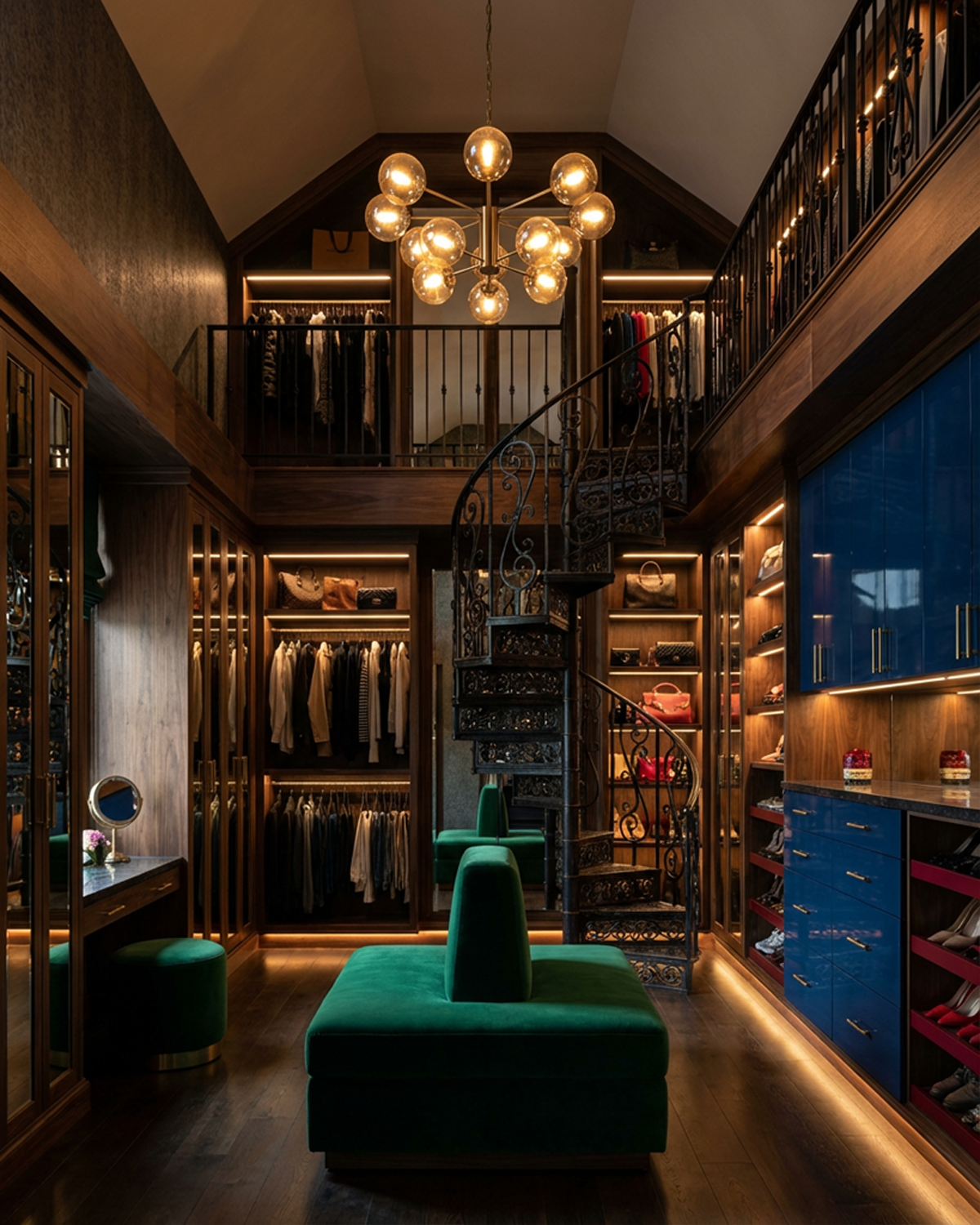
Staircases, ladders, and connecting galleries aren’t just functional—they choreograph the experience. A floating stair introduces lightness. A tailored ladder creates intimacy. A mezzanine offers perspective.
These elements slow the process down, turning something routine into something considered.
The act of getting dressed becomes a sequence.
DISPLAY, EDITED
With more space comes more visibility—and more opportunity to overdo it.
Restraint matters.
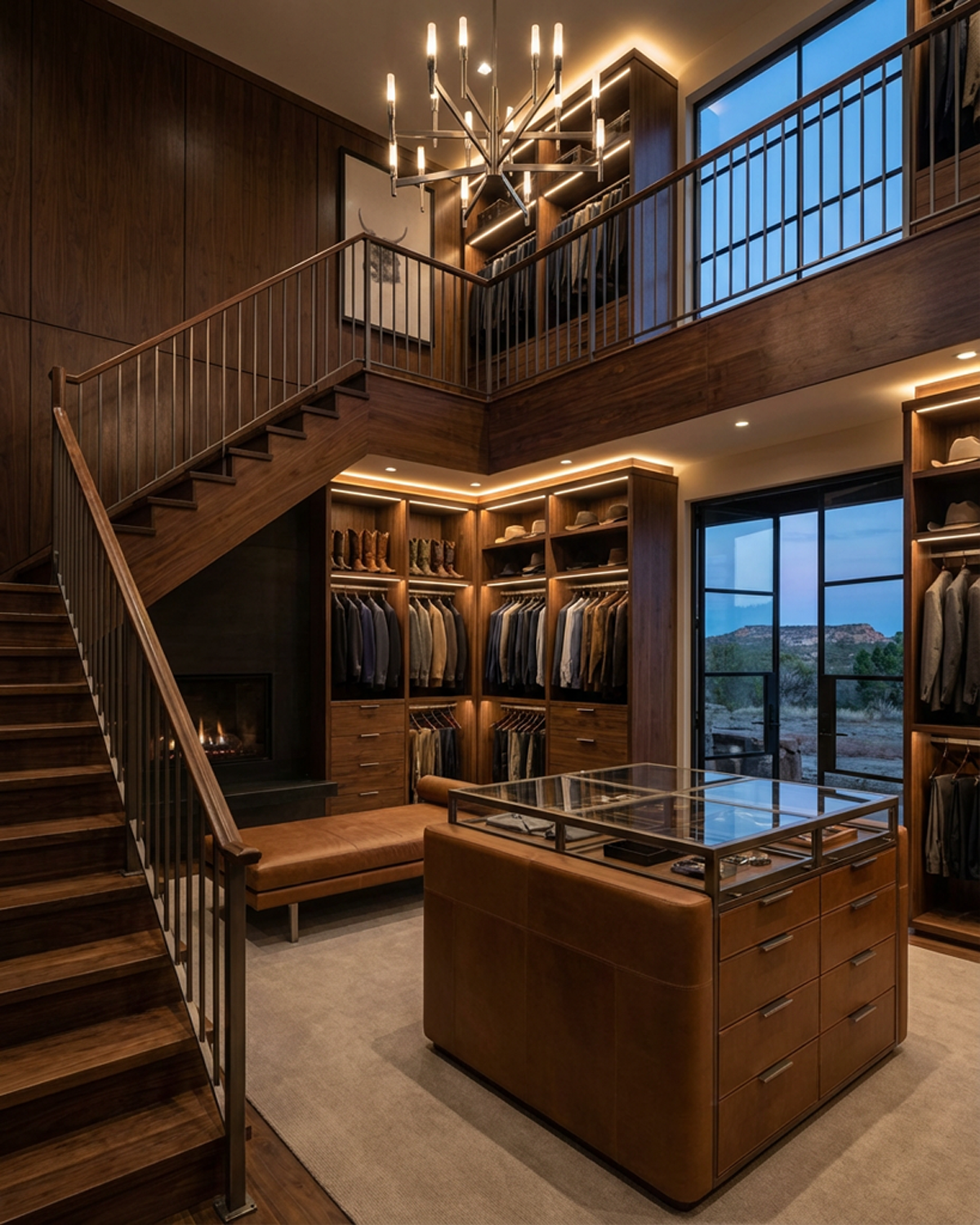
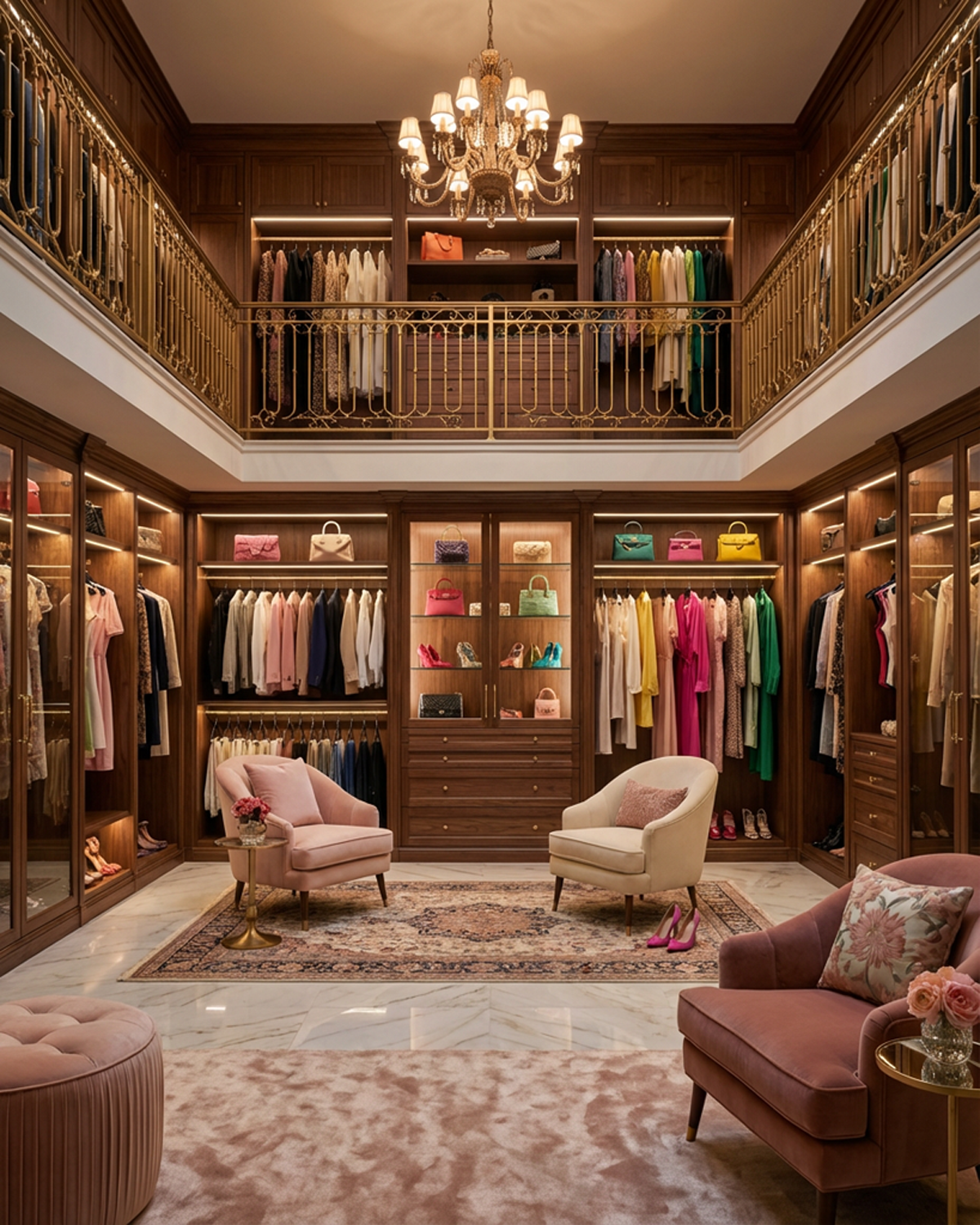
We balance open display with concealed storage, allowing key pieces to read as intentional moments rather than visual noise. Shelving, hanging, and vitrines are layered carefully, with lighting used to highlight—not overwhelm.
Even at scale, the goal is control.
LIGHTING
Lighting in a multi-level closet needs to operate across dimensions.
Integrated LED within rods and shelving creates consistency at eye level, while vertical illumination connects the space from floor to ceiling. Decorative fixtures—pendants or chandeliers—anchor the volume and establish proportion.
Without thoughtful lighting, height can feel empty.
THE ASPIRATIONAL ELEMENT
There’s an undeniable draw to these spaces. A wardrobe that rises two stories. A staircase leading to a private collection. The ability to step back and see everything at once. But the aspiration isn’t just visual. It’s functional.
It’s the luxury of separation. Of knowing where everything lives. Of having space not just to store—but to maintain, edit, and experience your wardrobe over time.
A larger closet isn’t inherently better.
But a well-designed one, at any scale, changes how you live.