
Designed to Simplify
Technology is at its best when you barely notice it's there.
The most successful smart homes aren't filled with flashy gadgets or blinking touchscreens. Instead, they quietly eliminate small daily frustrations, helping routines unfold more naturally. The result isn't a house that feels more technological—it feels more thoughtful.
As designers, we're increasingly seeing homeowners prioritize convenience, wellness, and efficiency alongside beautiful materials and bespoke craftsmanship. The smartest homes today integrate connected appliances and automation in ways that support everyday life, from the first cup of coffee in the morning to the last load of laundry at night.
Wake Up Smarter
Imagine your morning beginning before you ever step out of bed.
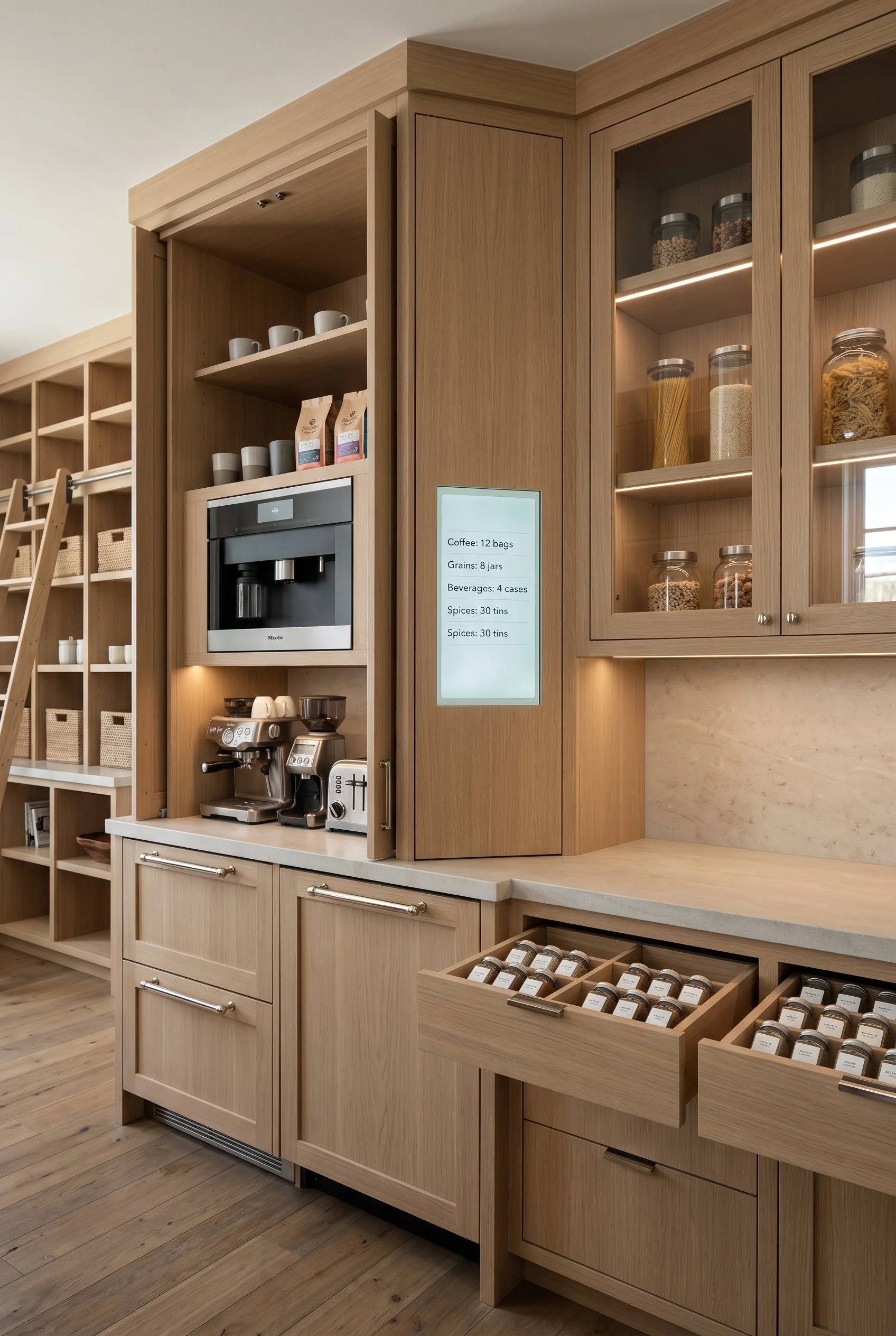
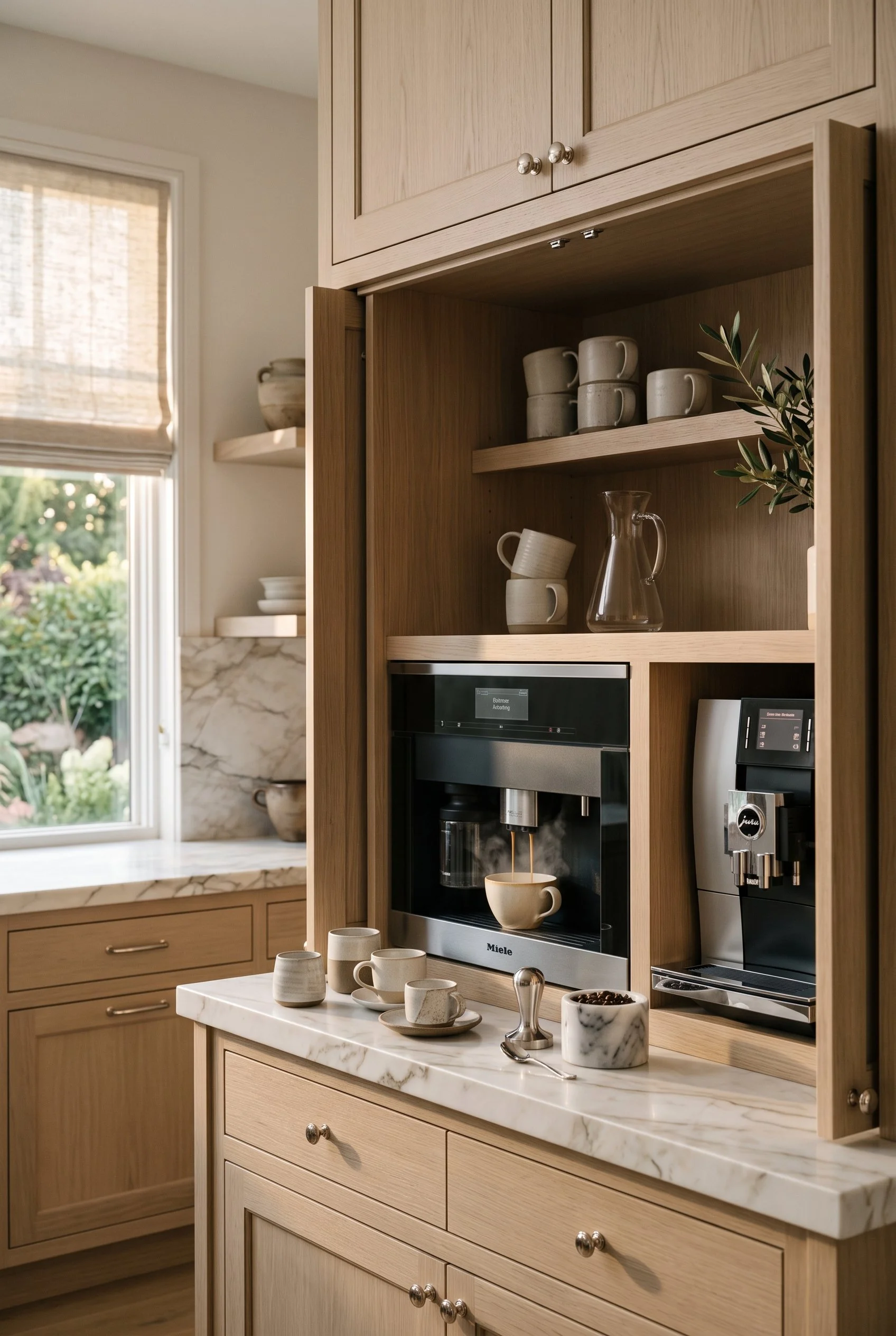
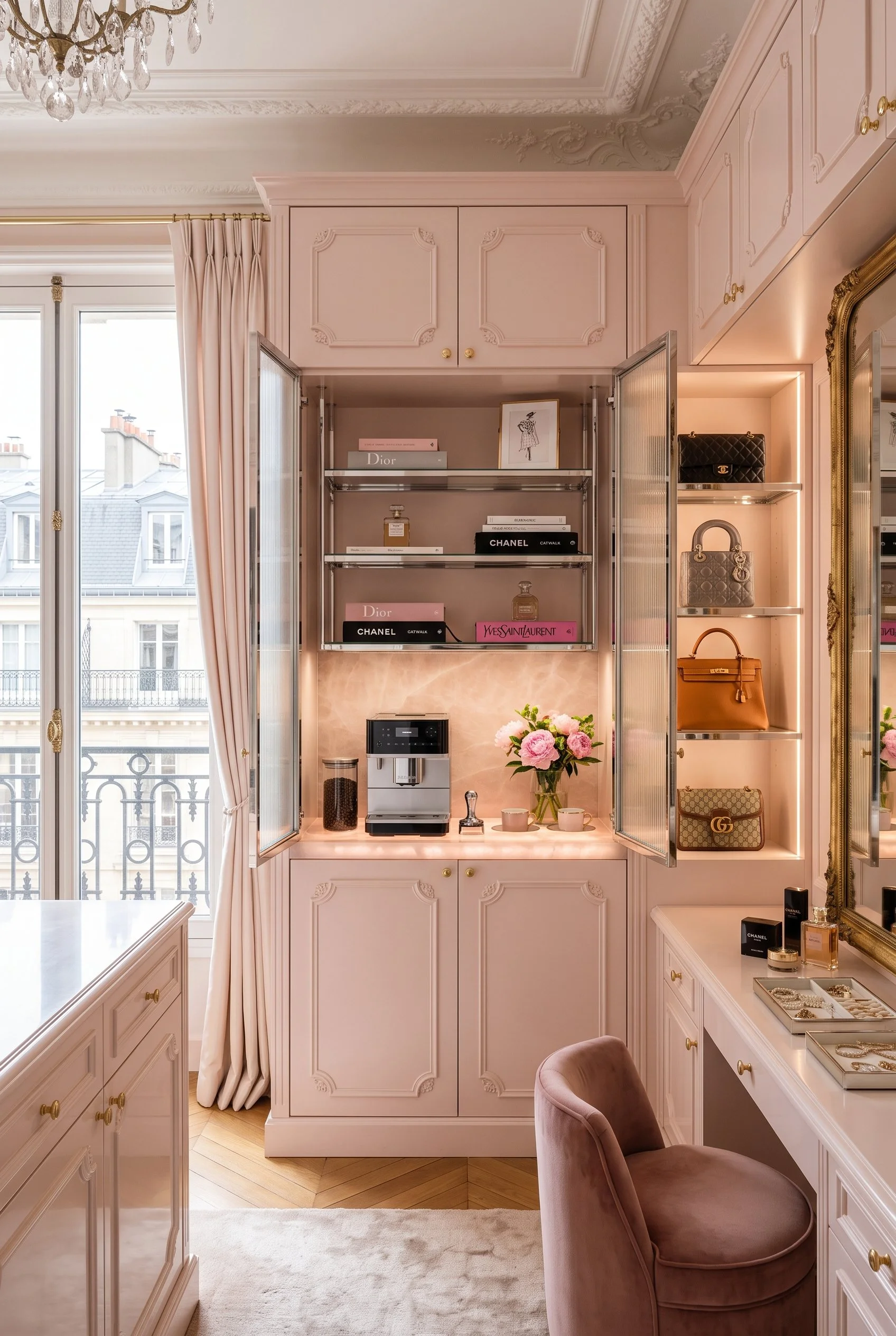
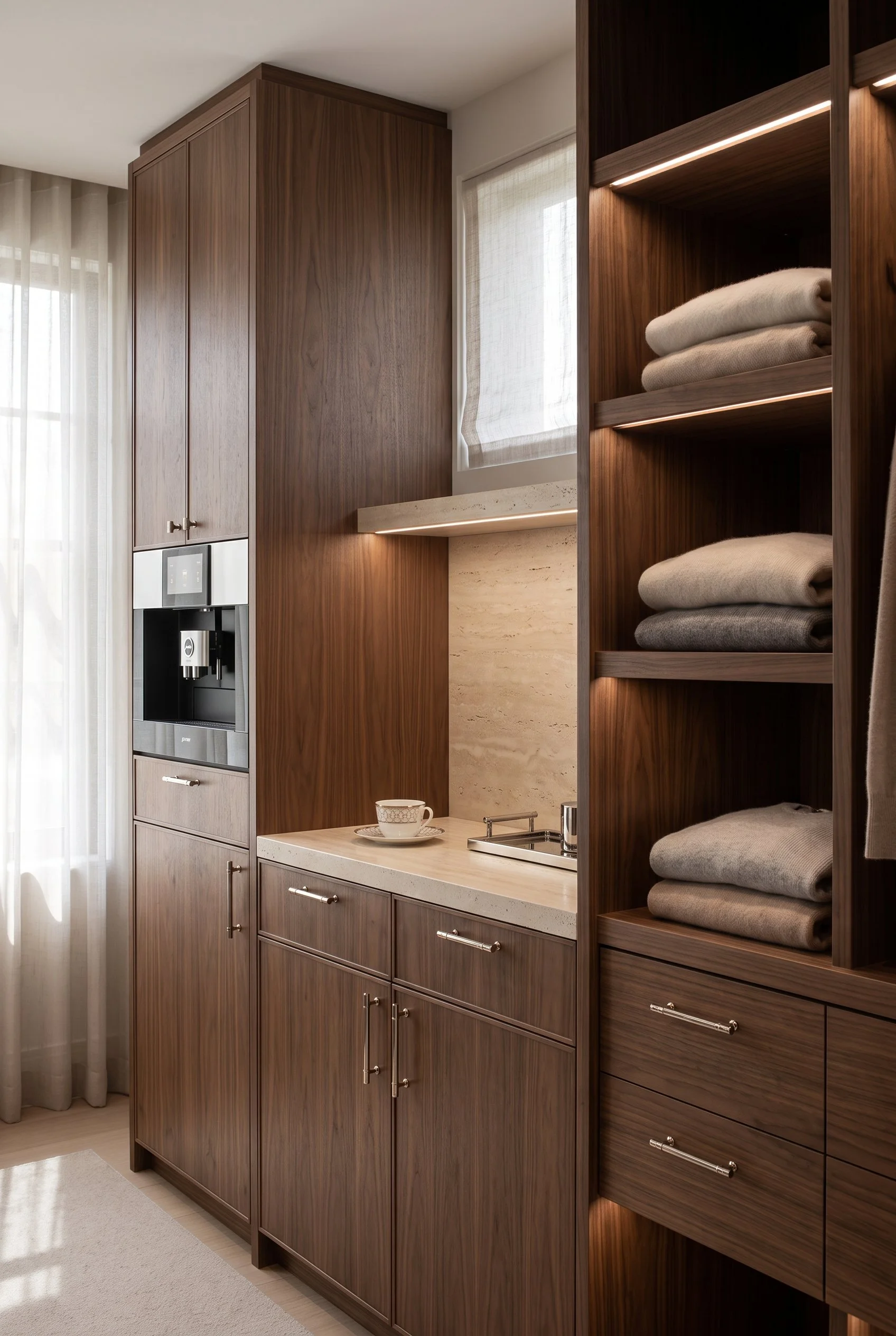
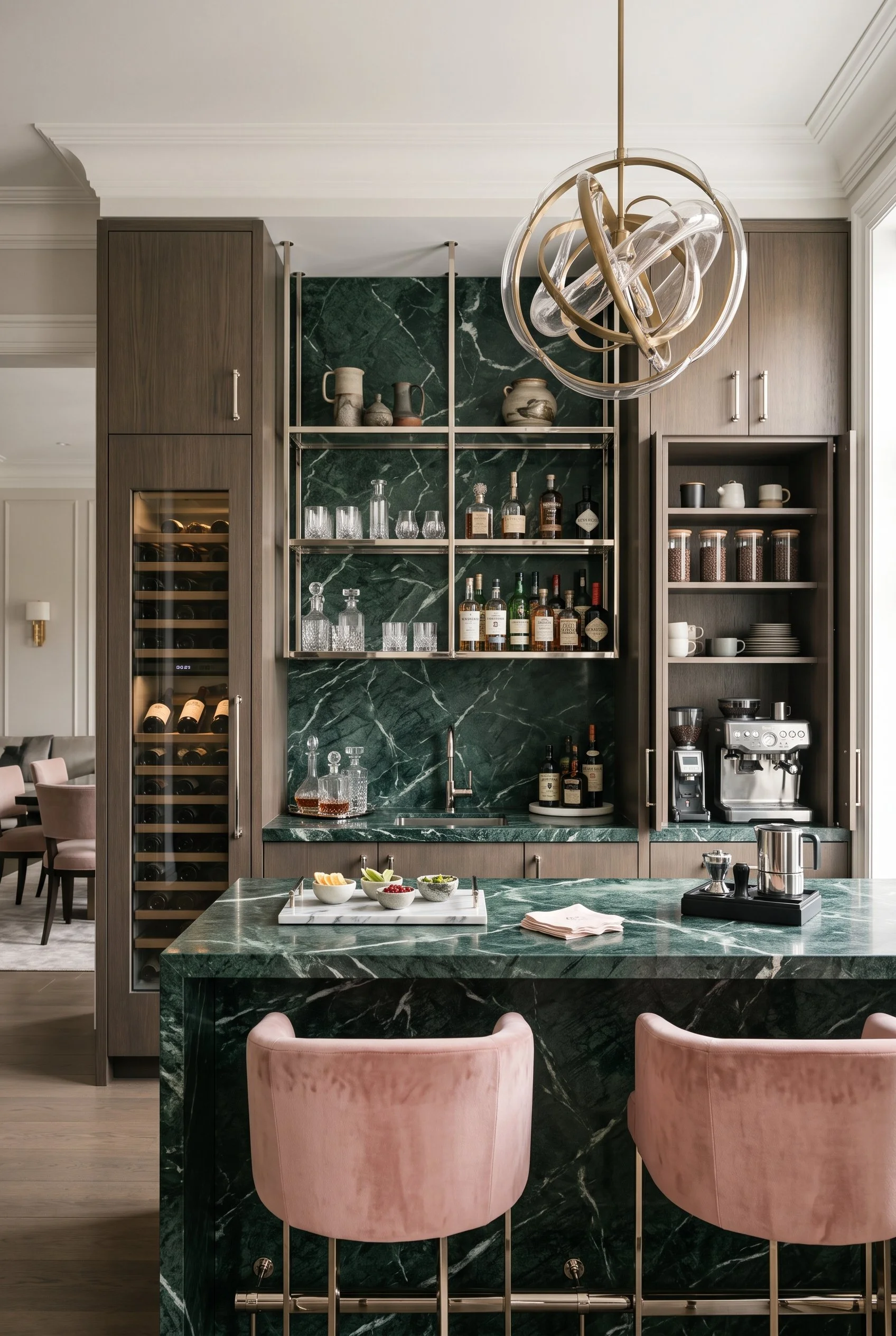
Connected coffee systems from brands like Bosch, Thermador, Miele, and Jura have transformed the morning ritual. Bosch's Home Connect platform, for example, allows users to remotely start brewing, save favorite beverages, create custom drink profiles, and even queue multiple drinks for guests. Smart coffee systems can also integrate with voice assistants and broader smart-home routines.
Paired with automated lighting from Lutron, motorized shades, and climate controls, the home transitions from sleep mode to daytime mode without requiring a single switch to be touched.
The luxury isn't simply having an espresso machine.
It's waking up to a cappuccino already waiting while sunlight filters into the room and the house gently comes to life around you.
The Modern Laundry Room
Few appliances have benefited from smart technology more than laundry.
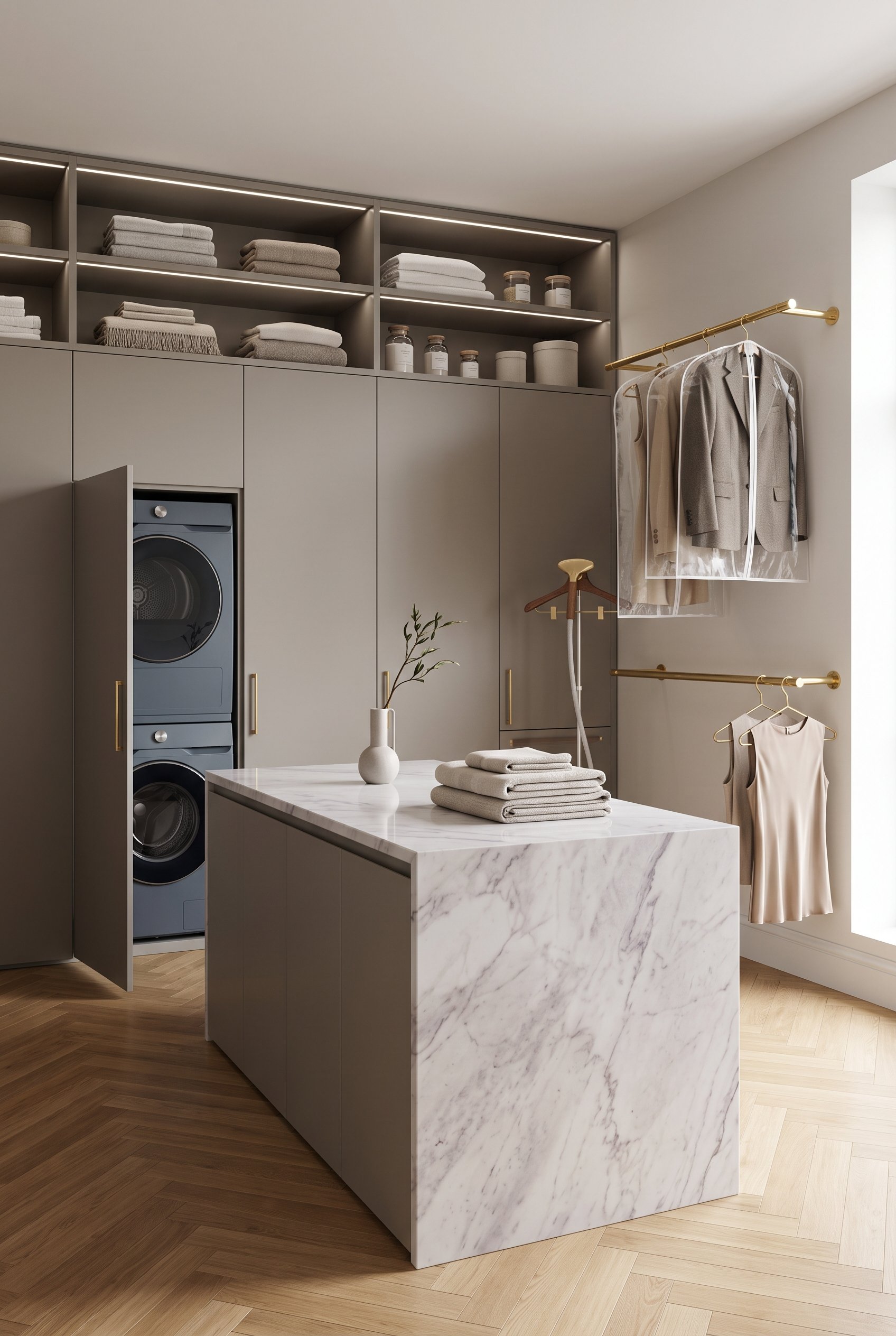
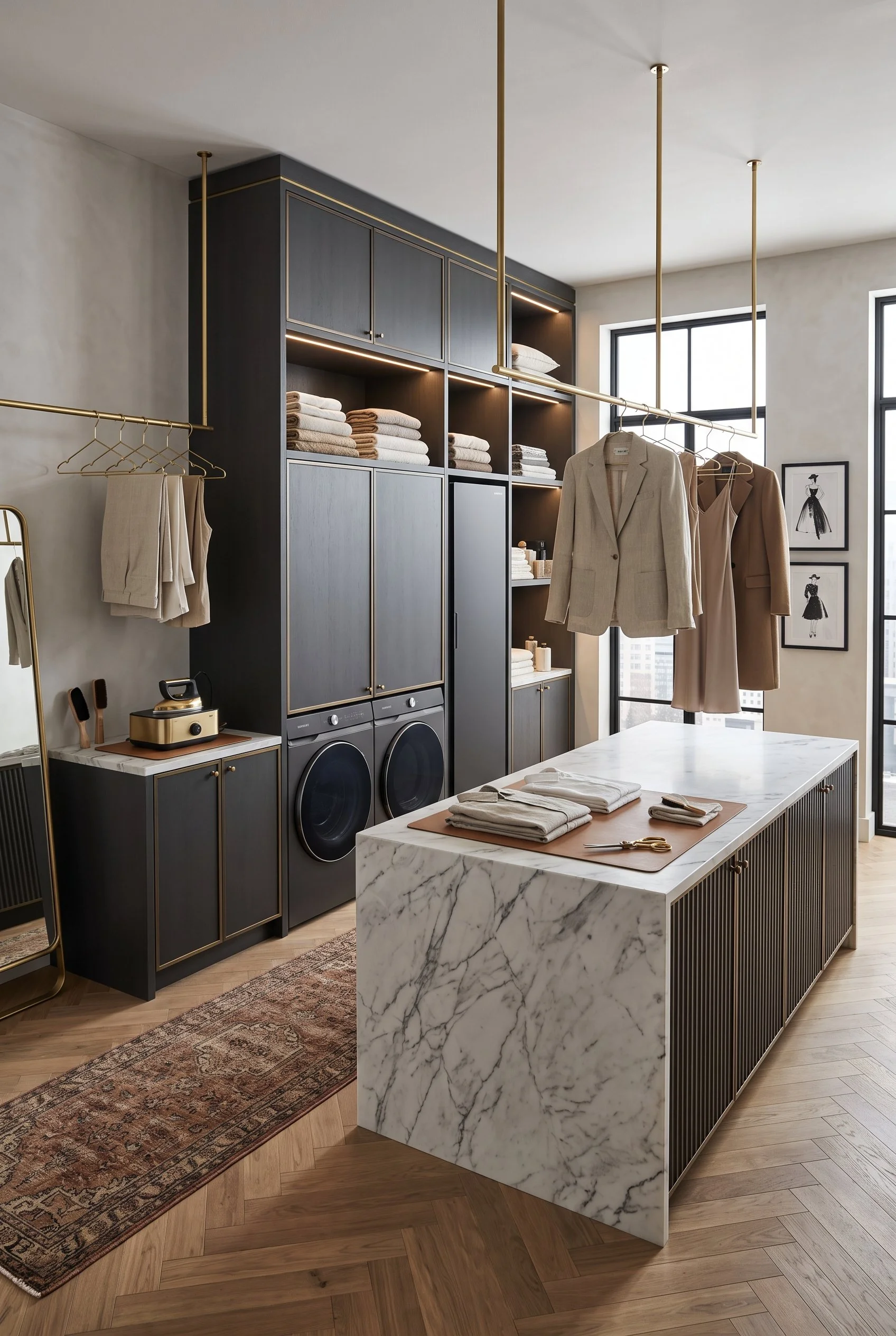
Samsung's Bespoke AI Laundry collection and SmartThings ecosystem allow homeowners to receive cycle notifications, monitor appliance status remotely, customize routines, and even receive maintenance alerts through a connected platform. Recent AI-enabled models can adapt settings to fabrics and usage patterns while integrating seamlessly into larger smart-home routines.
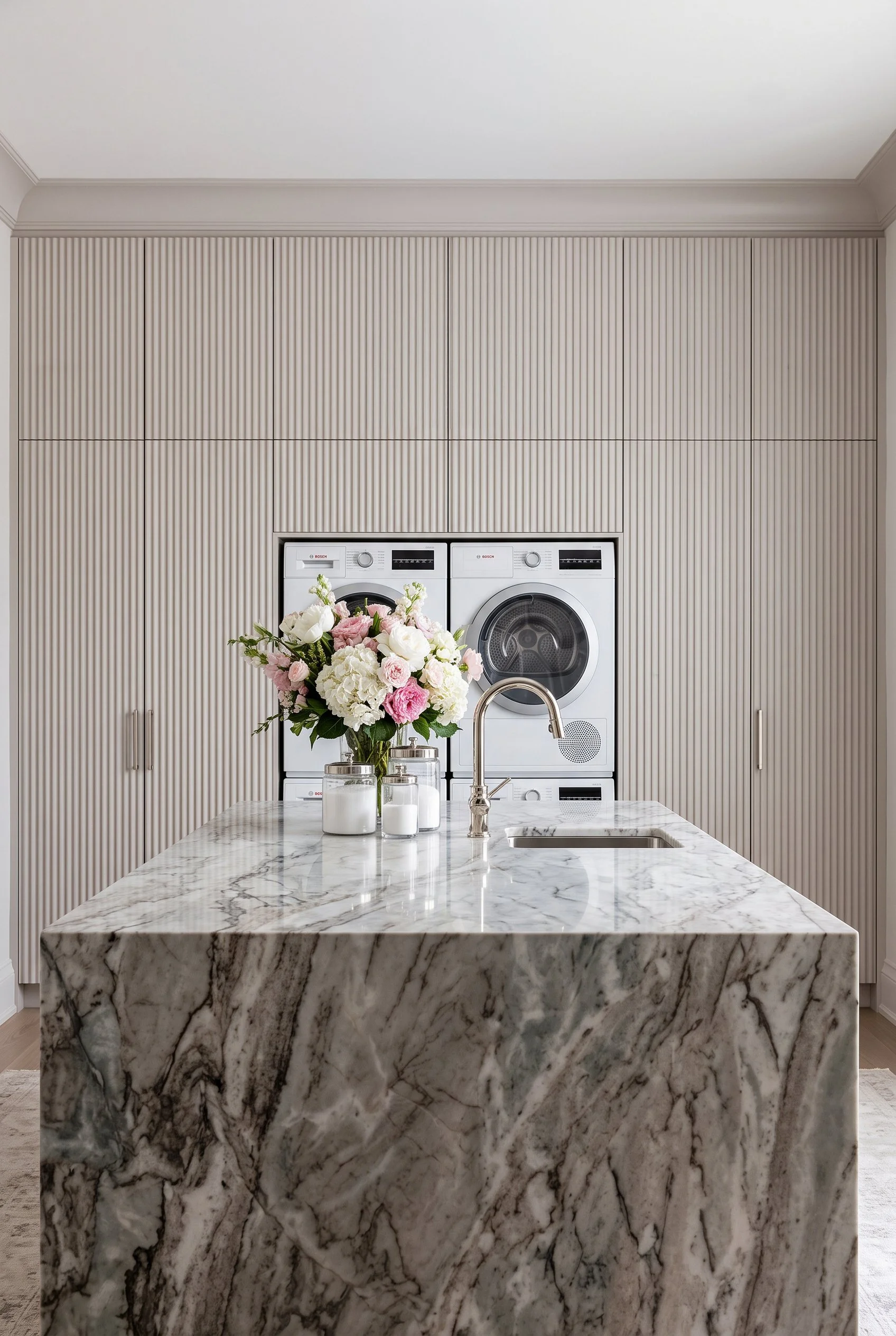
Bosch's Home Connect laundry platform similarly allows remote monitoring, scheduling, cycle customization, and coordination between washer and dryer systems.
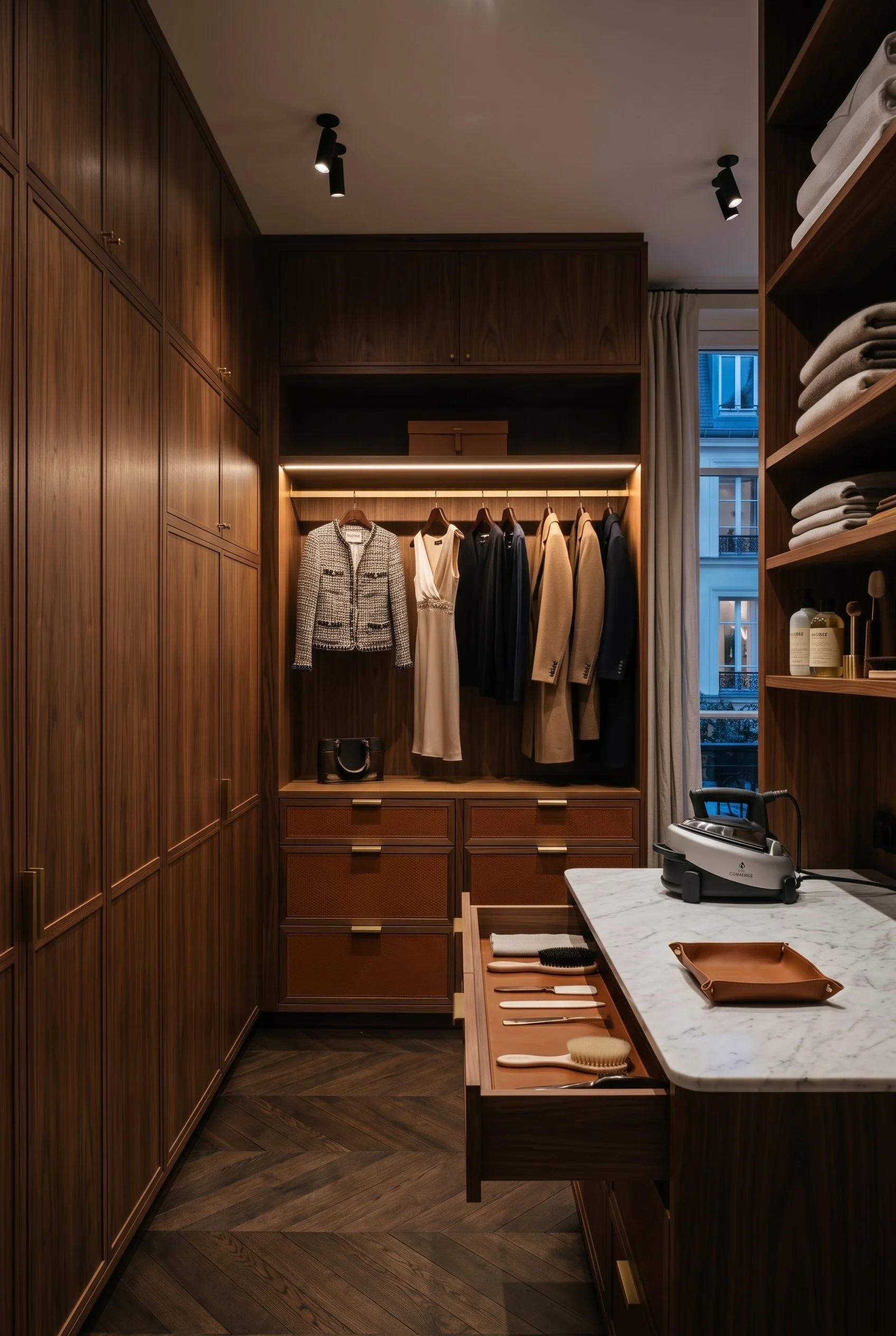
For luxury wardrobes, this creates an entirely different relationship with garment care. Laundry becomes part of a larger wardrobe management system rather than a separate household task.
Imagine receiving a notification that your favorite cashmere sweater is ready for steaming before an evening event, or scheduling laundry to finish just as you return home from work.
The laundry room becomes less of a utility space and more of a garment care studio.
Device Charging & Tech Organization
One of the most overlooked opportunities in closet design is technology storage.
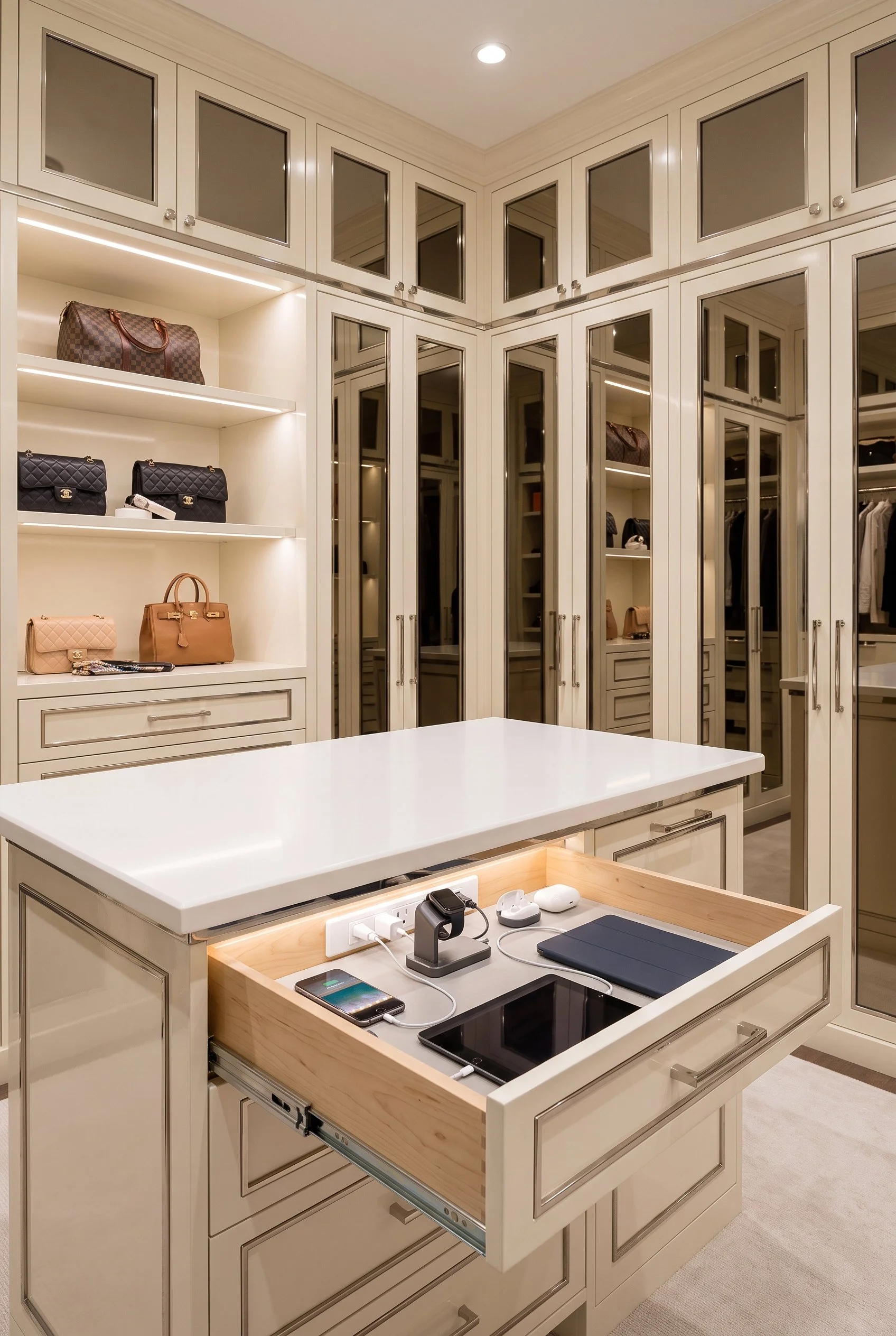
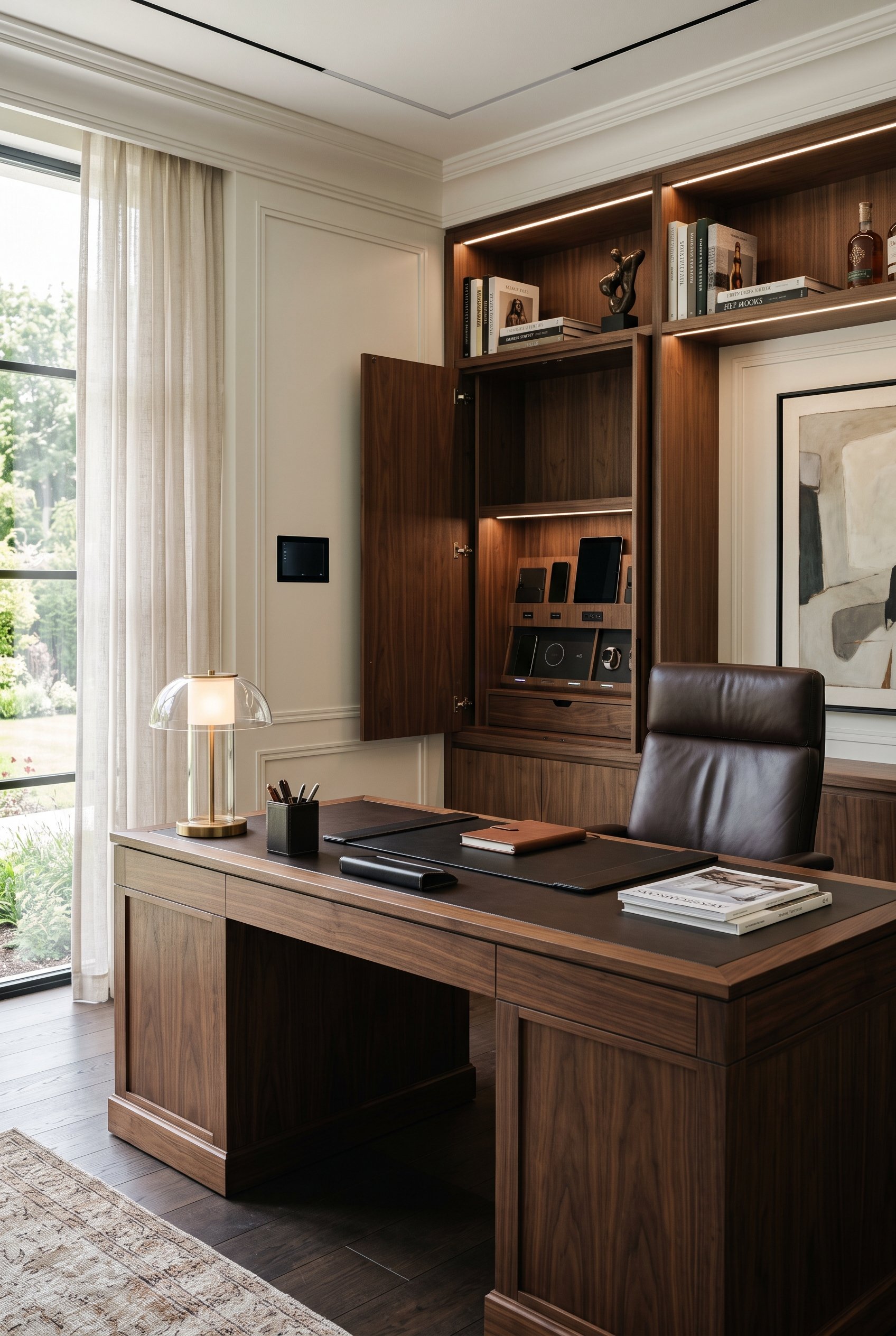
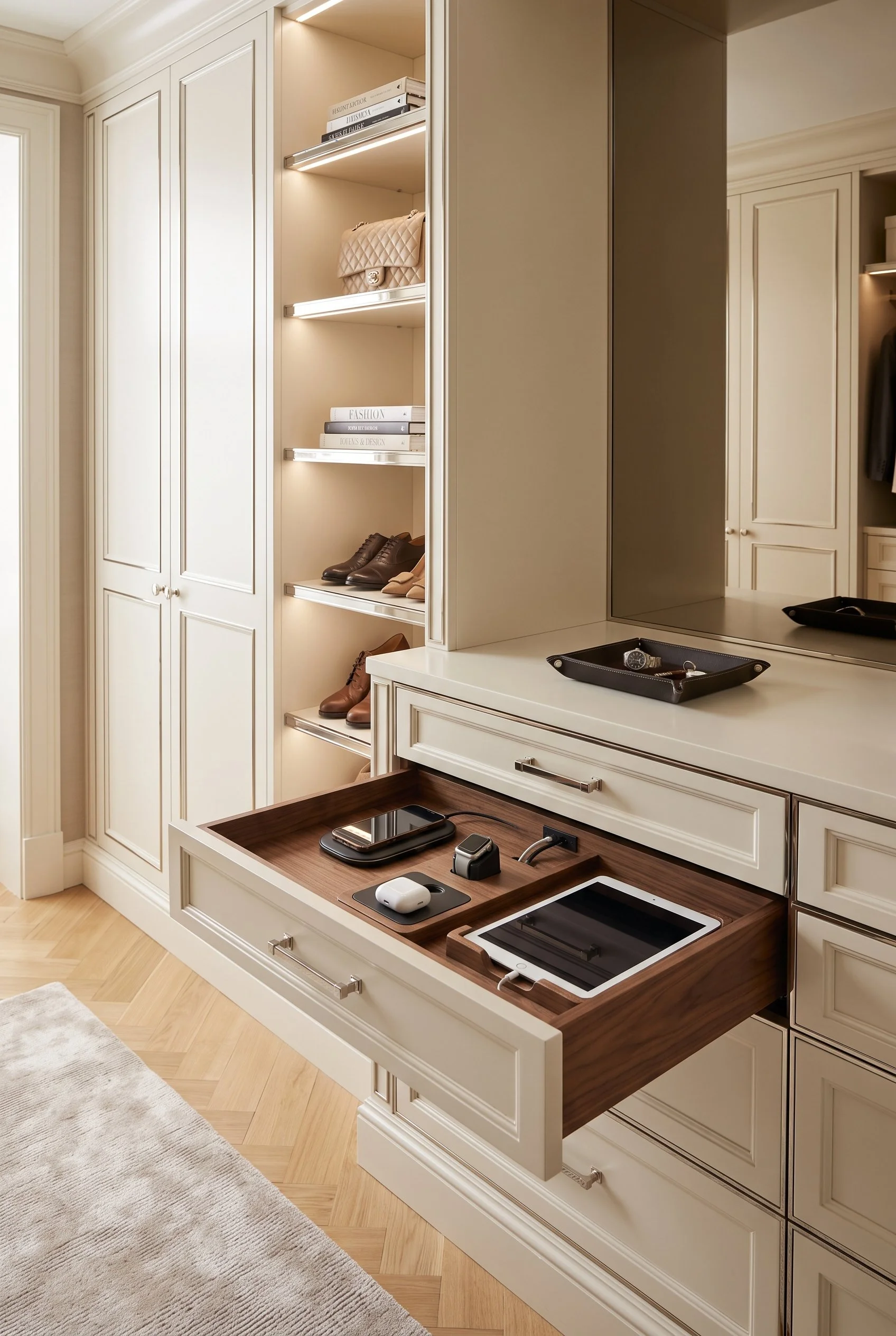
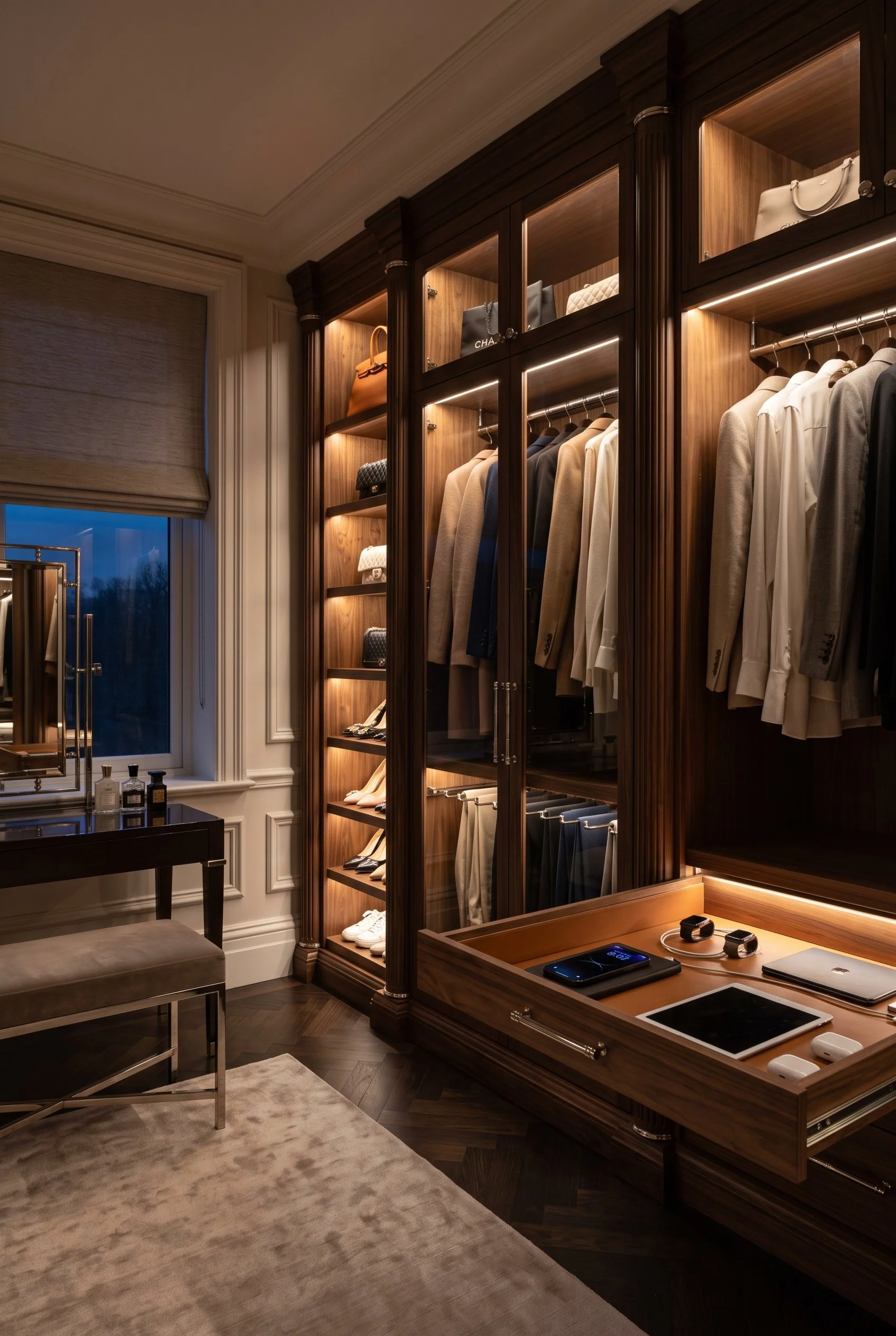
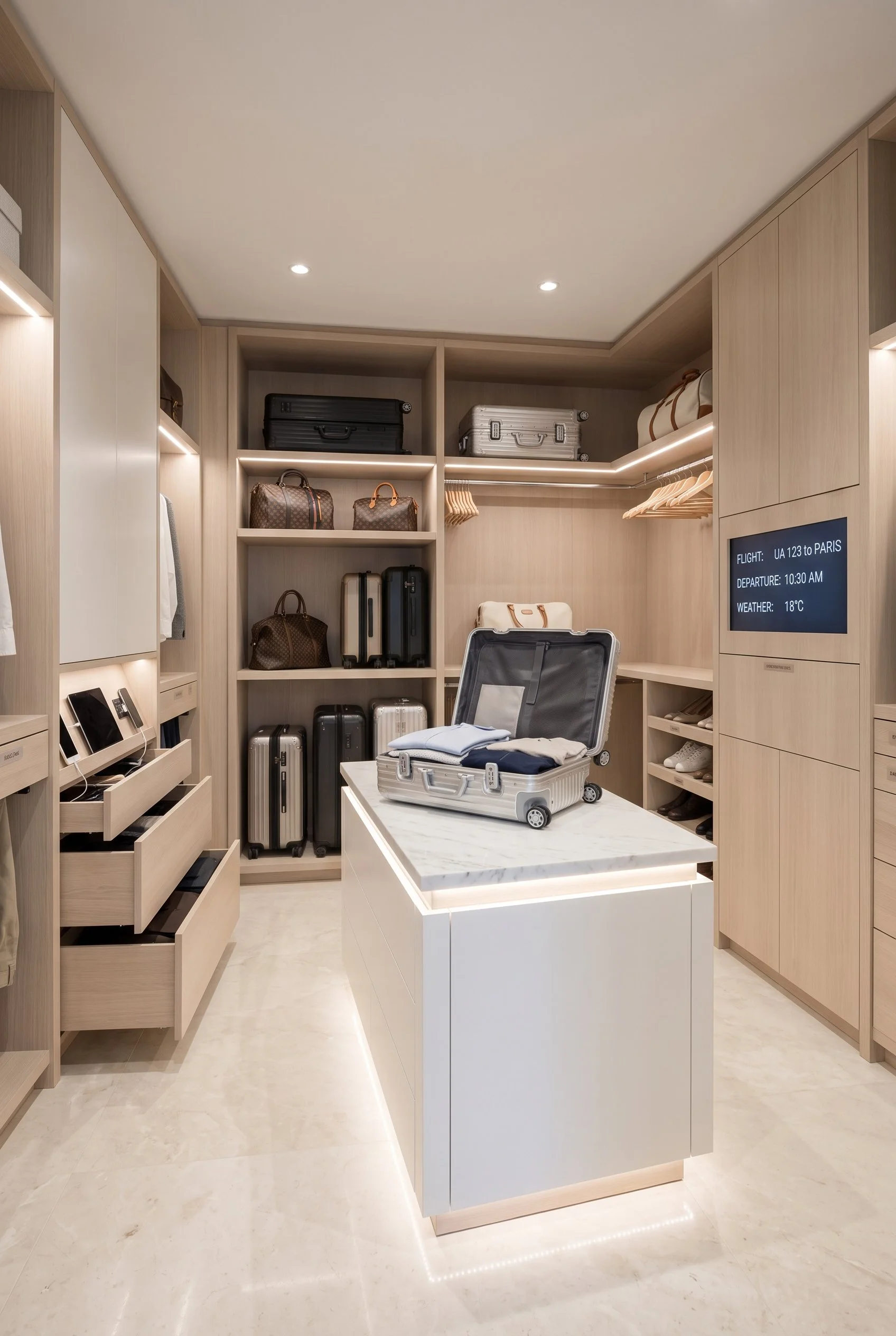
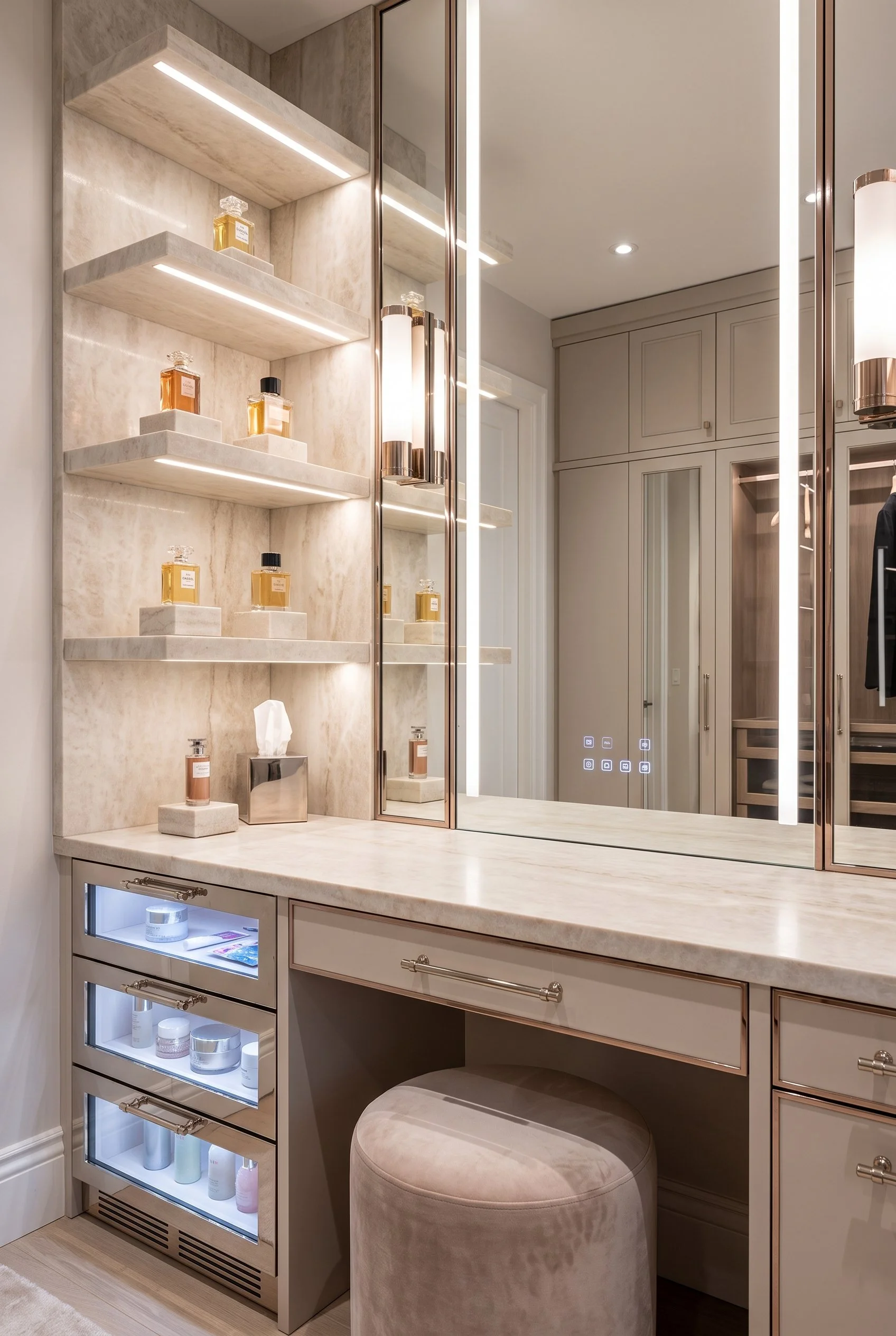
Today's dressing rooms aren't simply where we store clothing—they've become command centers for daily life. Phones, smart watches, tablets, earbuds, fitness trackers, portable batteries, laptops, and grooming tools all require charging and organization.
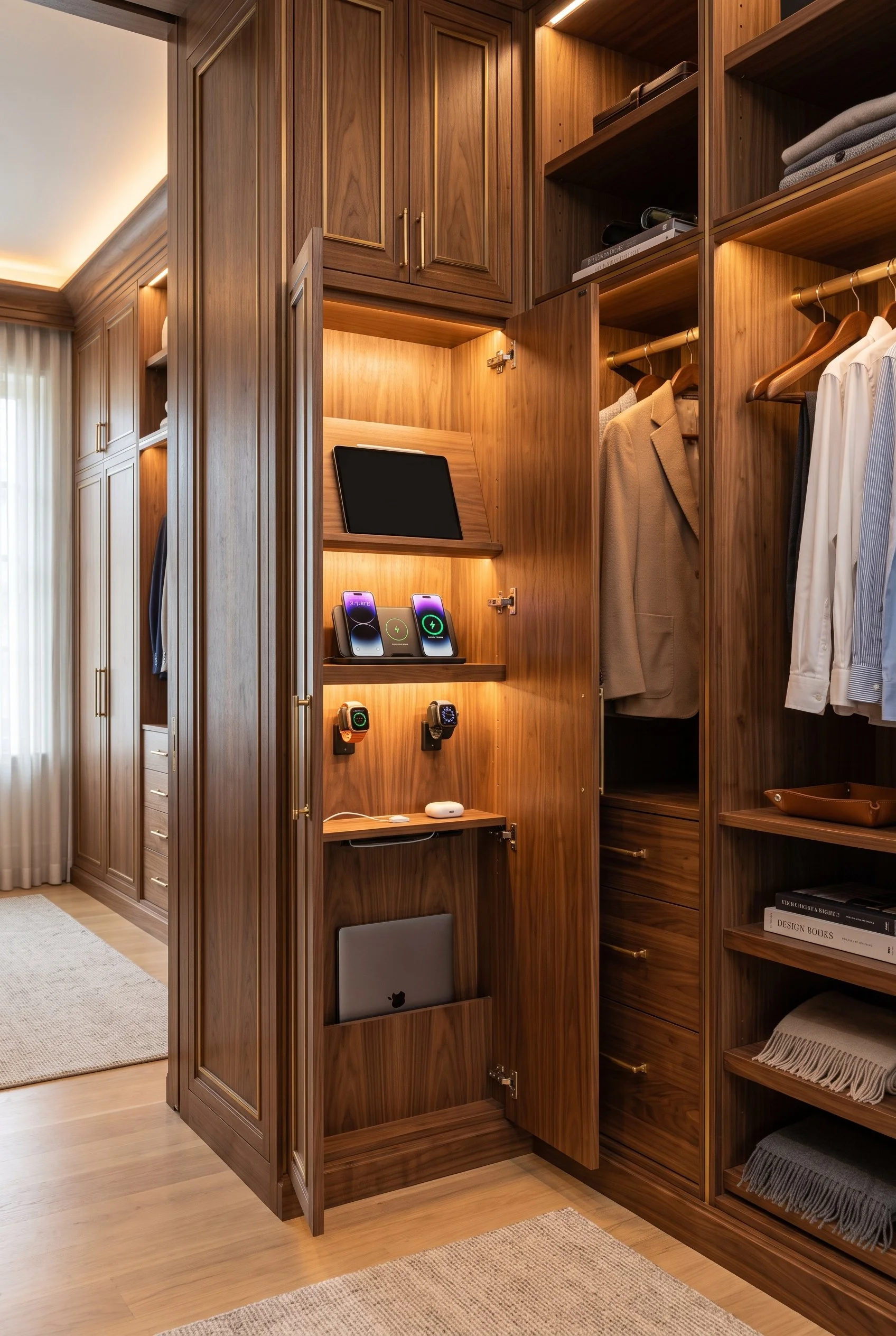
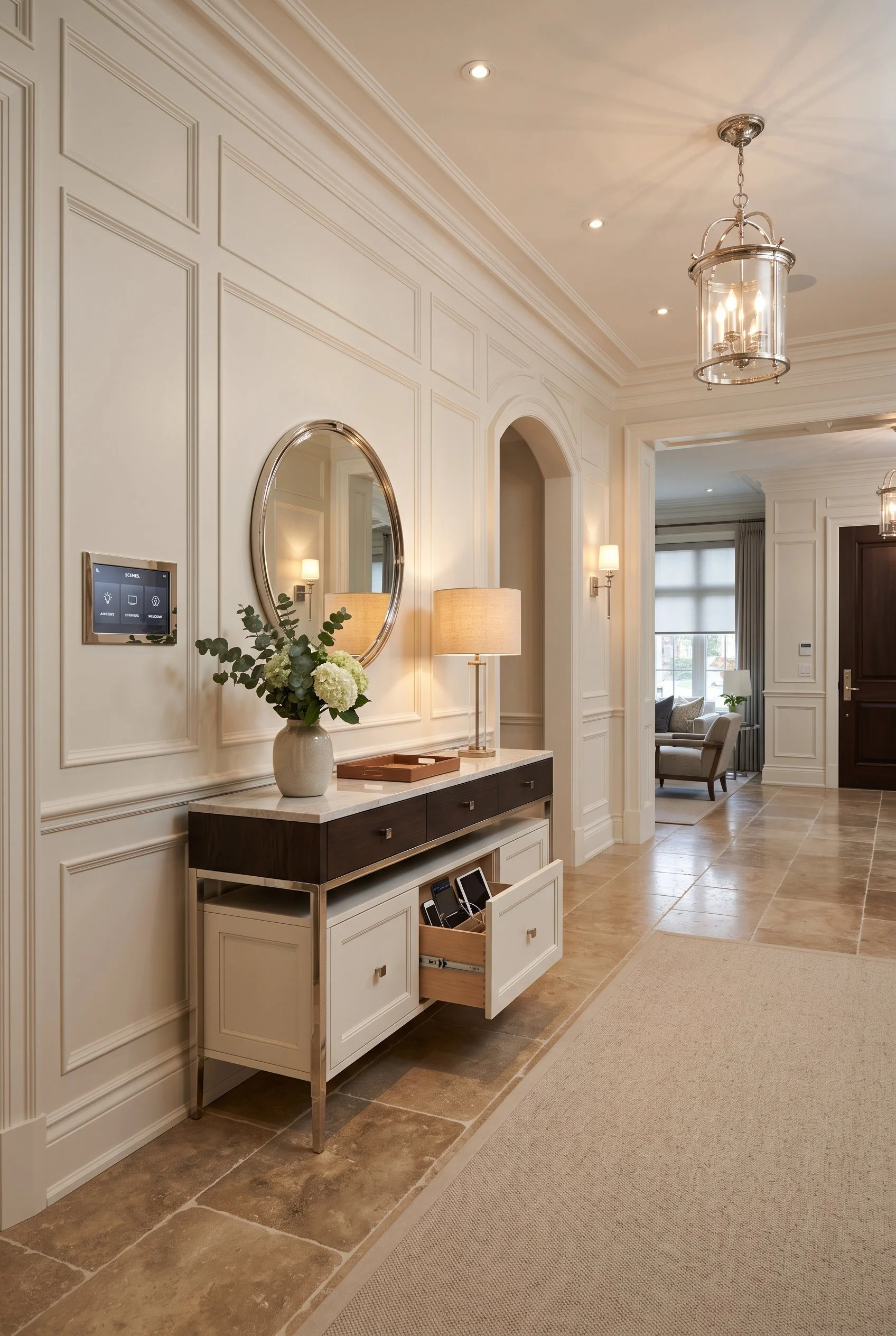
Custom charging drawers allow devices to remain powered while staying completely concealed. Dedicated compartments can be tailored for everything from an Apple Watch and AirPods to Kindles, iPads, and portable speakers. Integrated USB-C charging stations and wireless charging pads eliminate countertop clutter while ensuring essentials are ready for the day ahead.
Many homeowners are also incorporating overnight charging lockers within primary closets, creating a designated place to "put the day away" before bed.
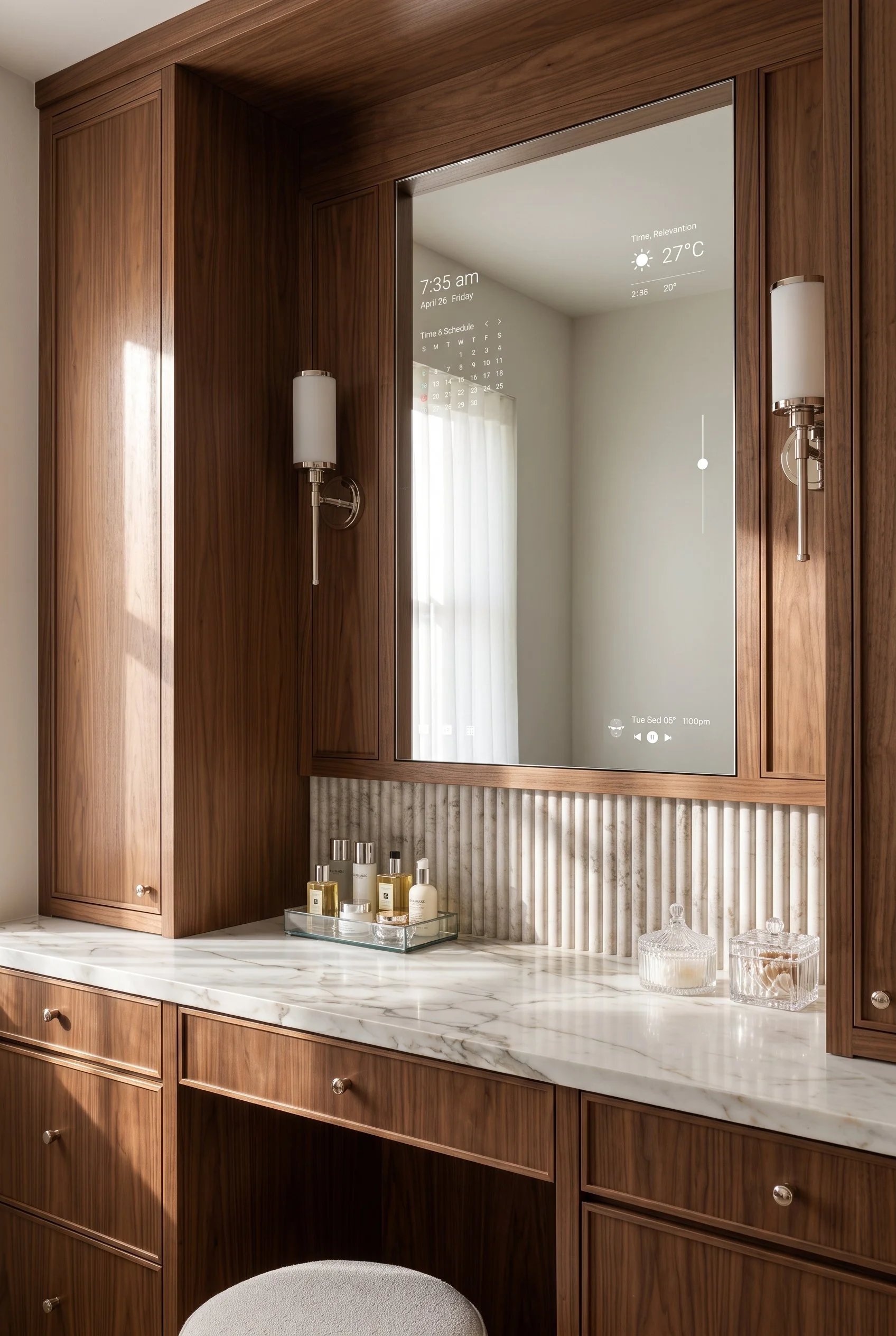
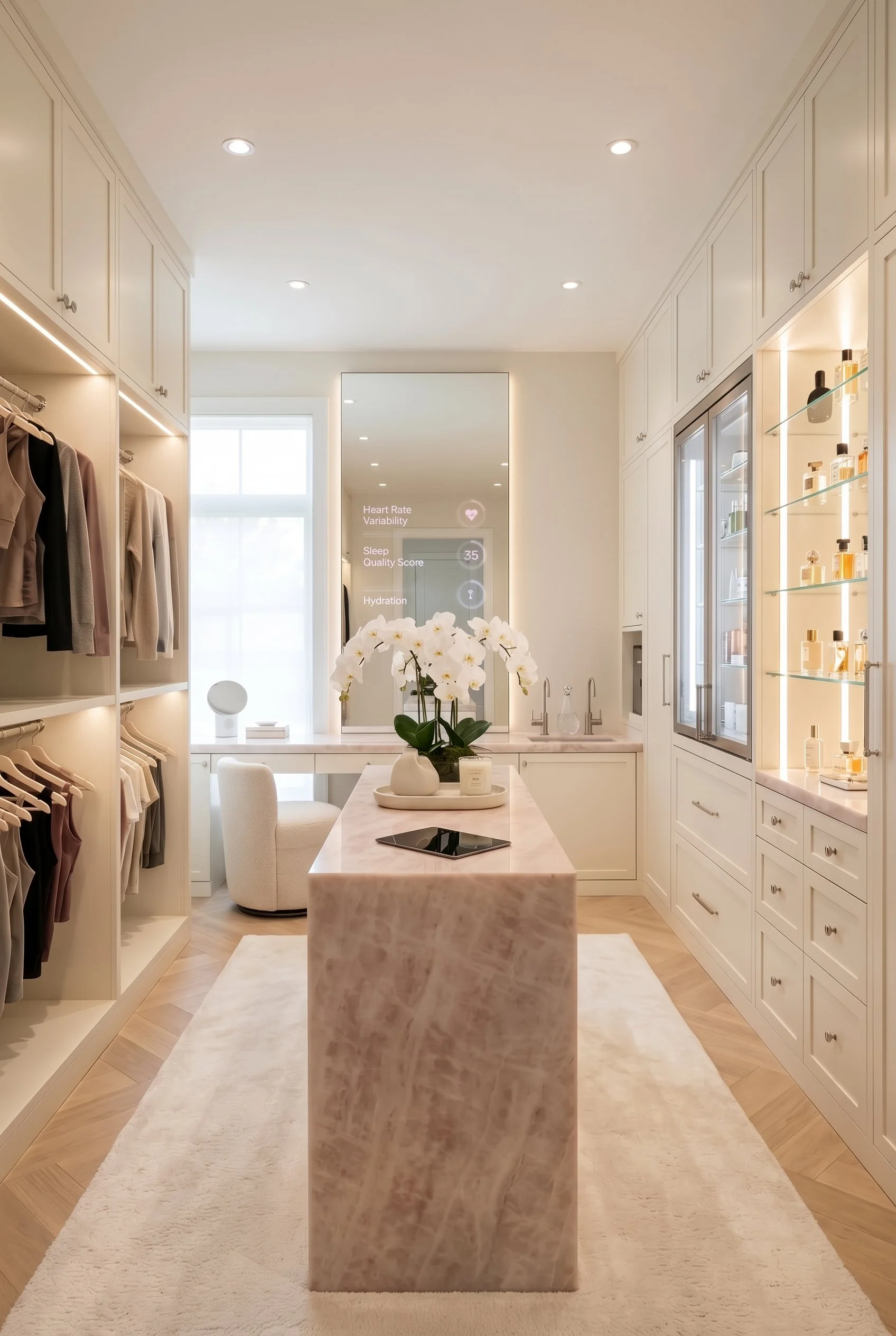
Paired with a smart mirror, digital calendar display, Sonos audio system, or voice assistant such as Josh.ai, the closet begins functioning as a personal headquarters rather than simply a place to get dressed.
The future closet isn't just storage.
It's infrastructure.
Smarter Closets
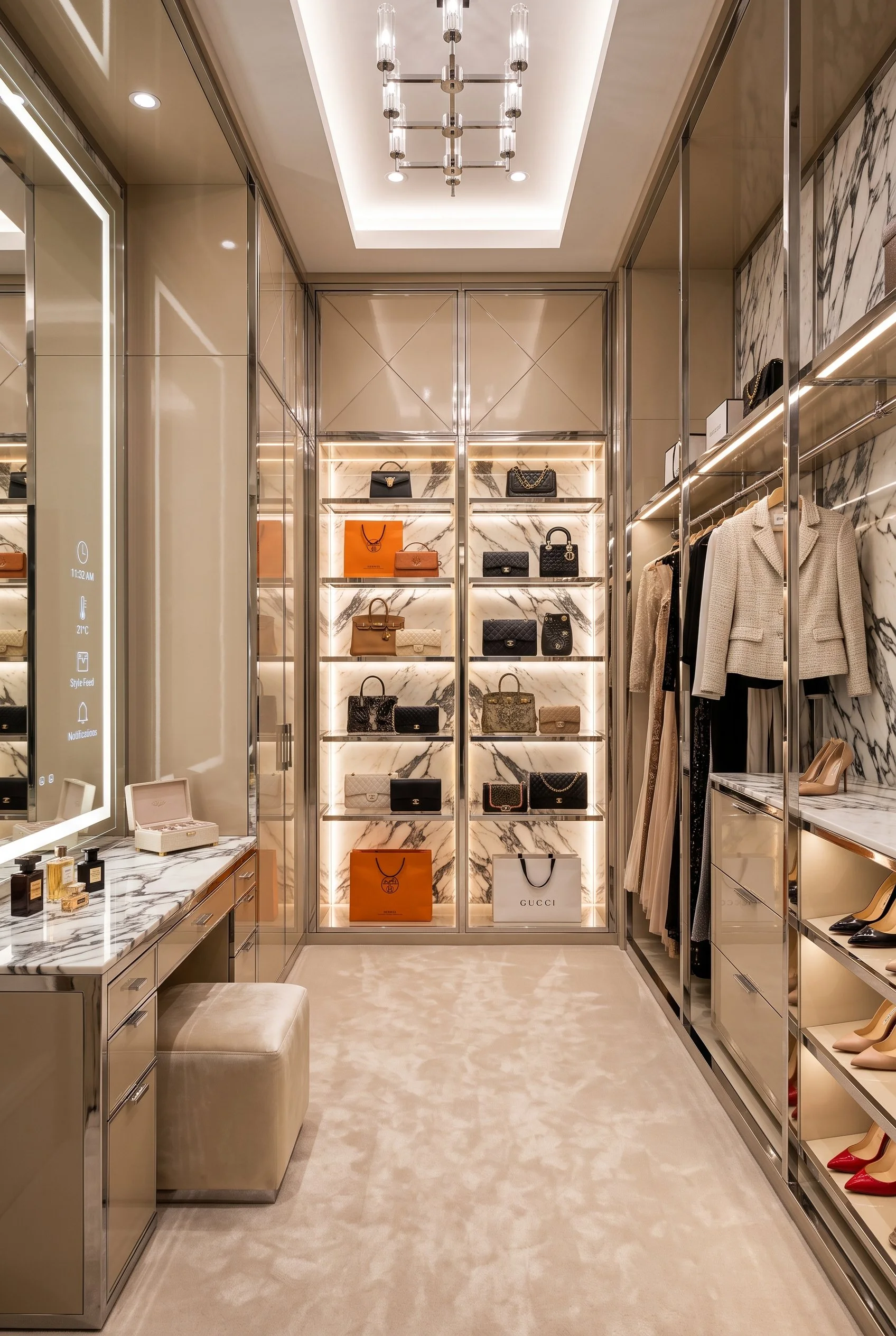
While kitchens and laundry rooms often receive the spotlight, the closet may be the next frontier of smart-home design.
Integrated lighting scenes can adjust throughout the day, helping clothing colors appear accurate whether you're dressing for a morning meeting or evening event. Automated occupancy sensors illuminate specific wardrobe zones as needed, while motorized accessories, digital inventory systems, and wardrobe management apps continue to evolve.
As artificial intelligence becomes more integrated into everyday life, we're likely to see closets become increasingly personalized—anticipating routines, recommending outfits, and streamlining daily decision-making.
The future closet isn't simply a room.
It's an operating system for personal organization.
The Connected Kitchen
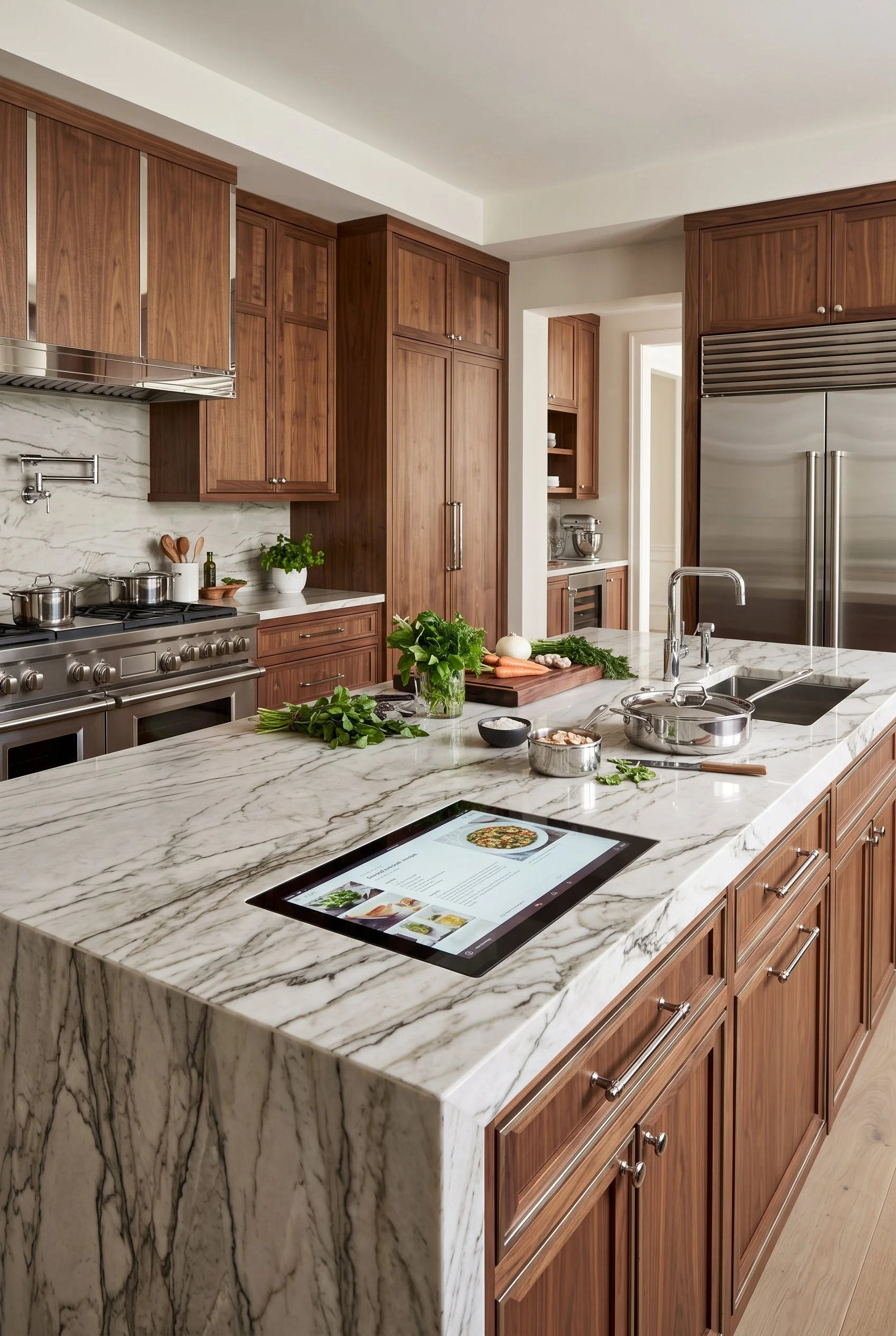
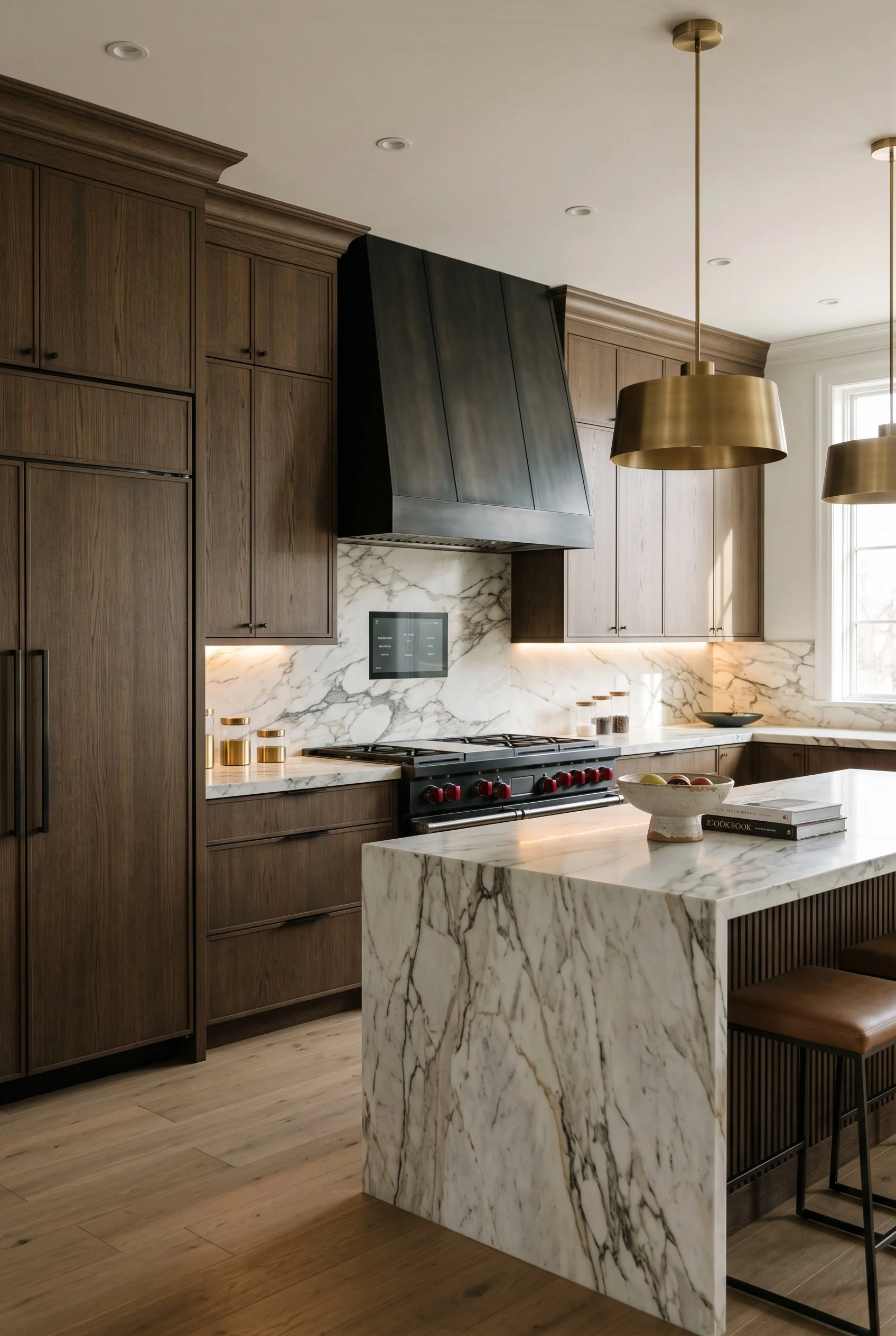
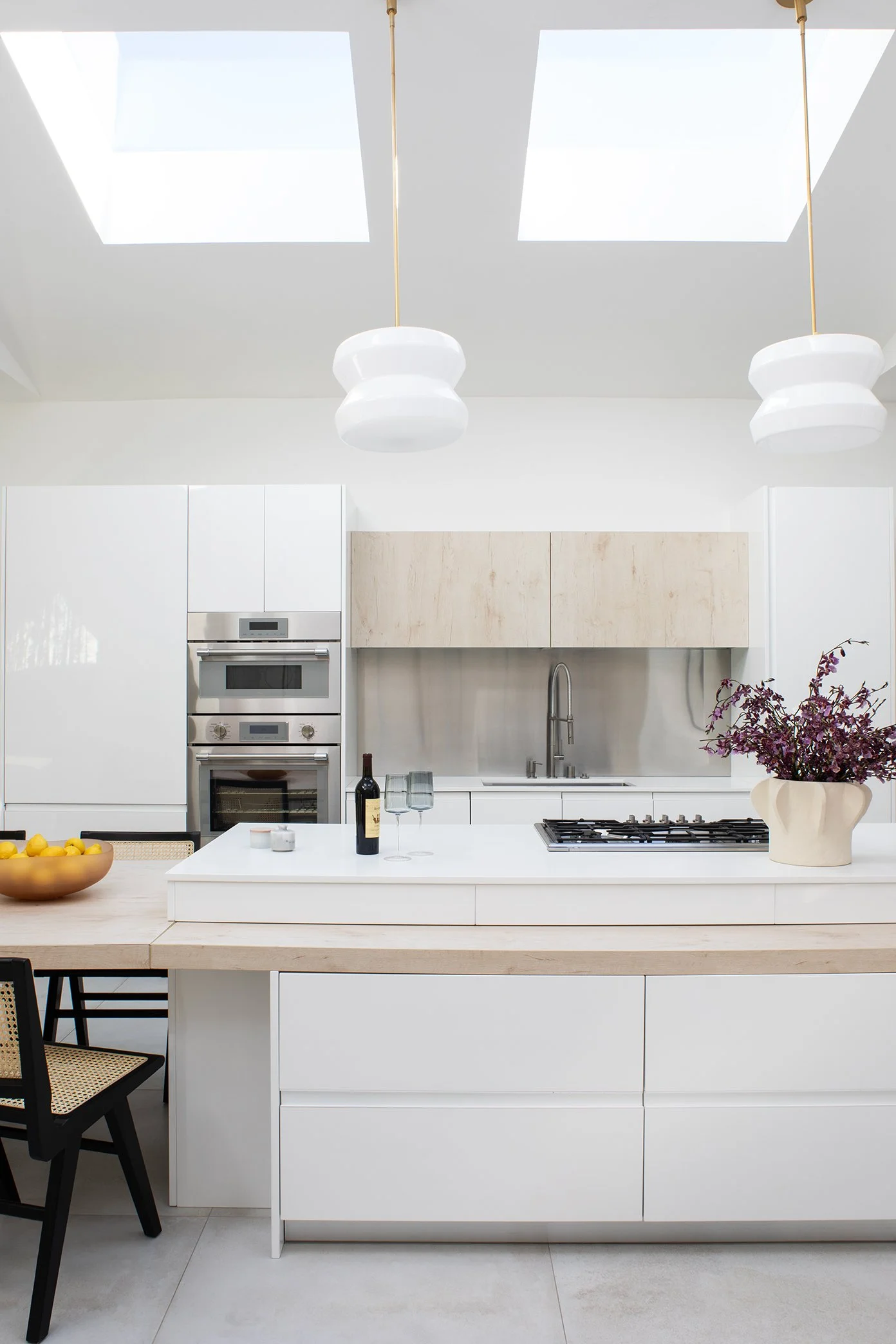
The kitchen remains the heart of the smart home.
Brands like Sub-Zero, Wolf, Cove, Thermador, Bosch, Samsung, and Miele continue to expand connected appliance ecosystems that allow homeowners to monitor cooking, receive alerts, automate routines, and manage appliances remotely.
Bosch's Home Connect platform, for example, allows users to remotely preheat ovens, monitor cooking progress, and coordinate multiple appliances through a single interface.
Samsung's SmartThings ecosystem similarly connects refrigerators, ranges, laundry appliances, and other devices through customizable routines and centralized control.
Imagine receiving a notification that your oven has preheated while you're finishing a tennis match. Or having your refrigerator remind you that ingredients are running low before guests arrive.
Convenience becomes proactive rather than reactive.
Wellness at Home
Perhaps the most exciting category of smart technology is wellness.
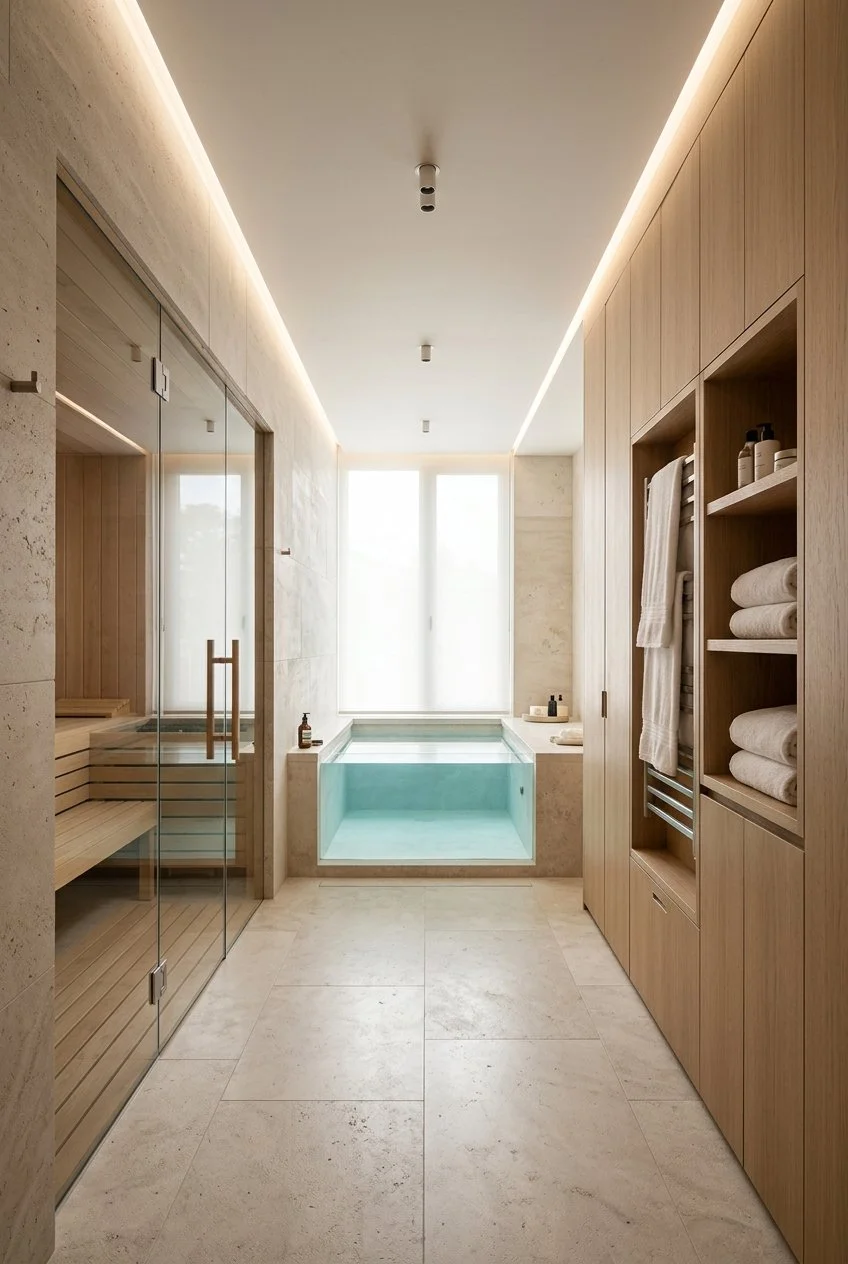
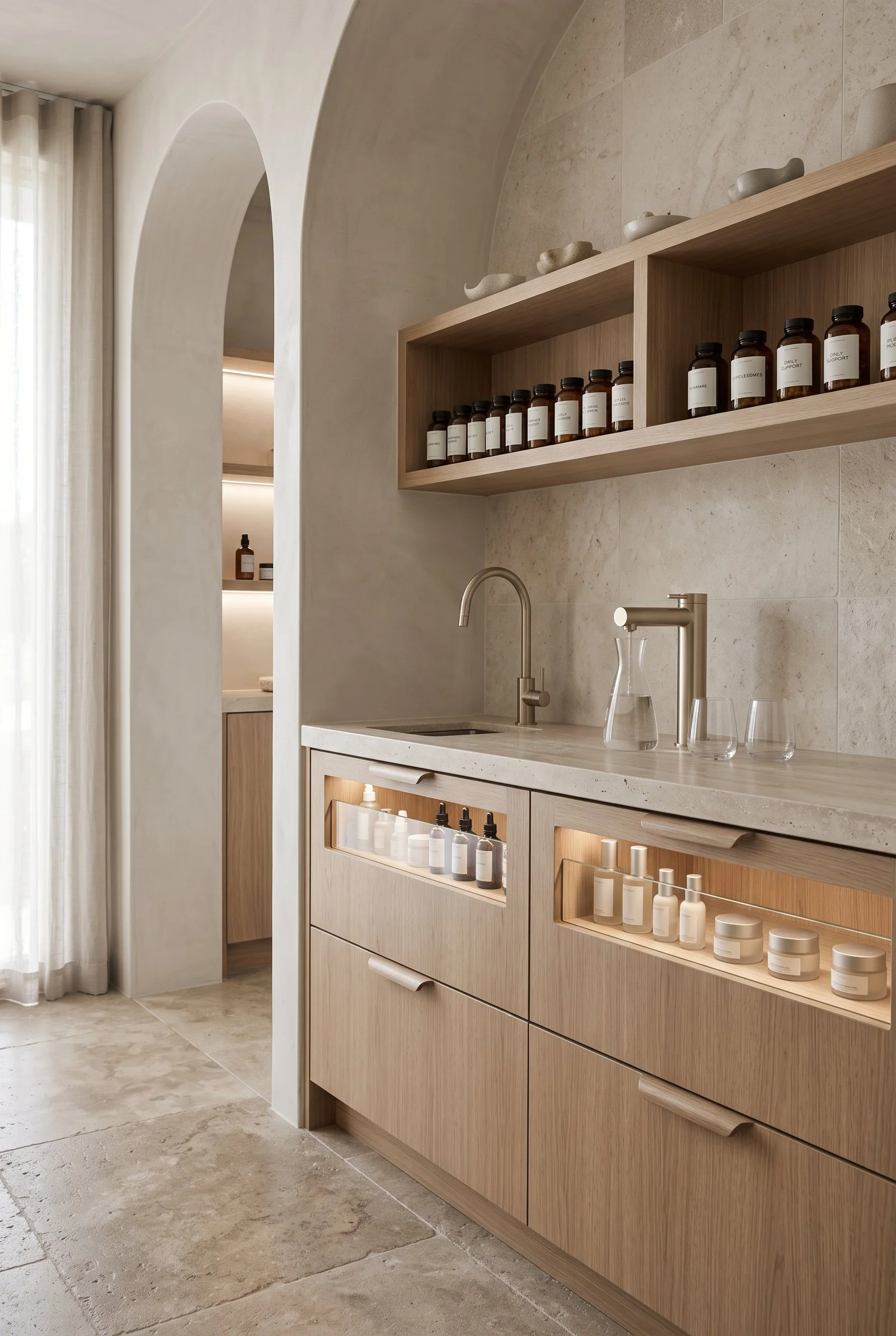
Air purification systems, circadian lighting, hydration stations, climate monitoring, towel warmers, saunas, recovery rooms, and connected fitness equipment are becoming increasingly common in luxury residences.
These systems work best when integrated together. Lighting gradually shifts throughout the day. Temperatures adjust automatically. Air quality is monitored continuously. Wellness becomes embedded into the architecture itself.
The result is a home that actively supports better habits without demanding more attention.
Bringing It All Together
The most successful smart homes aren't built around individual products.
They're built around ecosystems.
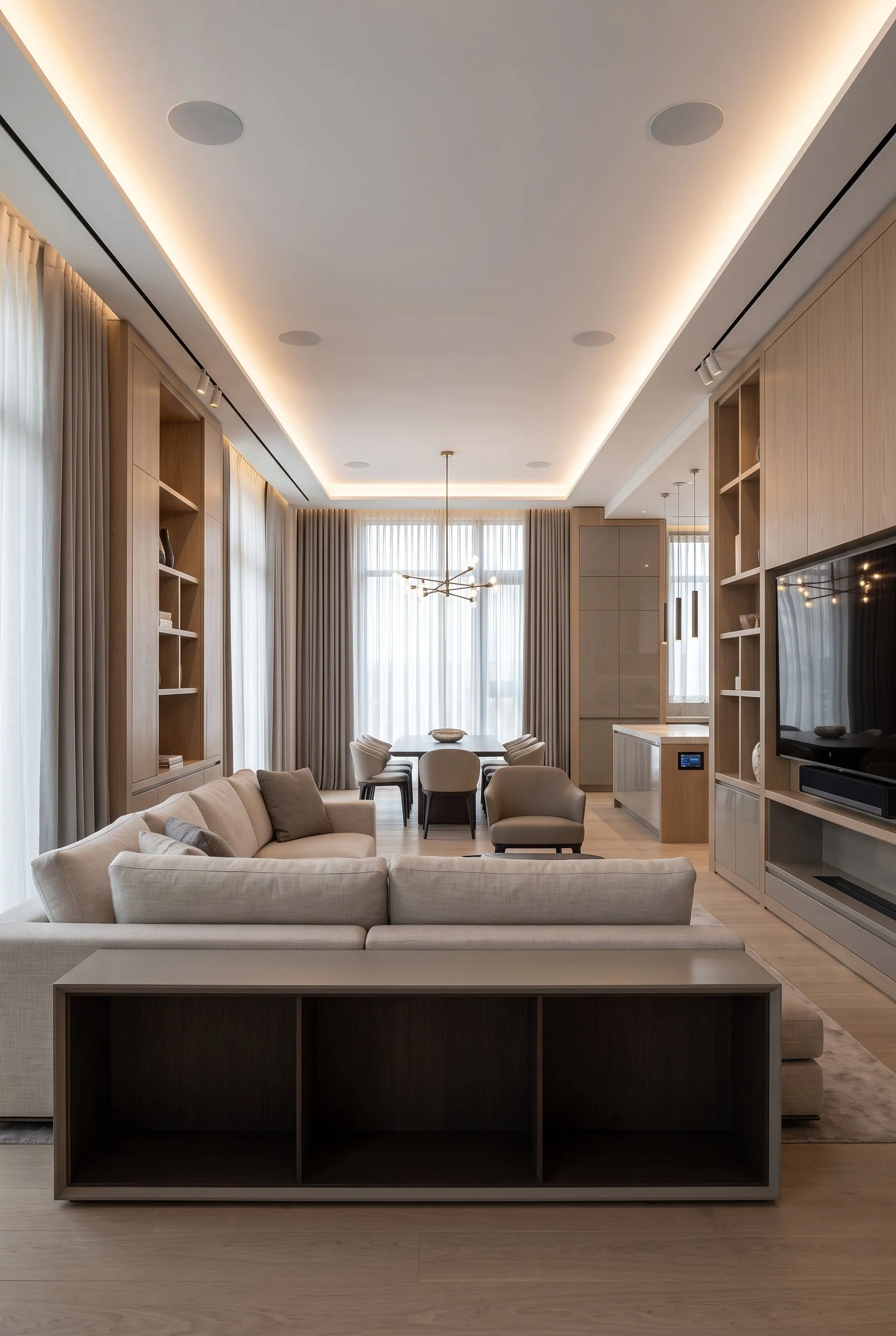
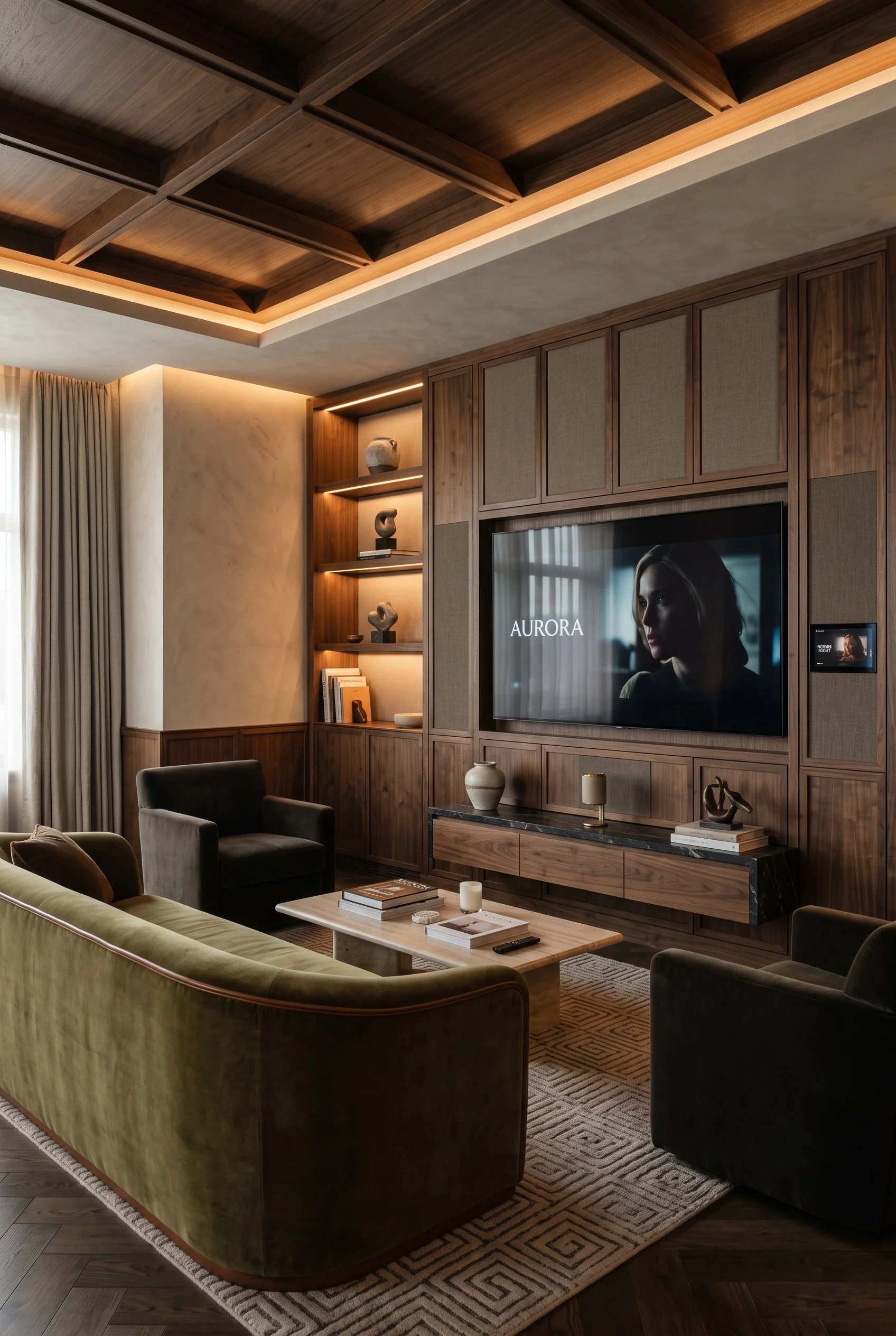
Platforms such as Savant, Control4, Crestron, Josh.ai, Lutron HomeWorks, and Samsung SmartThings allow lighting, climate, shades, security, entertainment, and appliances to function as a cohesive experience. SmartThings, for example, enables homeowners to organize connected devices into rooms, create routines, and control multiple products simultaneously from a single platform.
The technology itself fades into the background.
What remains is a home that feels intuitive.
Designing Around the Experience
The biggest mistake homeowners make with smart technology is focusing on products instead of routines.
A truly intelligent home isn't defined by how many connected devices it contains. It's defined by how seamlessly those devices support daily life.
When planning a custom closet, dressing room, laundry room, pantry, wellness suite, or kitchen, we encourage clients to think beyond cabinetry and finishes. Consider the moments that happen inside those rooms every day.
The most luxurious spaces aren't simply beautiful. They're effortless.