
DESIGNING FOR OVERFLOW
For years, the ultimate goal of closet design seemed simple: create a larger closet. More hanging space. More shelving. More drawers. More room for shoes, handbags, luggage, and everything in between. But as homes have evolved, so has our thinking around storage.
The most successful spaces aren't necessarily the ones that store the most—they're the ones that store the right things. In many cases, that means accepting a simple truth: not everything needs to live in the primary closet.
In fact, some of the most functional homes we encounter rely on a thoughtful network of secondary storage spaces distributed throughout the home. Seasonal pieces, occasional-use items, keepsakes, luggage, and specialty collections can all be relocated to areas better suited to long-term storage, freeing valuable real estate in the spaces we use every day.
We call it designing for overflow.
The Guest Room Closet
Guest room closets are often among the least utilized storage opportunities in a home. While it's important to leave space for visitors, many guest rooms sit vacant for the majority of the year.
These closets can become ideal homes for seasonal wardrobes, garment bags, travel accessories, extra luggage, formalwear, or specialty pieces that don't need to be accessed regularly. When thoughtfully organized, they provide valuable breathing room elsewhere in the home while remaining readily accessible when needed.
Looking Up
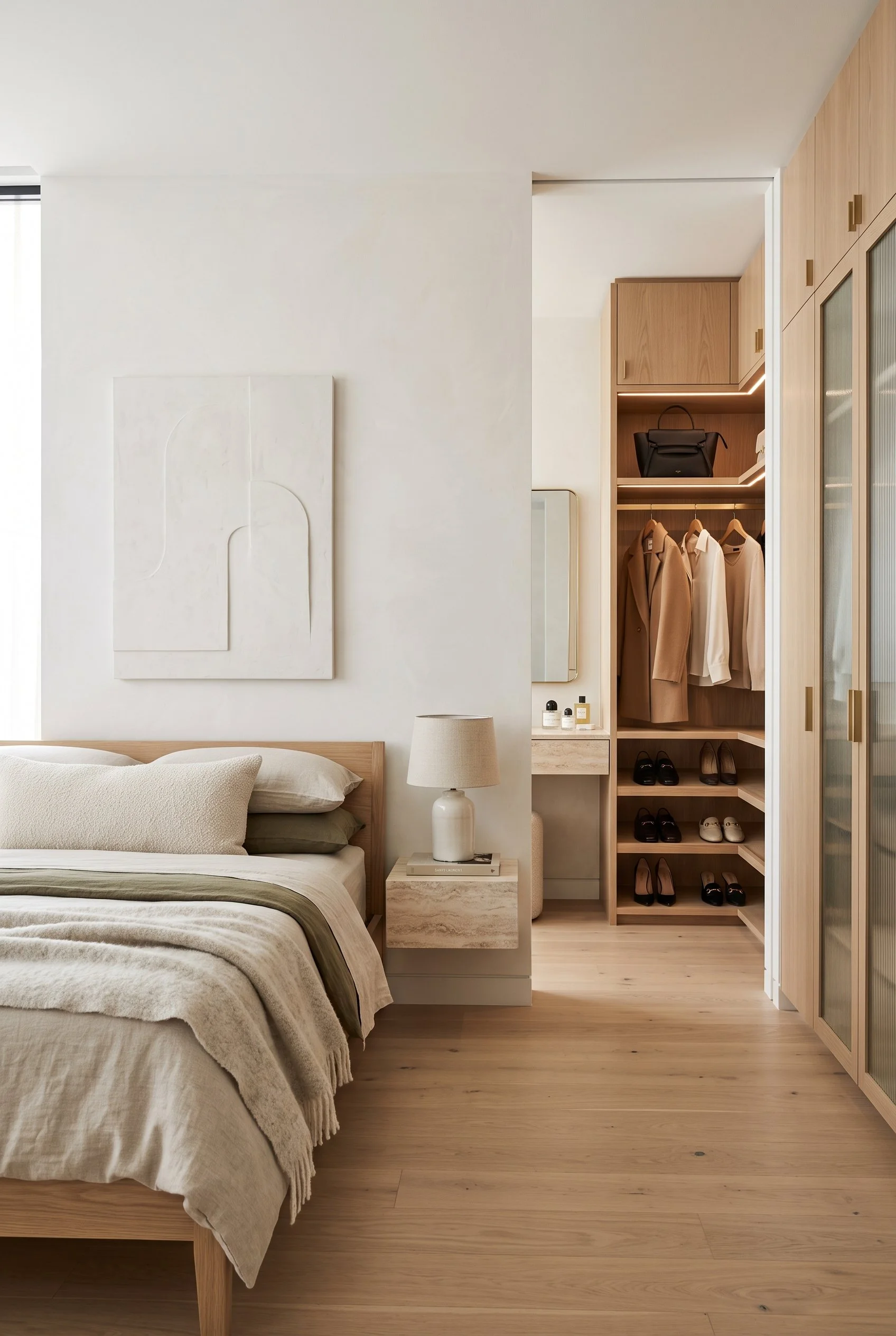
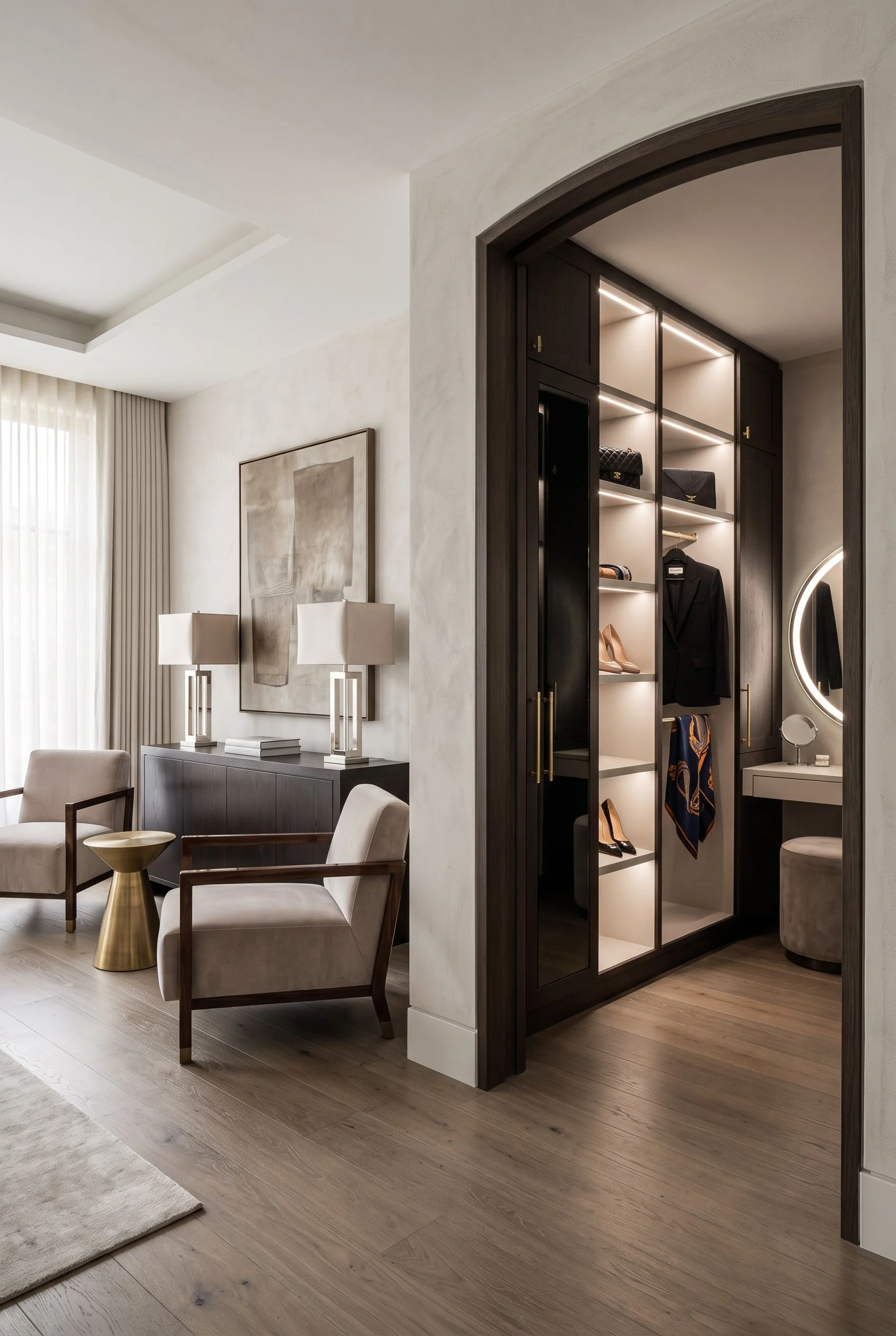
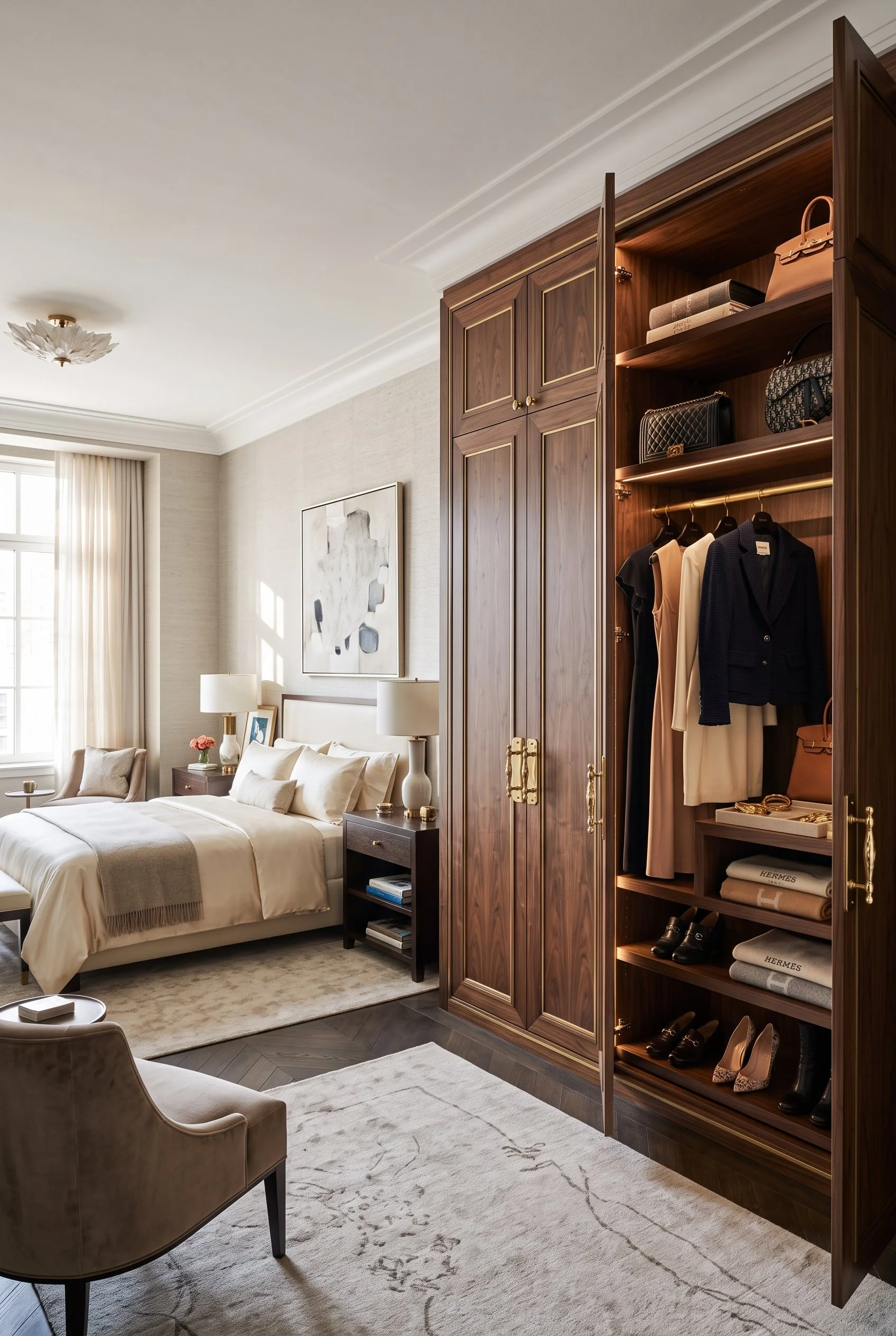
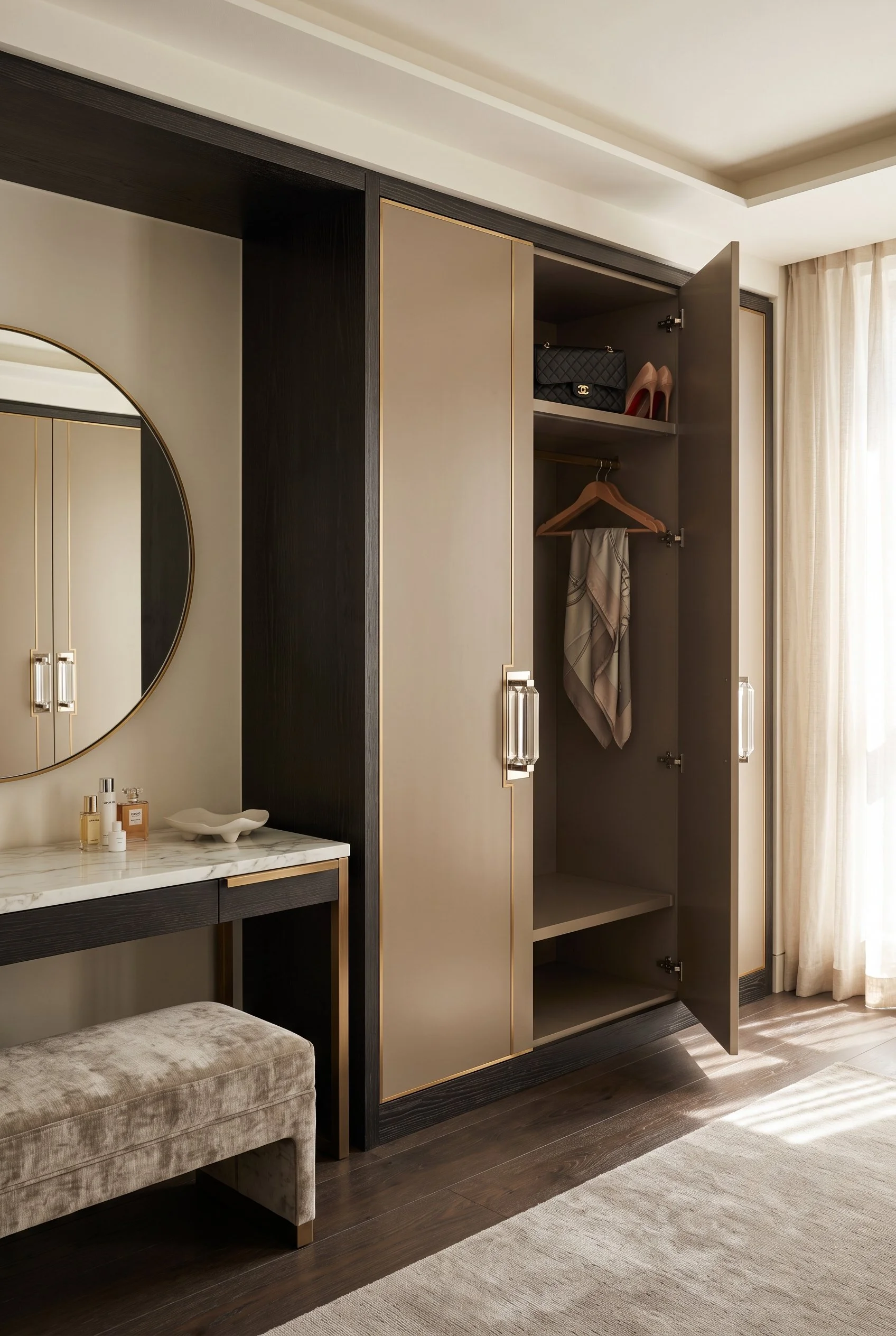
One of the most overlooked storage zones in any closet is the space above eye level.
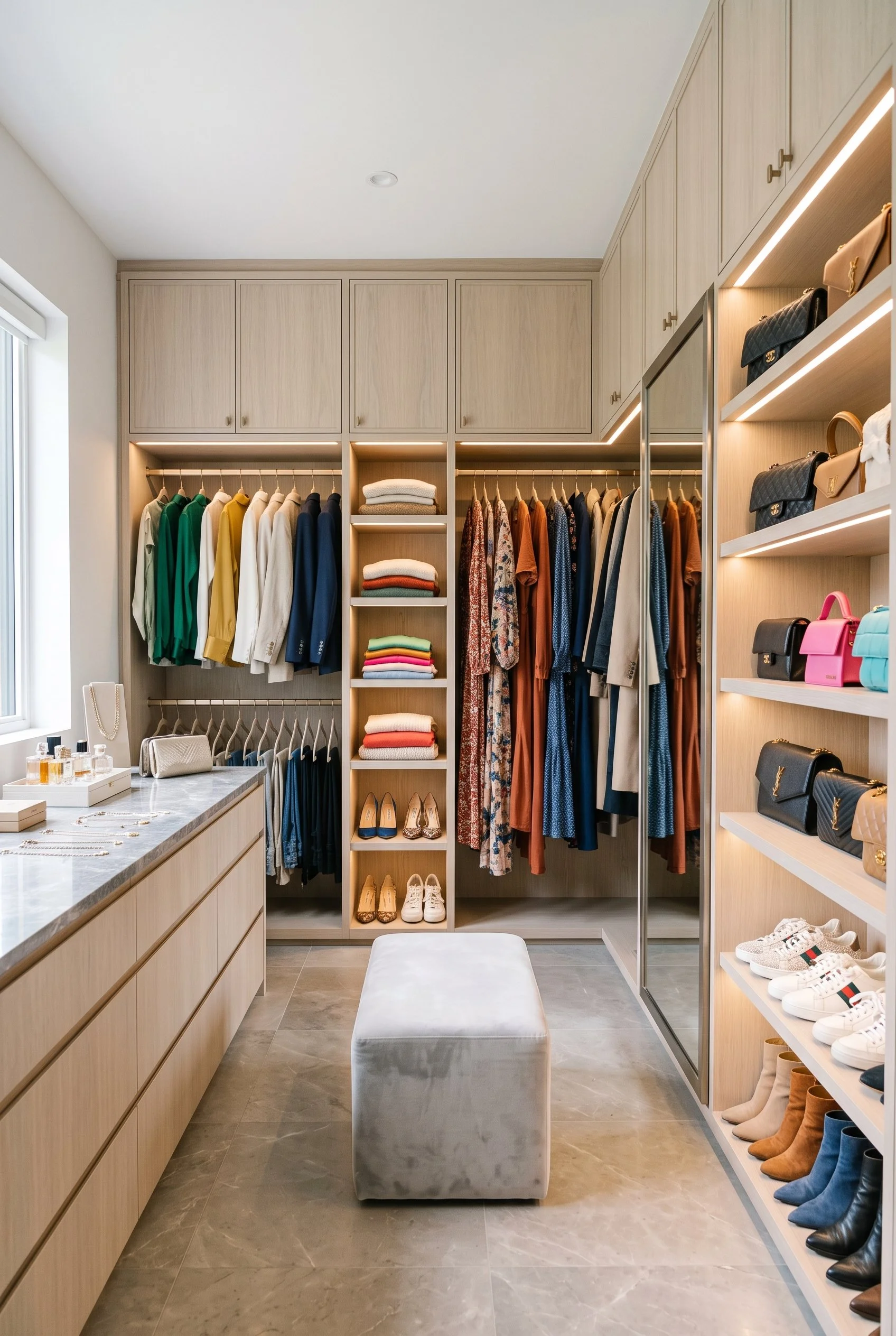
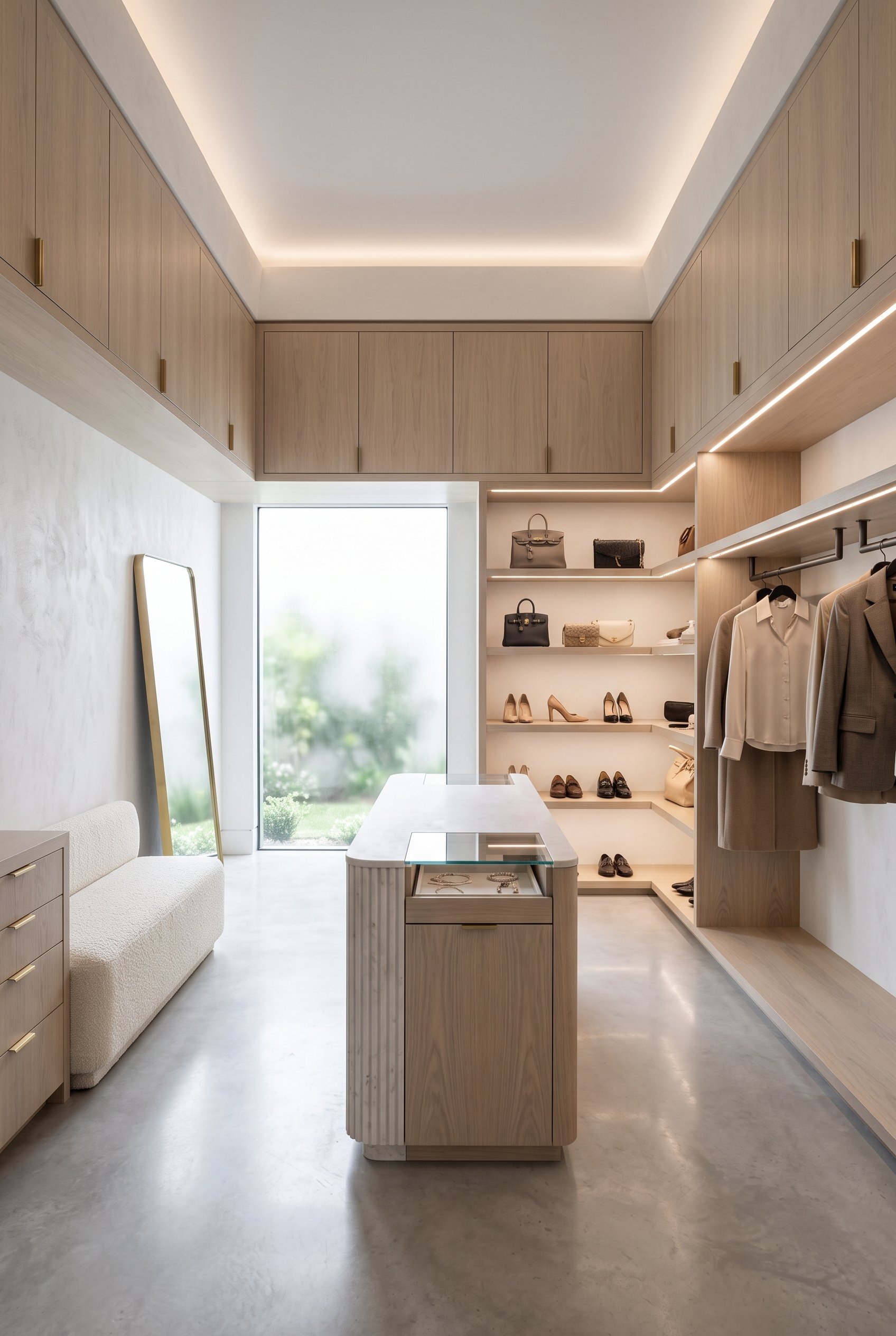
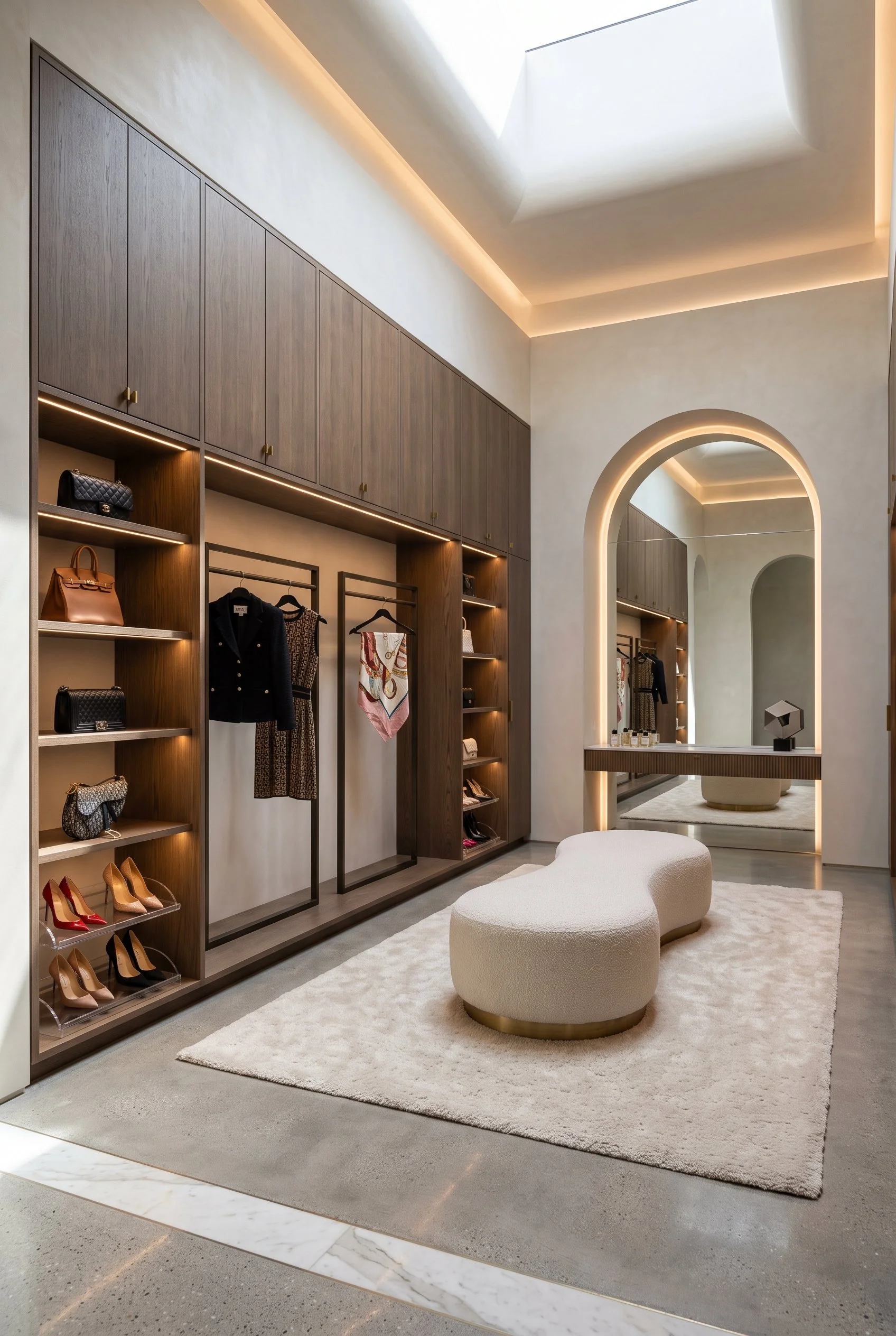
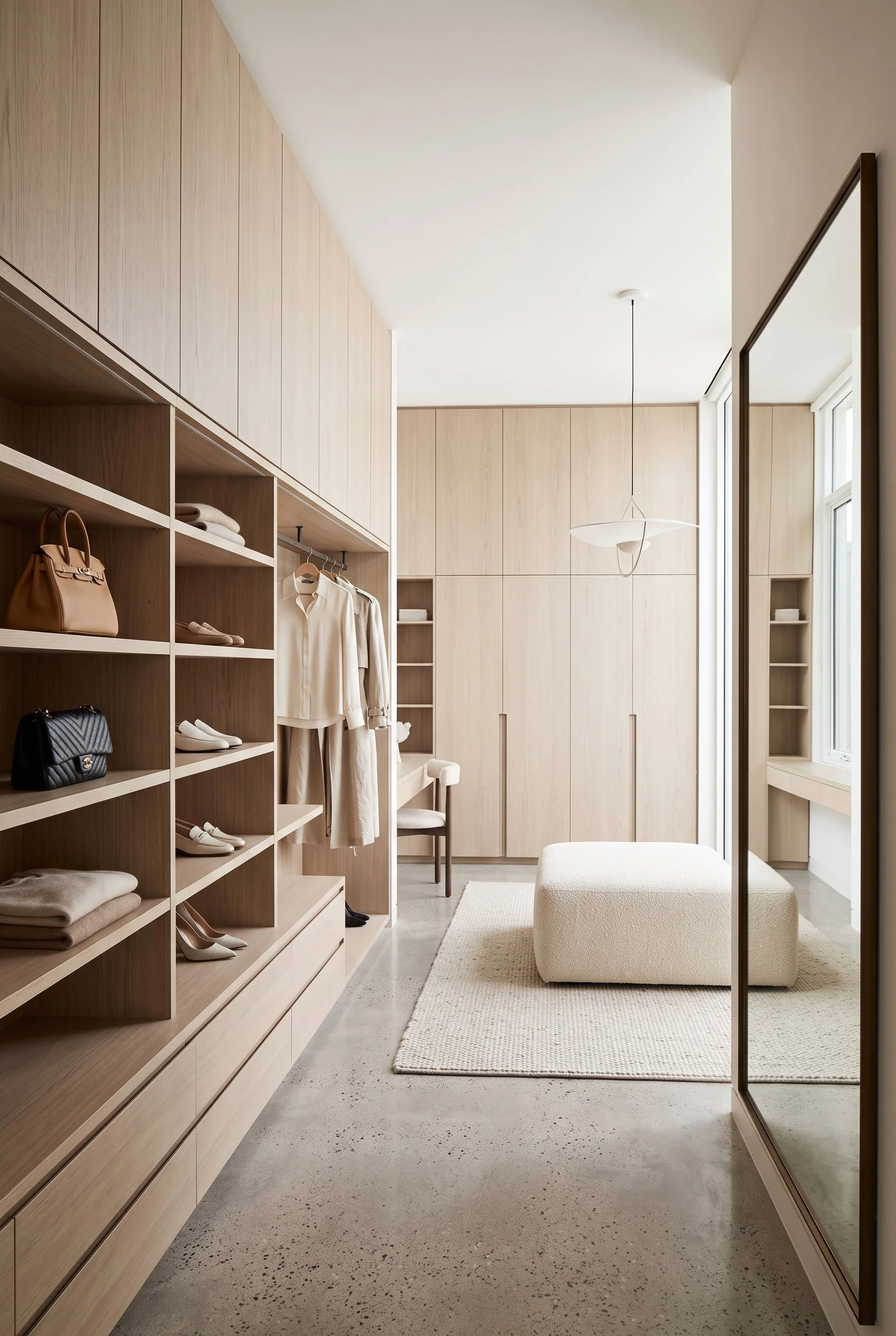
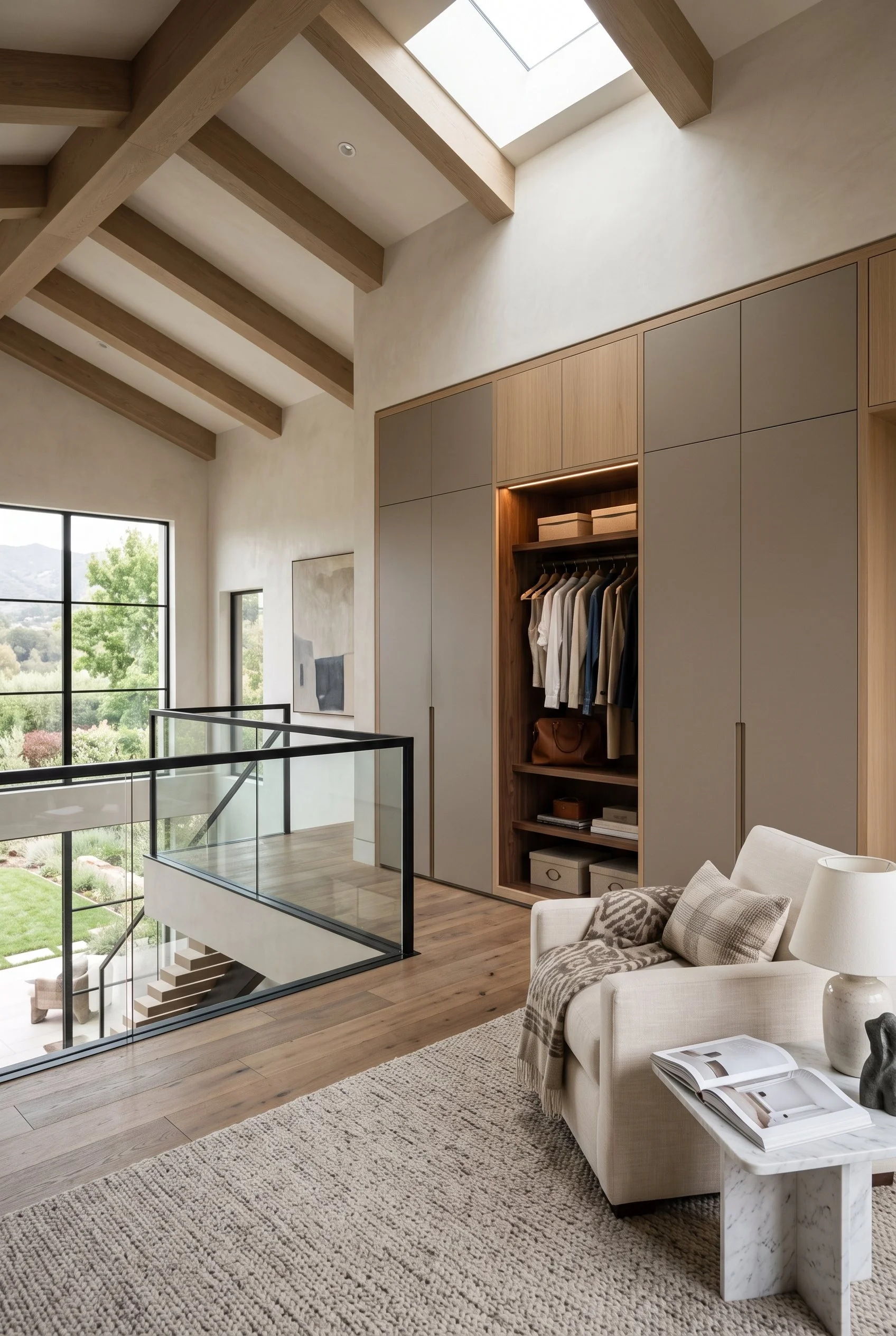
In custom cabinetry, we often extend millwork all the way to the ceiling, creating enclosed upper cabinets that serve as a natural destination for infrequently used belongings. Holiday attire, archival garments, keepsake boxes, specialty handbags, and sentimental items can all be stored neatly out of sight without consuming prime everyday storage space.
The result is a closet that feels lighter, more intentional, and easier to navigate.
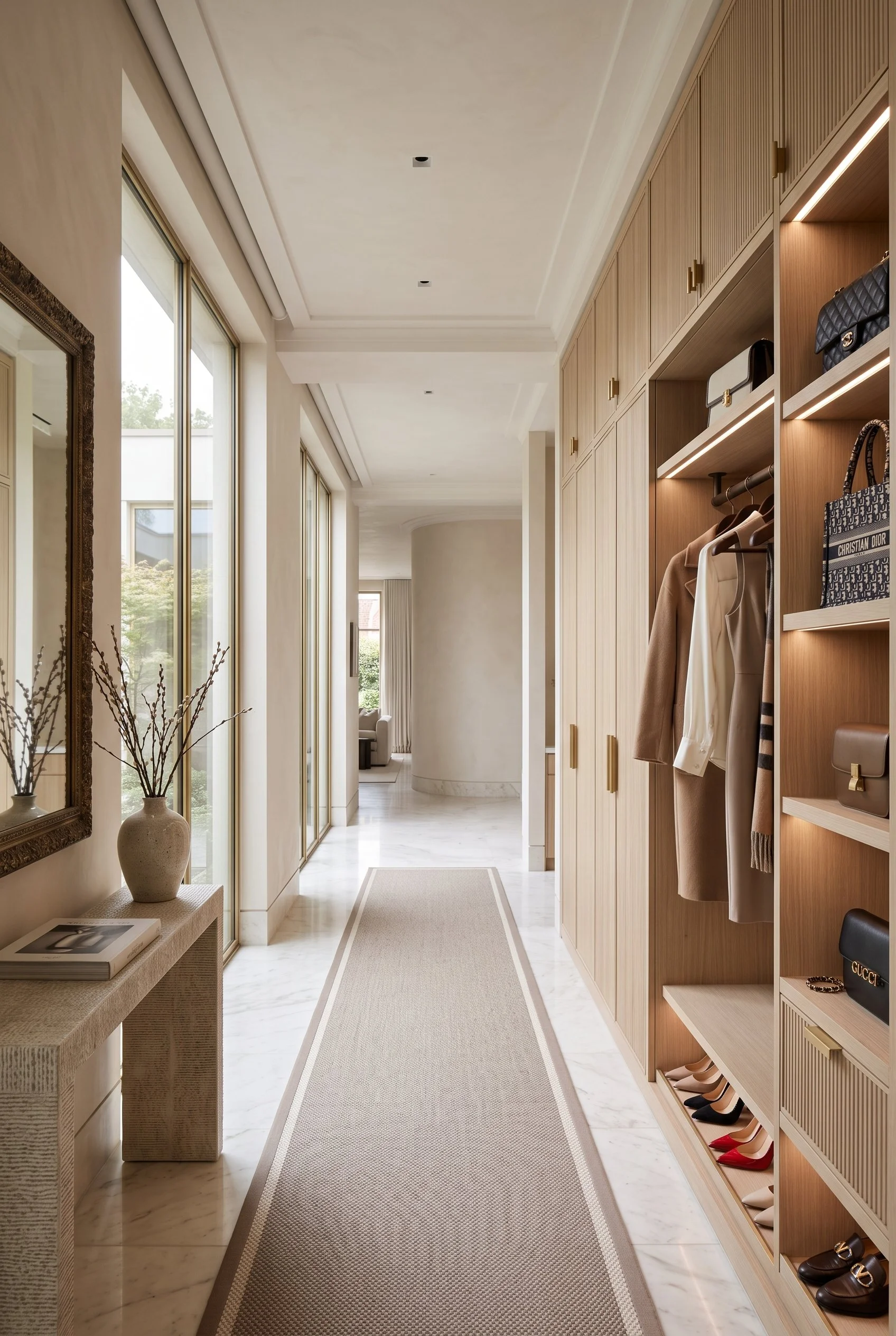
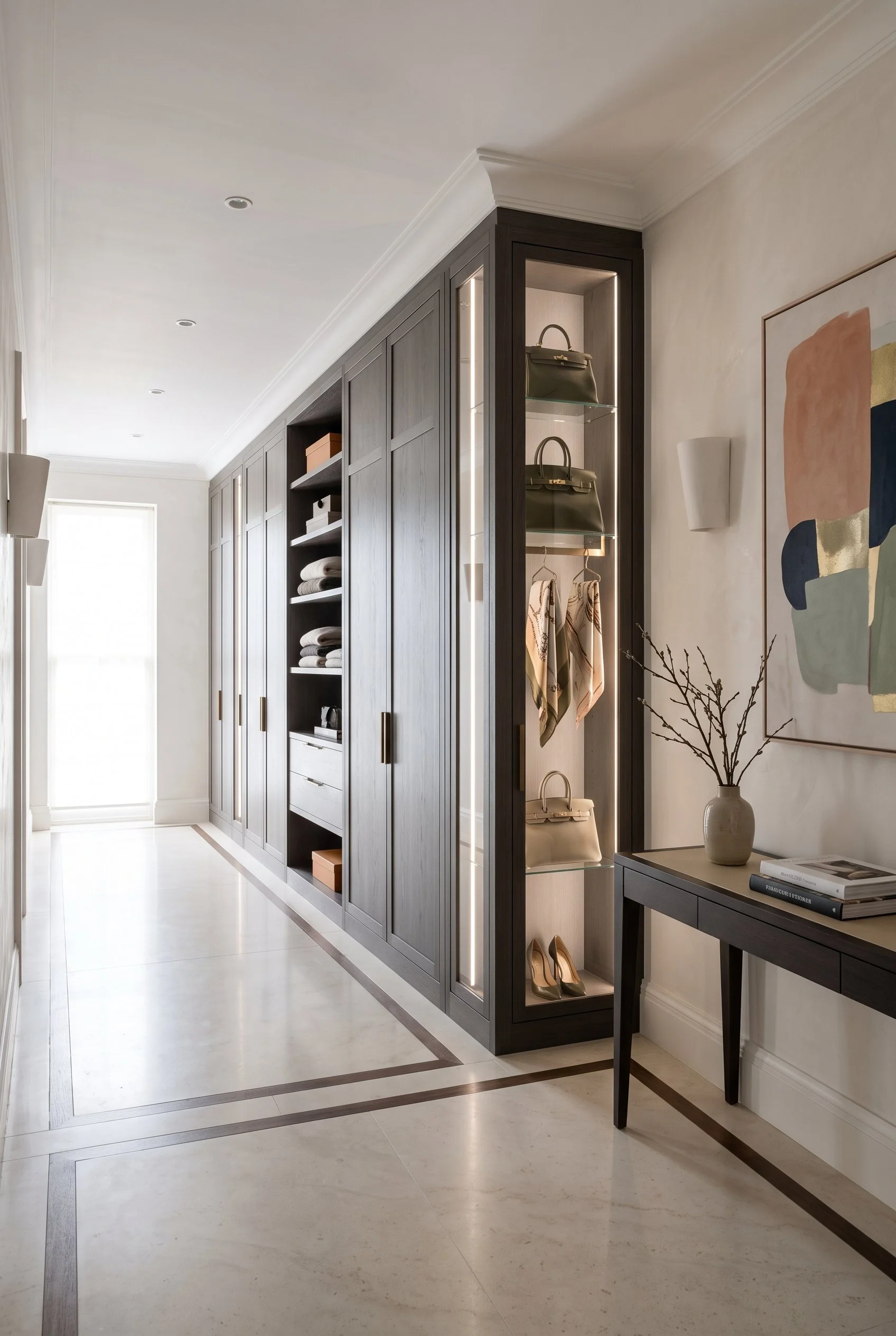
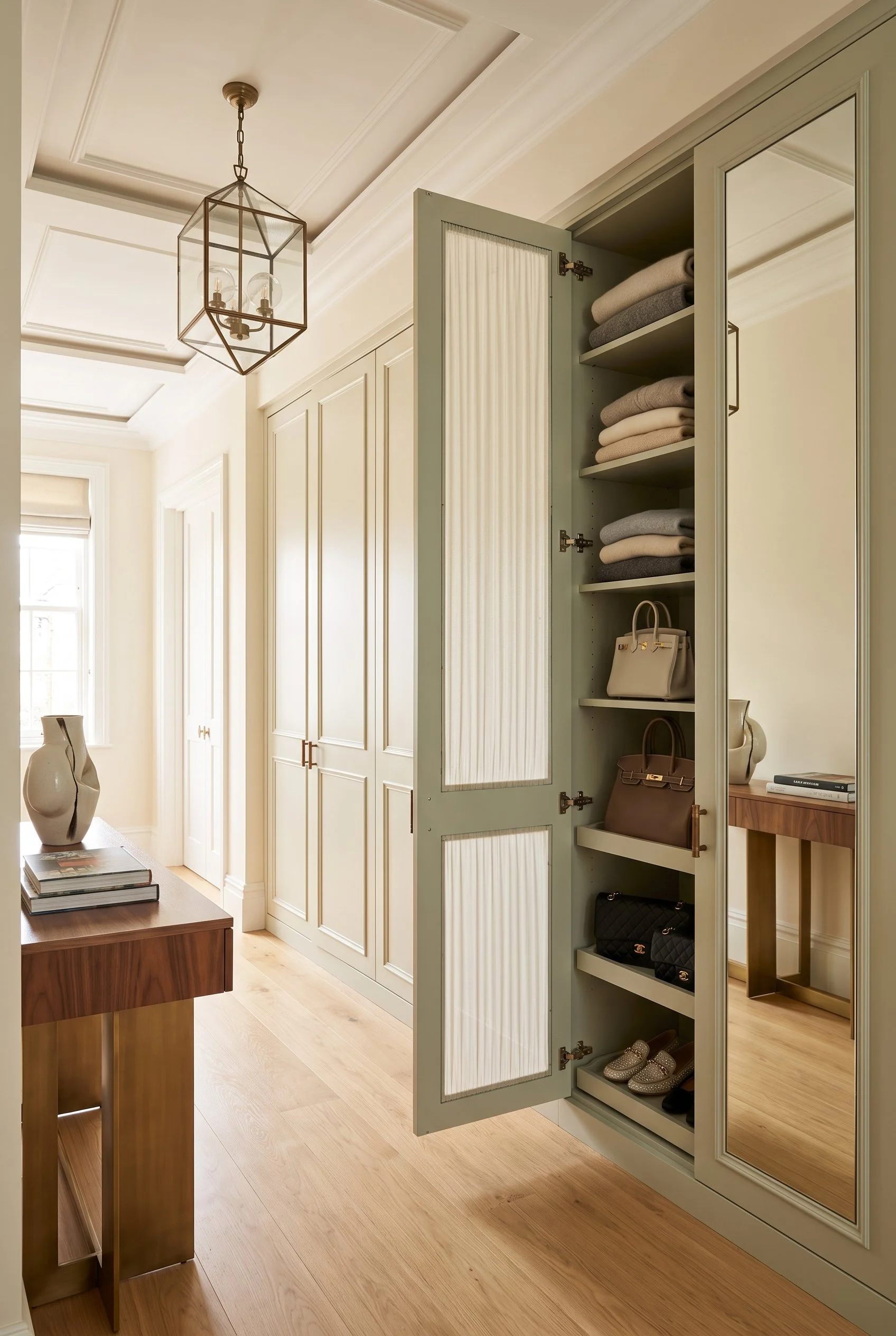
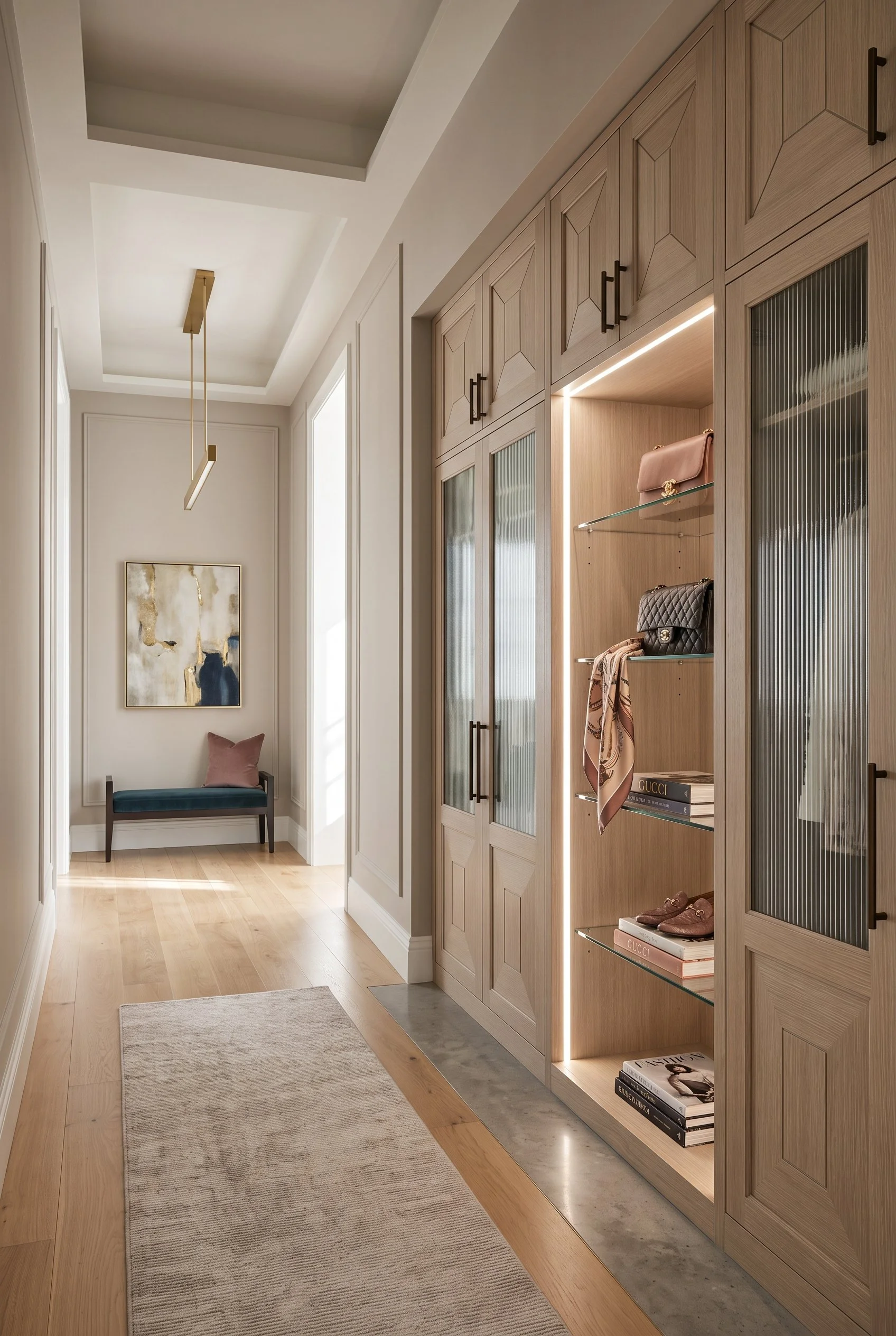
Hallway Closets Reimagined
Not every hallway closet needs to store linens.
Depending on the needs of the household, these flexible spaces can serve a variety of purposes beyond their traditional role. Seasonal outerwear, travel supplies, gift wrap, entertaining accessories, holiday décor, and household overflow can all be organized within these centrally located storage areas.
Good design isn't about following conventions—it's about tailoring spaces to the way a family actually lives.
The Hidden Potential of the Home Office
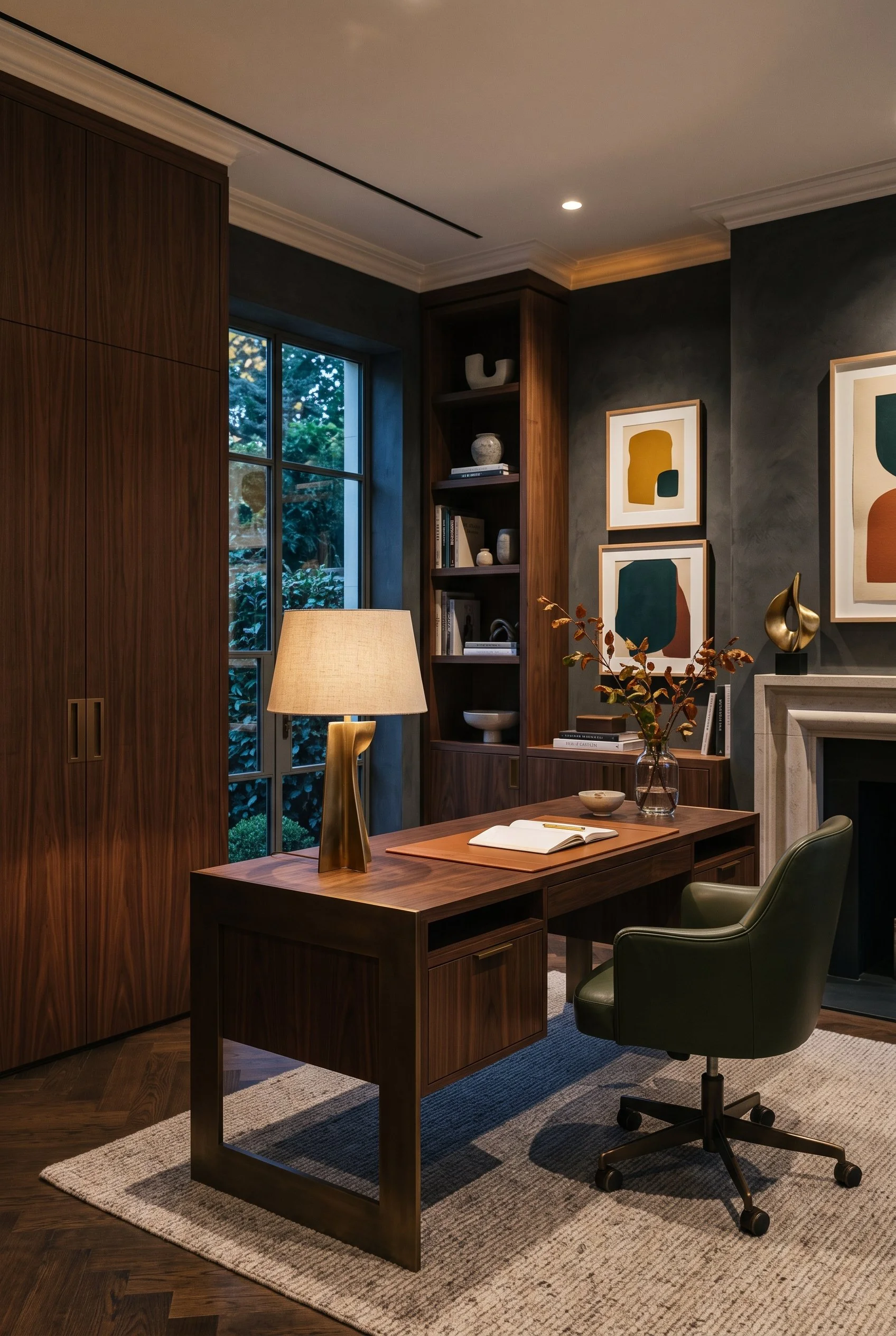
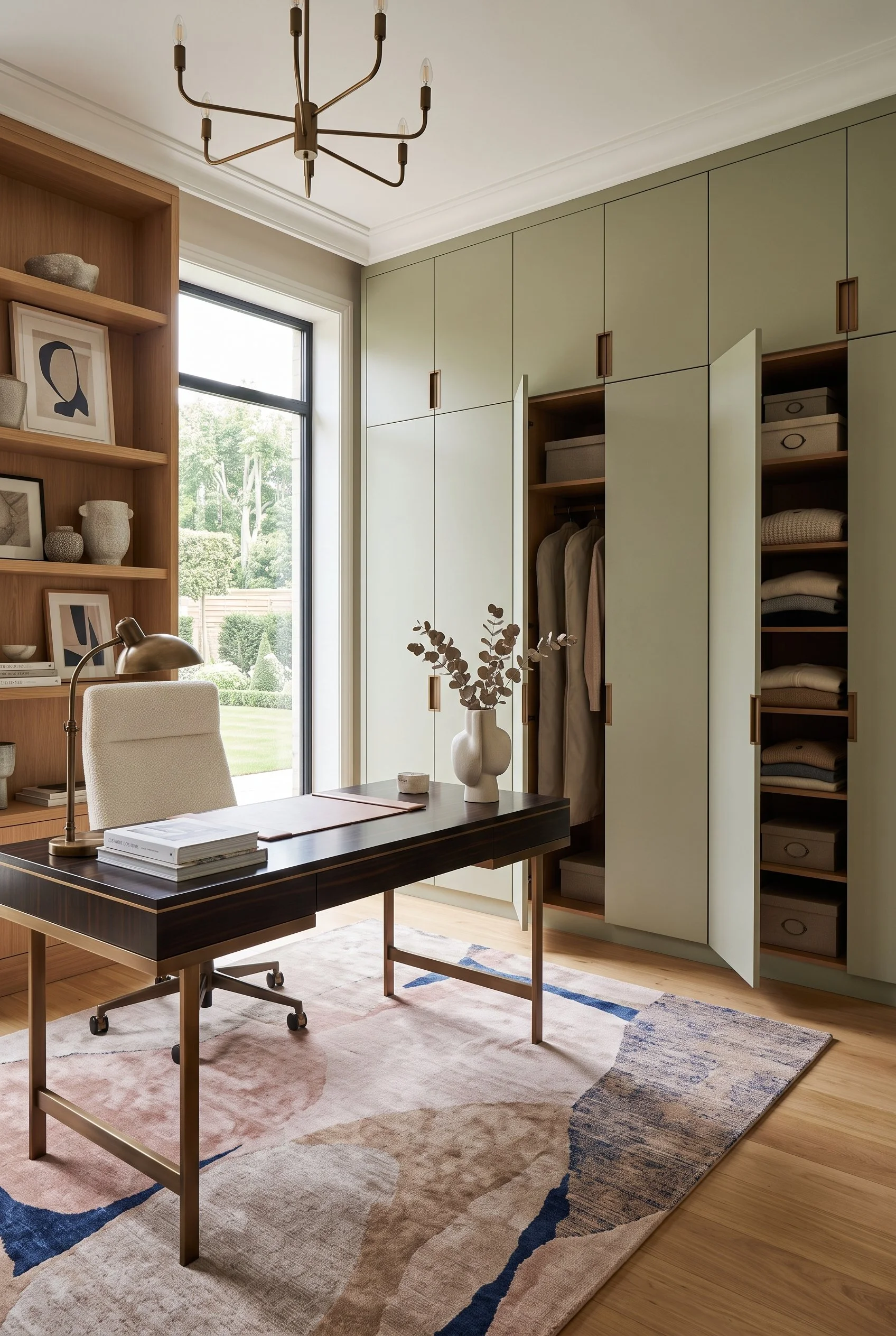
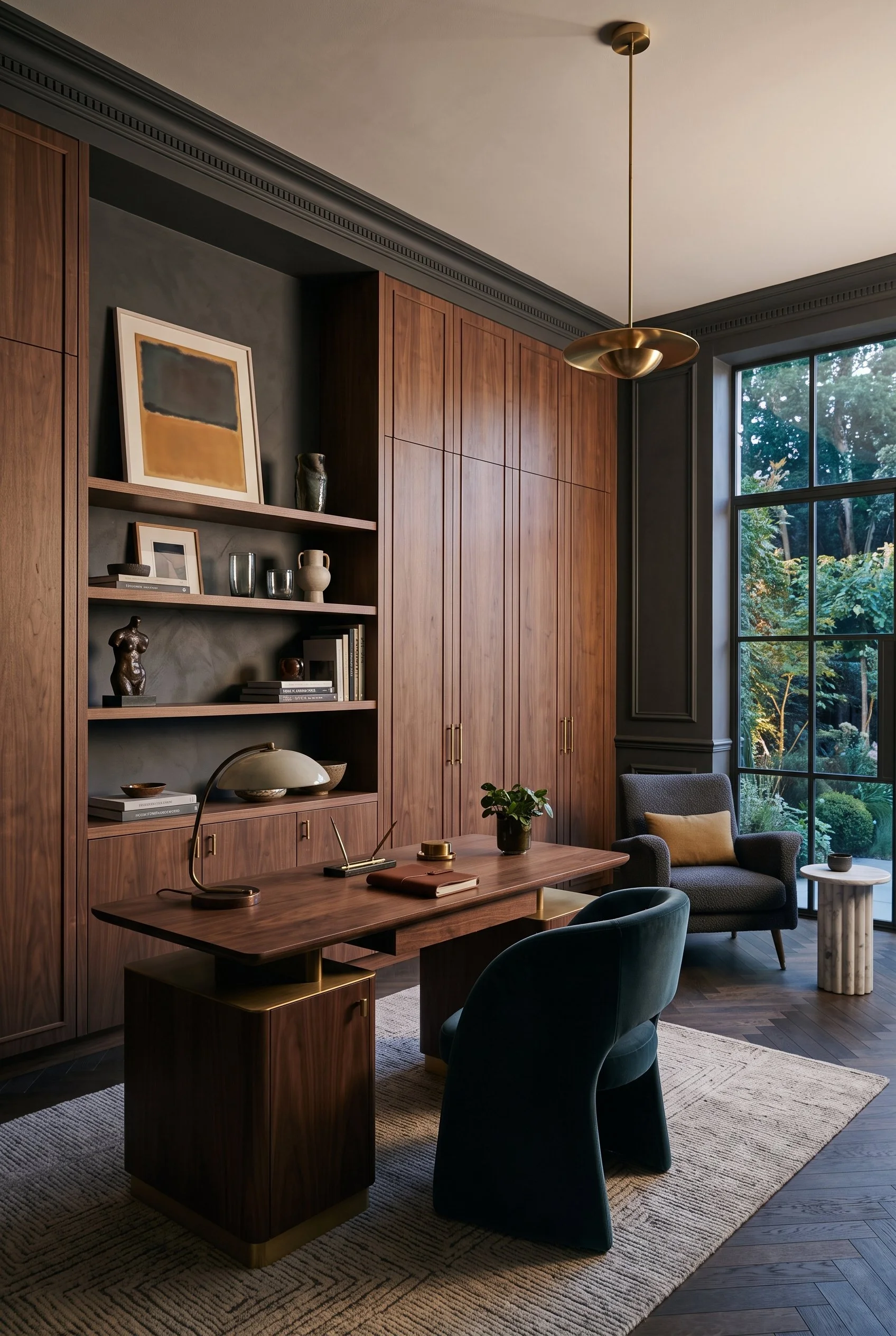
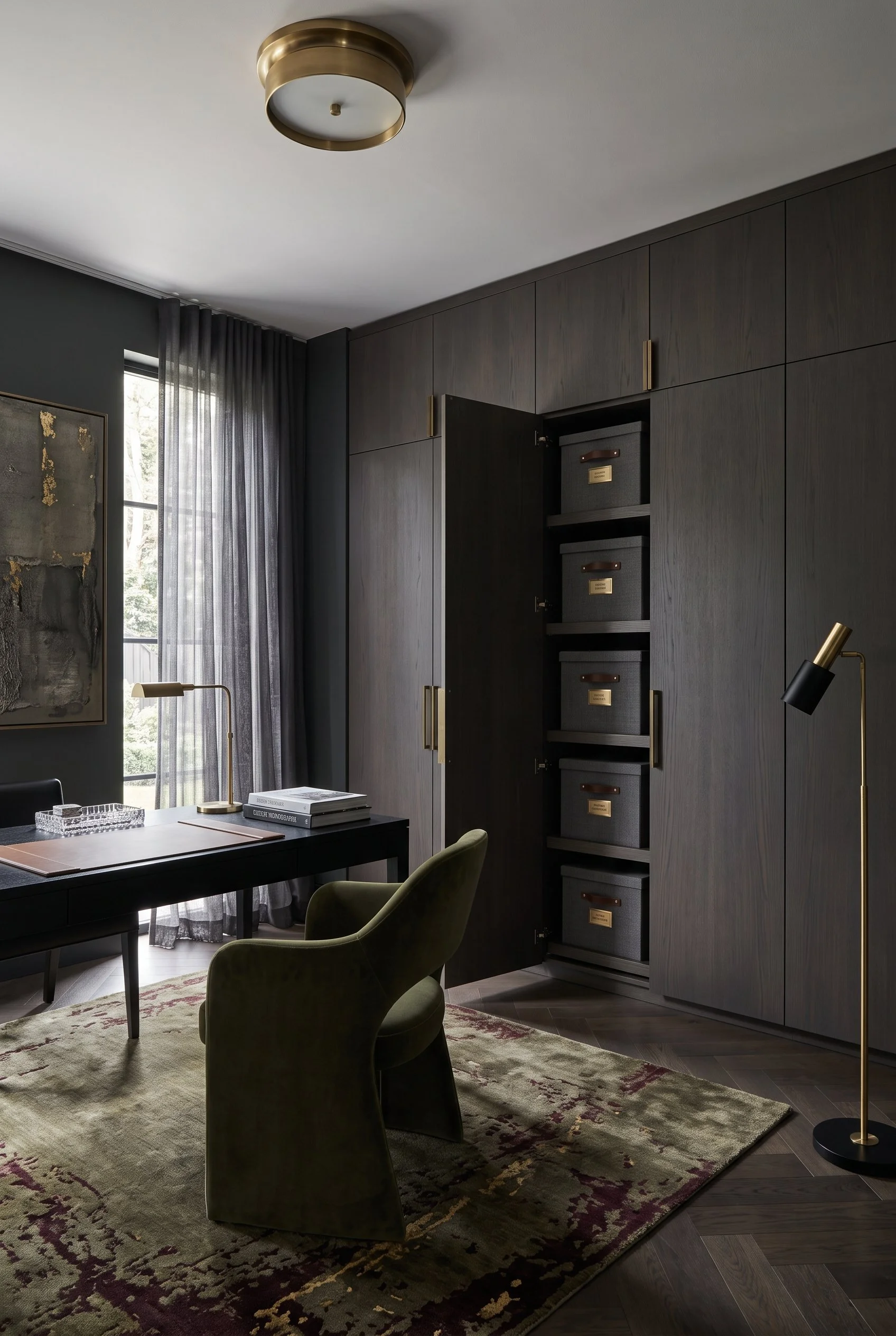
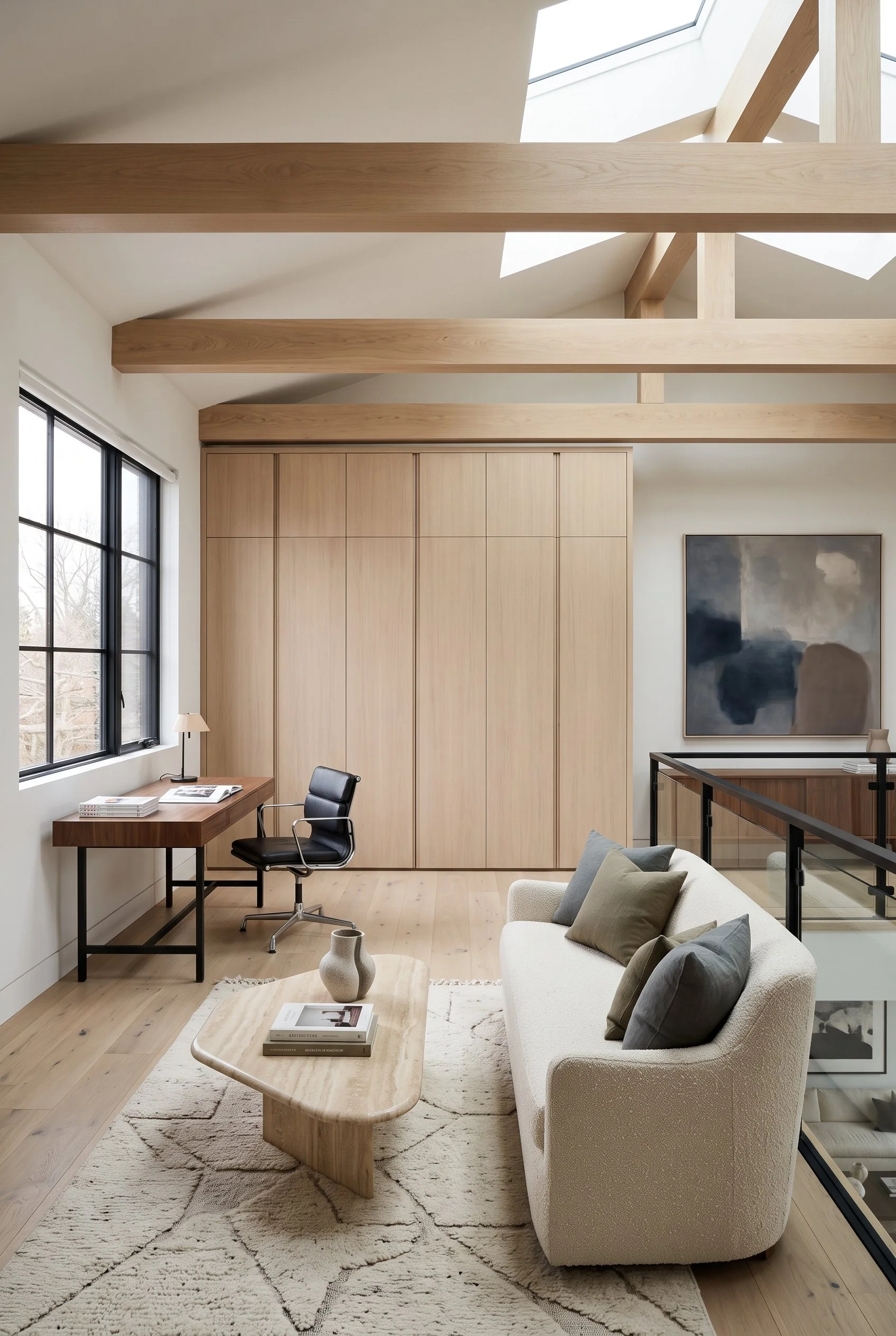
As more homeowners embrace dedicated office spaces, we're finding new opportunities to incorporate discreet storage into architectural millwork.
Paneled walls, built-in cabinetry, and integrated storage systems can conceal an impressive amount of overflow without disrupting the aesthetic of the room. What appears to be a seamless wall of cabinetry may be quietly housing seasonal wardrobes, archival files, luggage, collections, or household essentials.
Some of the best storage solutions are the ones that disappear completely.
Mudrooms Beyond Shoes and Coats
Mudrooms have evolved far beyond their original purpose.
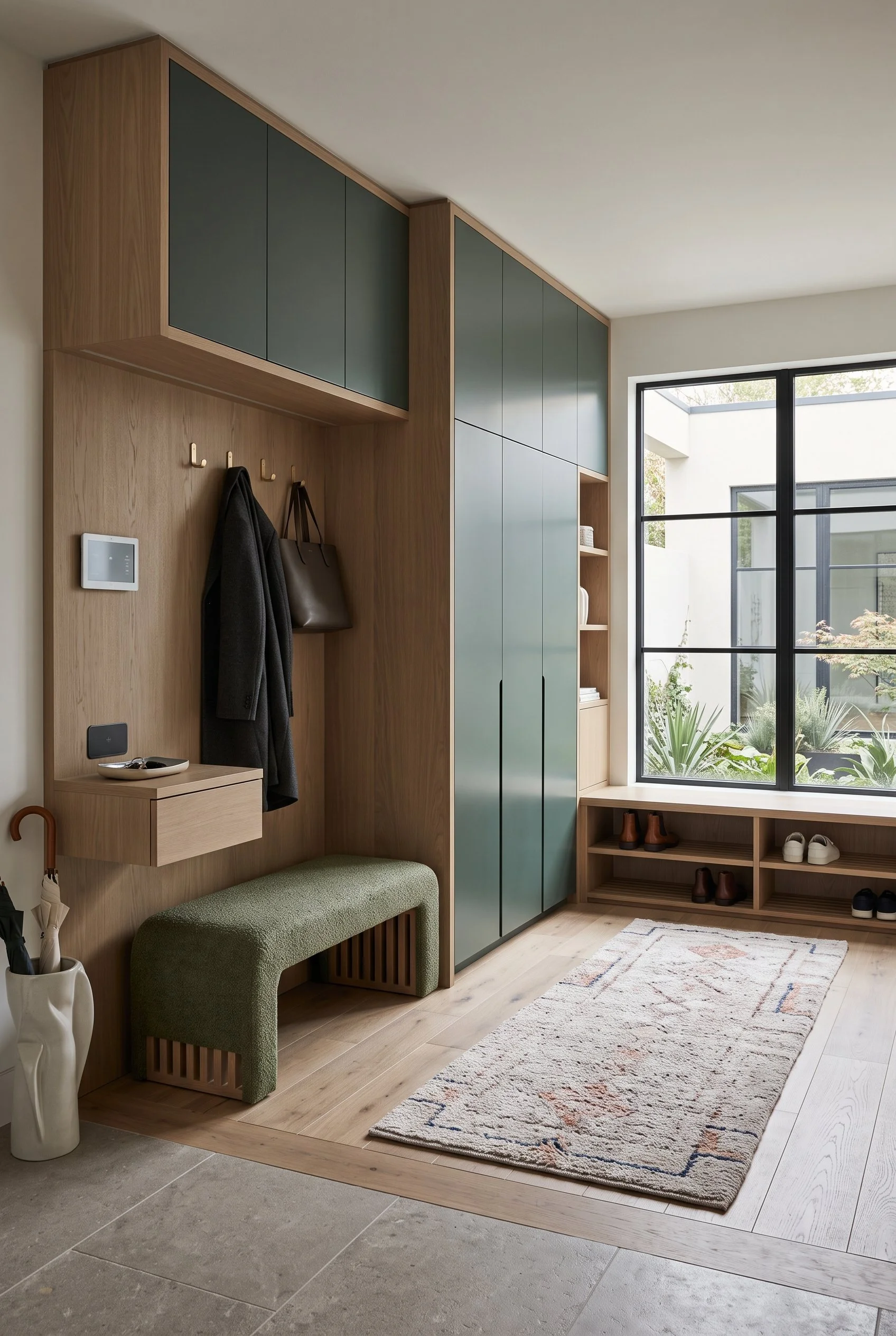
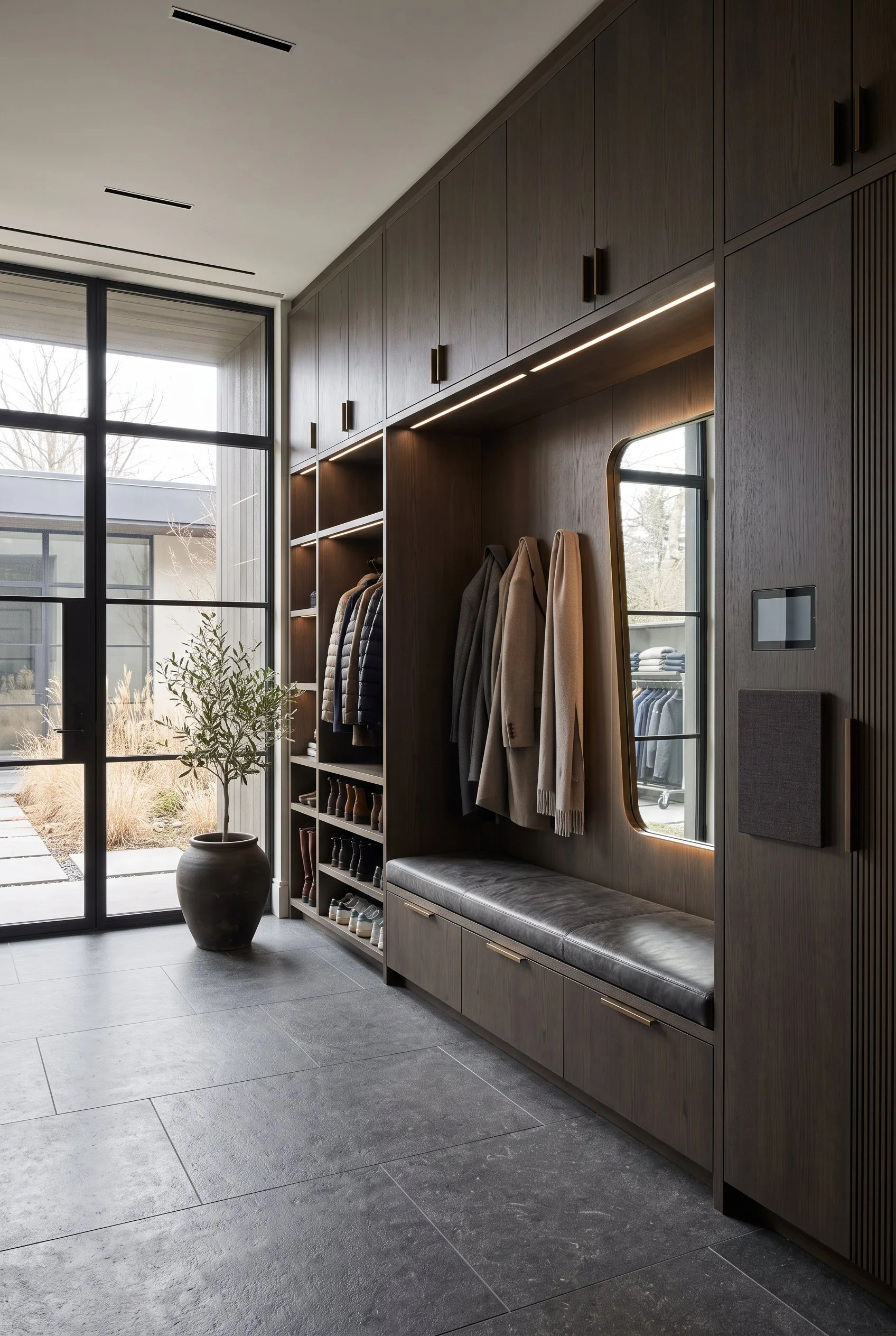
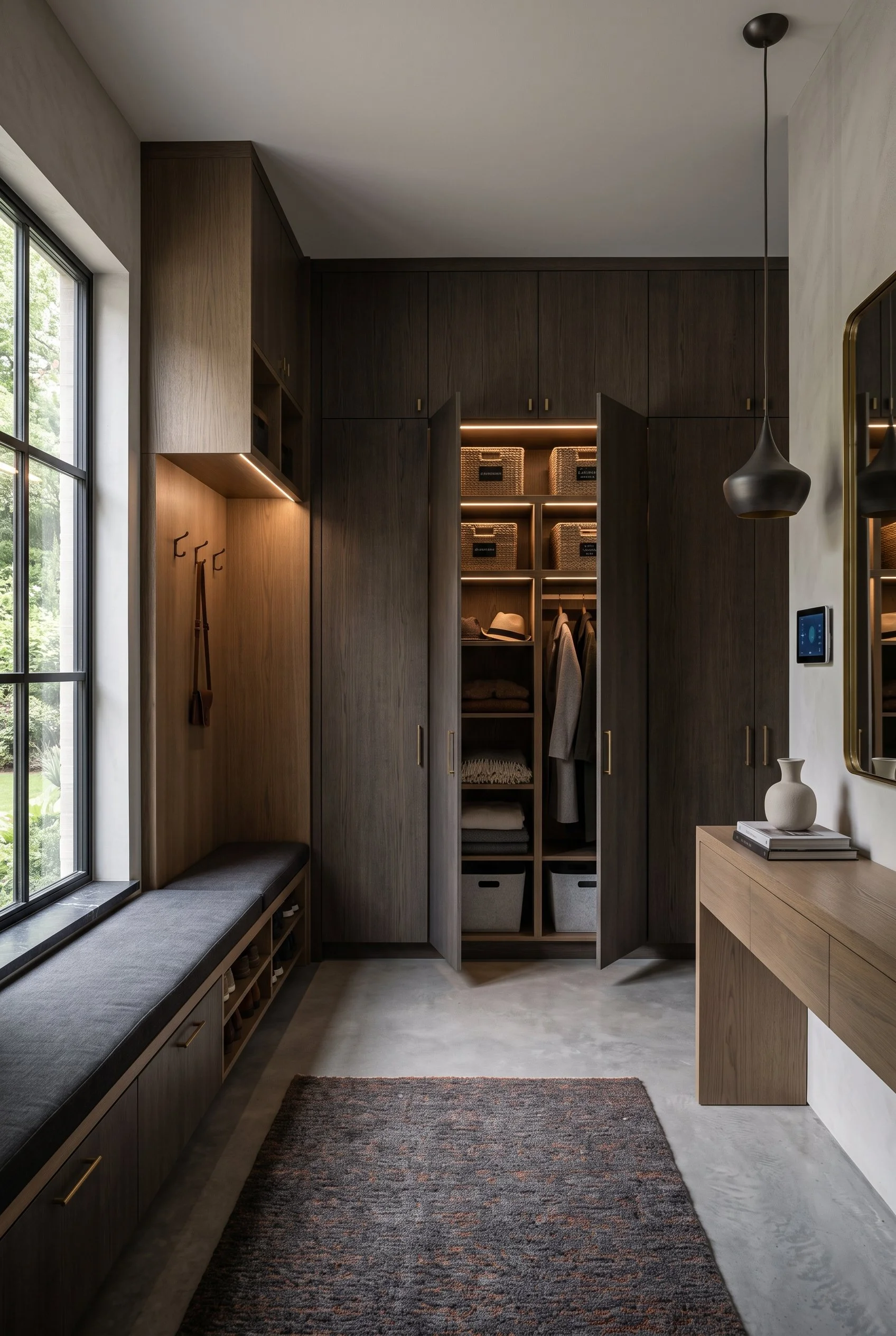
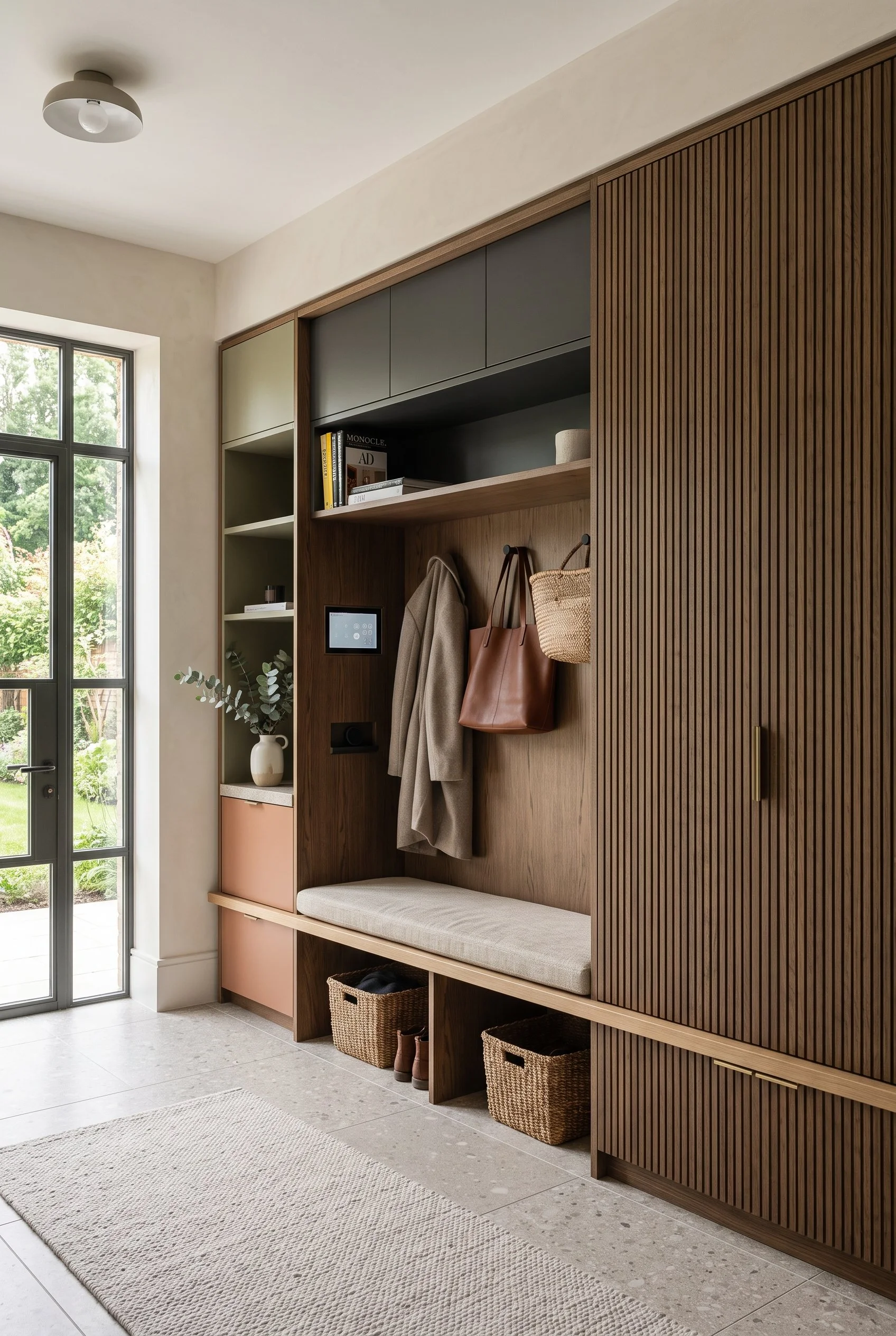
Today, they often serve as command centers for active households, providing storage for golf clubs, tennis equipment, dog supplies, outdoor gear, reusable shopping bags, coolers, and seasonal accessories.
Relocating these items out of primary closets not only improves organization but also ensures that everyday storage remains dedicated to everyday needs.
Underutilized Square Footage
Every home contains opportunities that are easy to overlook.
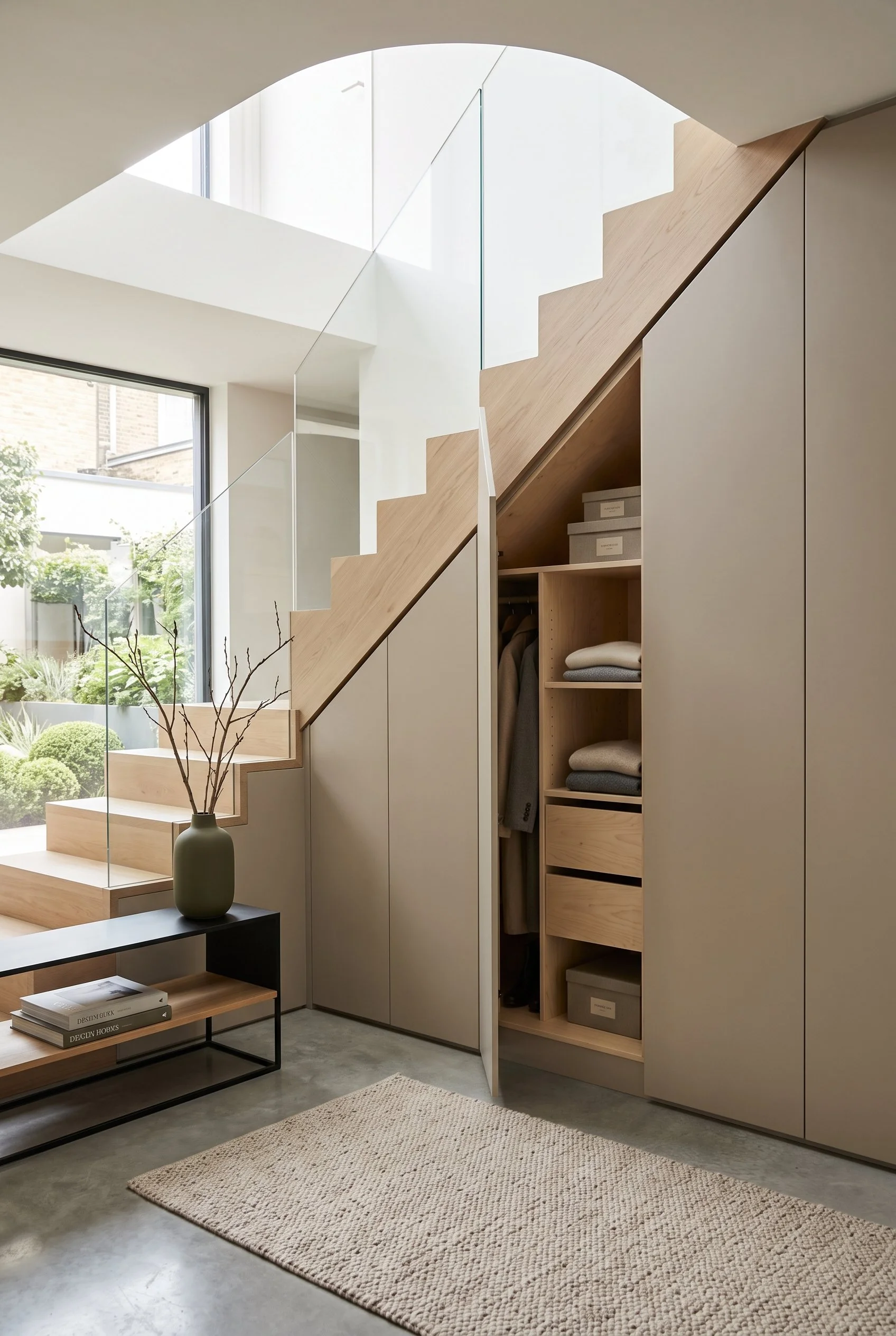
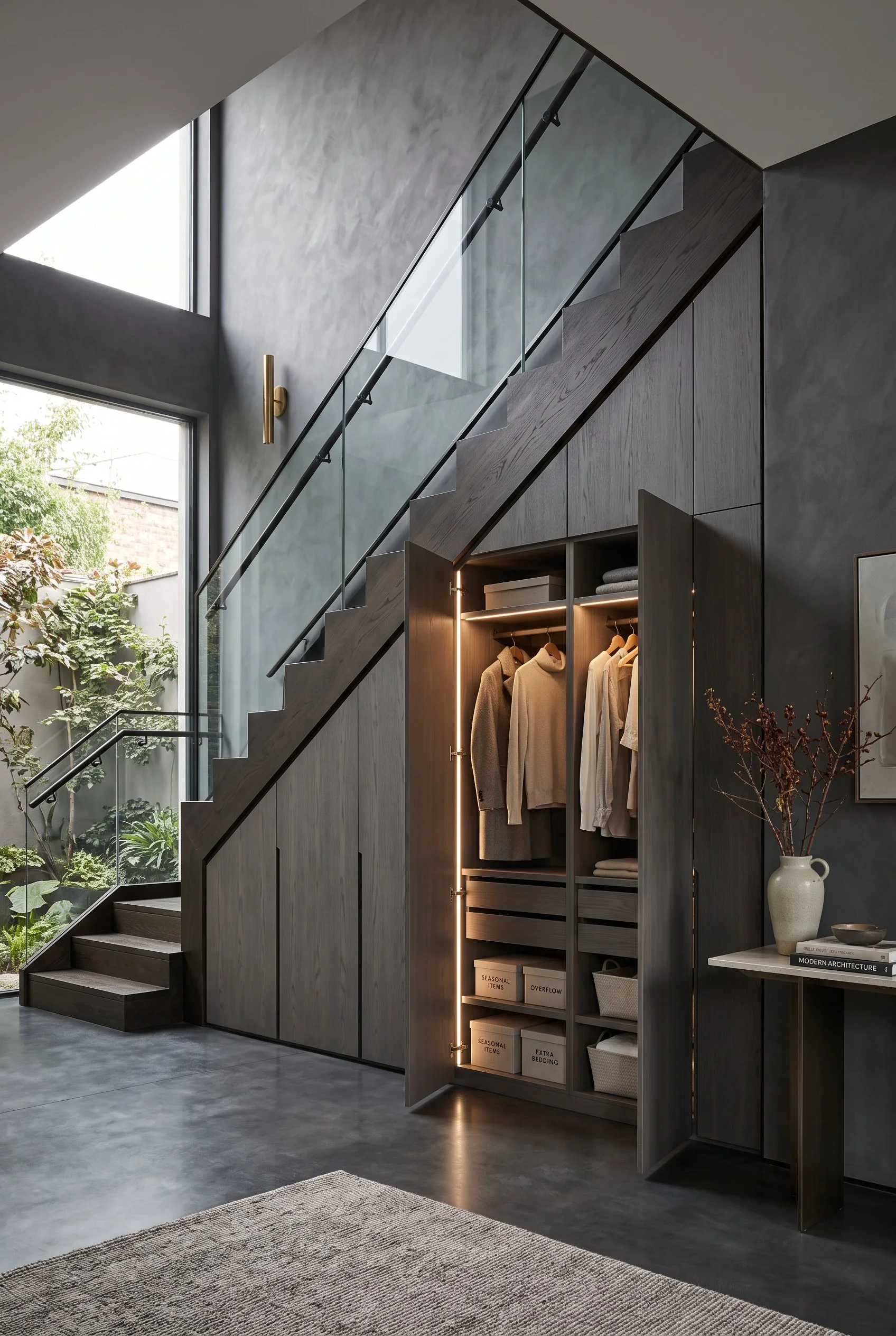
Under-stair storage, bonus rooms, loft spaces, attic storage, and built-in cabinetry can all become valuable extensions of a home's storage strategy. These secondary locations are often ideal for items that are important but not frequently used—luggage, seasonal décor, memorabilia, specialty equipment, and household overflow.
The goal is not simply to find more places to put things. The goal is to create a hierarchy.
A Whole-Home Approach
The most thoughtfully designed homes view storage as a system rather than a collection of individual closets.
Instead of forcing every belonging into a single dressing room, they distribute storage intelligently throughout the home, assigning each item a place based on how often it is used. Daily essentials remain close at hand, while seasonal, occasional, and archival belongings are relocated to supporting spaces designed specifically for that purpose.
When everything doesn't have to live in the closet, the closet itself becomes more beautiful, more functional, and ultimately more enjoyable to use.
Sometimes the secret to a better closet isn't building a bigger one.
It's designing for overflow.