
The Garment Rack, Reconsidered
Once relegated to backstage dressing rooms, fashion studios, and temporary wardrobes, the garment rack has become something far more considered. In the right setting, it can function as architecture, furniture, display, and utility all at once.
A custom garment rack is not simply additional hanging space. It can create a place to assemble tomorrow’s look, stage a travel wardrobe, display a favorite collection, or give recently worn pieces somewhere to live before returning to the closet. In dressing rooms, bedrooms, guest suites, and wardrobe studios, the rack offers a lighter, more flexible alternative to traditional cabinetry—while making the clothing itself part of the room.
The most successful designs begin with purpose. Is the rack meant for permanent storage, daily styling, packing, garment care, or display? Once that is defined, its form can follow.
Suspended in Space
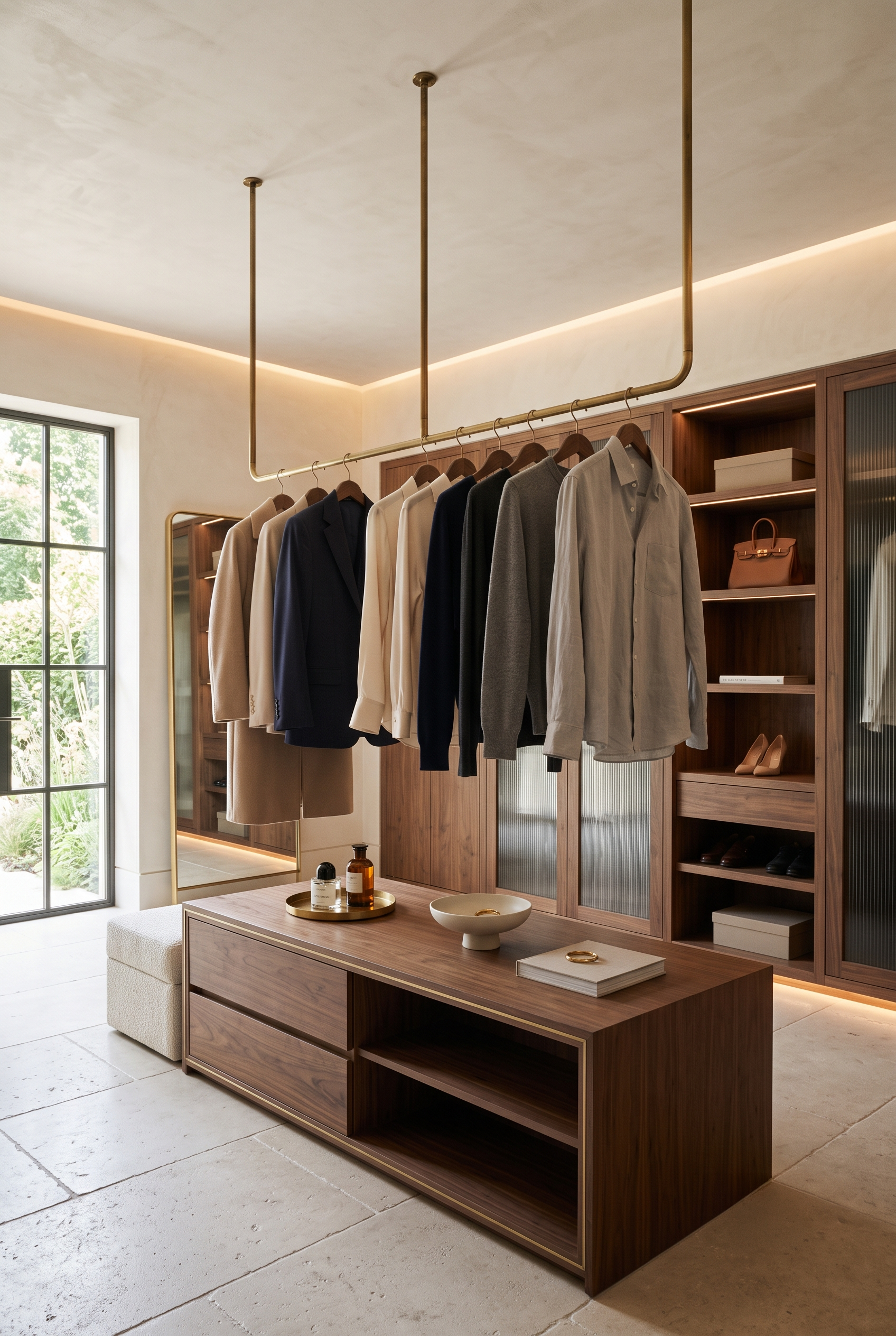
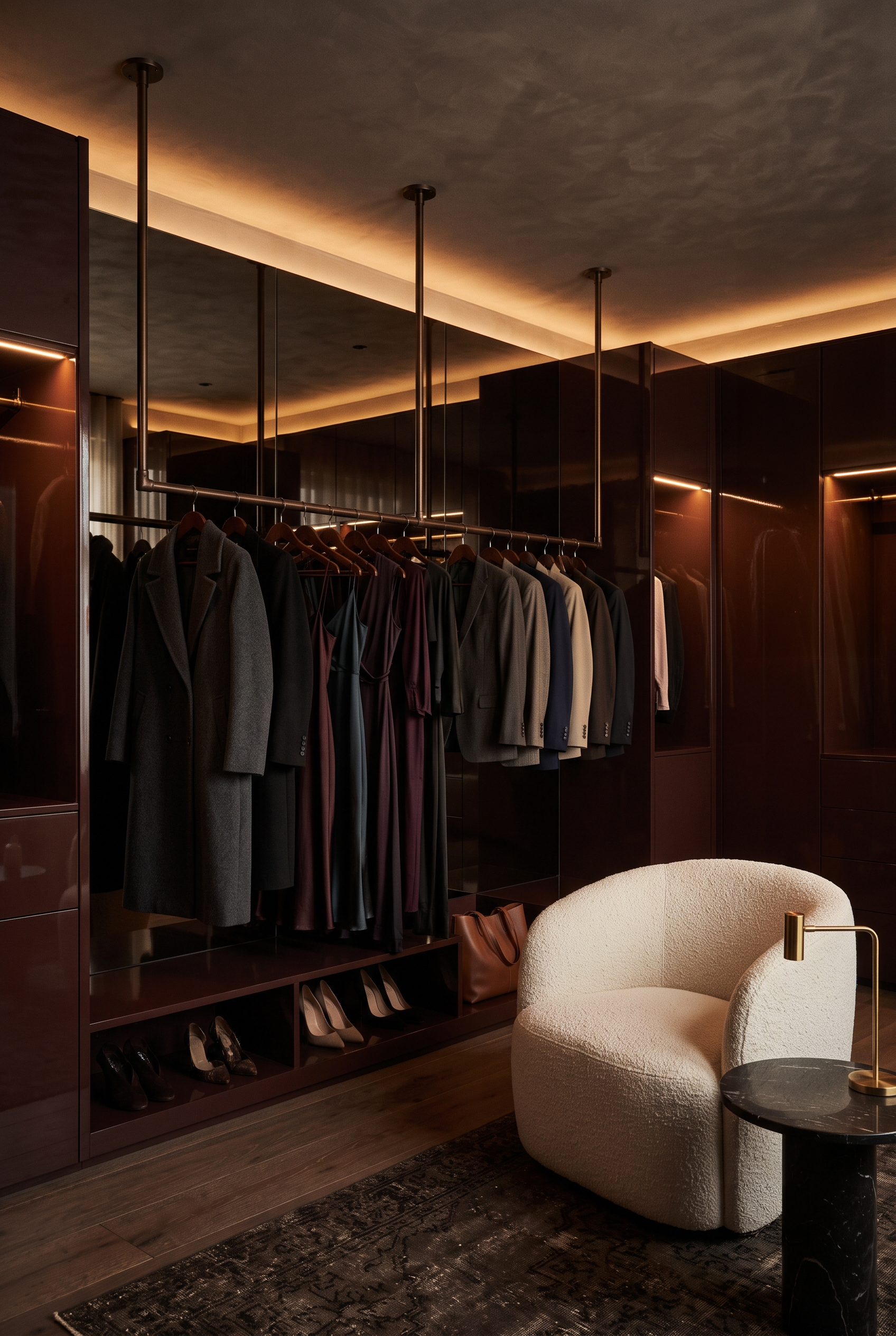
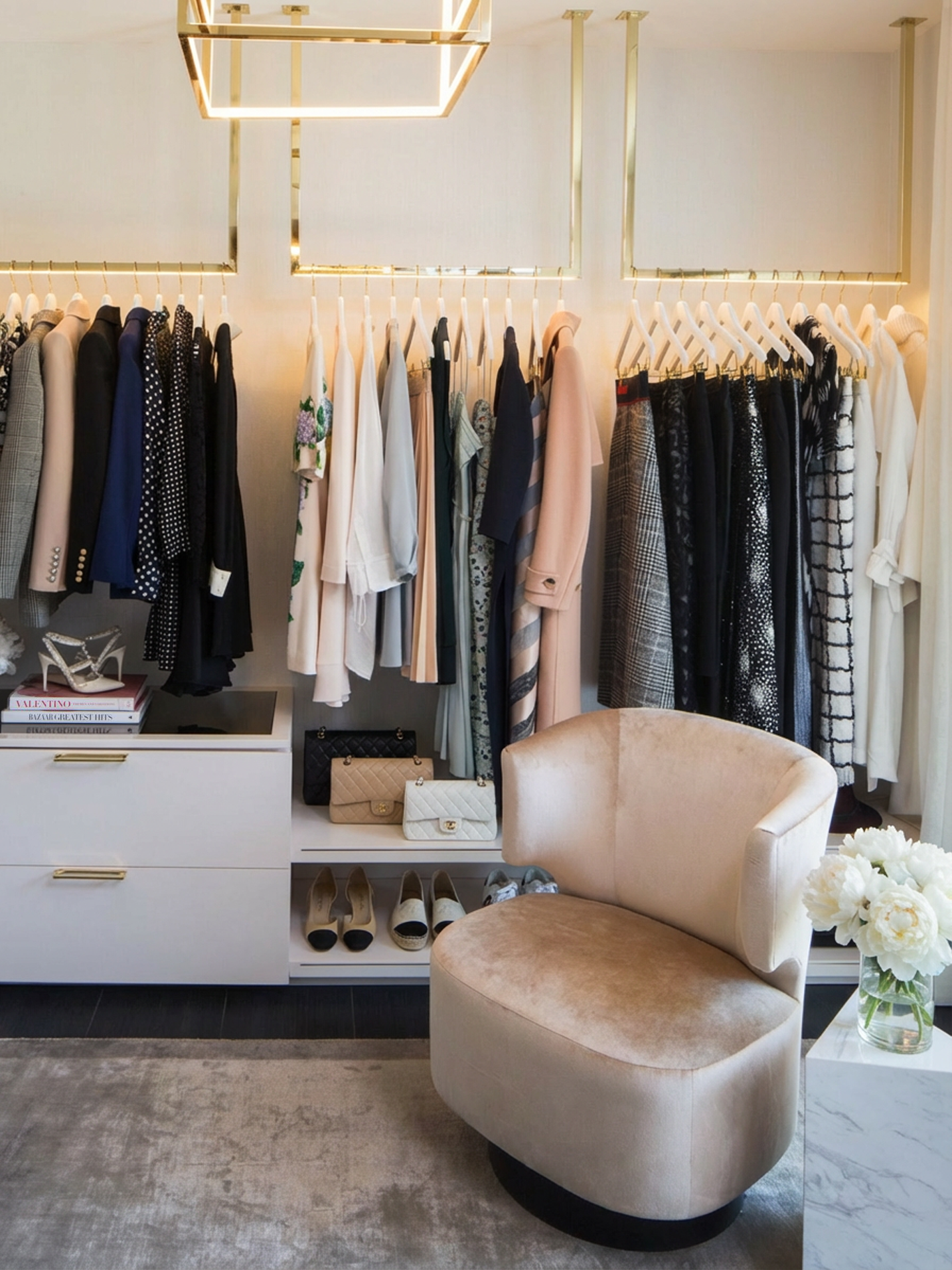
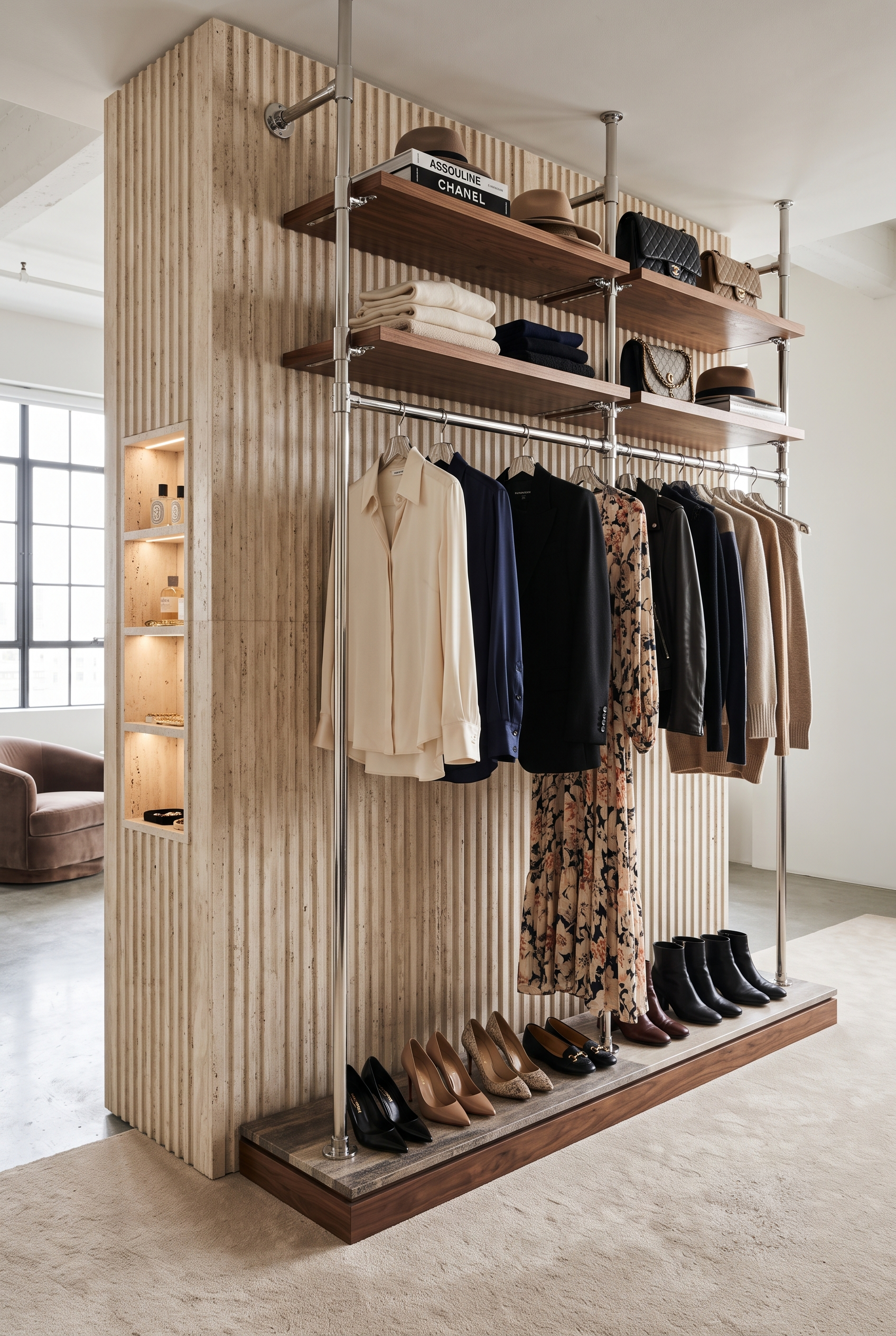
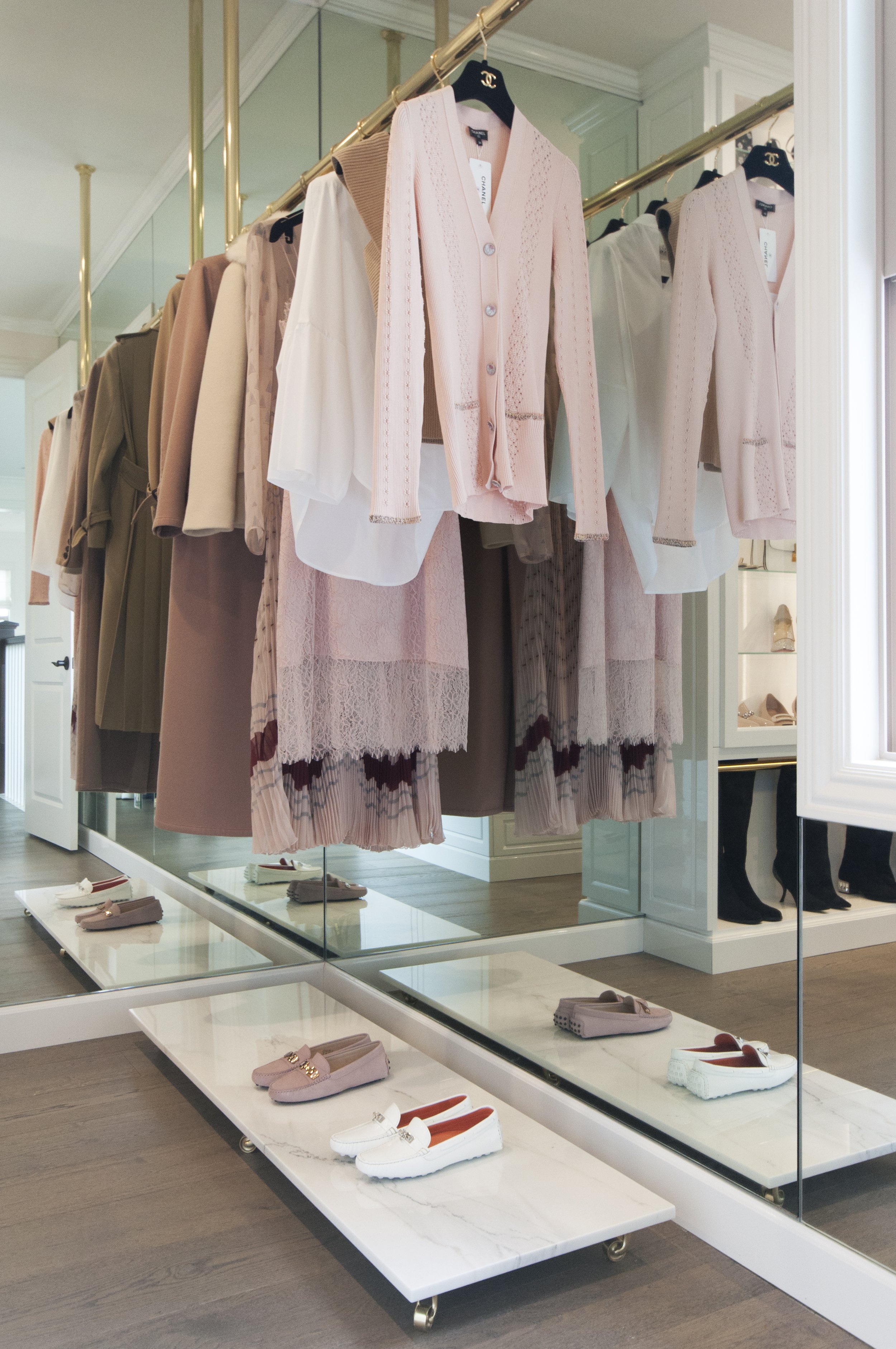
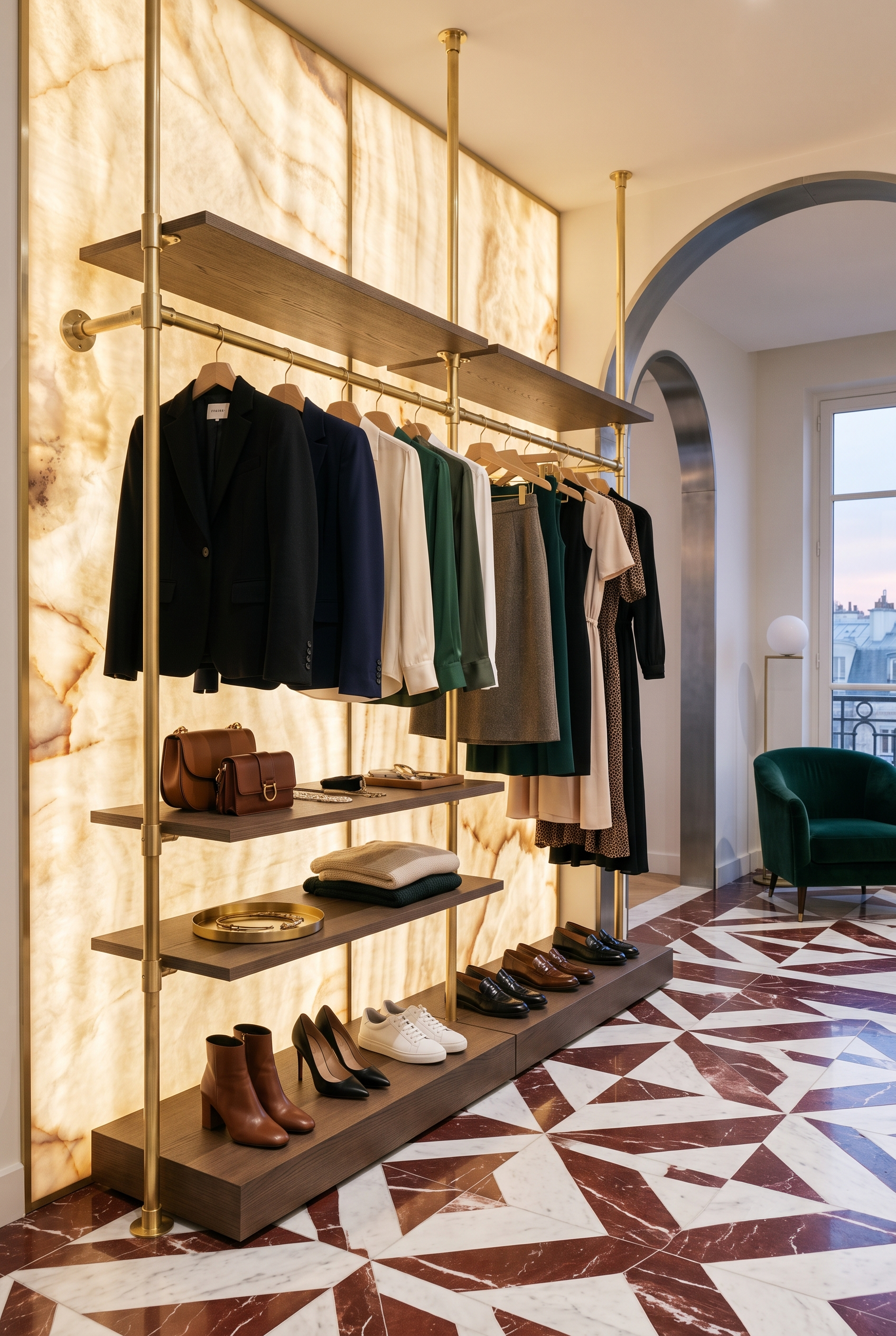
Ceiling-mounted garment racks bring an architectural quality to open hanging storage. Suspended from slender rods or straps, they appear to float within the room, preserving sightlines and keeping the floor visually clear.
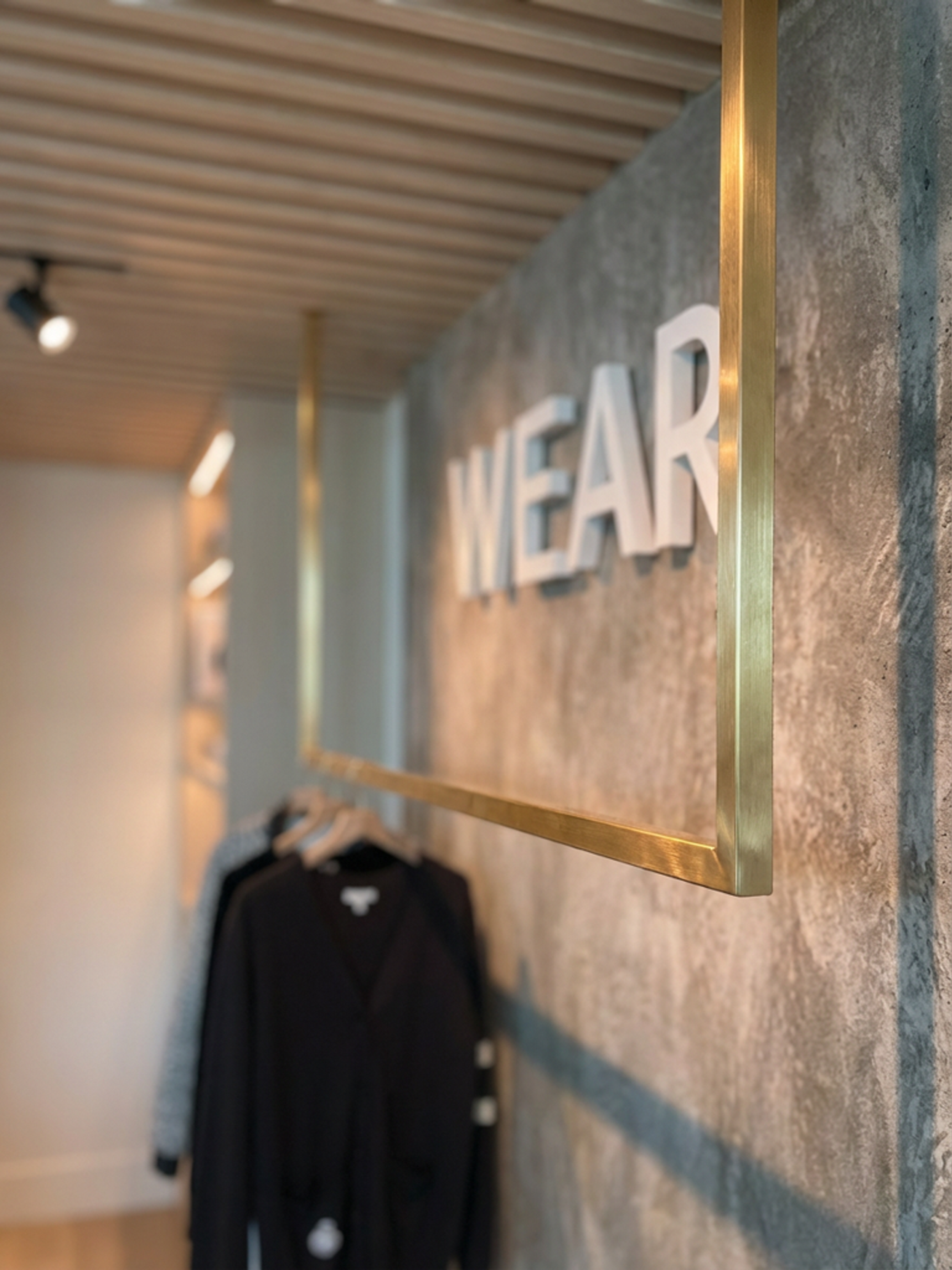
A single rail can be positioned above low cabinetry, in front of a window, or within the center of a dressing room. More elaborate versions may form a rectangular frame, an oval track, or a continuous hanging installation.
The finish can completely change the character of the piece. Unlacquered brass feels warm and tailored, polished nickel lends a refined clarity, and blackened steel creates a more graphic, modern presence. Integrated lighting can further transform the rack into a true focal point.
The Wardrobe Wall
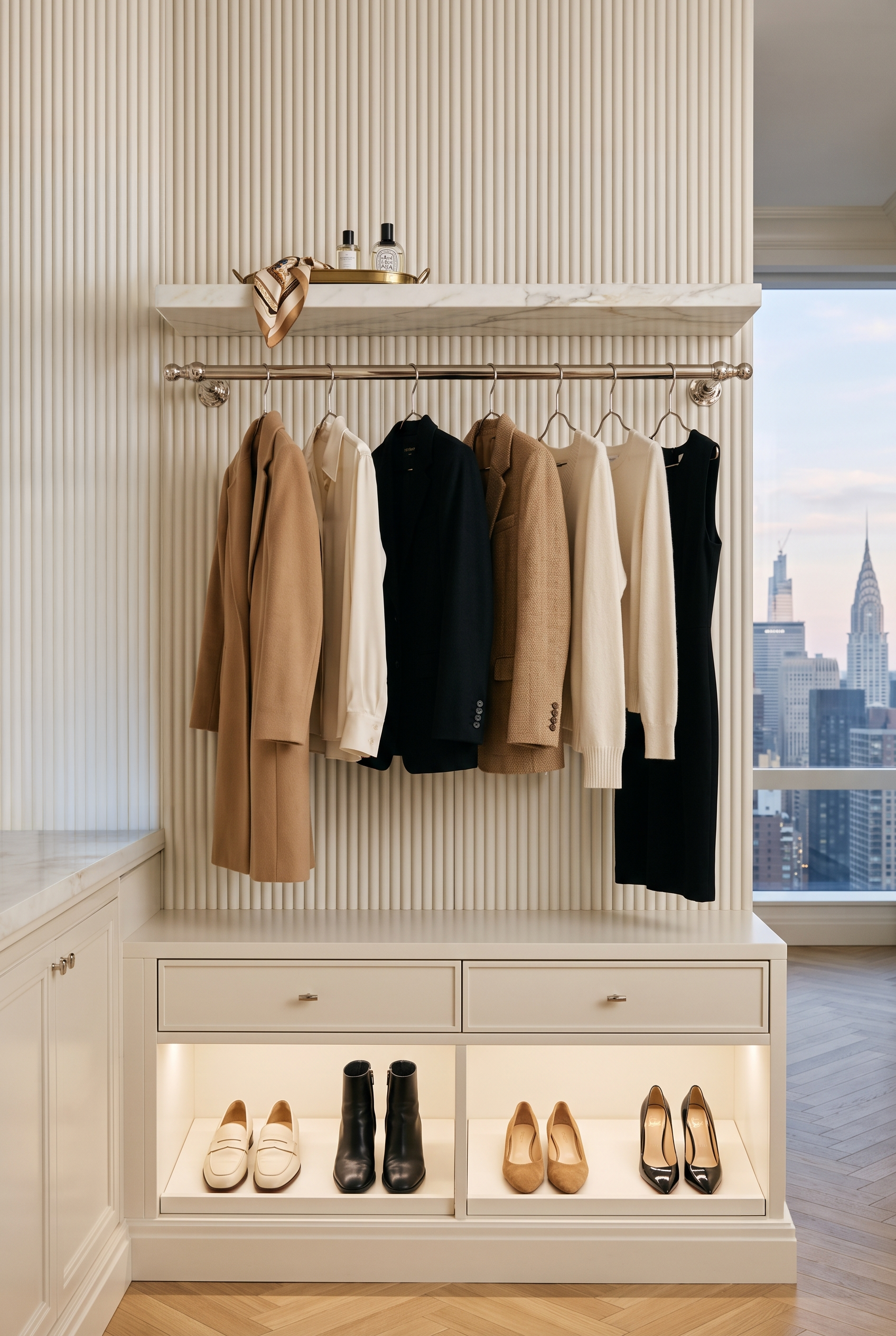
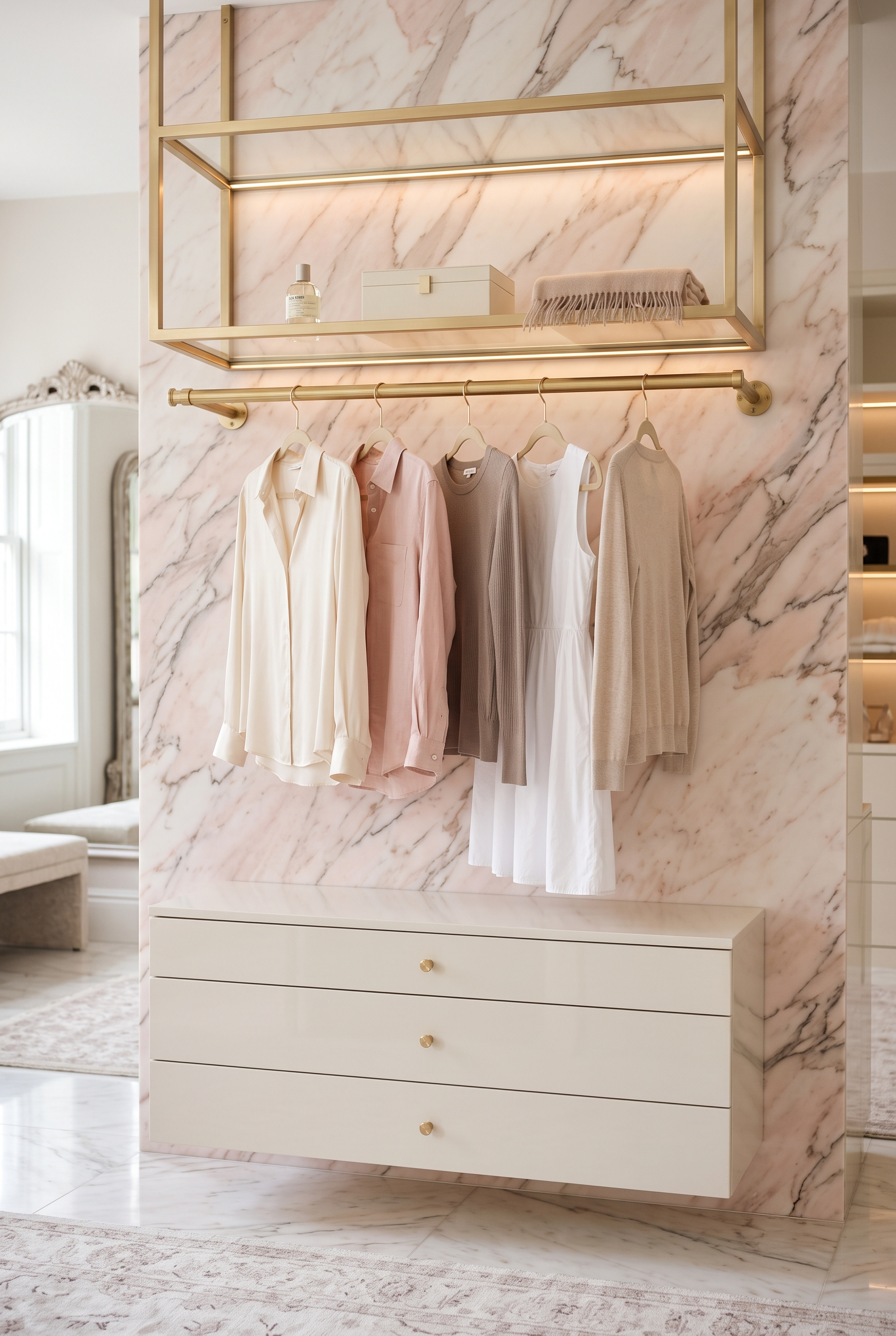
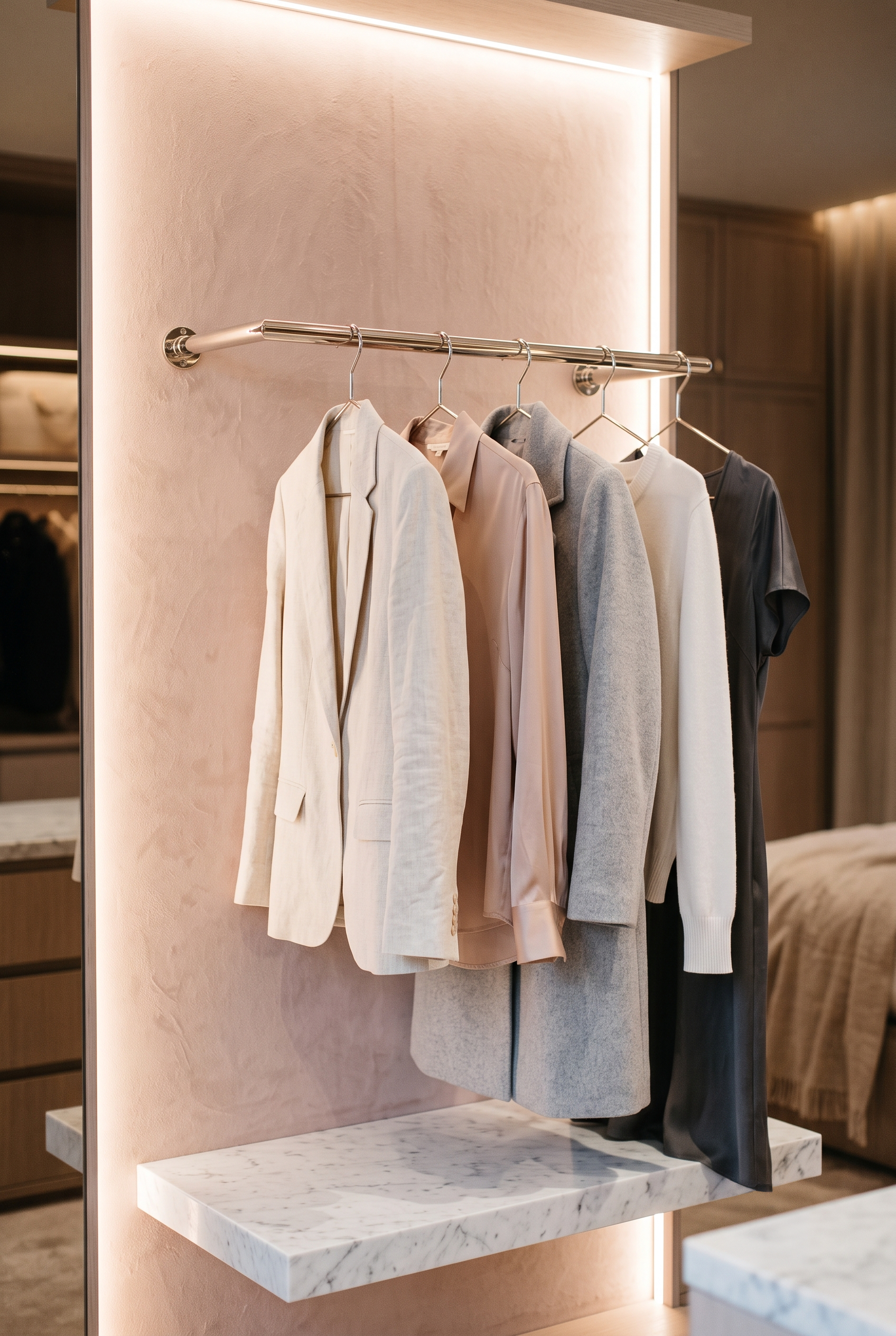
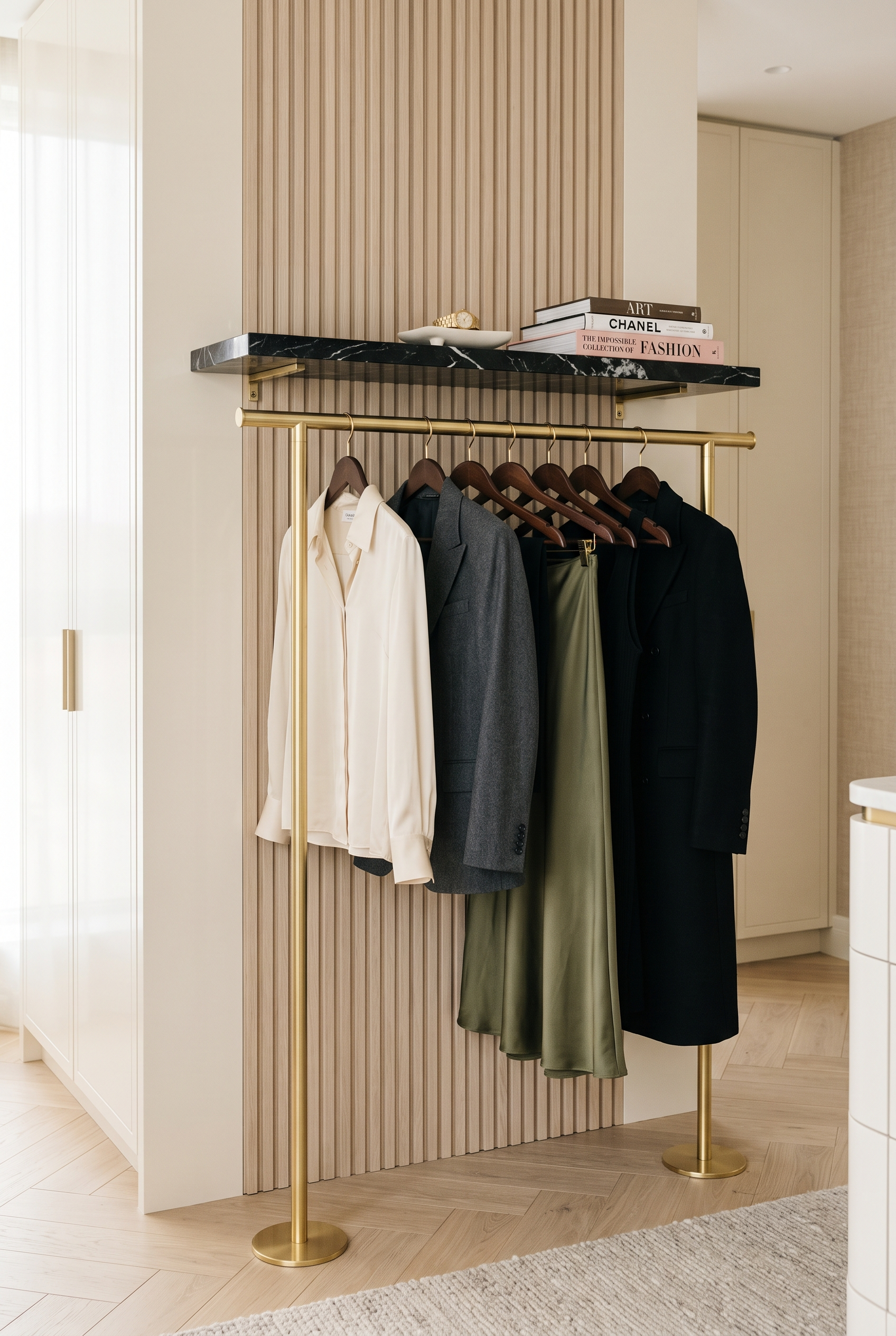
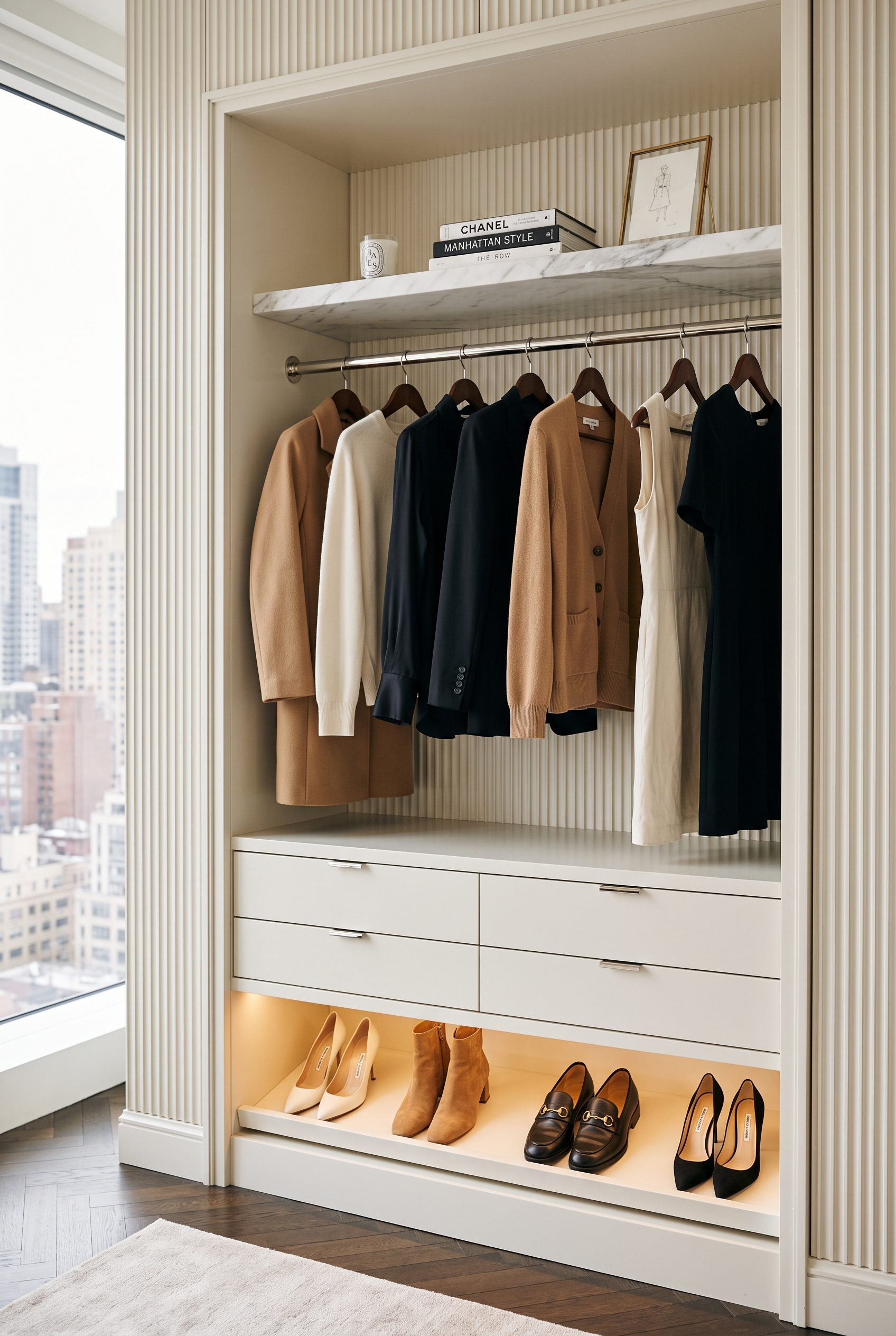
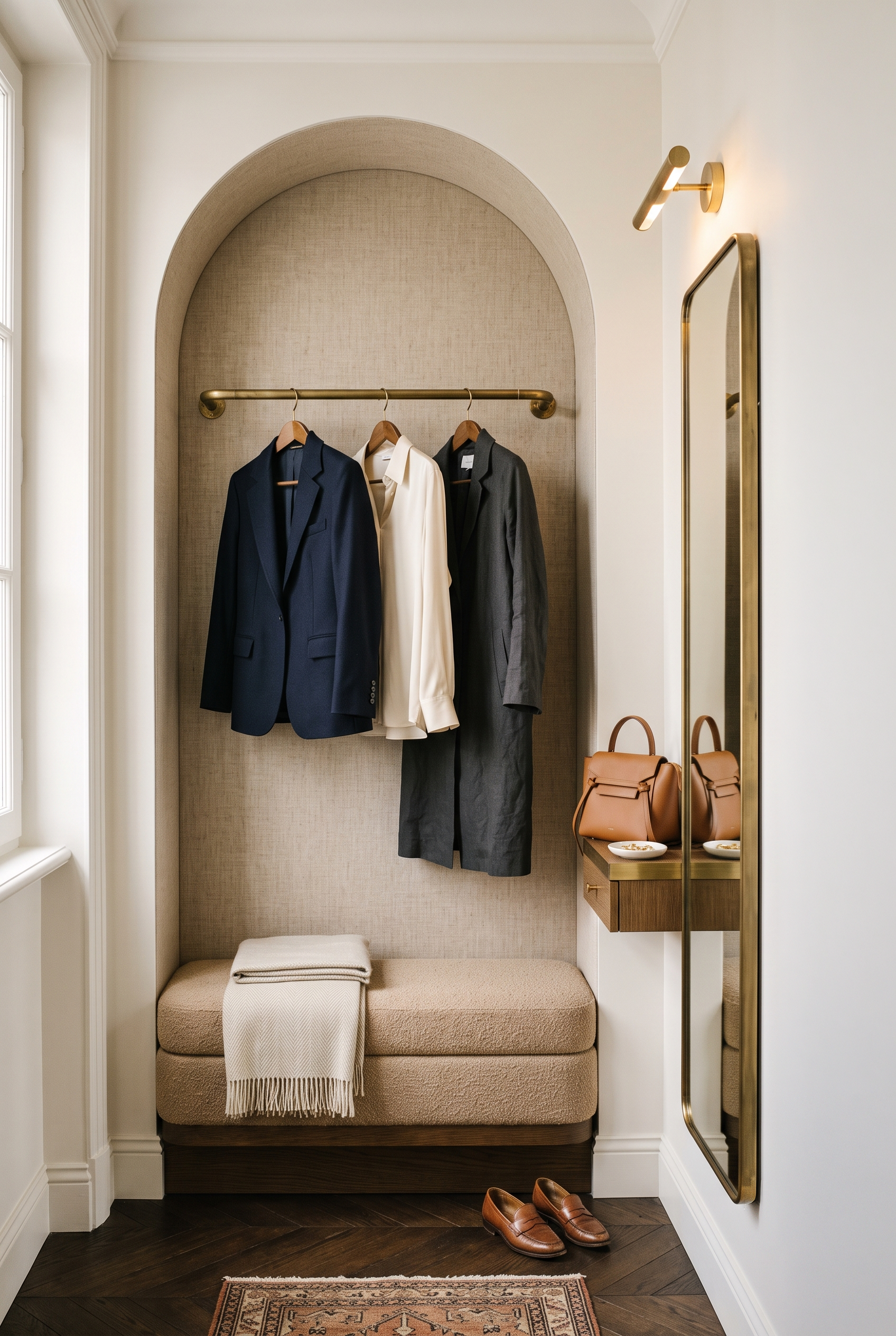
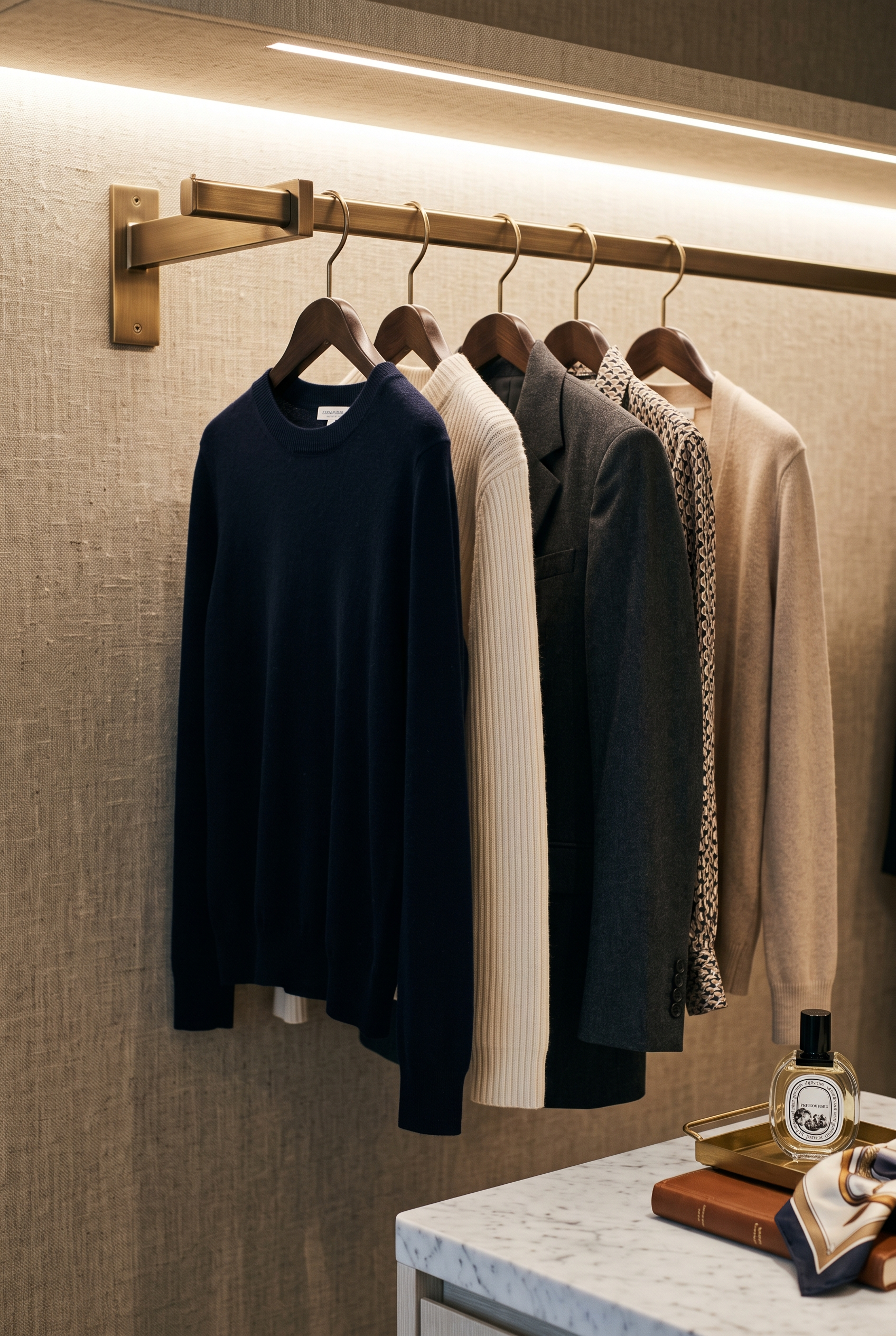
Wall-mounted rails are ideal for dressing corridors, compact wardrobes, guest rooms, and styling alcoves. They make use of otherwise underutilized wall space while offering immediate access to a carefully edited selection of clothing.
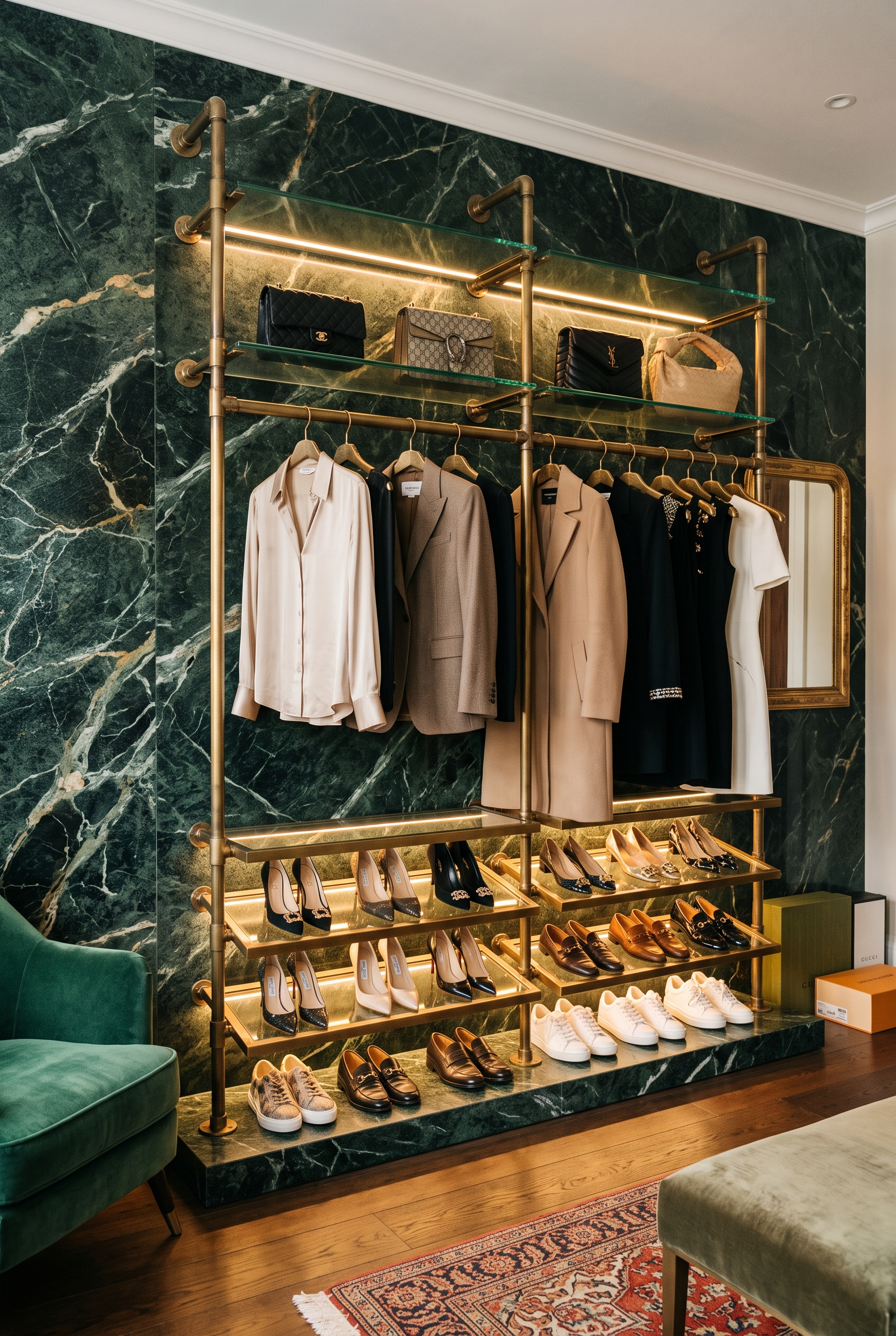
Rather than treating the rail as an isolated element, it can become part of a complete composition. A shelf above provides space for hats or handbags, while drawers, shoe storage, or an upholstered bench below create a more functional wardrobe station.
A mirror, decorative wall panel, or art backdrop can make the arrangement feel intentional—more like a boutique display than exposed storage.
Furniture for Fashion
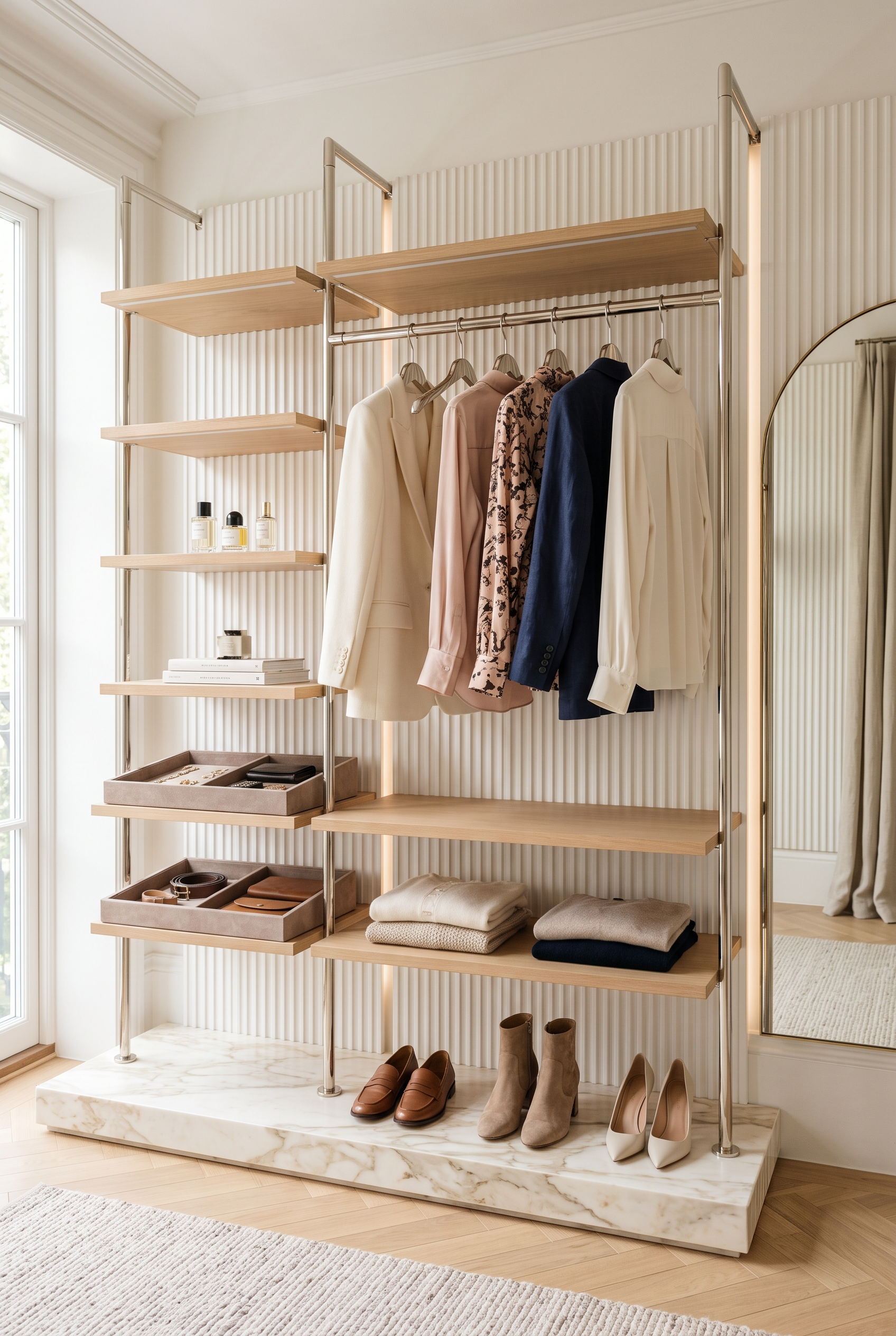
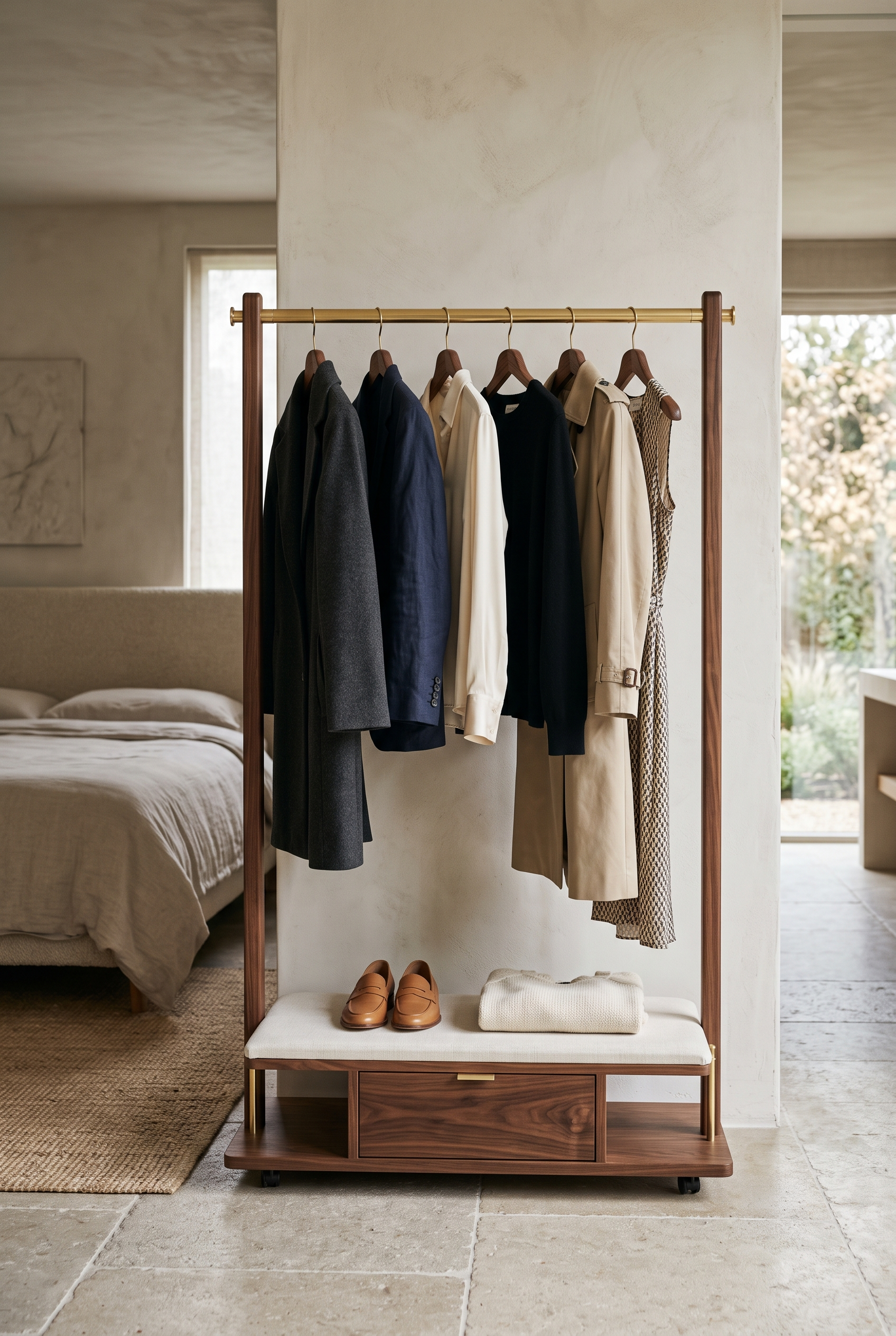
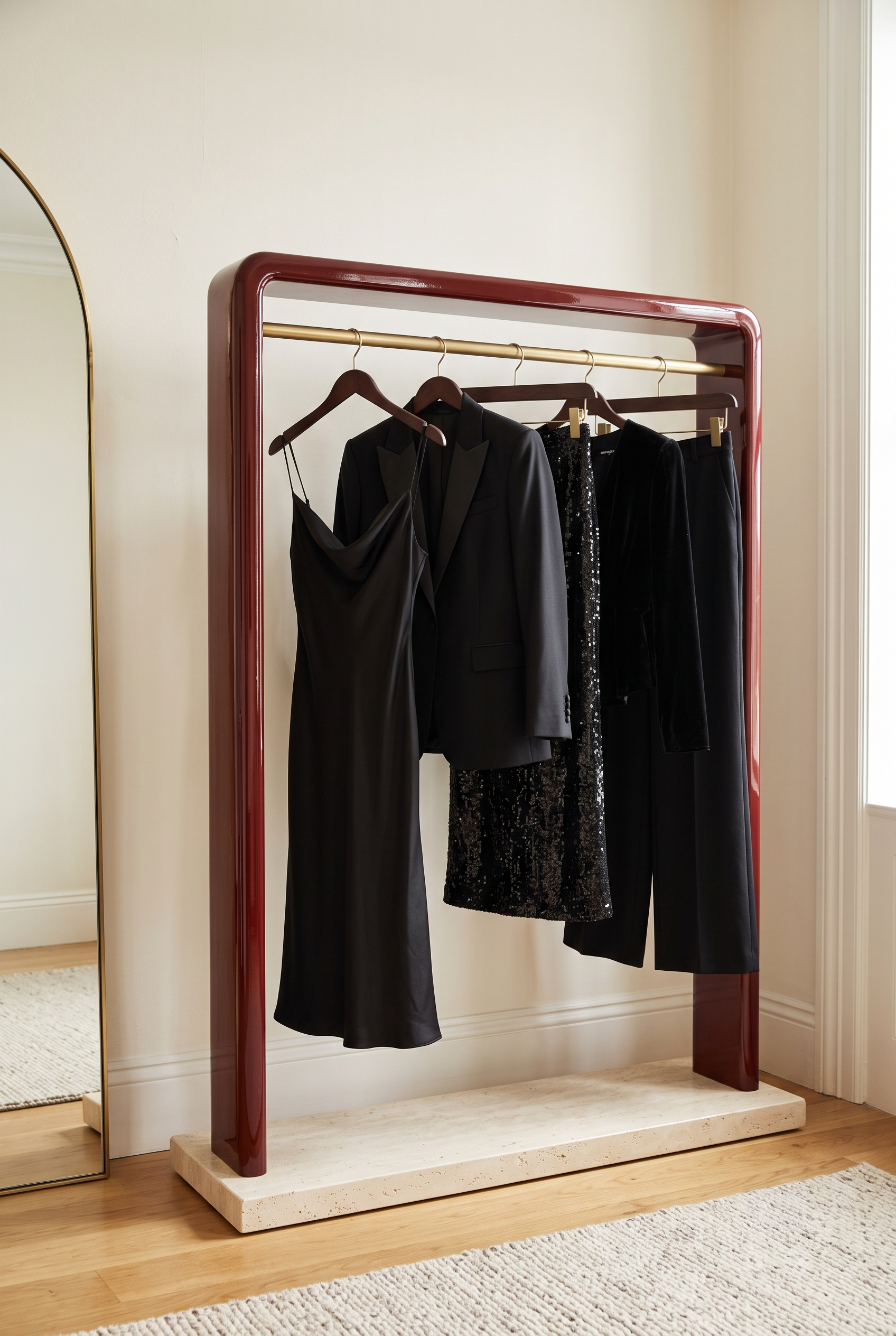
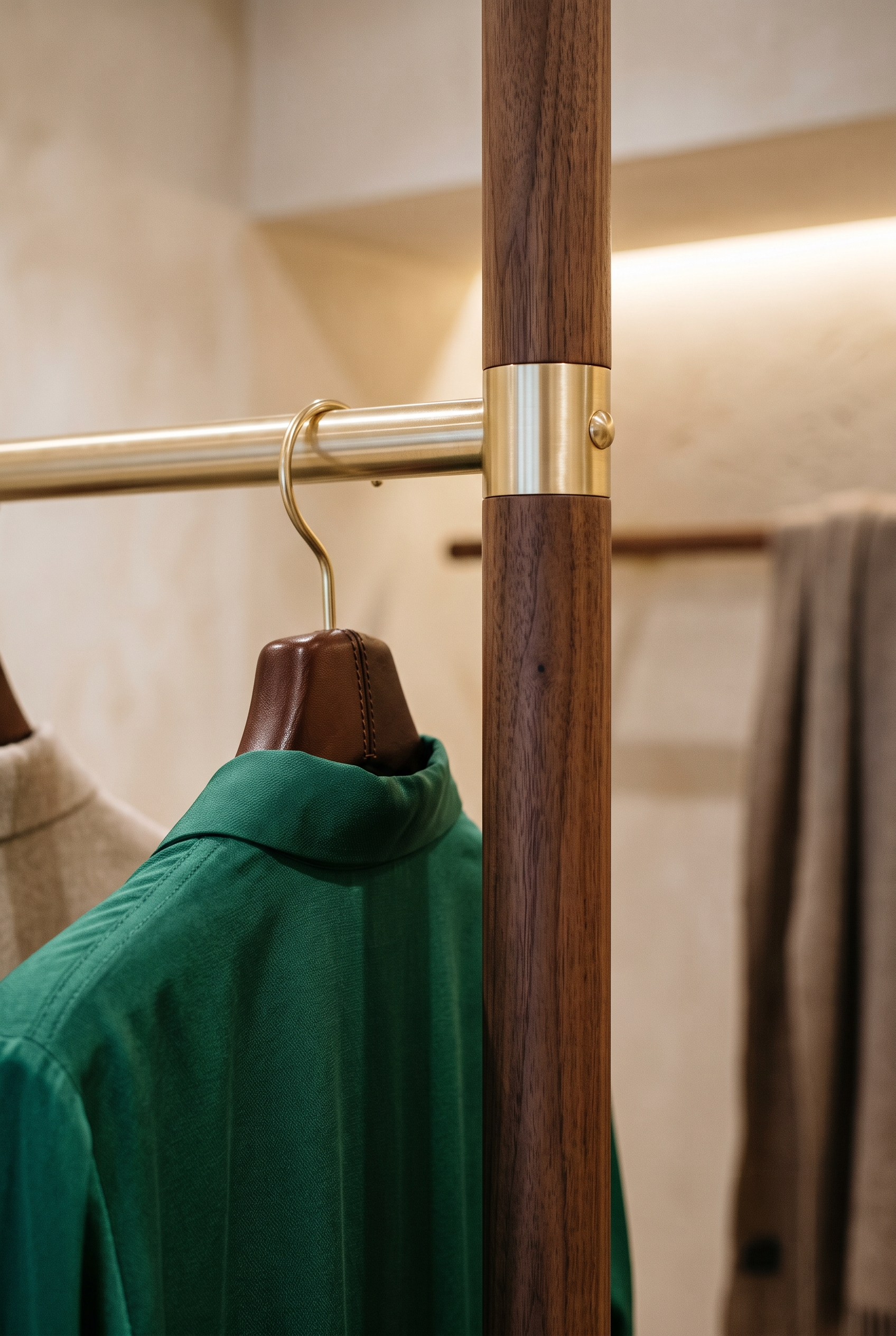
A freestanding garment rack has the potential to become a true piece of furniture.
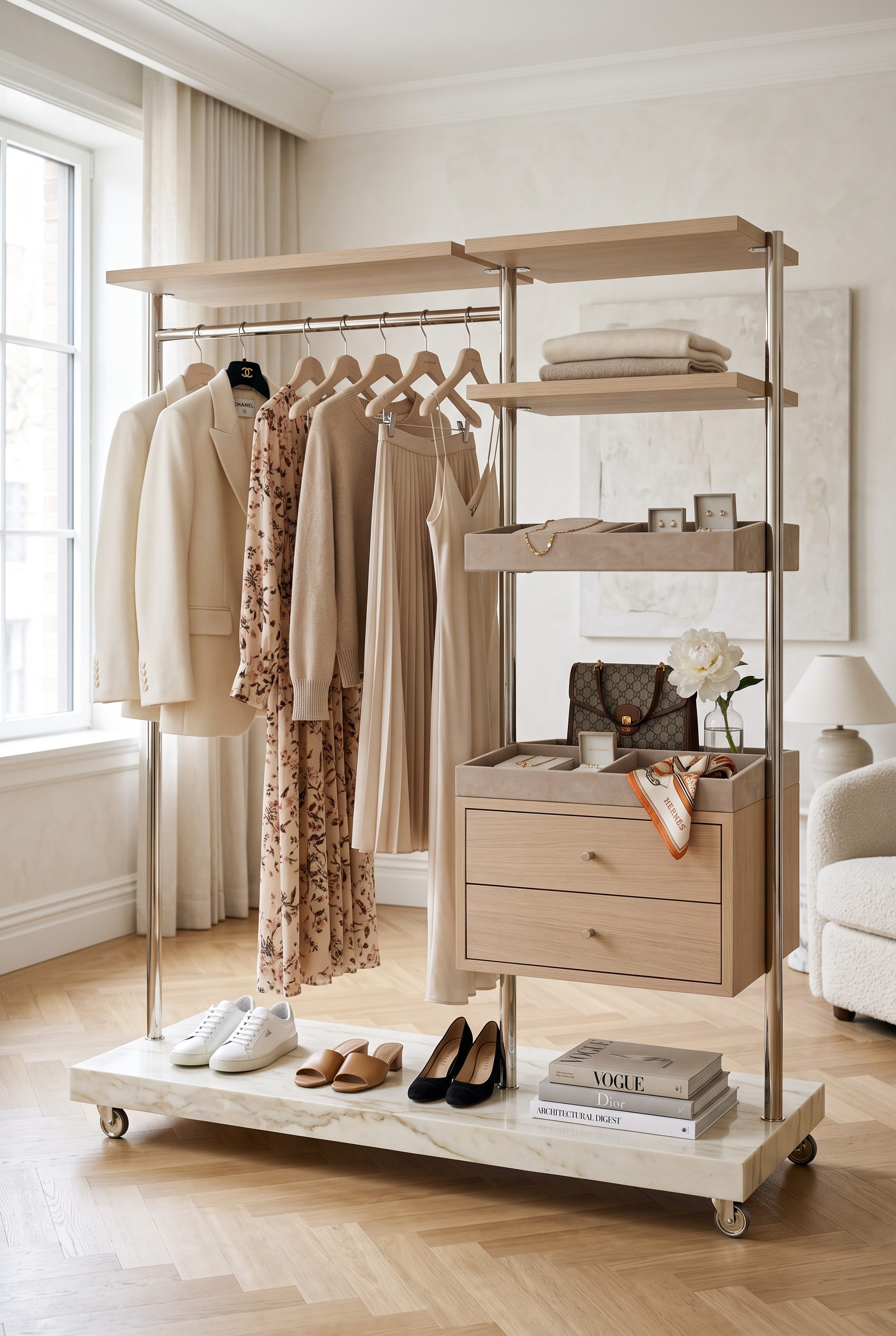
Custom versions may incorporate solid wood frames, lacquered forms, metal detailing, integrated drawers, lower shelves, or a stone base. Casters can be concealed beneath the structure, allowing the rack to move between a closet, bedroom, packing area, or laundry room without appearing overly utilitarian.
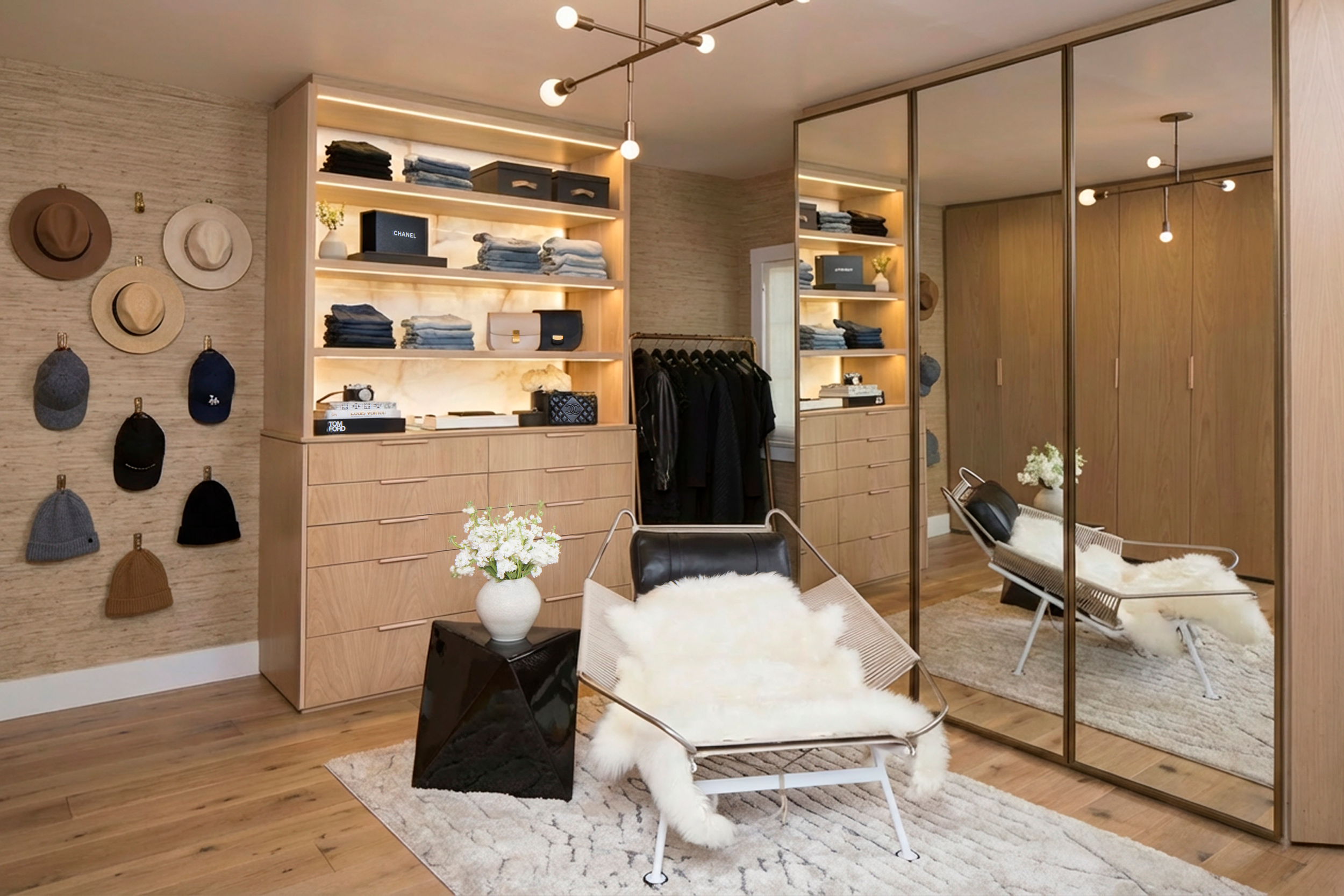
In a large dressing room, a freestanding rack can serve almost like a wardrobe island turned vertically—creating separation within the space while keeping clothing visible and accessible.
Industrial, Refined
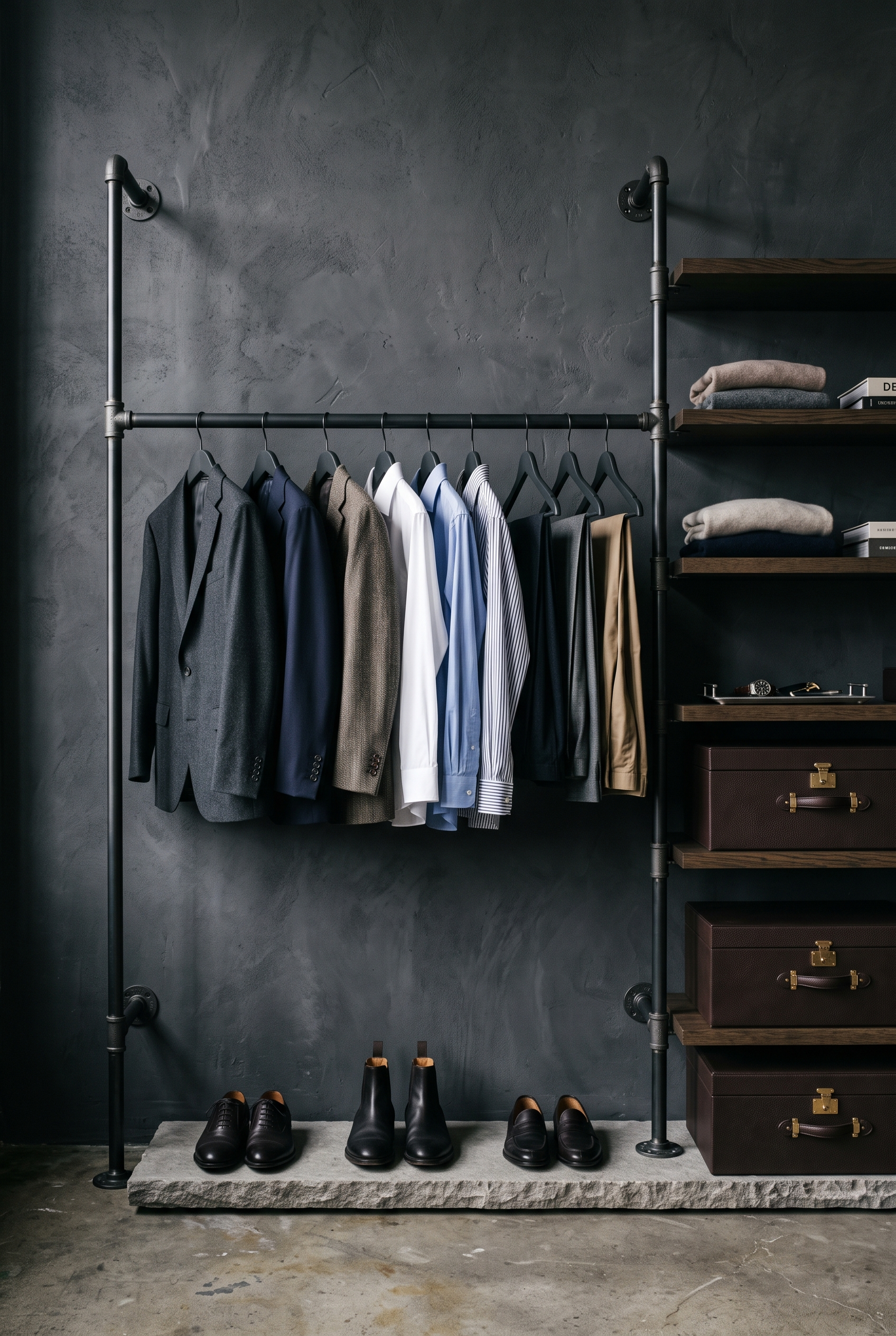
Industrial pipe systems offer a more utilitarian expression, particularly suited to lofts, masculine dressing rooms, fashion studios, mudrooms, and contemporary interiors.
The difference between a basic pipe rack and a custom architectural system lies in the details. Carefully considered proportions, coordinated fittings, specialized finishes, integrated shelving, and precise attachment points elevate the system beyond something temporary or improvised.
Blackened steel, aged brass, or brushed metal can create a striking framework for hanging garments while maintaining a sense of honesty and simplicity.
DESIGNED for Display
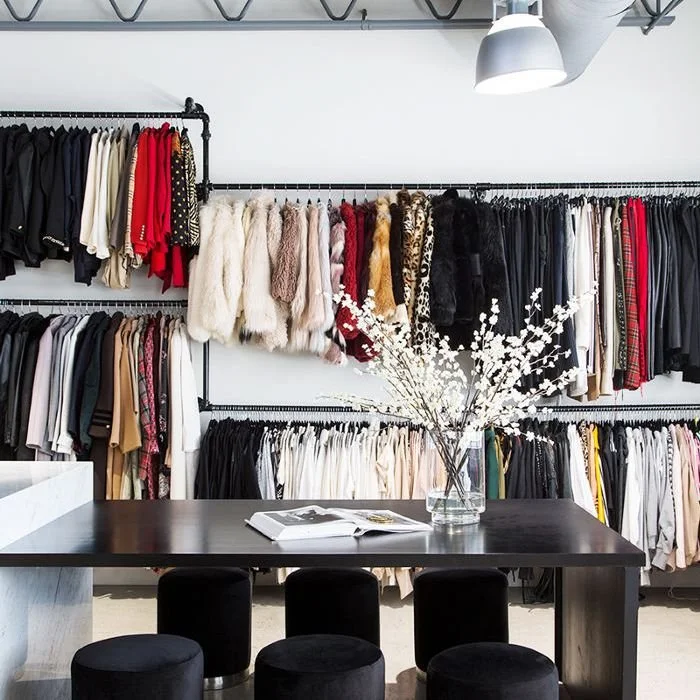
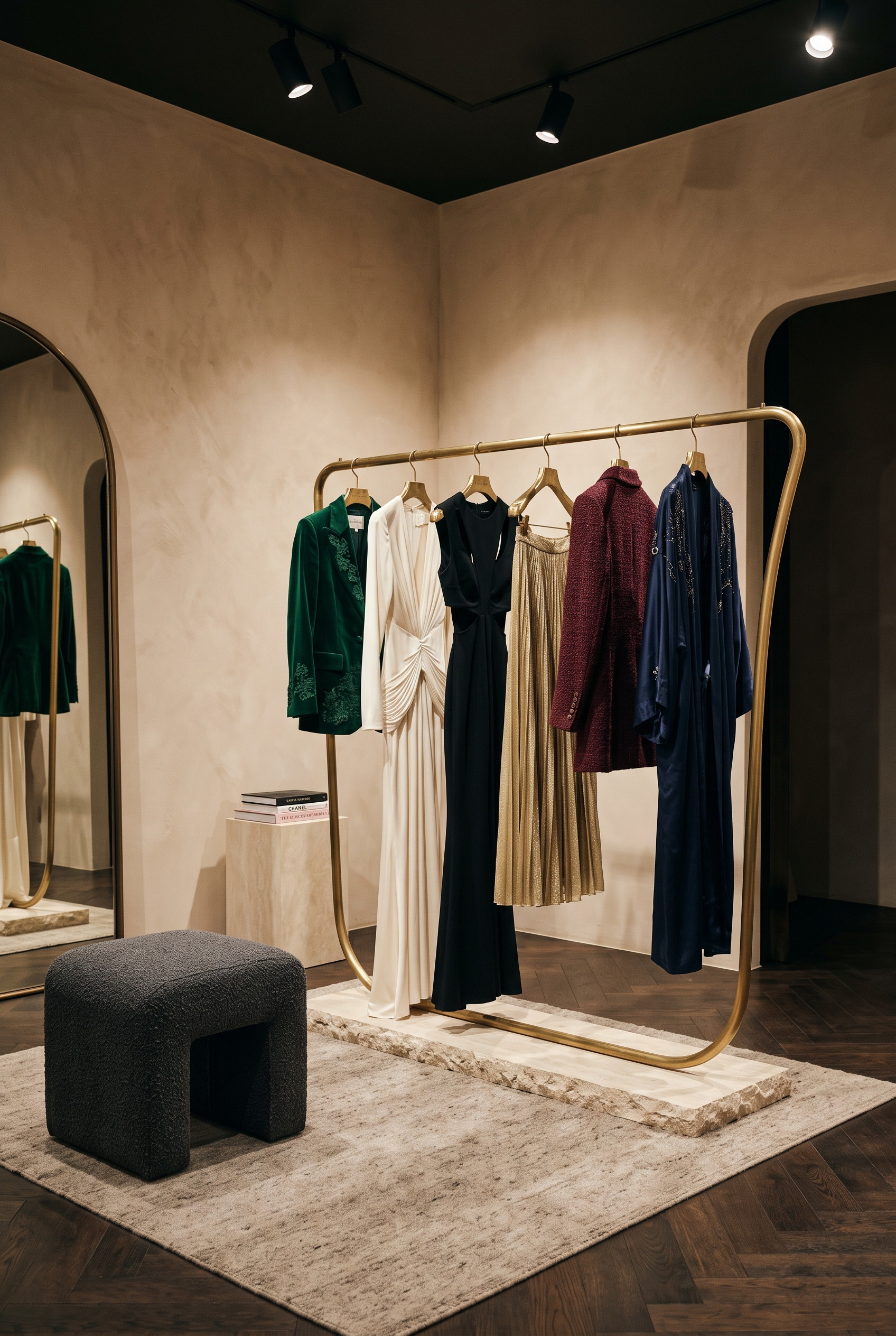
Luxury boutiques understand the visual impact of generous spacing. A small number of garments, beautifully lit and thoughtfully arranged, can feel far more special than an overfilled rail.
In the home, a retail-inspired garment rack can create a rotating exhibition of favorite pieces: eveningwear, vintage garments, new purchases, seasonal capsules, or a collection selected for an upcoming event.
For the serious collector, the rack becomes part of the presentation. Clothing is no longer hidden away, but displayed with the same attention given to art, jewelry, or other treasured objects.
Made to Move
Mobile garment racks are particularly valuable in wardrobes that need to adapt.
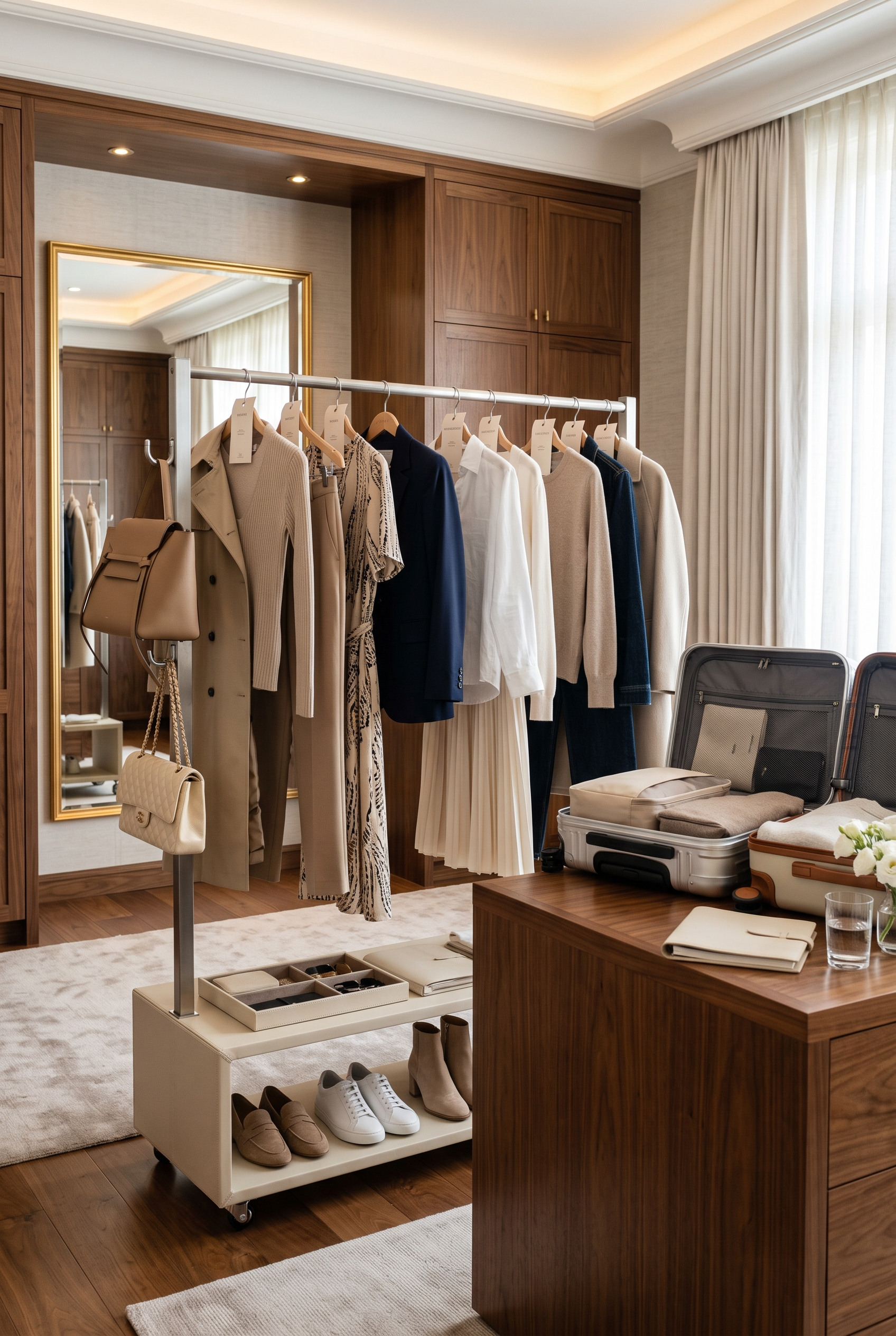
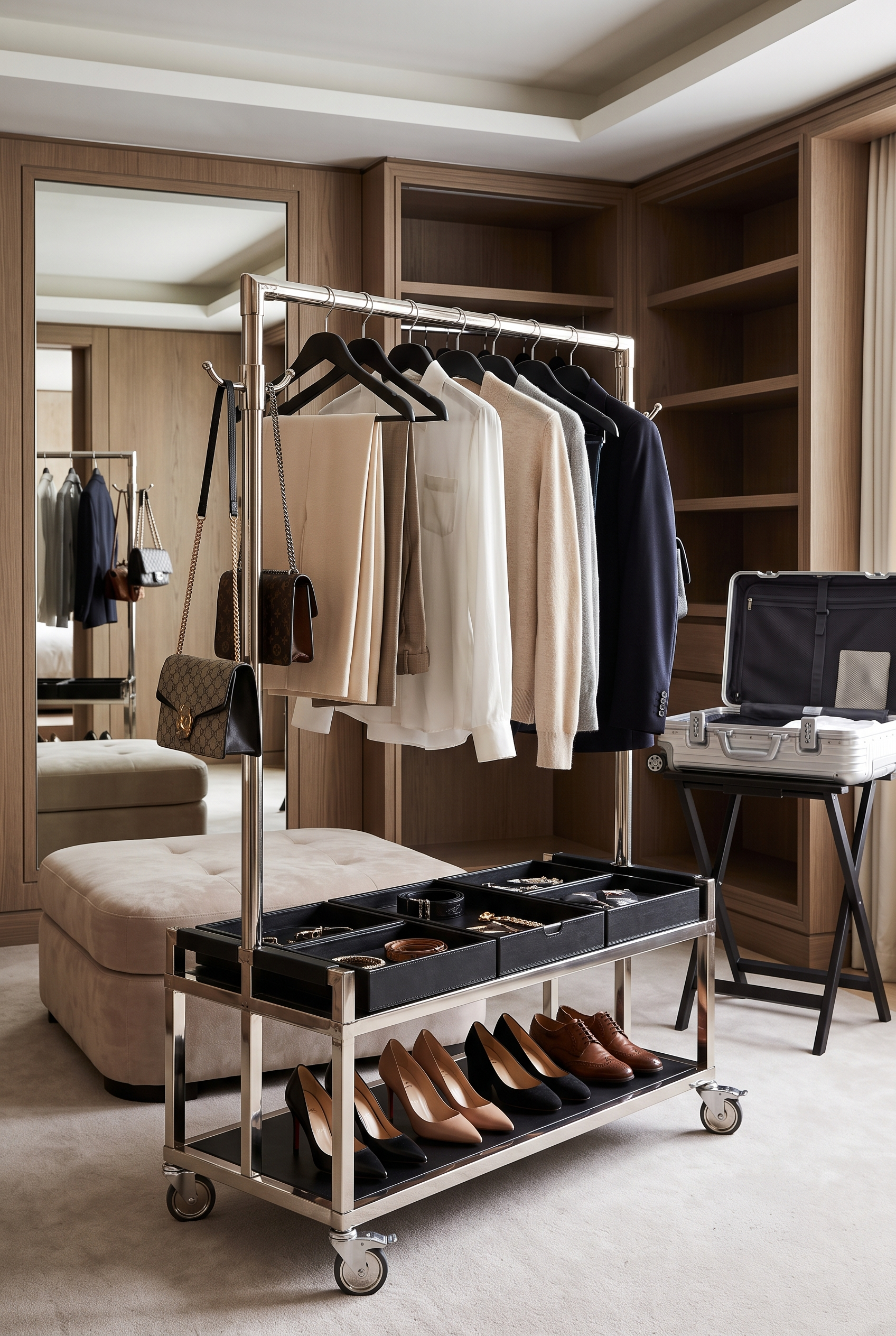
A rack on casters can move from the closet to the bedroom, laundry room, guest suite, or packing area. It may be used for seasonal wardrobe changes, fittings, photo shoots, entertaining, or garment care.
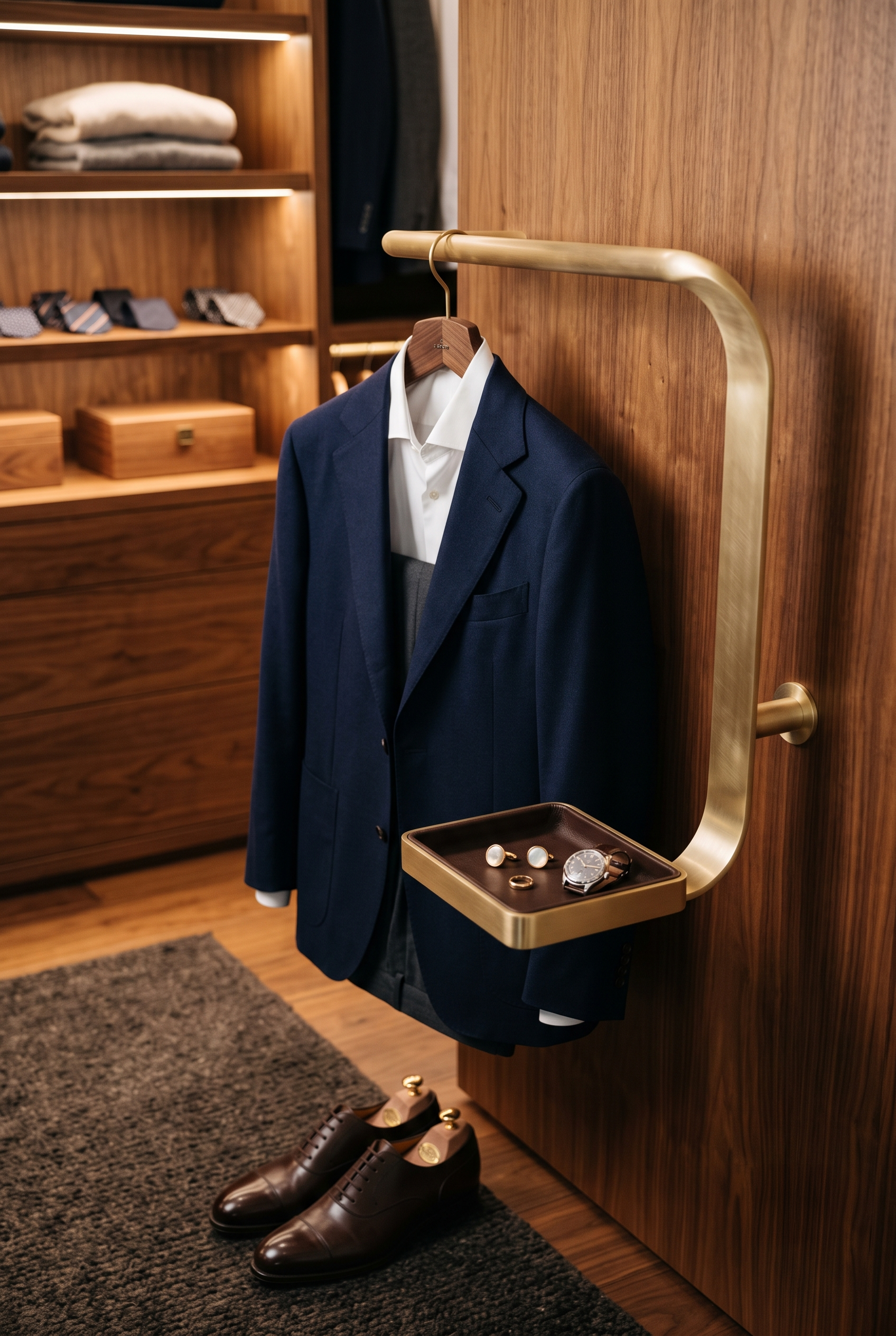
Customizing the base, wheels, finish, and accessories allows the piece to retain its flexibility without looking like production equipment. Lower shoe shelves, handbag hooks, removable trays, and garment dividers can make it highly specialized to the owner’s routine.
The Rack as Sculpture
At its most expressive, a garment rack can become functional art.
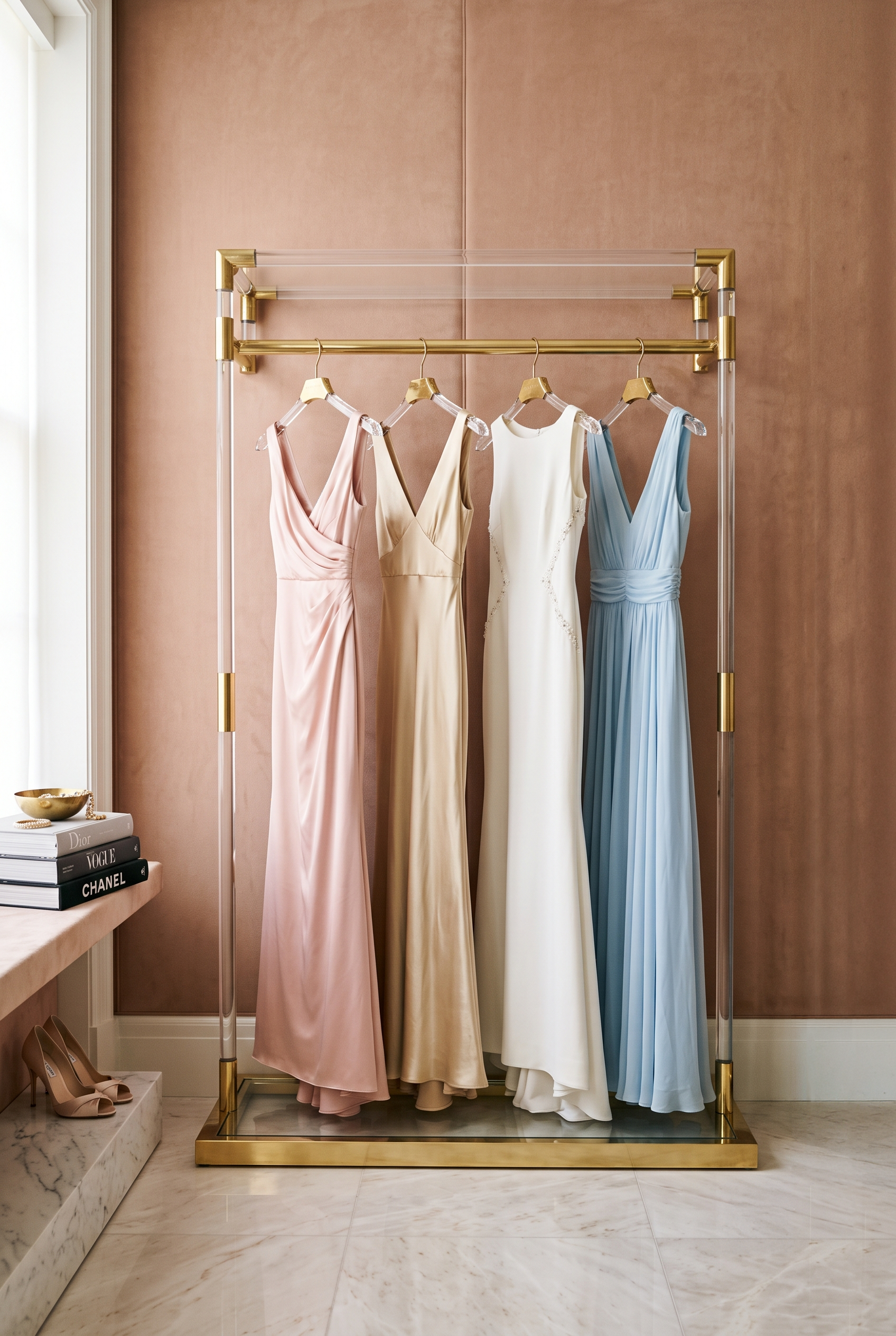
Curved rails, arched frames, hand-forged metalwork, lucite supports, leather suspension straps, and monolithic stone bases can turn a simple hanging element into the defining feature of a room.
These designs are not meant to disappear. They create a moment—part gallery installation, part wardrobe tool—and invite the clothing to participate in the architecture of the space.
Whatever its form, a custom garment rack should respond to the garments it is intended to hold.
Long dresses require generous clearance. Jackets and shirts allow room for storage below. Heavy collections demand proper structural support. Sunlight, dust, lighting, hanger spacing, and proximity to garment-care tools should all be considered from the beginning.
The best rack is not simply beautiful when empty. It remains beautiful once the wardrobe is added.
Whether suspended from the ceiling, mounted to the wall, built as furniture, or designed to move, the modern garment rack offers a new way to think about clothing storage. It can be practical without feeling purely utilitarian, open without appearing unfinished, and expressive without sacrificing function.
Sometimes the most beautiful pieces in the wardrobe deserve to be seen.