
The Wardrobe Wall
Forget the conventional reach-in closet with a few hanging rods, some shelves, and a drawer bank. The new generation of wardrobe walls is supersized: dramatically tall, extraordinarily long, deeply customized, and packed with functionality that makes use of every possible inch.
Think triple hanging, rolling ladders, automated garment lifts, floor-to-ceiling shoe displays, dedicated luggage bays, hidden accessories, integrated lighting, and enough storage to make a boutique jealous.
This is storage turned all the way up.
Go All the Way Up
Why stop at eight feet?
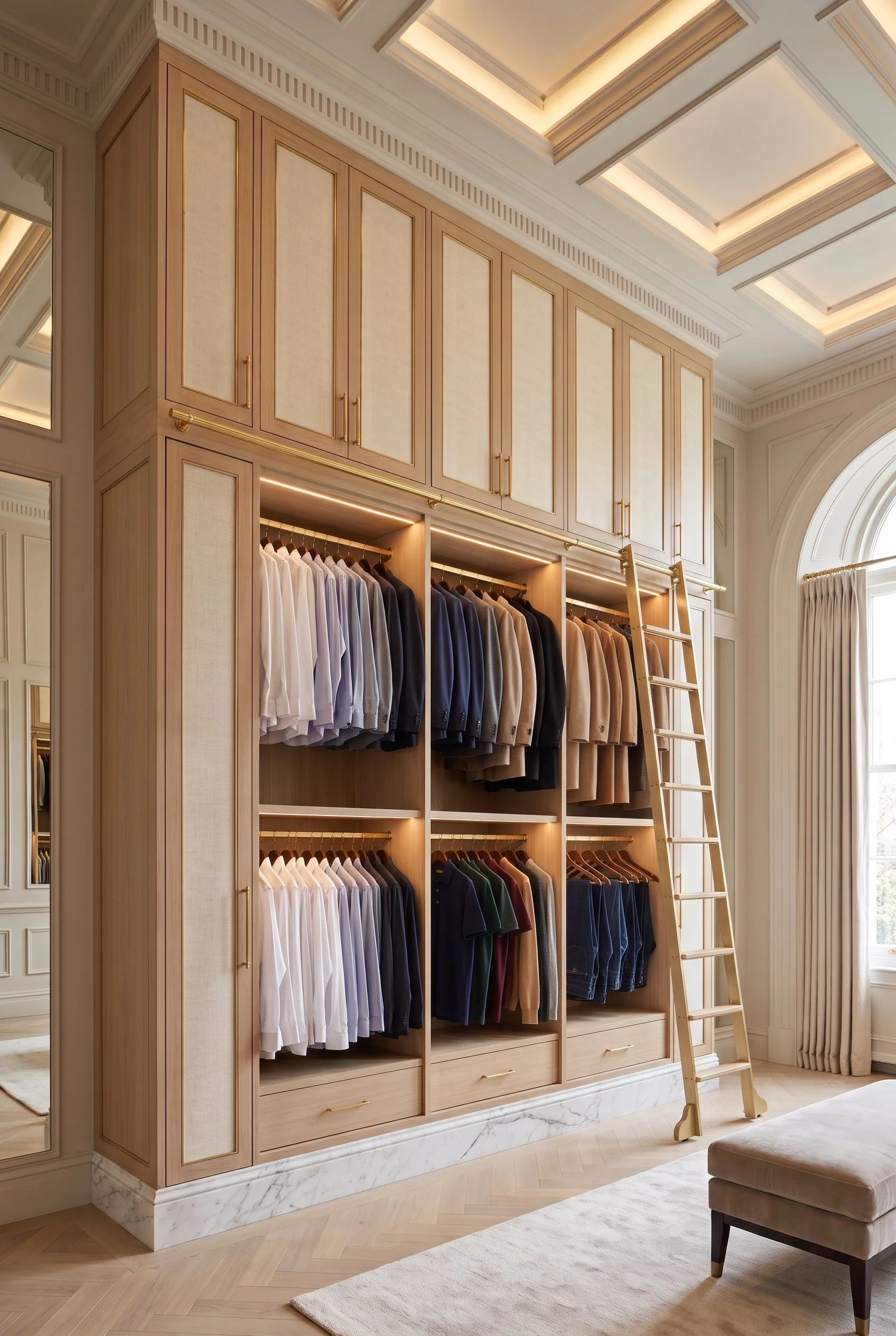
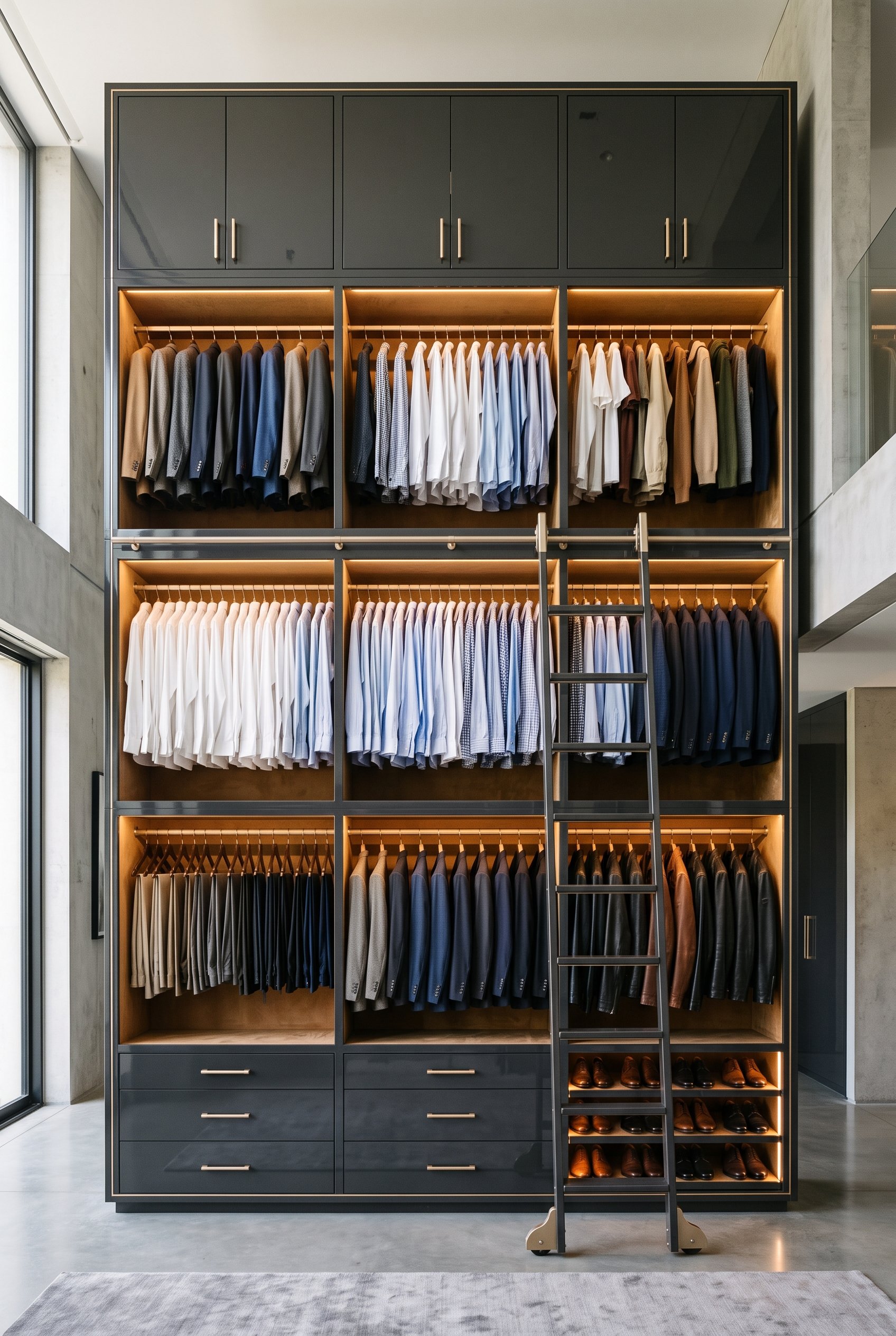
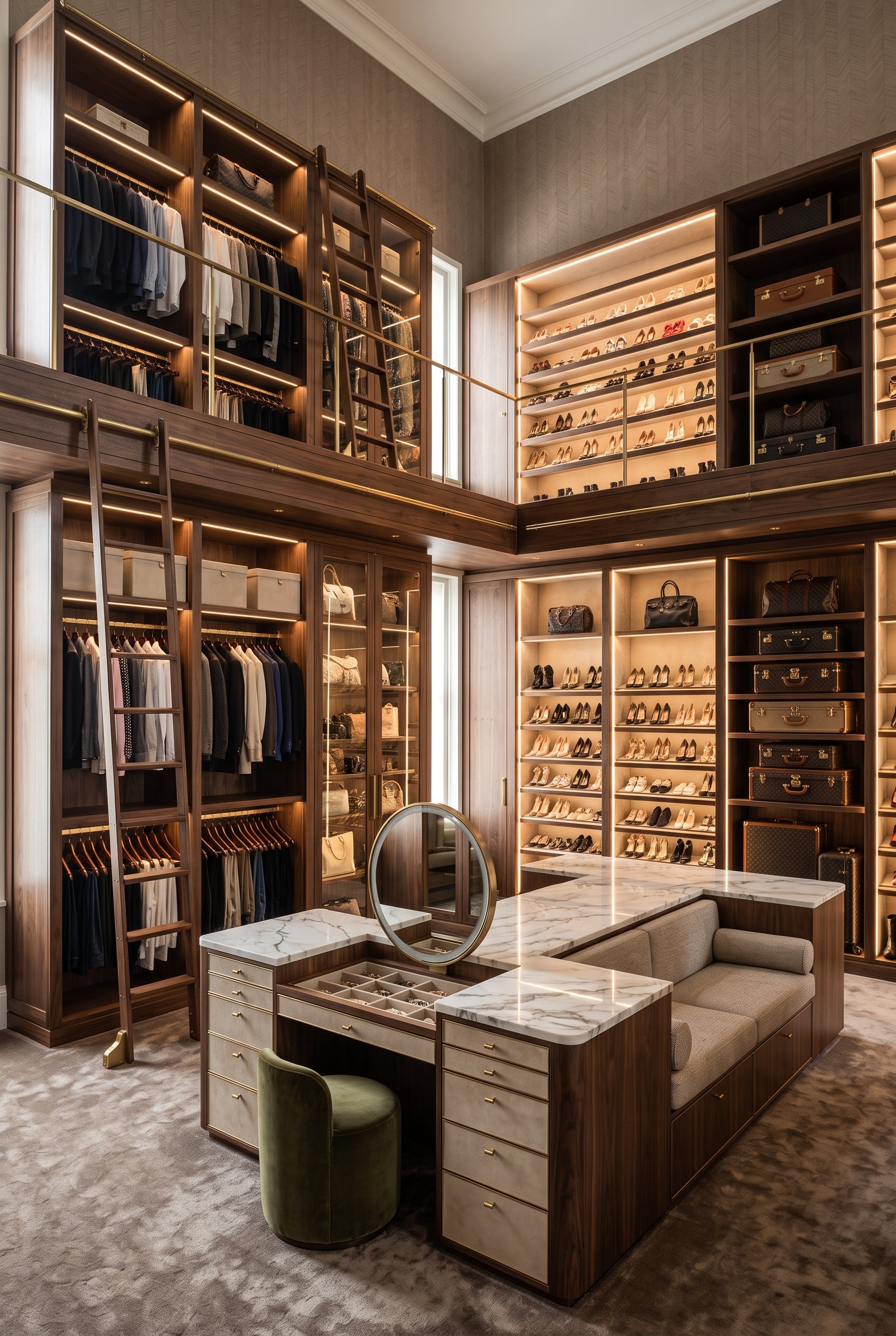
In rooms with generous ceiling heights, wardrobe walls can climb 10, 12, or even 14 feet overhead, creating an extraordinary vertical plane of storage.
The upper levels might house seasonal clothing, luggage, archival pieces, hat collections, or beautiful storage boxes. Below, multiple levels of hanging keep everyday wardrobes immediately accessible.
The result is dramatic even before you open a door.
Triple the Hanging
One hanging rod is standard.
Two is efficient.
Three starts to feel like a Super Wardrobe.
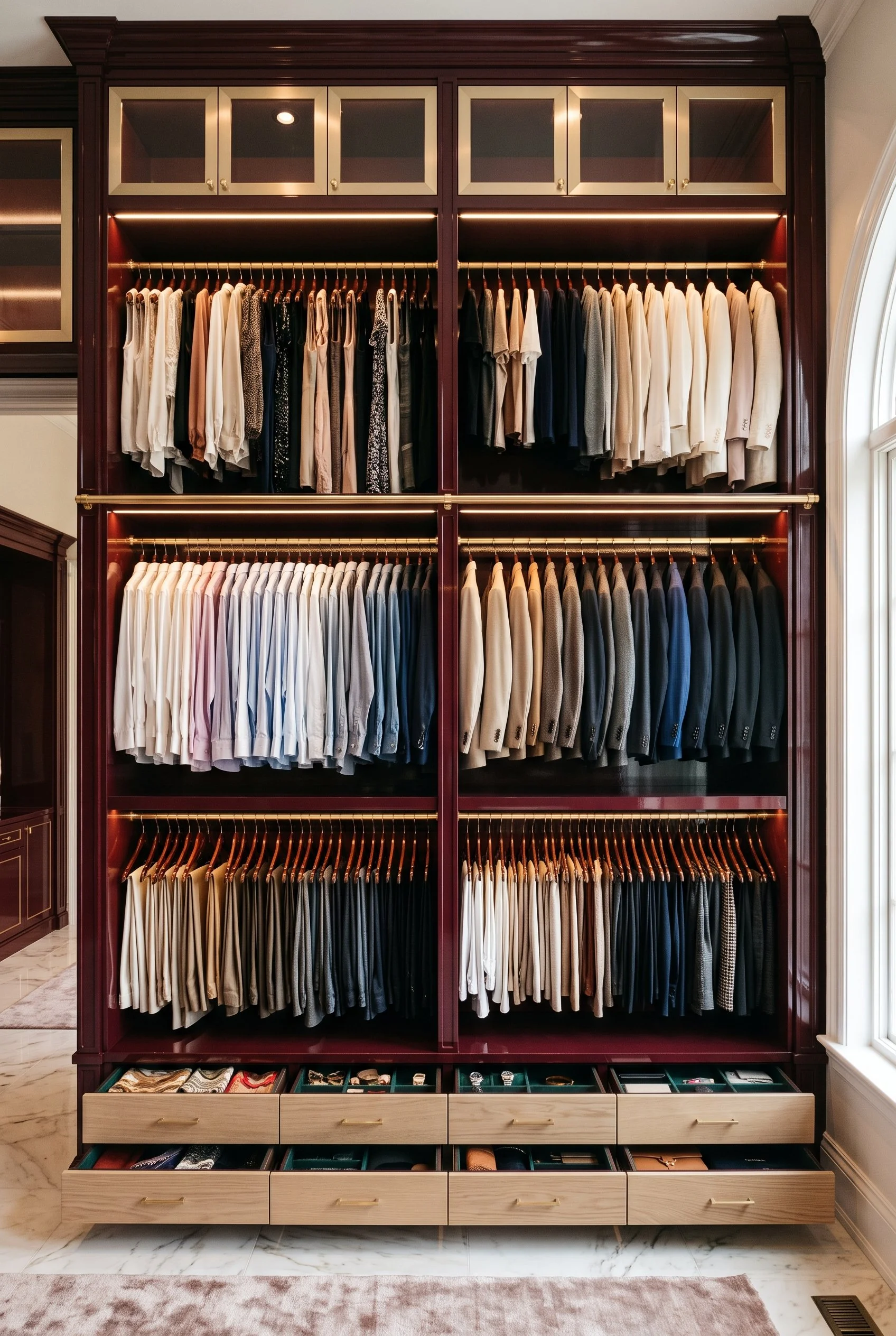
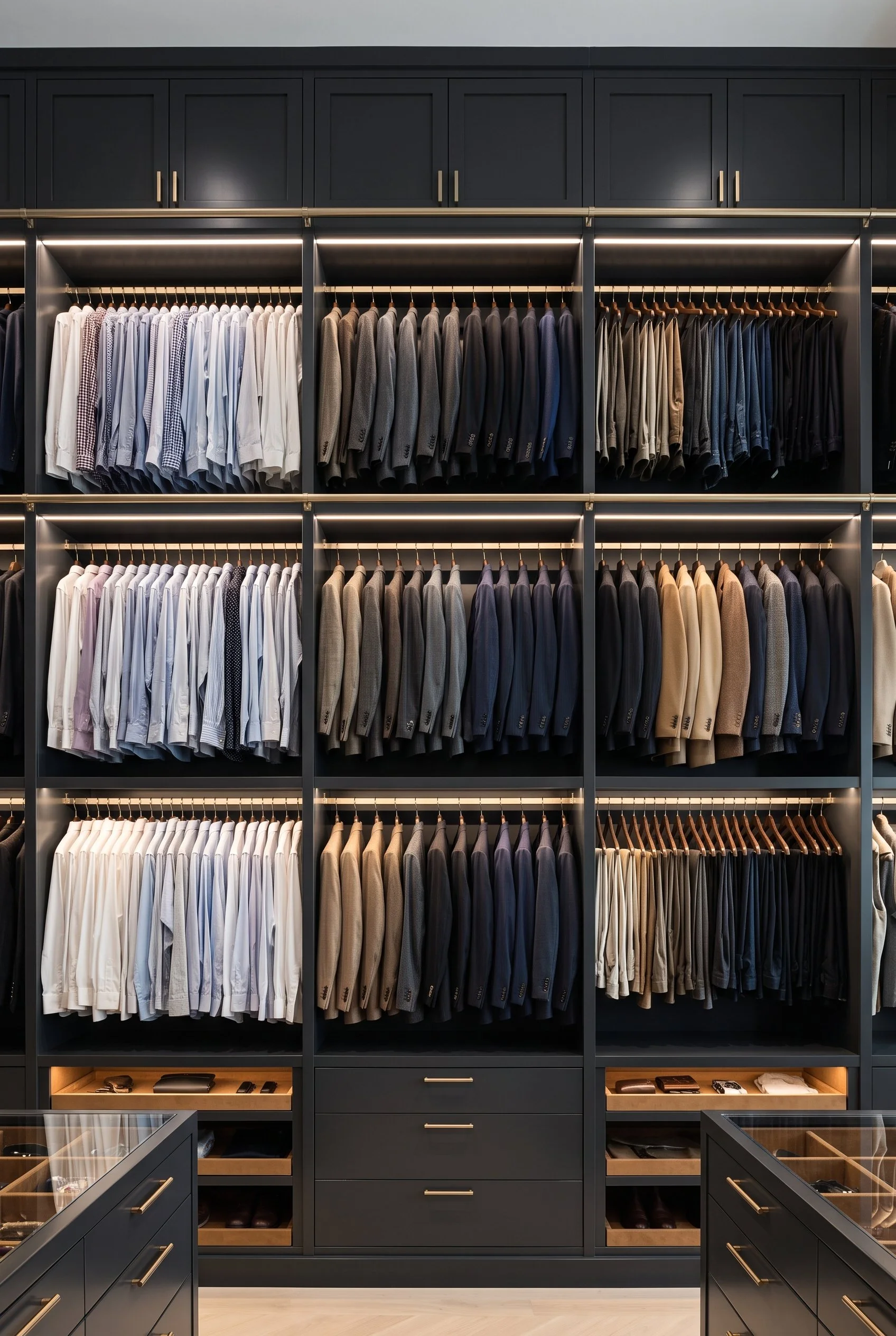
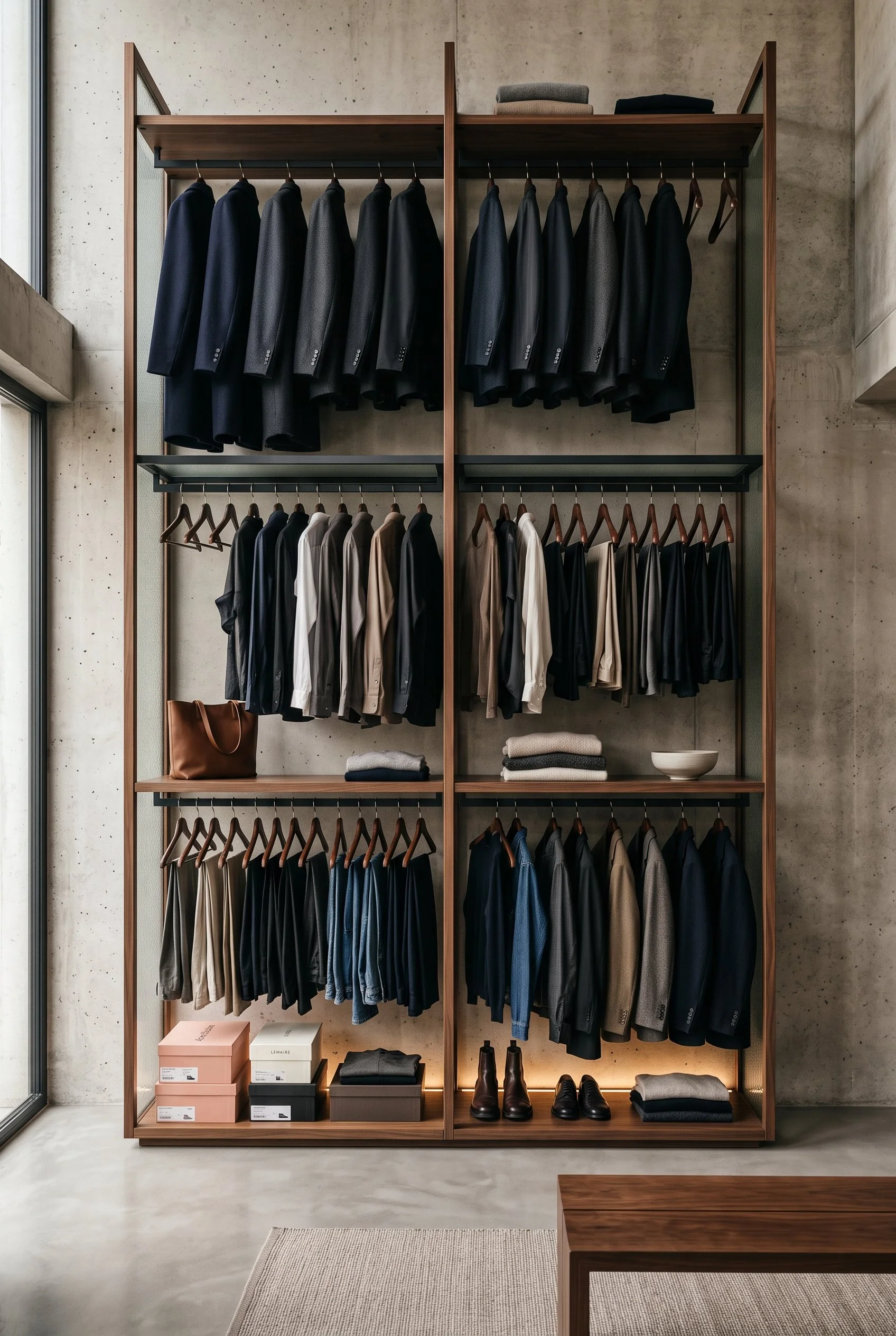
Triple-hanging configurations can transform a towering wall into an incredibly dense storage system, particularly for shirts, jackets, trousers, skirts, and other shorter garments.
And when the wall stretches 20, 30, or 40 feet across a room, the capacity becomes almost that of an entire room.
Suddenly, an entire wardrobe can have a dedicated address.
The Ladder Is Part of the Design
At this scale, a ladder isn't an accessory. It's infrastructure.
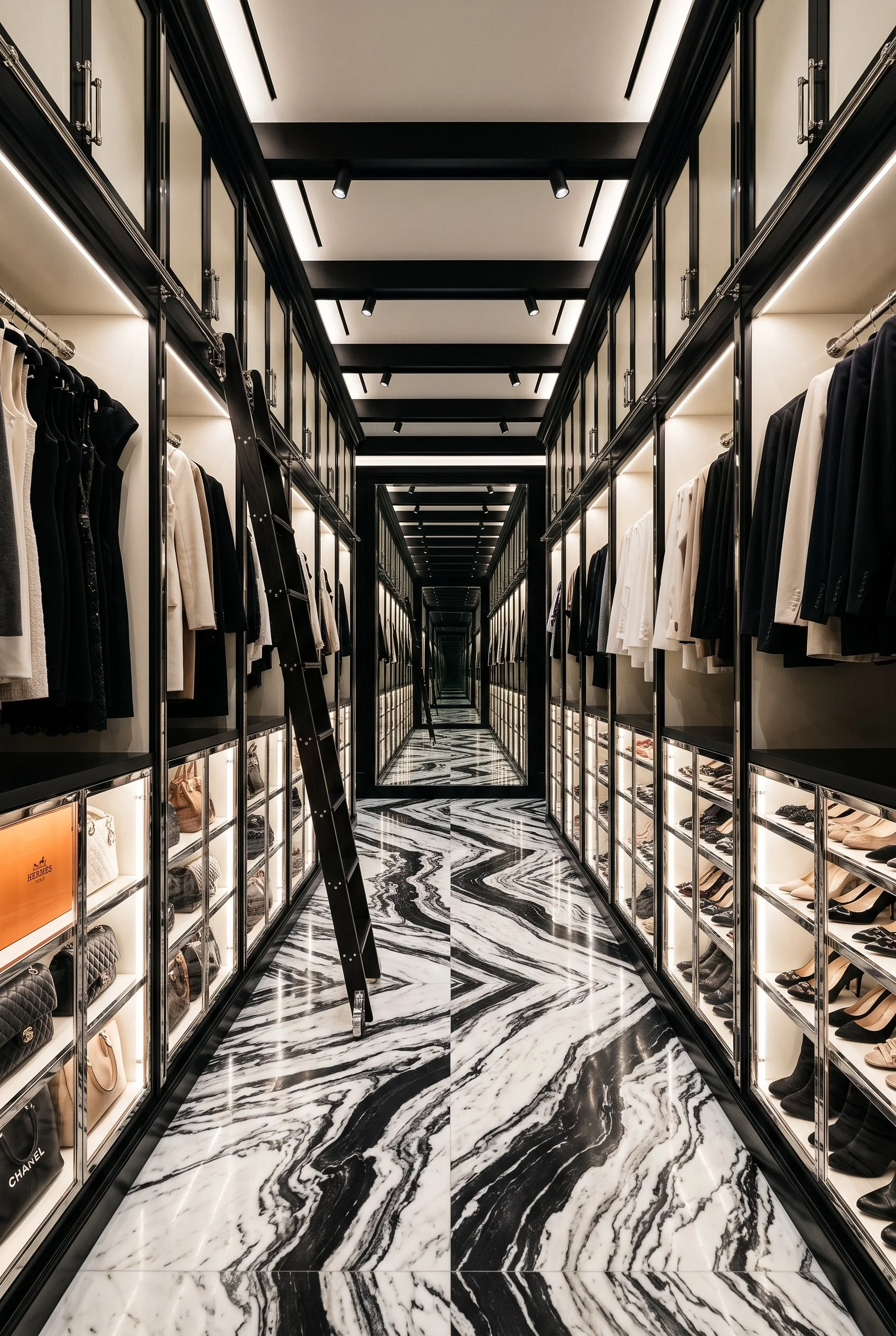
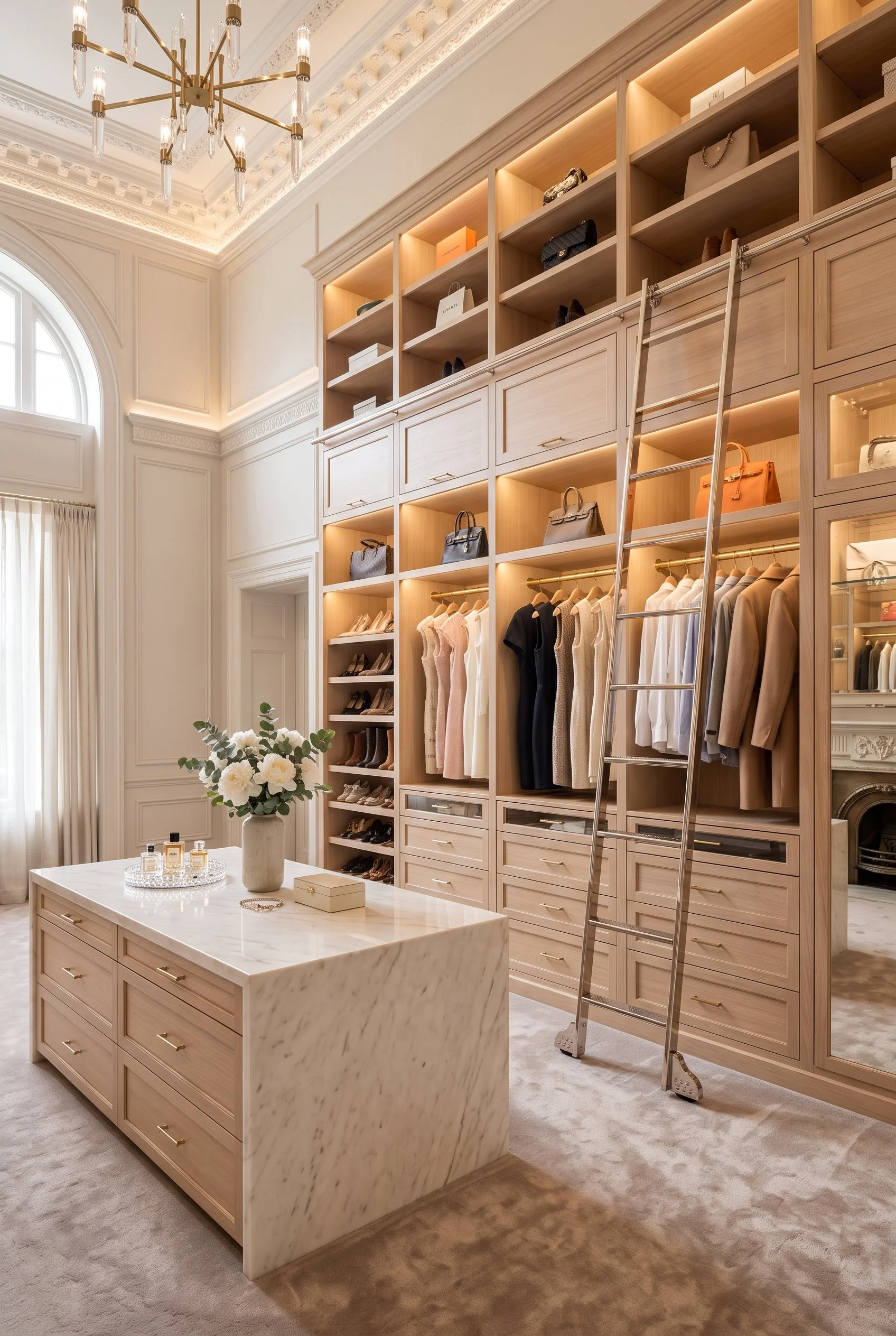
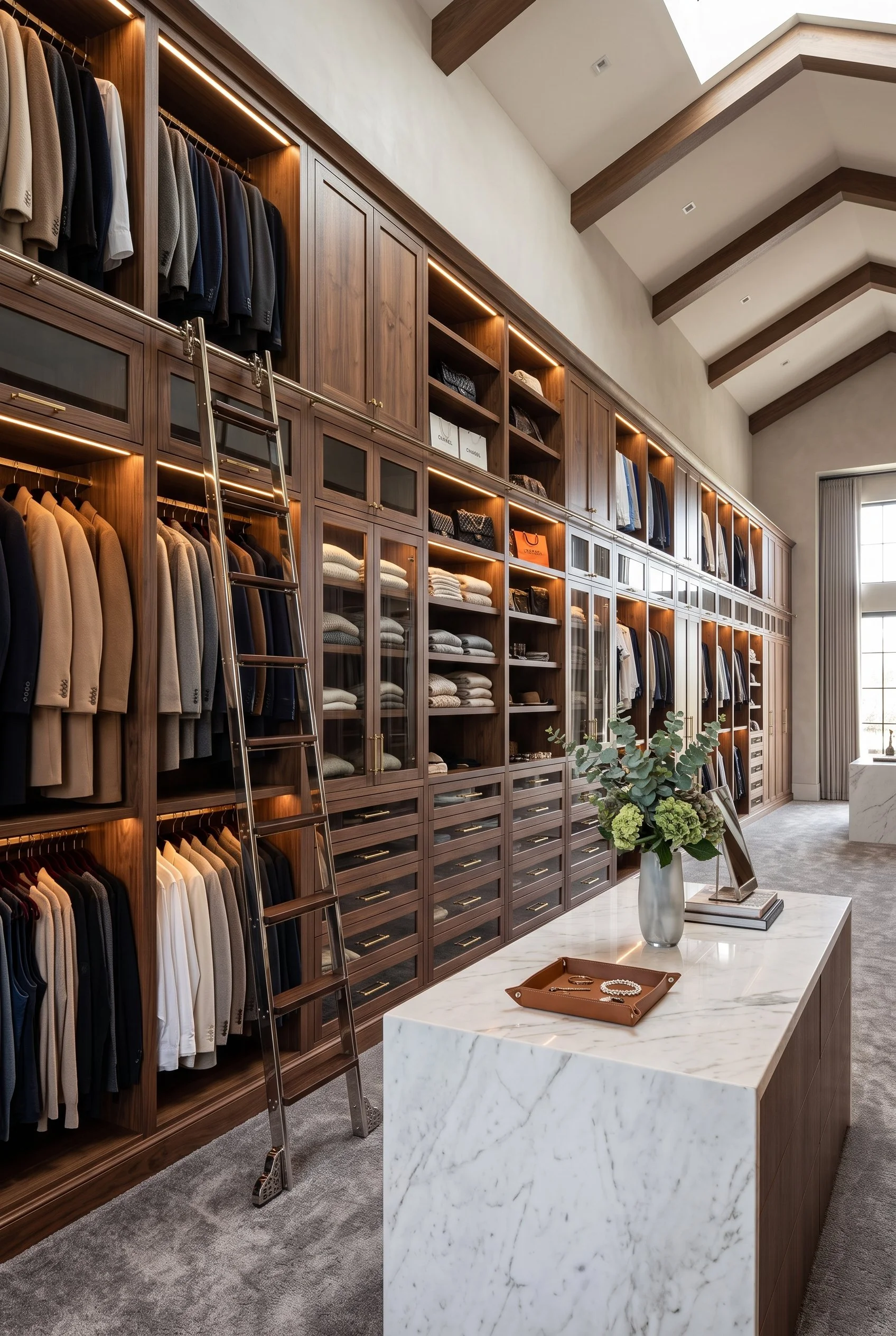
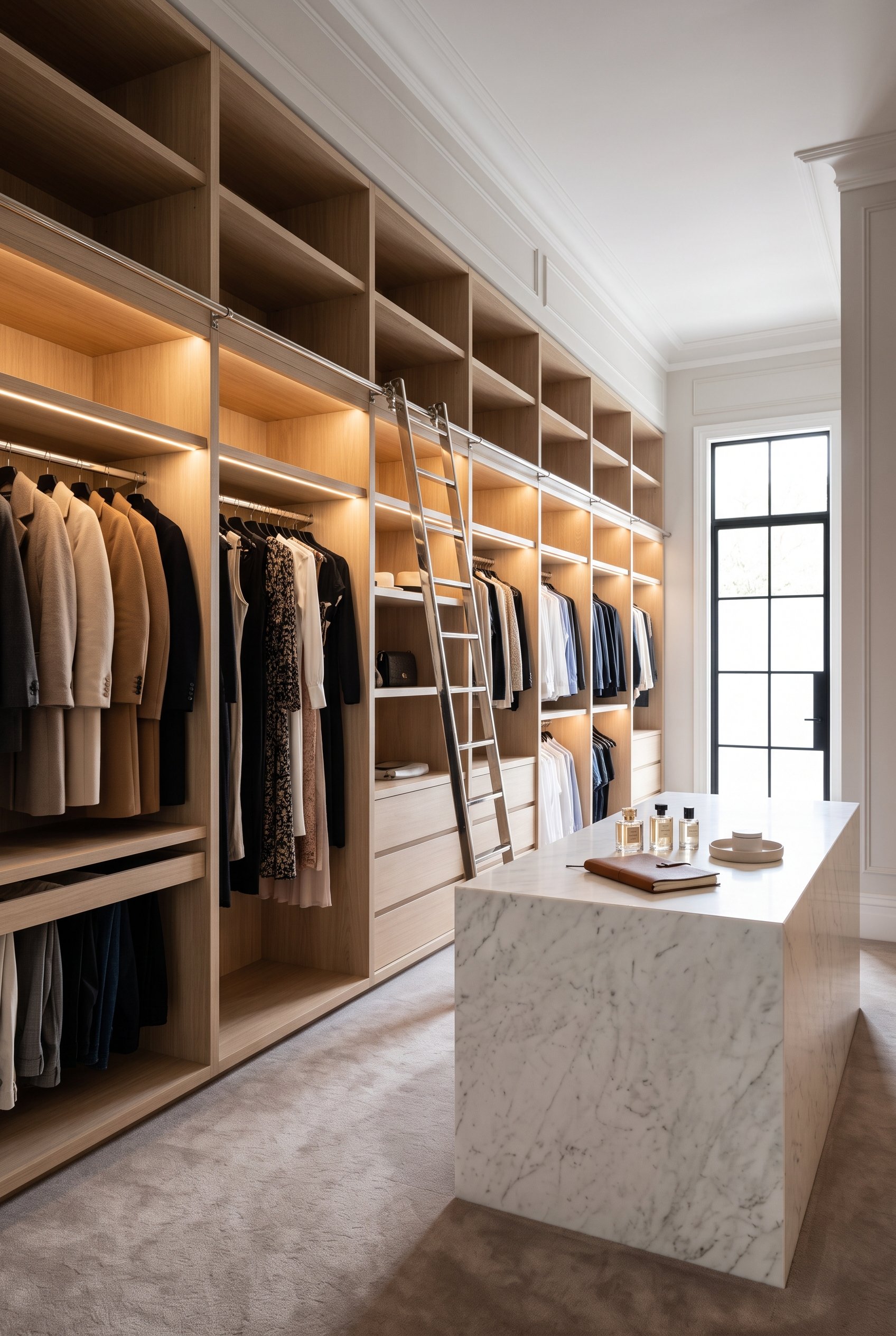
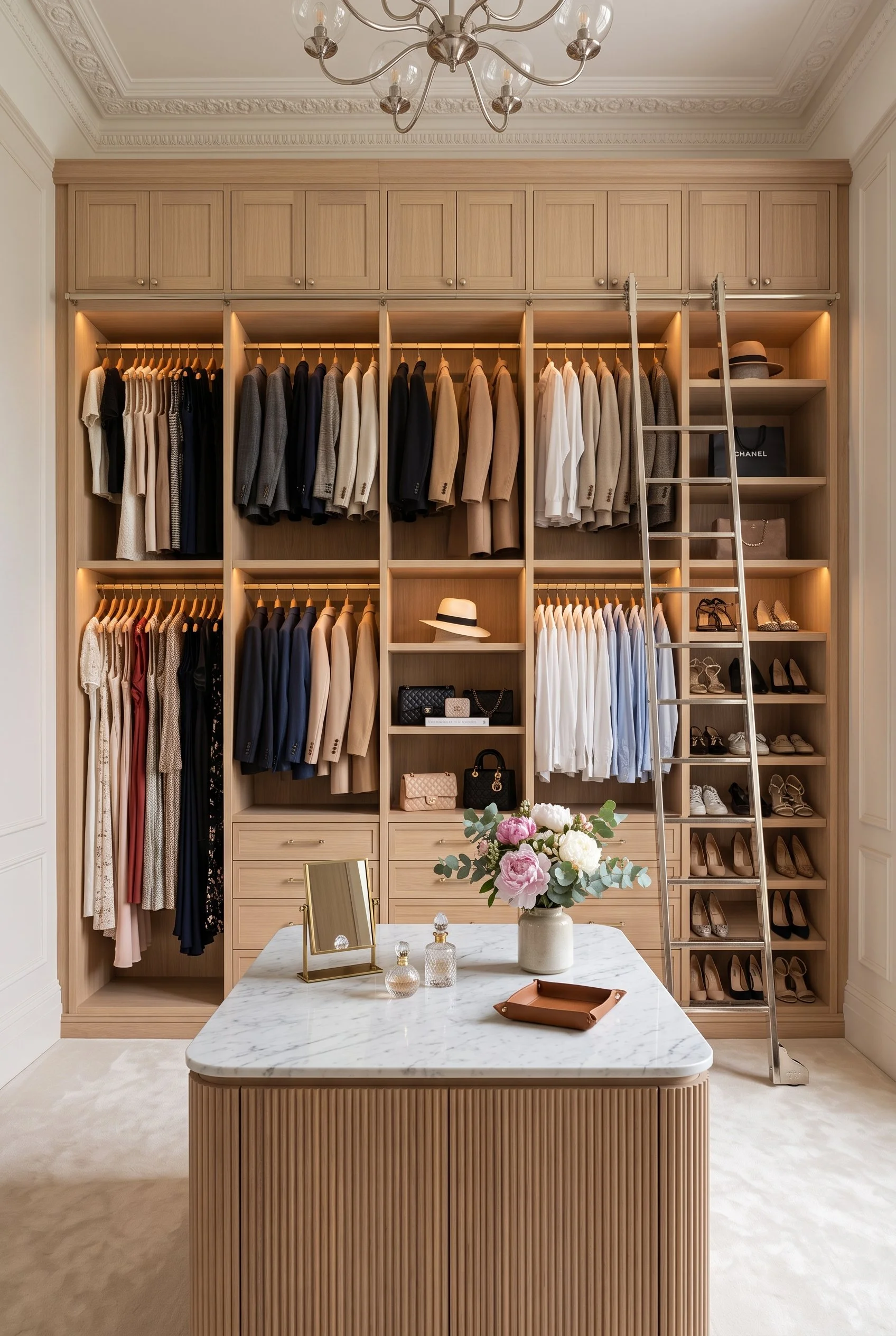
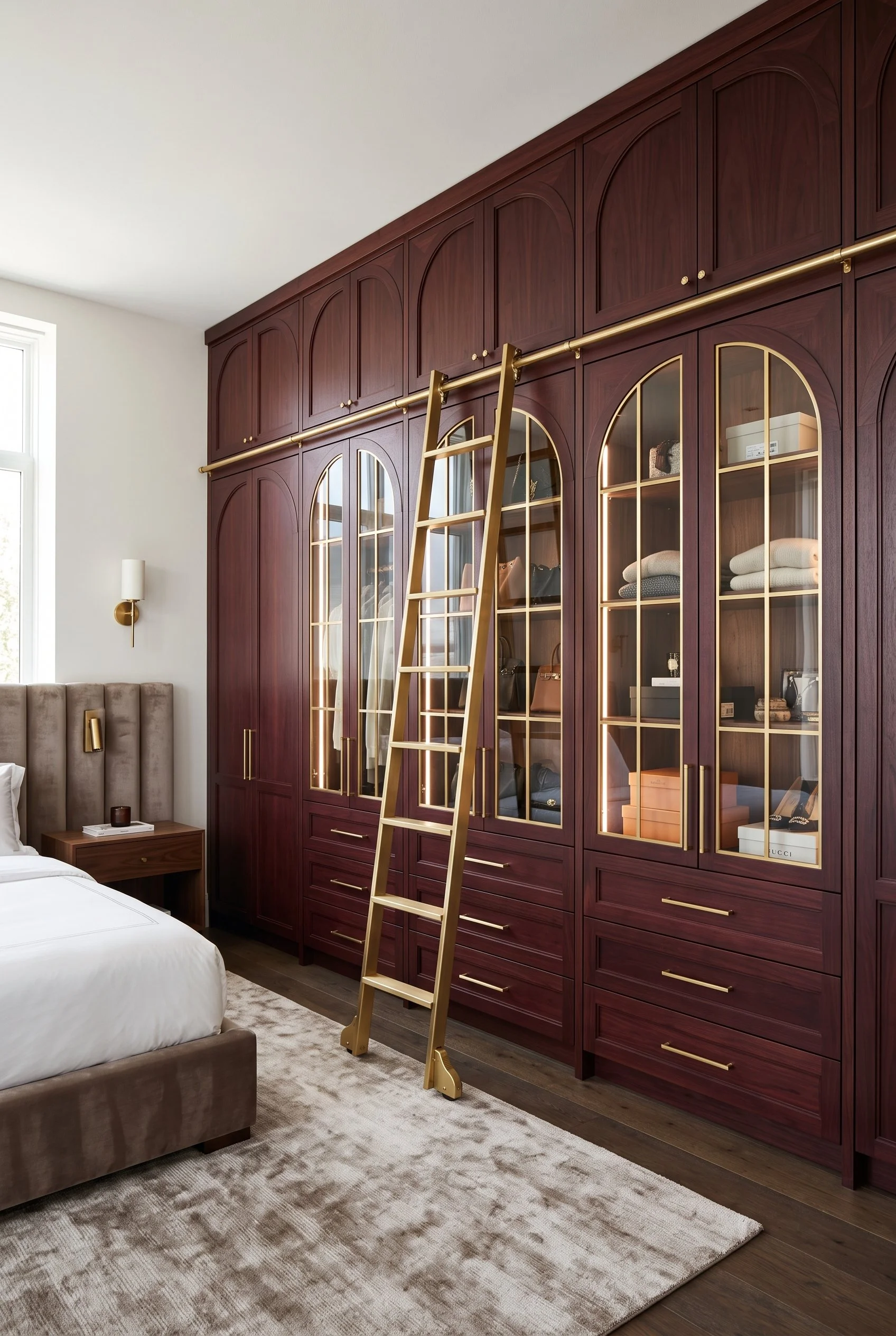
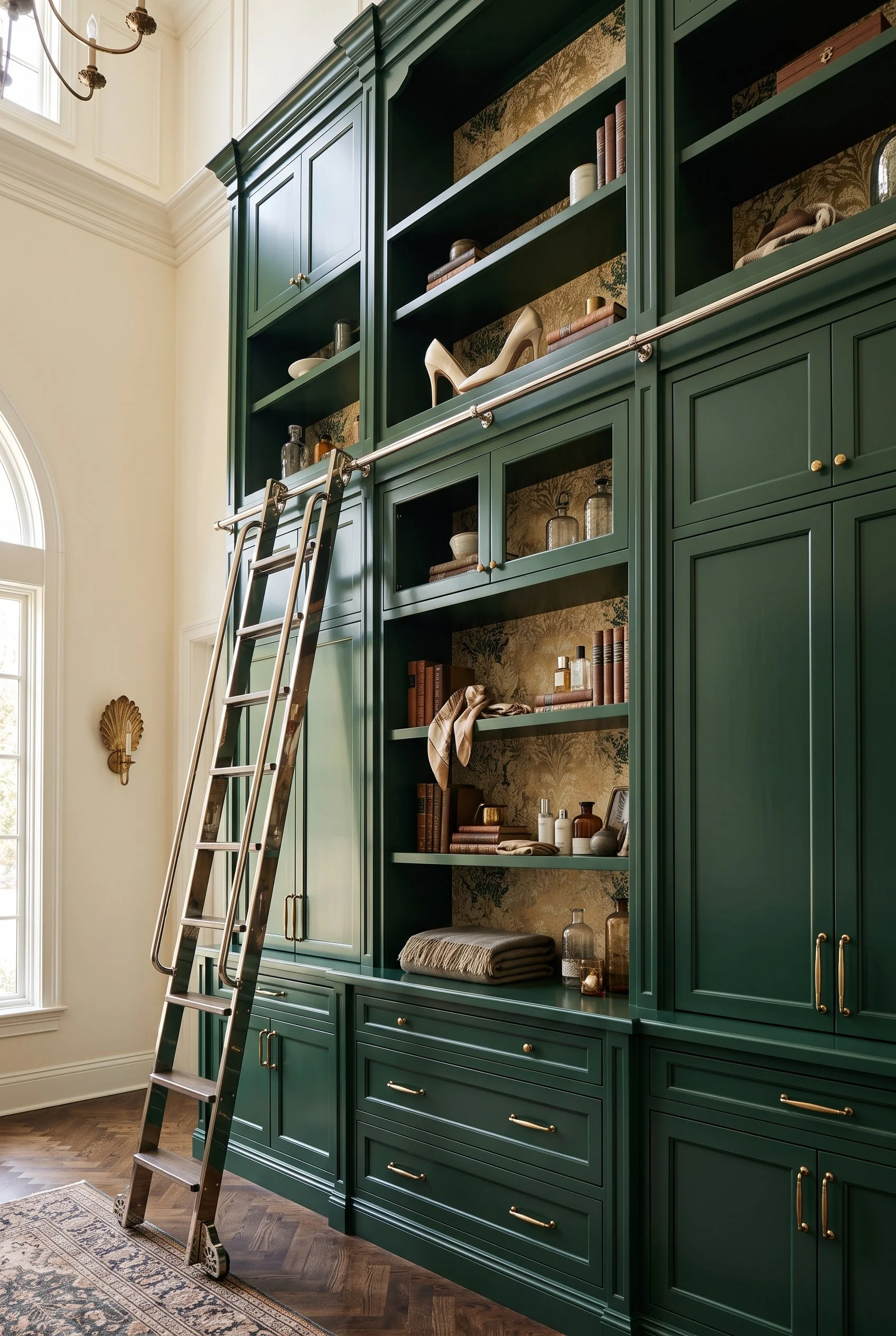
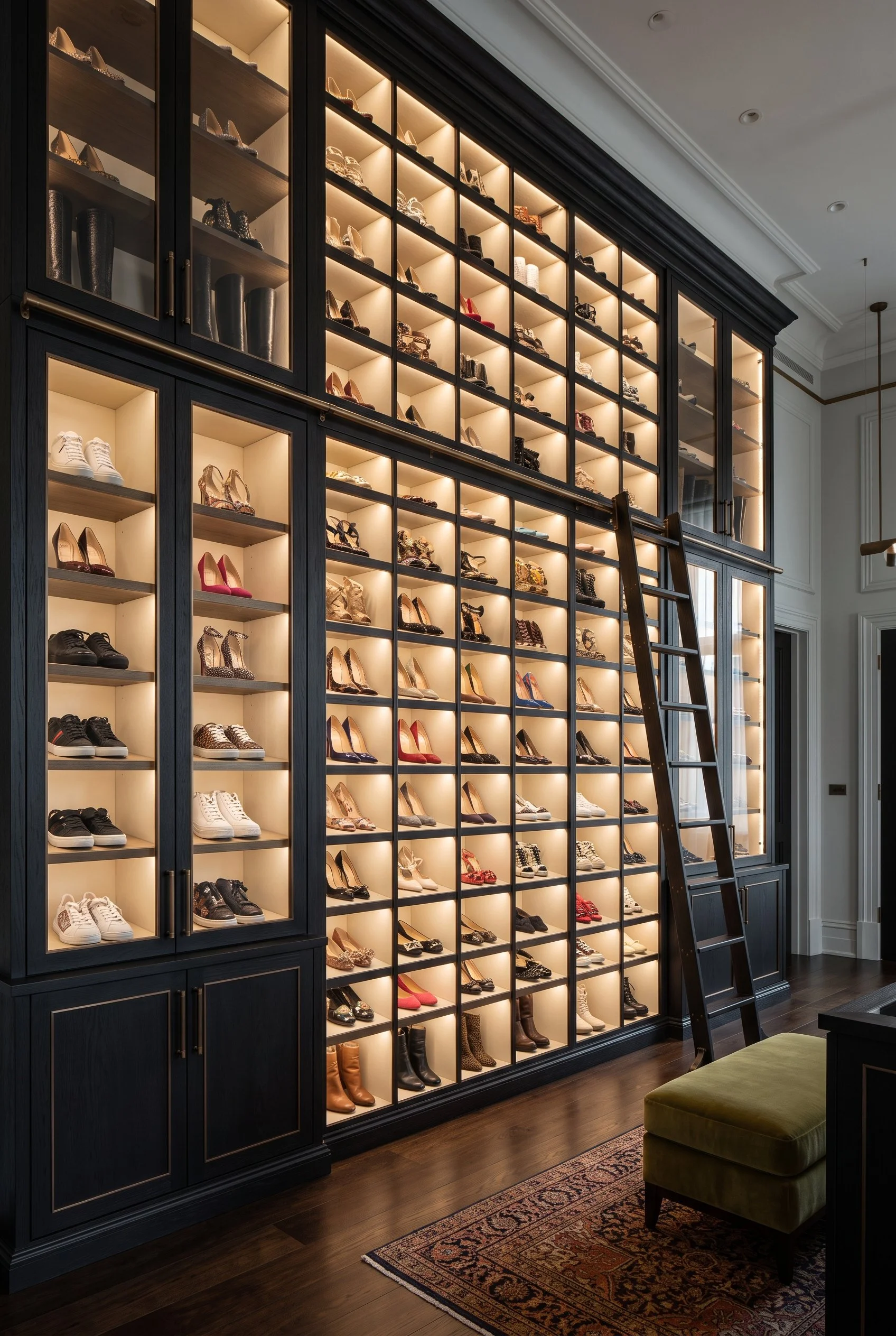
A beautifully detailed rolling ladder can run the length of a wardrobe wall, providing access to upper storage while creating a dramatic architectural moment.
Think private library, but instead of books: cashmere, couture, handbags, and shoes.
Polished nickel, brass, walnut, lacquer, or painted wood can make the ladder feel intentionally integrated rather than purely utilitarian.
Let the Wardrobe Come to You
For the truly oversized wardrobe, not everything needs to be accessible by ladder.
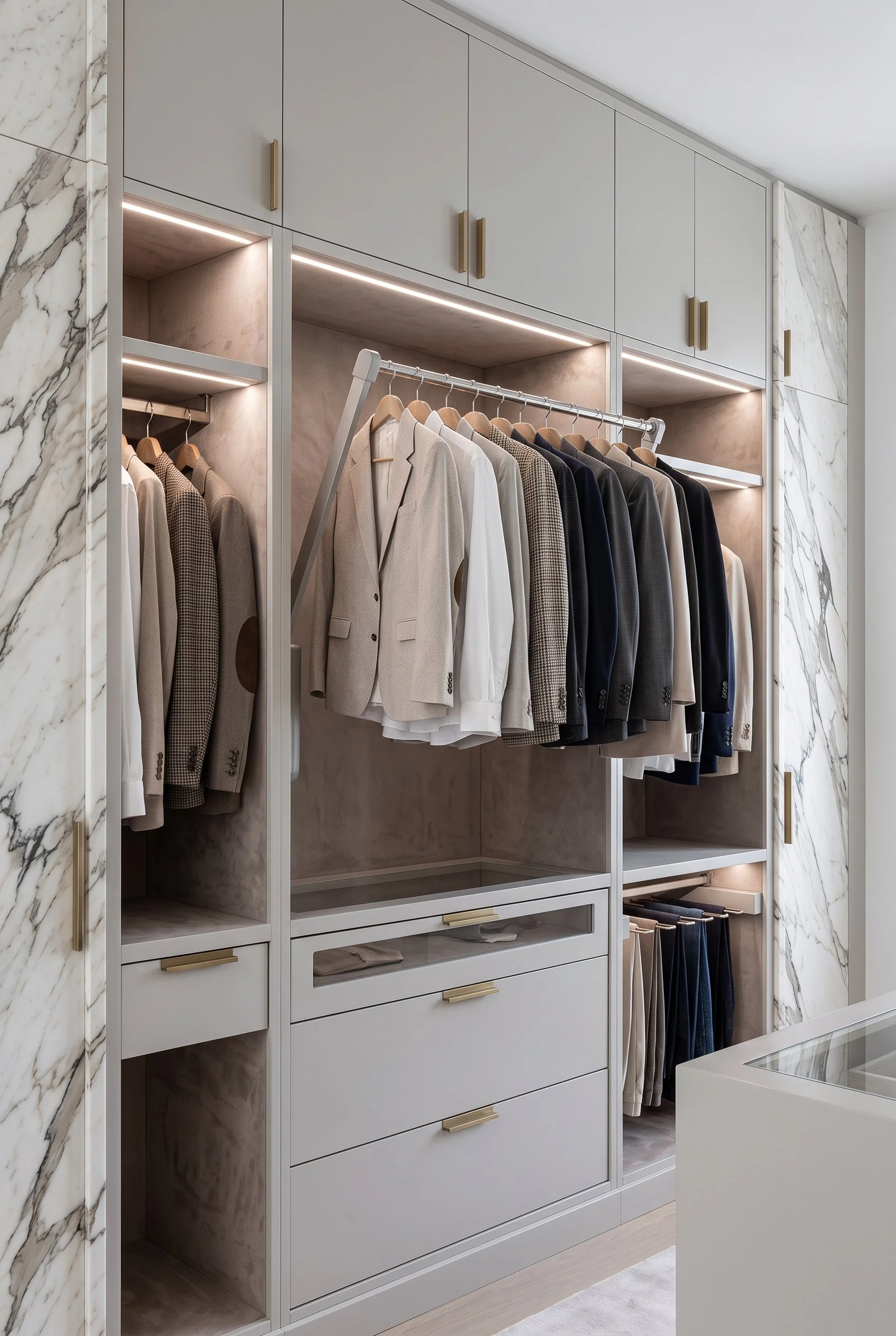
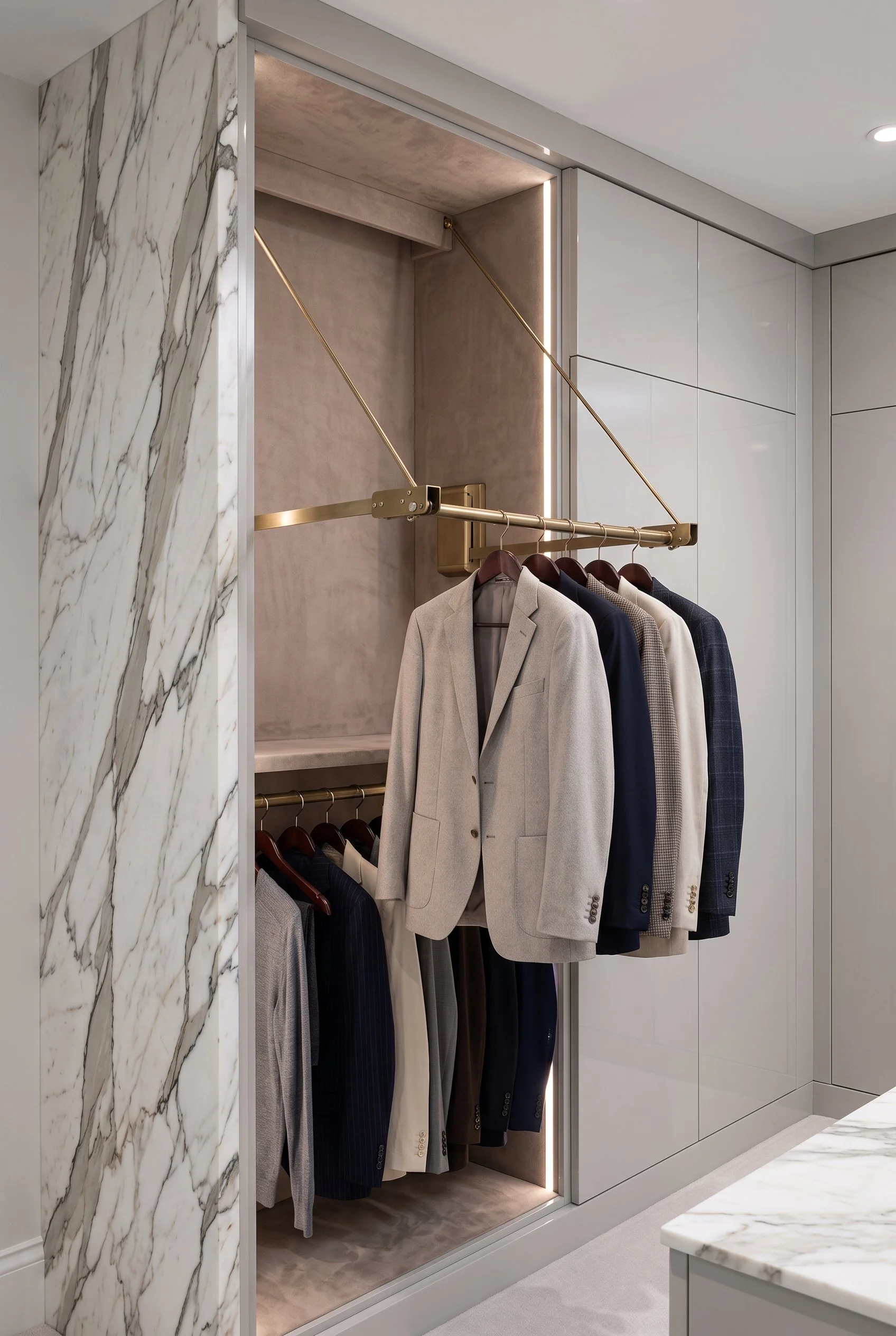
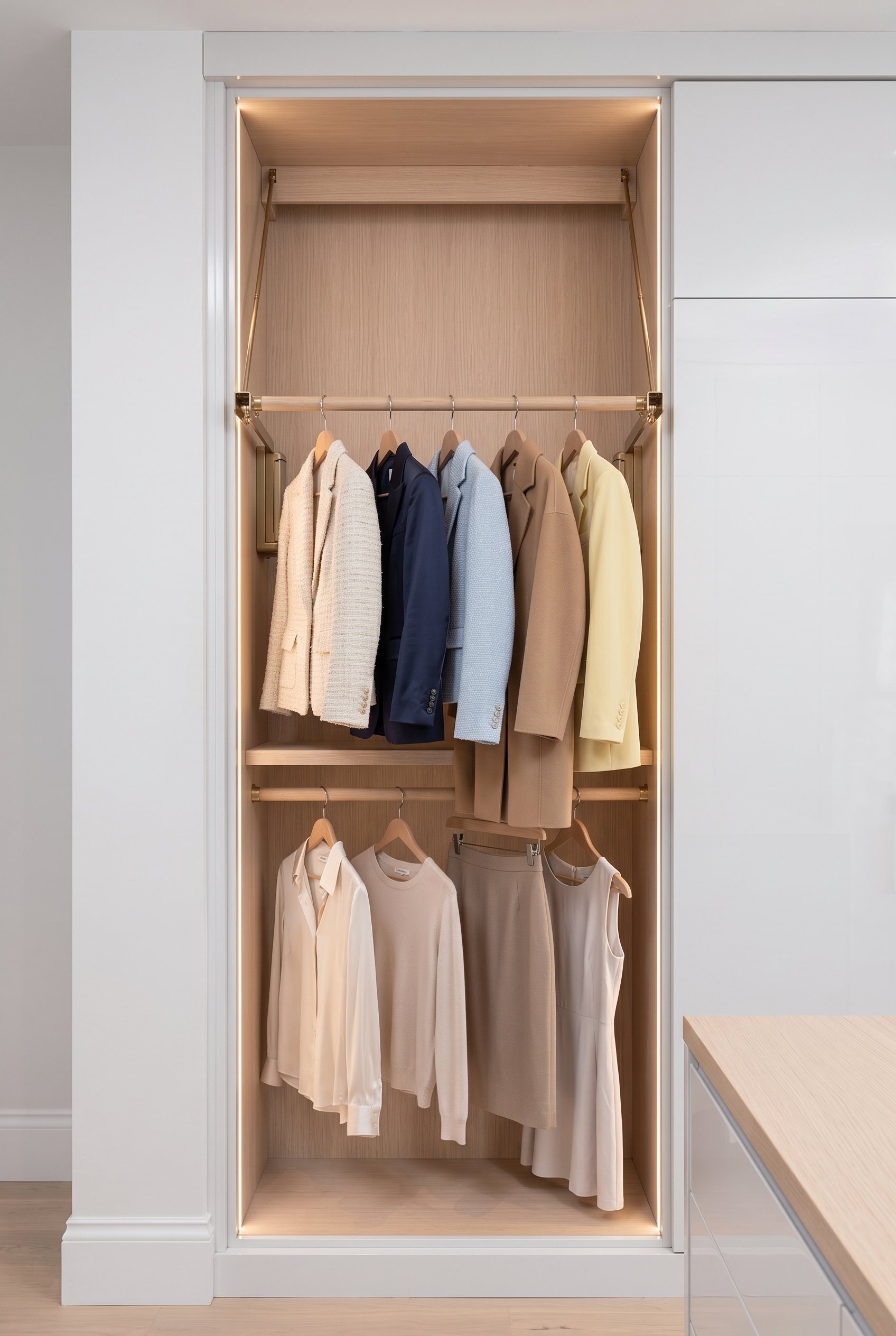
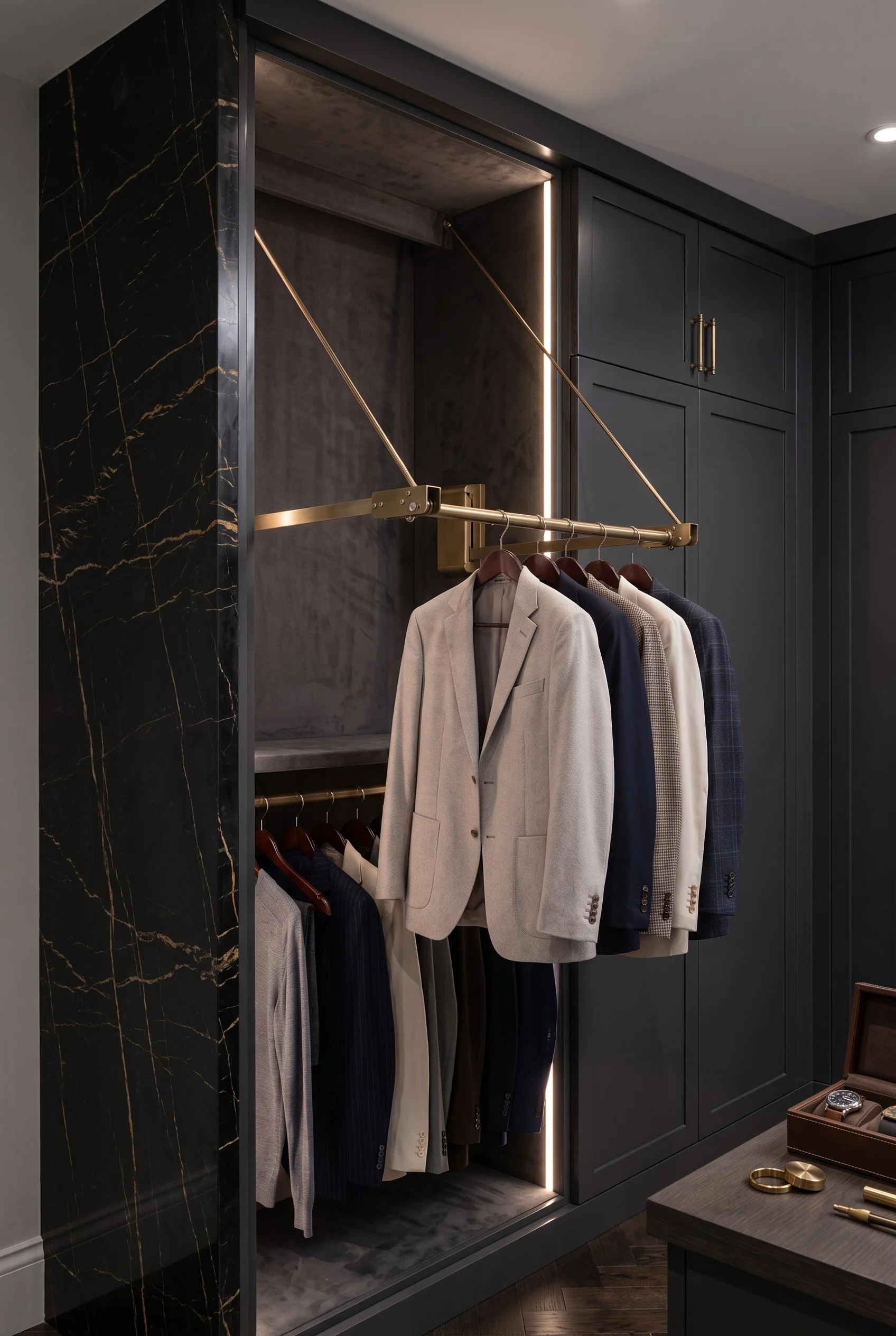
Automated garment lifts can bring upper hanging rods down to eye level at the push of a button. Motorized systems make it possible to take advantage of otherwise unreachable vertical space without compromising usability.
It's one of those features that feels slightly excessive—until you realize how useful it is.
And that's exactly the point.
Build a Wardrobe for the Wardrobe
Supersized storage means supersized specialization.
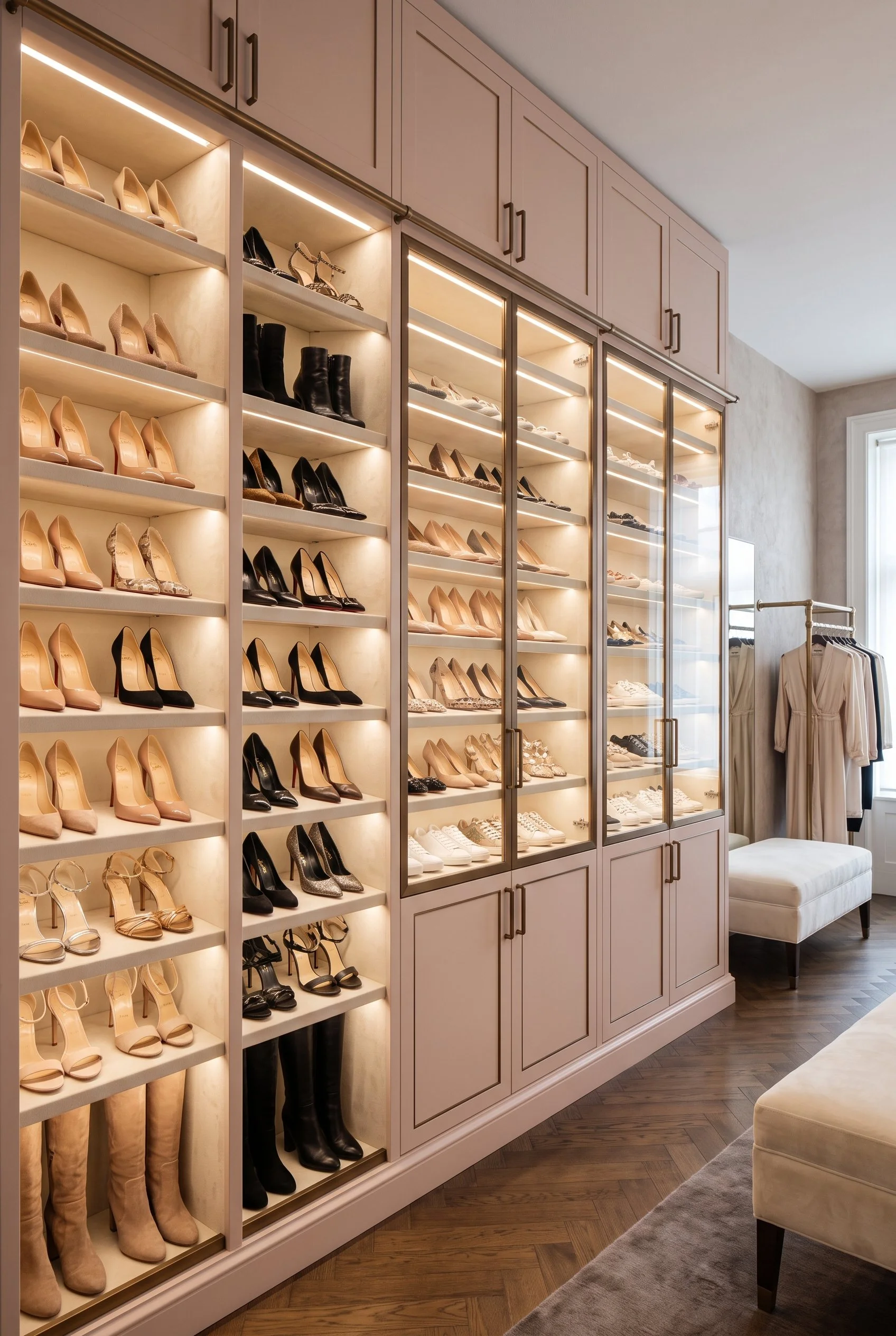
Instead of asking, Where can I put my shoes?, the question becomes: How should we design an entire wall around the shoes?
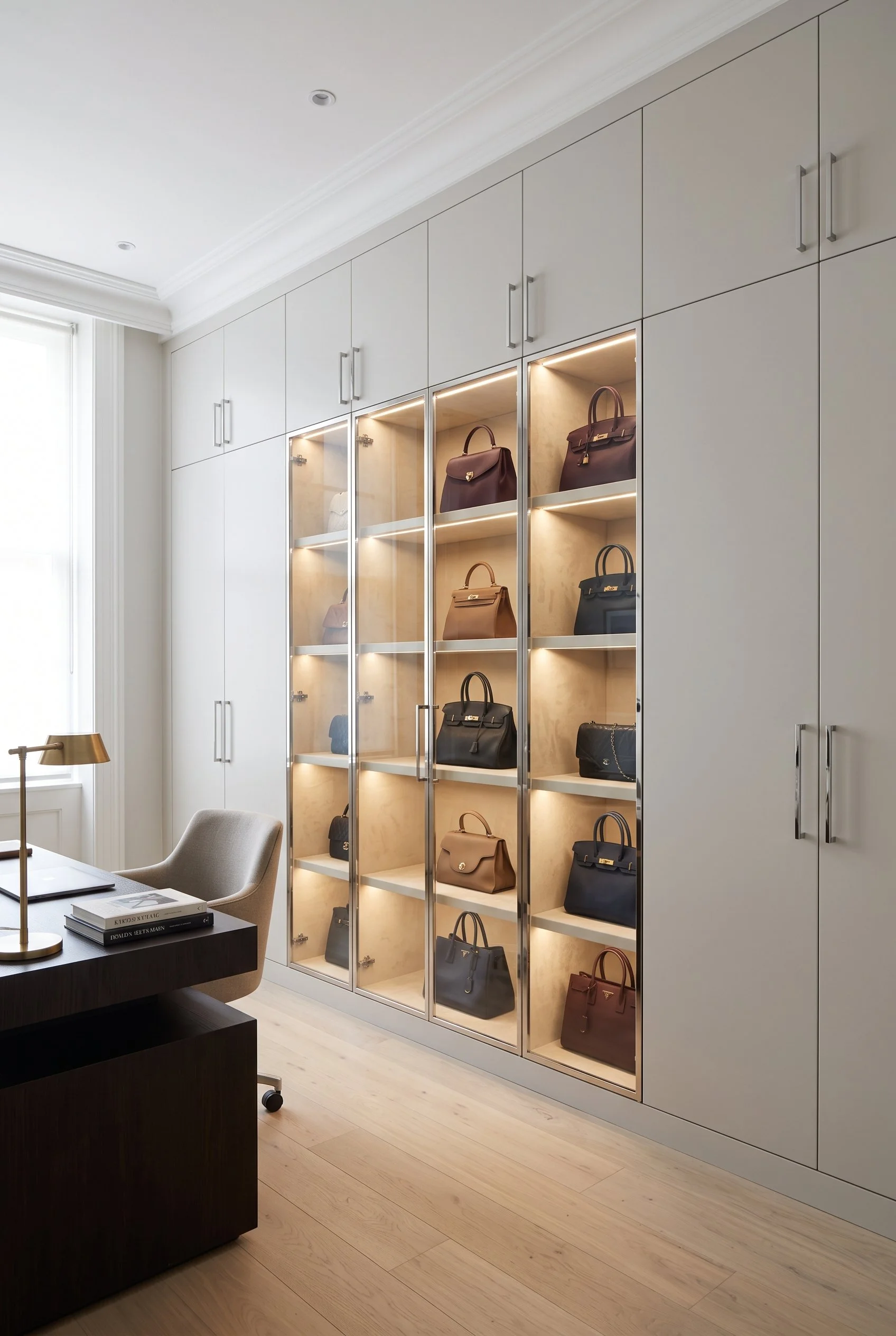
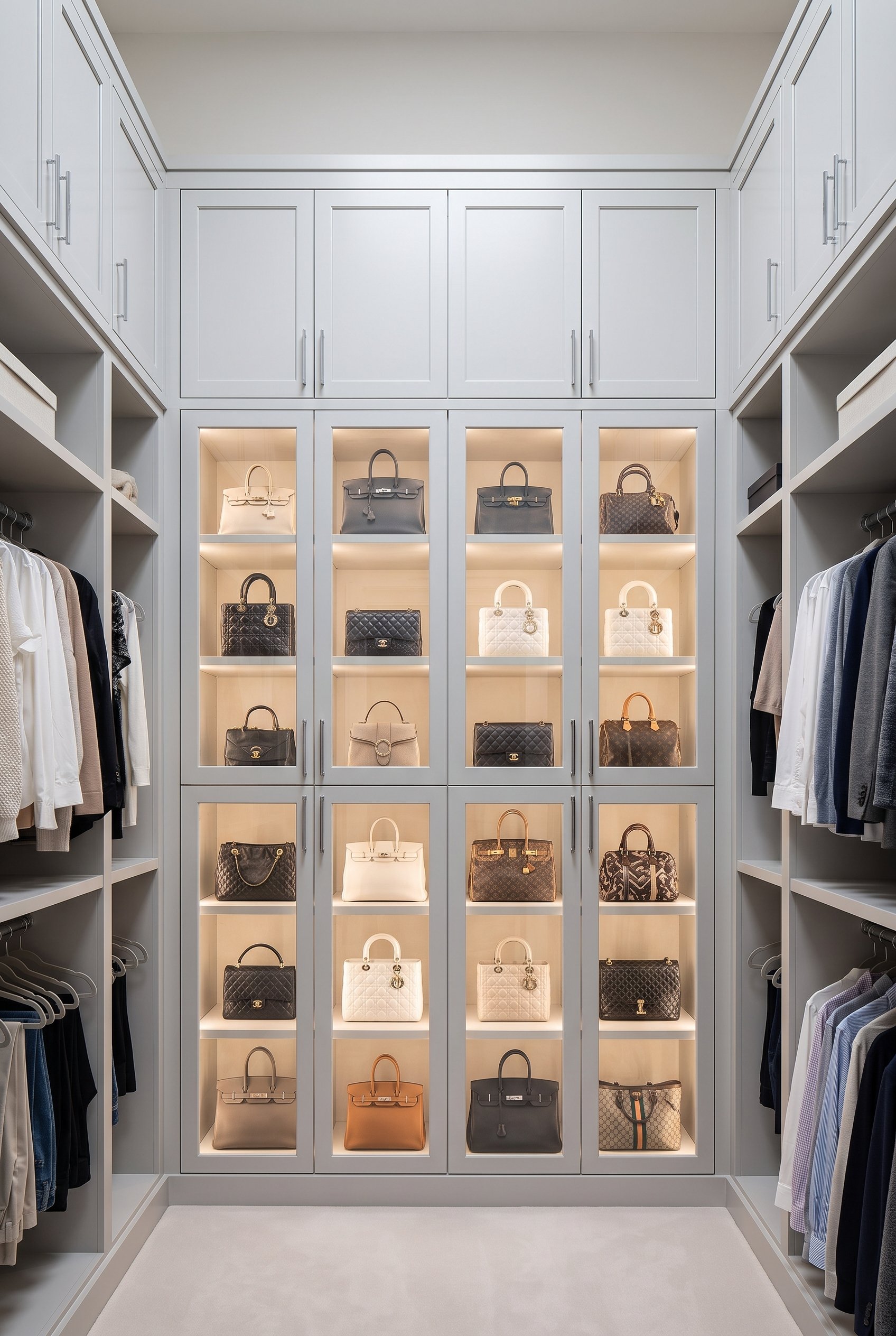
Dedicated zones can accommodate everything from floor-to-ceiling shoe displays and handbag towers to pull-out tie and belt storage, jewelry drawers, watch drawers, hat displays, long-hanging bays, sweater shelving, accessory drawers, luggage towers, garment bags, built-in hampers, valet rods, pull-out mirrors, and even concealed steaming or ironing stations.
The bigger the wardrobe becomes, the more specific the architecture can become.
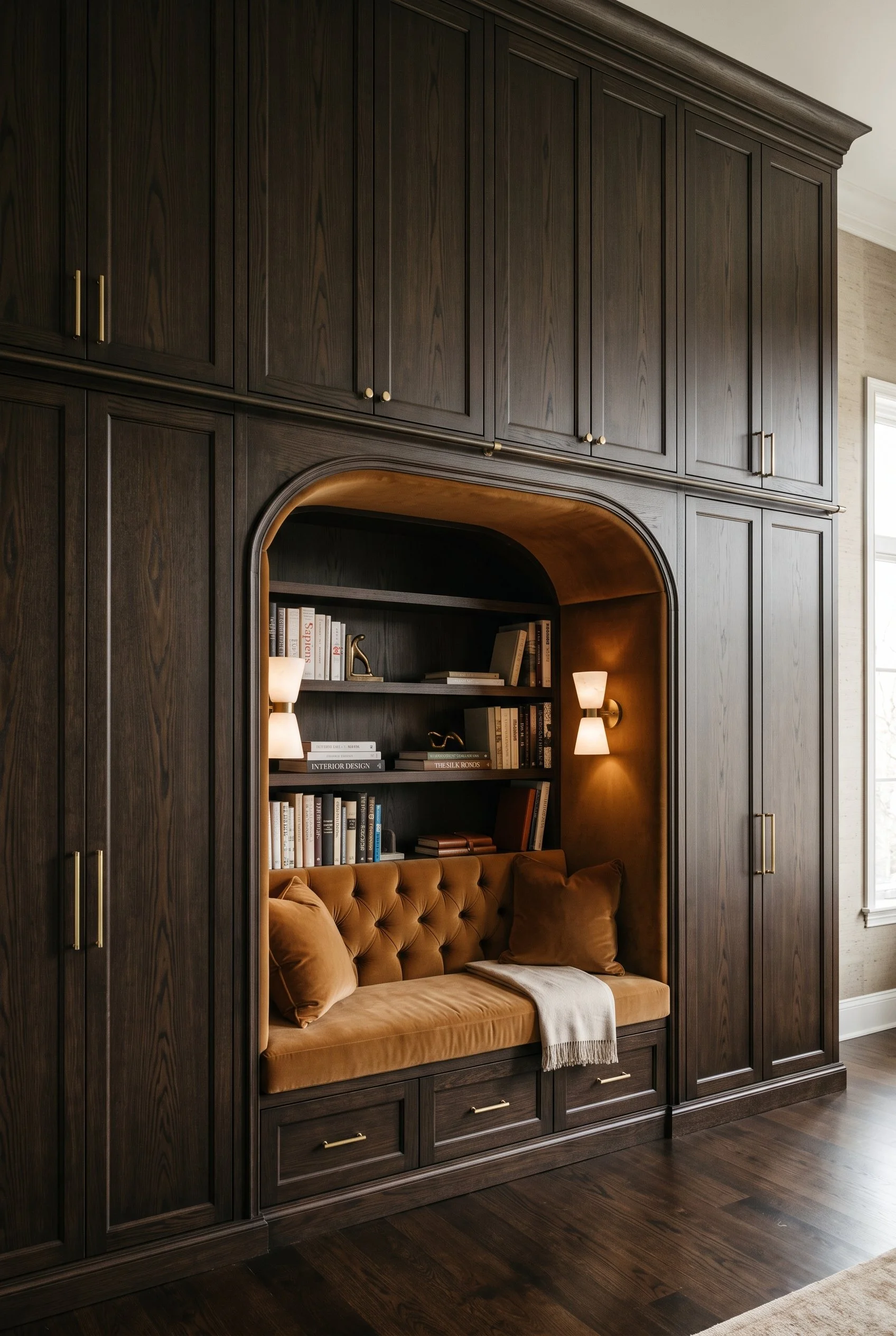
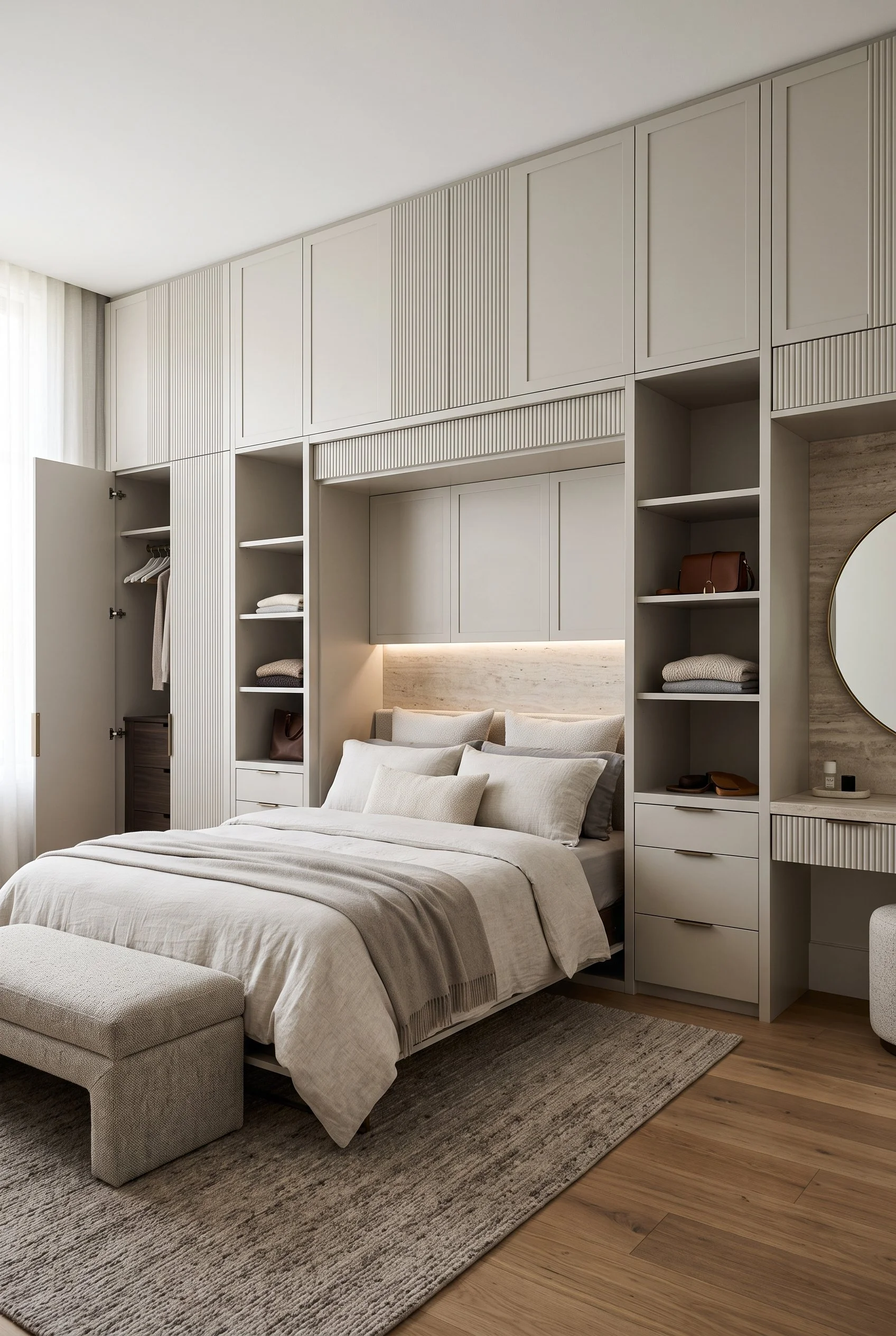
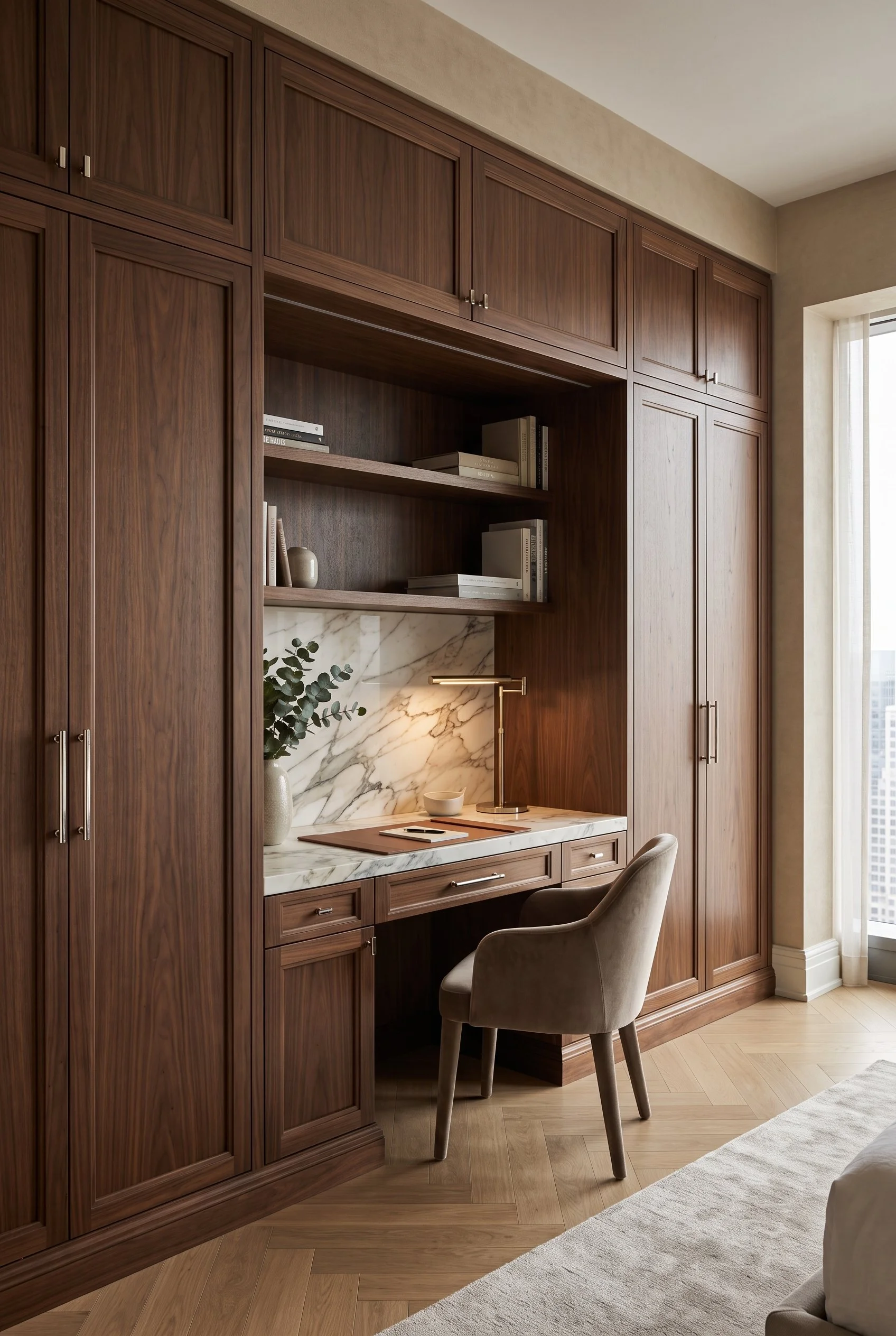
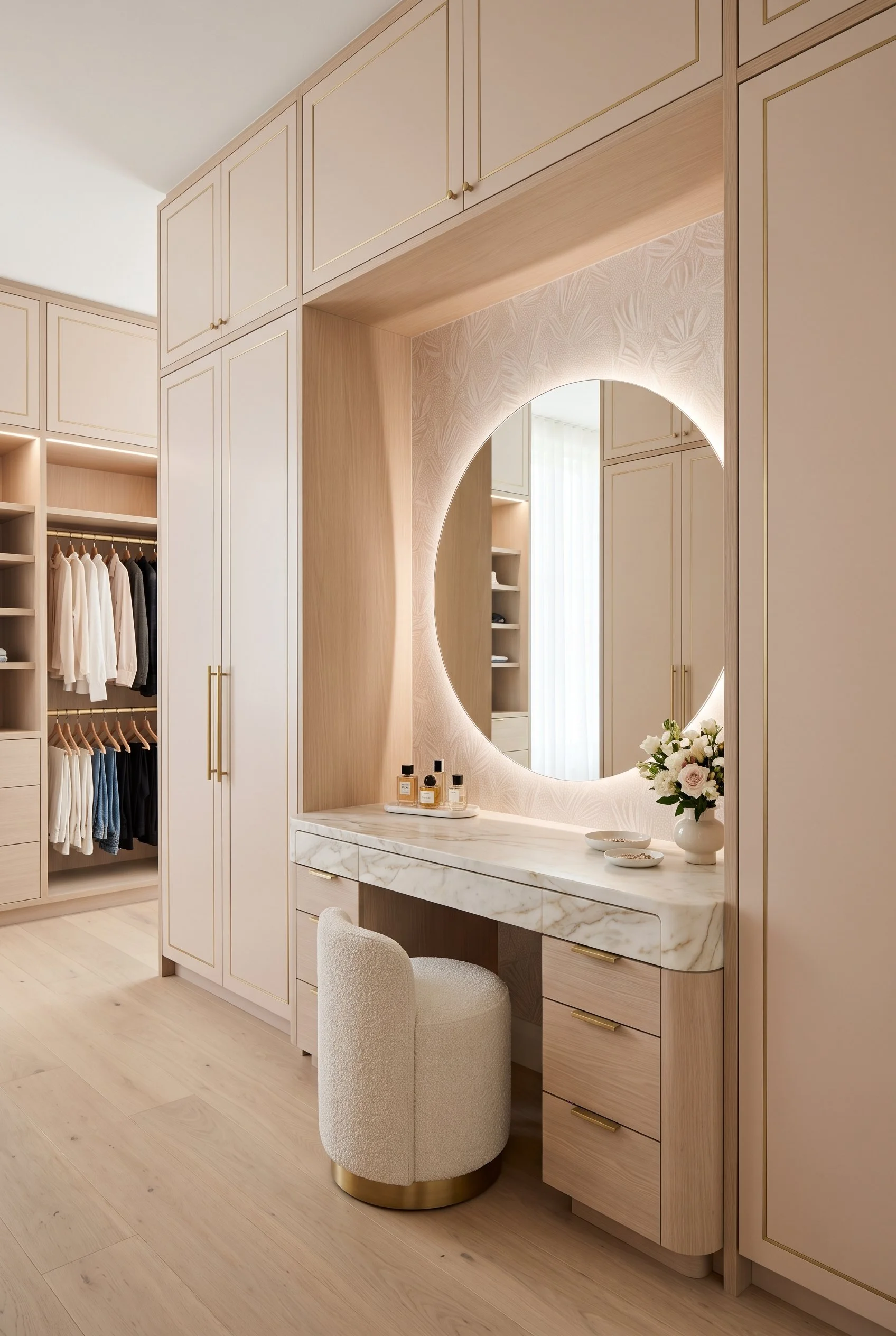
Double-duty design
When there is truly abundant space, or you’re designing for a multi functional room, the wardrobe can begin absorbing functions that would normally belong to entirely different spaces.
A built-in desk or dressing vanity can create a compact workspace. A window seat or upholstered banquette can provide somewhere to sit while getting dressed. A concealed Murphy bed can even transform part of an oversized dressing room into a guest space when needed.
At that point, the wardrobe isn't simply storing the things you own. It's supporting the way you live.
The Wardrobe as Architecture
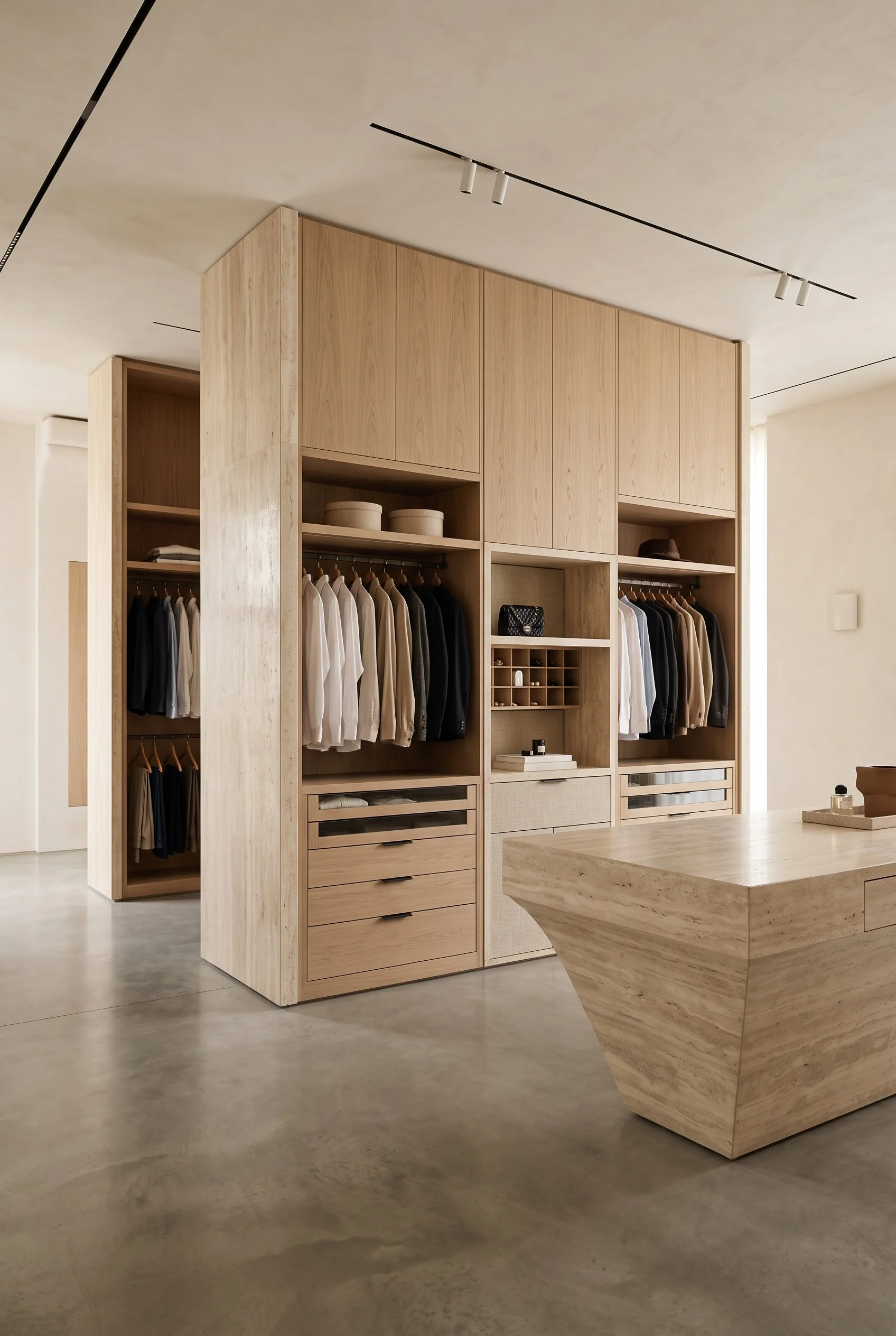
At its most extreme, the wardrobe wall stops looking like cabinetry altogether.
It can frame doorways, wrap corners, create niches, divide rooms, surround windows, or create a central dressing island. It can form a dramatic backdrop for a vanity or conceal another room entirely behind paneled doors.
The wardrobe isn't placed inside the architecture.
It becomes the architecture.
More Isn't Always More—Except When It Is
There is something undeniably satisfying about taking a familiar residential element and pushing it to an almost absurd level.
A closet becomes a wall. A wall becomes a room. A room becomes a wardrobe system. And suddenly the humble act of getting dressed has its own piece of dedicated architecture.