
The Drop Zone
Designing the hardest-working room in the house—with the precision of a luxury wardrobe.
The mudroom is often treated as an afterthought—an in-between space where things get dropped, kicked off, and forgotten. But in a well-designed home, it’s something else entirely: a point of arrival, a moment of transition, and one of the most highly used storage systems in daily life.
From a closet designer’s perspective, the mudroom isn’t casual—it’s strategic. It’s where function is tested in real time, multiple times a day. And when it’s done right, it feels effortless.
ZONING THE EVERYDAY
The biggest mistake in mudroom design is thinking in terms of storage, rather than systems.
A luxury mudroom is zoned with intention:
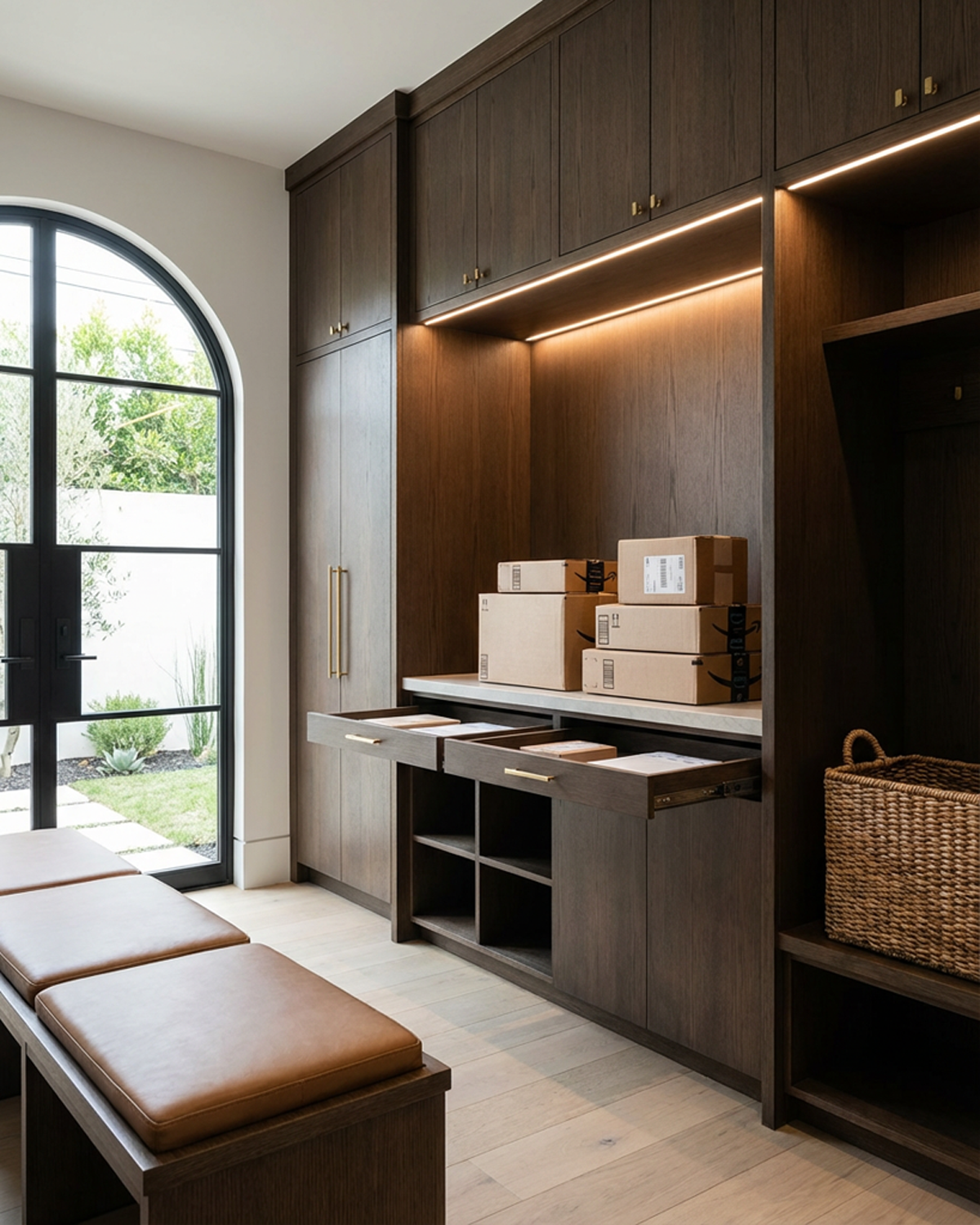
Drop zone (keys, mail, sunglasses)
Outerwear (coats, hats, seasonal layers)
Footwear (daily rotation vs. overflow)
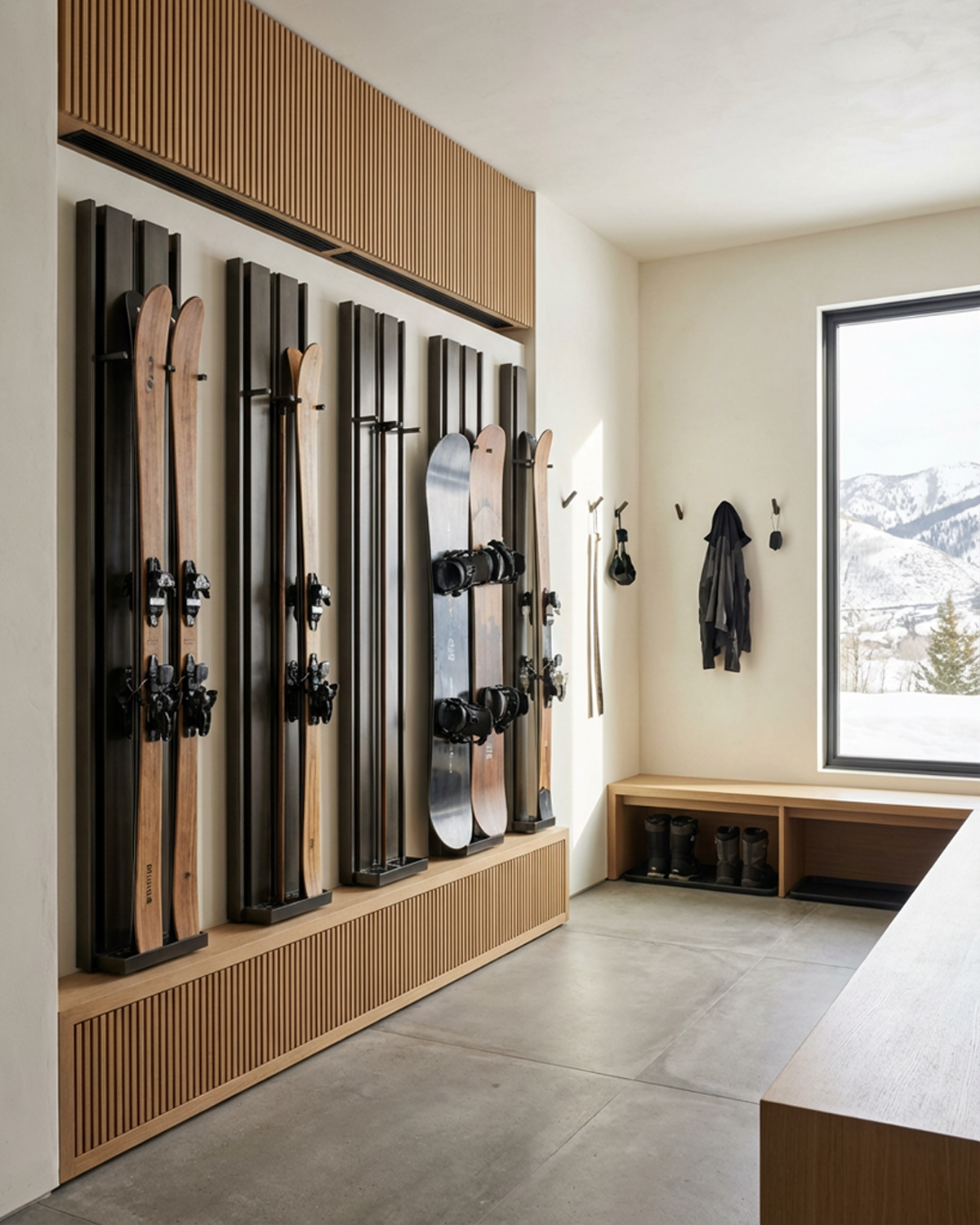
Active gear (gym, sports, dog walking)
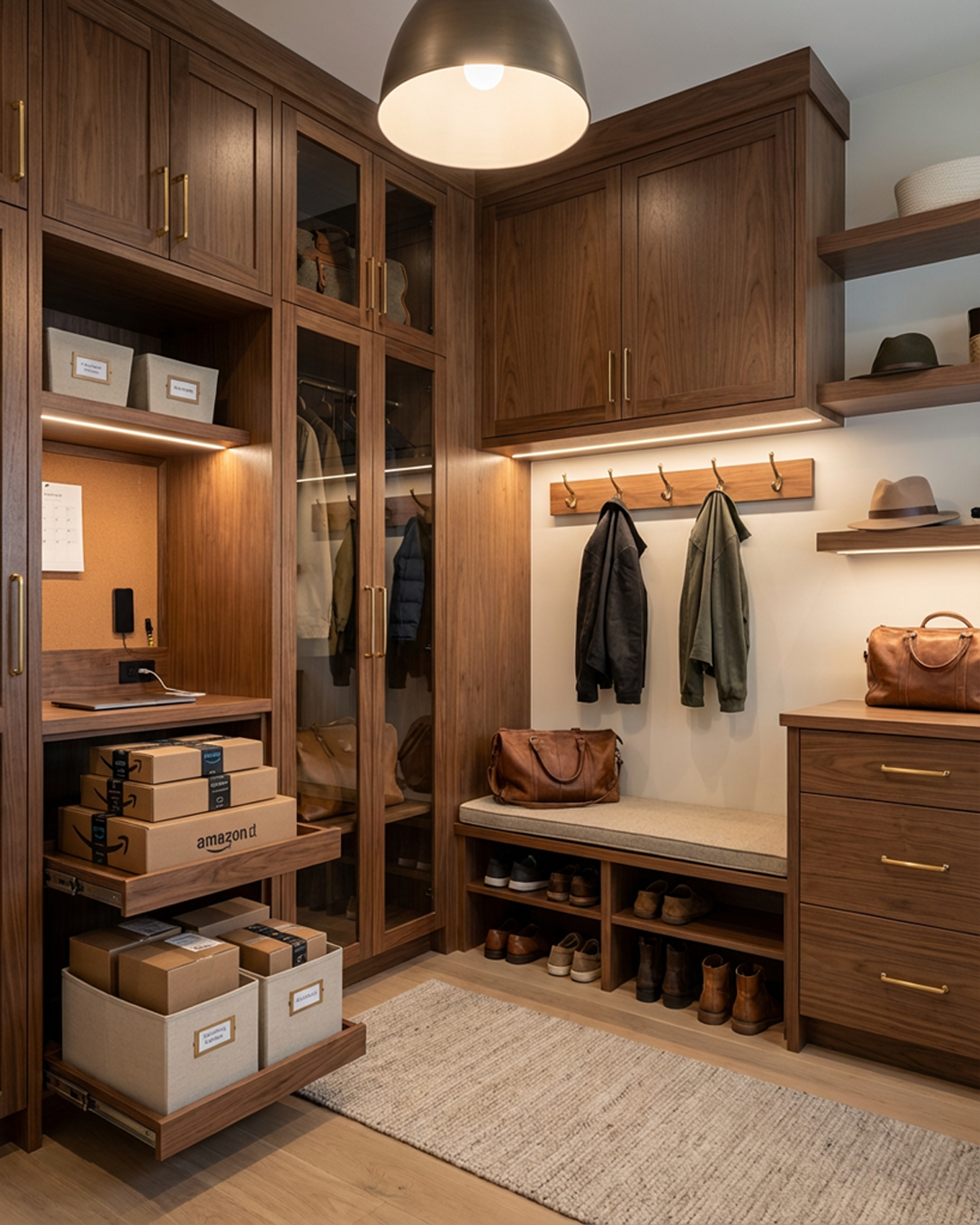
Overflow storage (bulk, backstock, less-used items)
Each category has a dedicated home—no overlap, no ambiguity.
This is the same logic we apply in a high-functioning dressing room. The difference is simply what’s being stored.
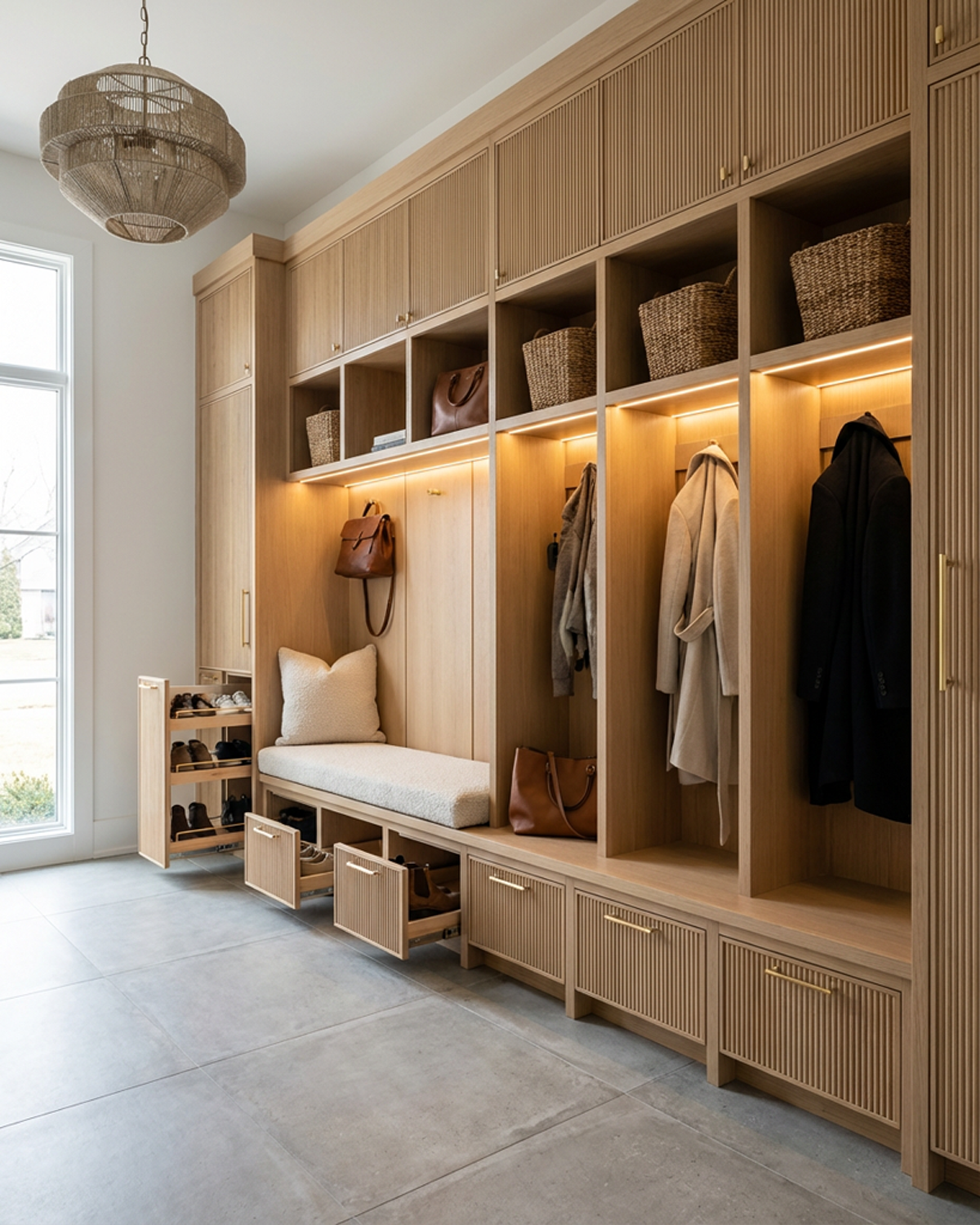
A PLACE TO SIT—DONE PROPERLY
A bench isn’t just a bench. It’s a moment.
In a luxury context, it becomes:
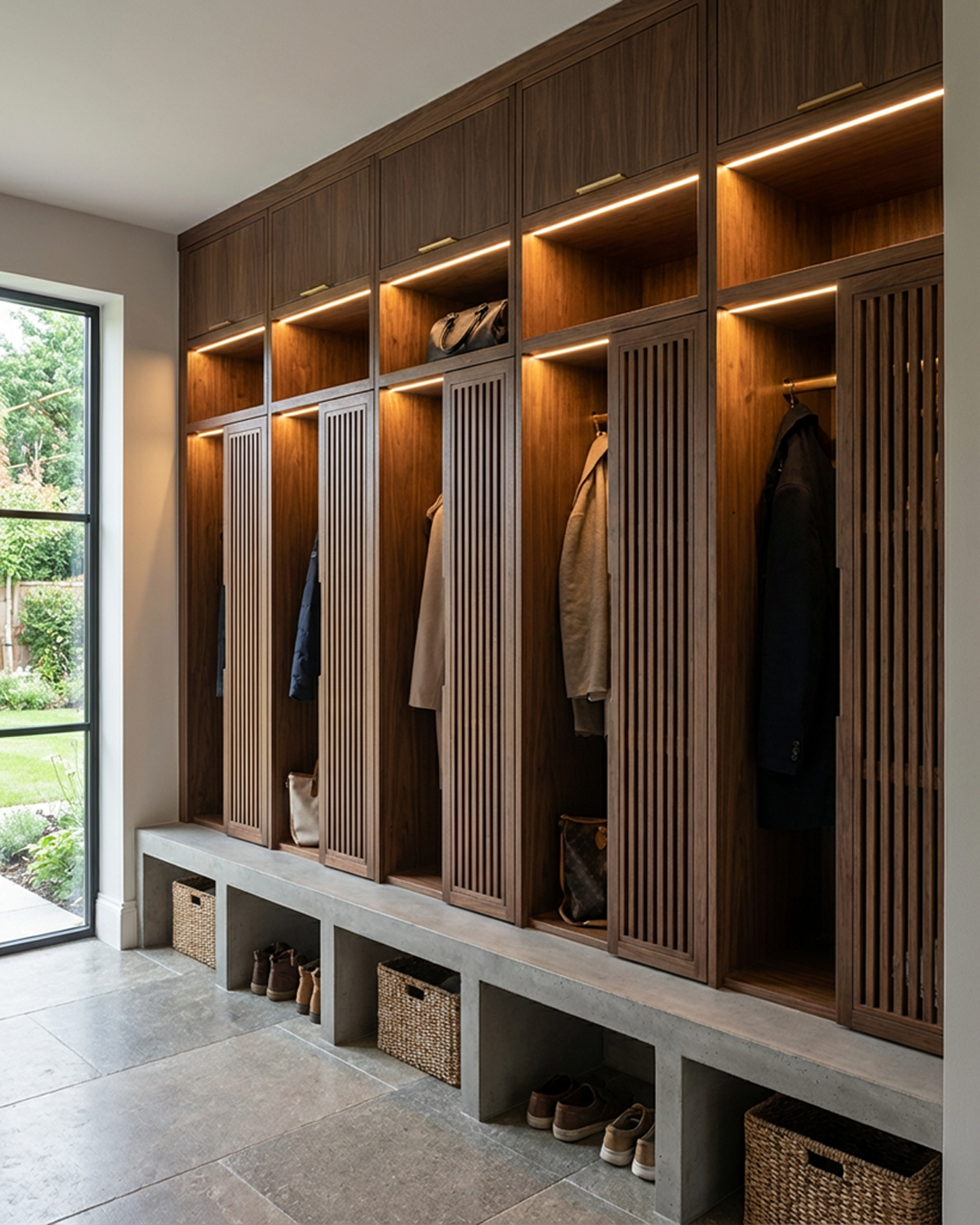
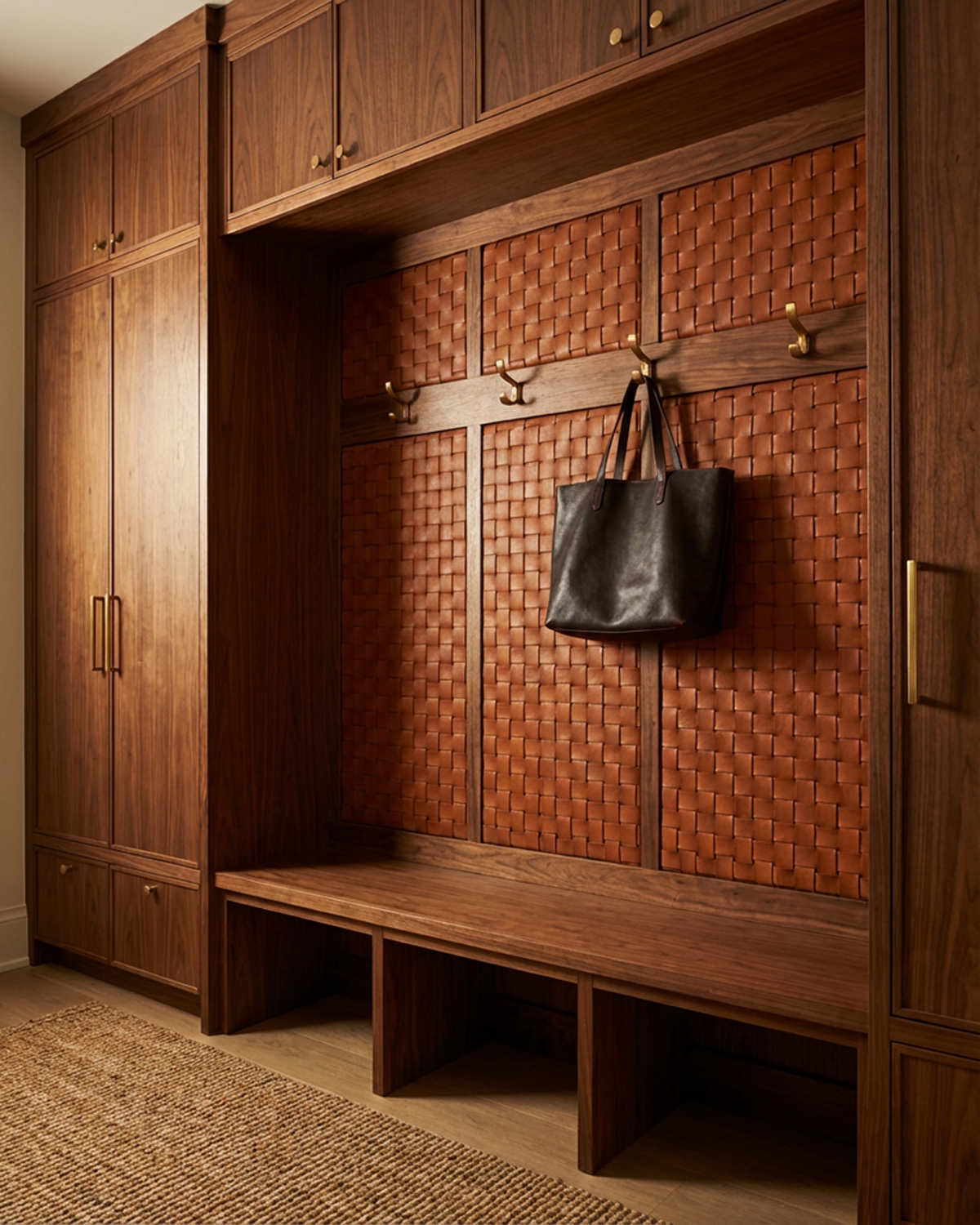
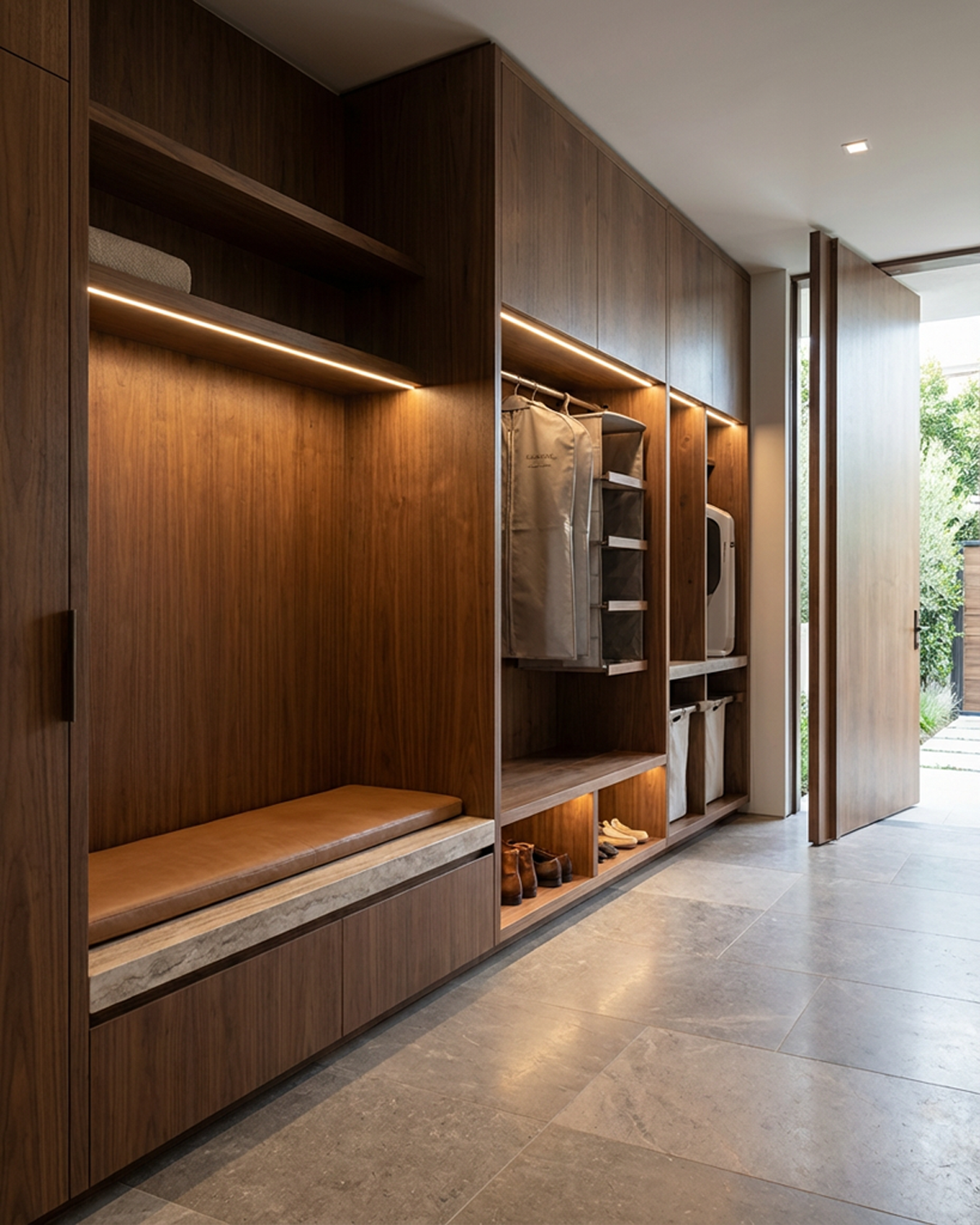
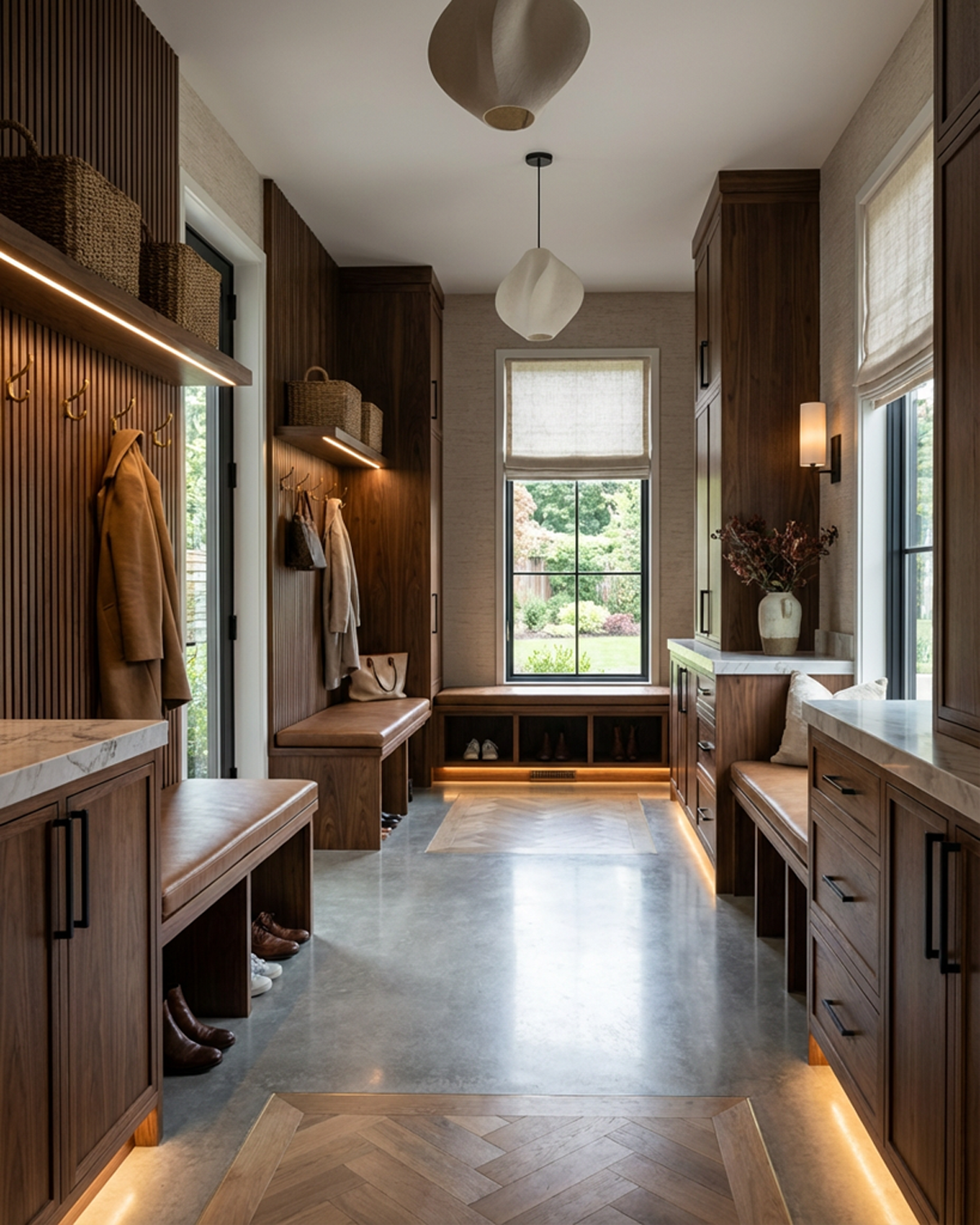
Fully integrated into millwork
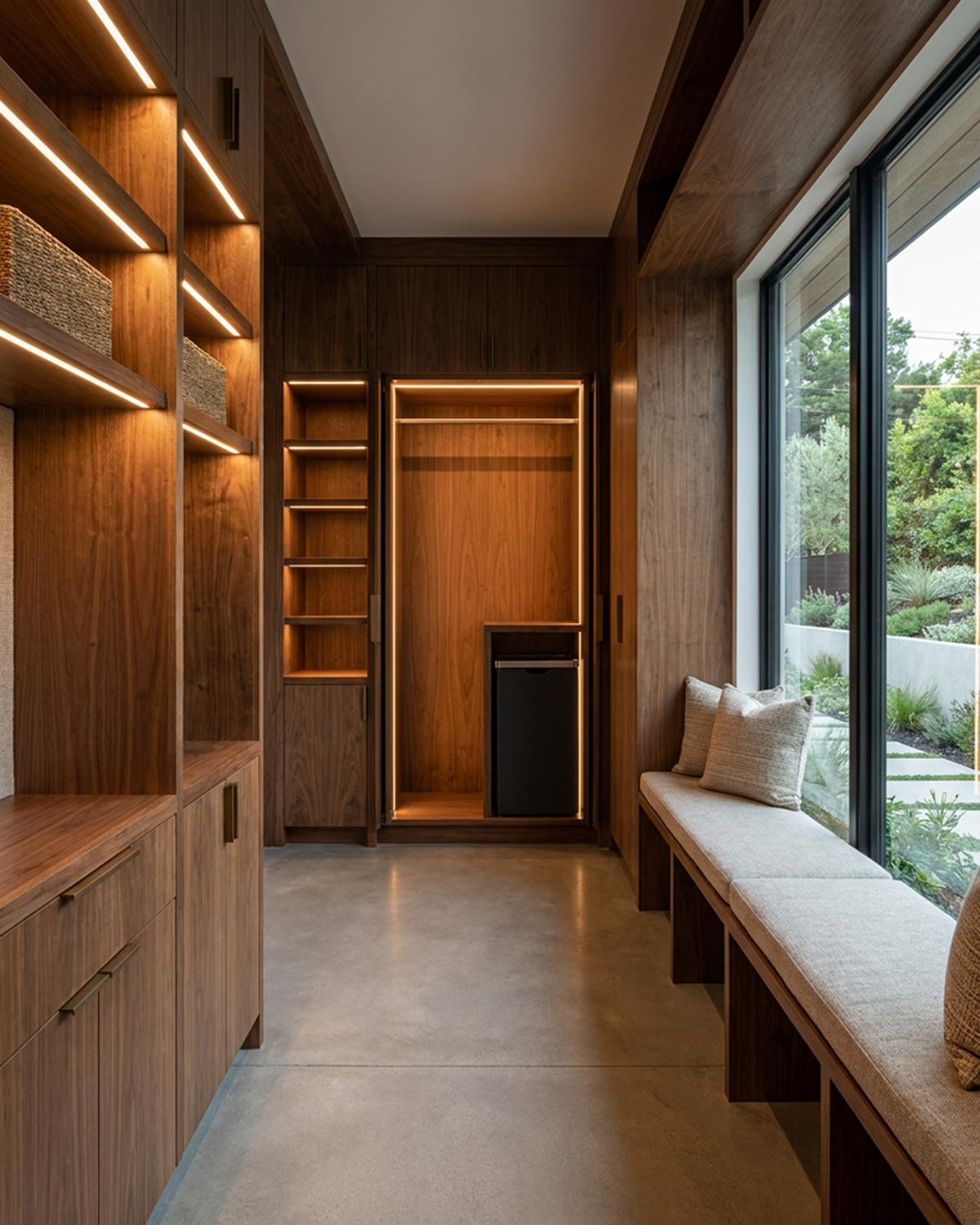
Sized generously (not an afterthought perch)
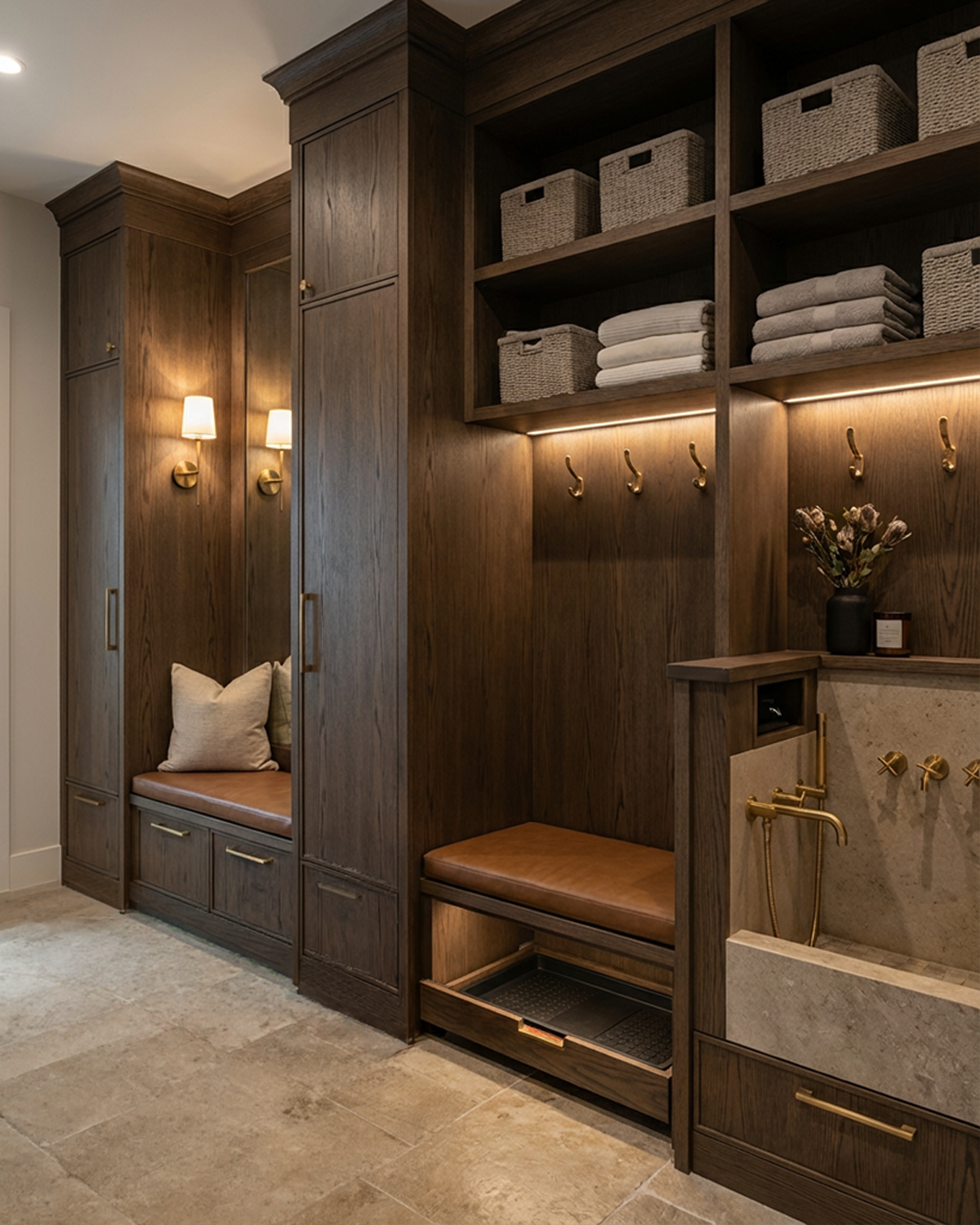
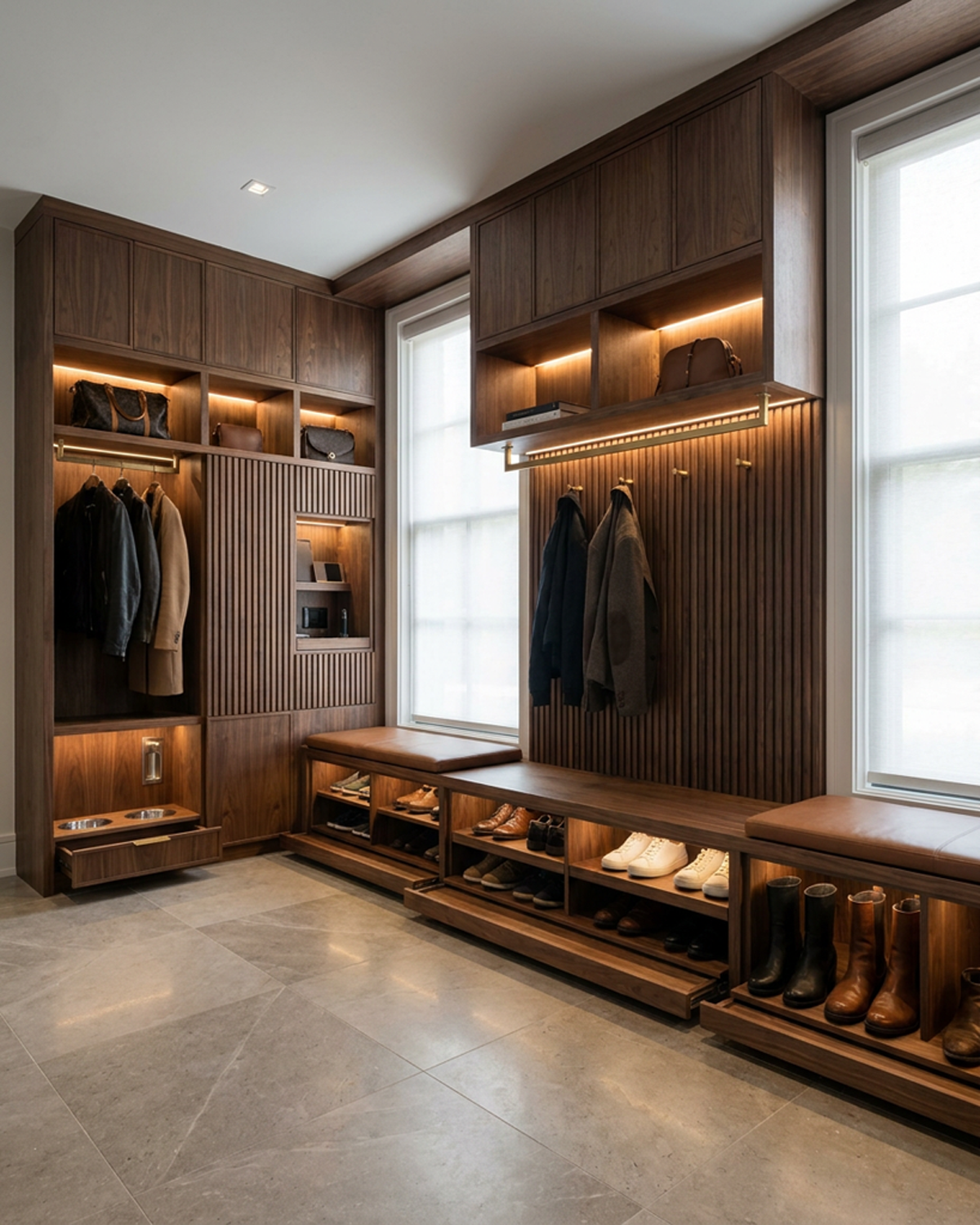
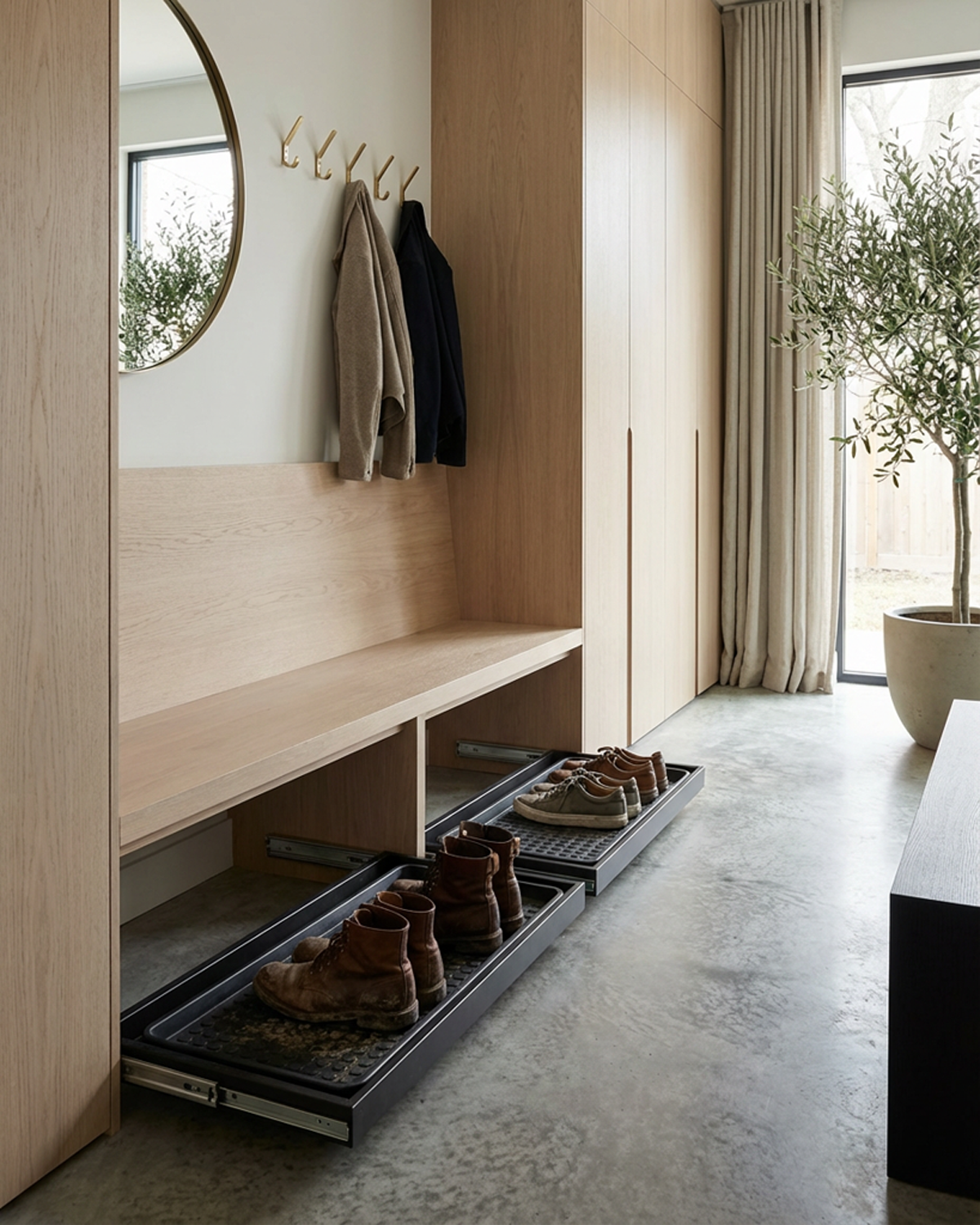
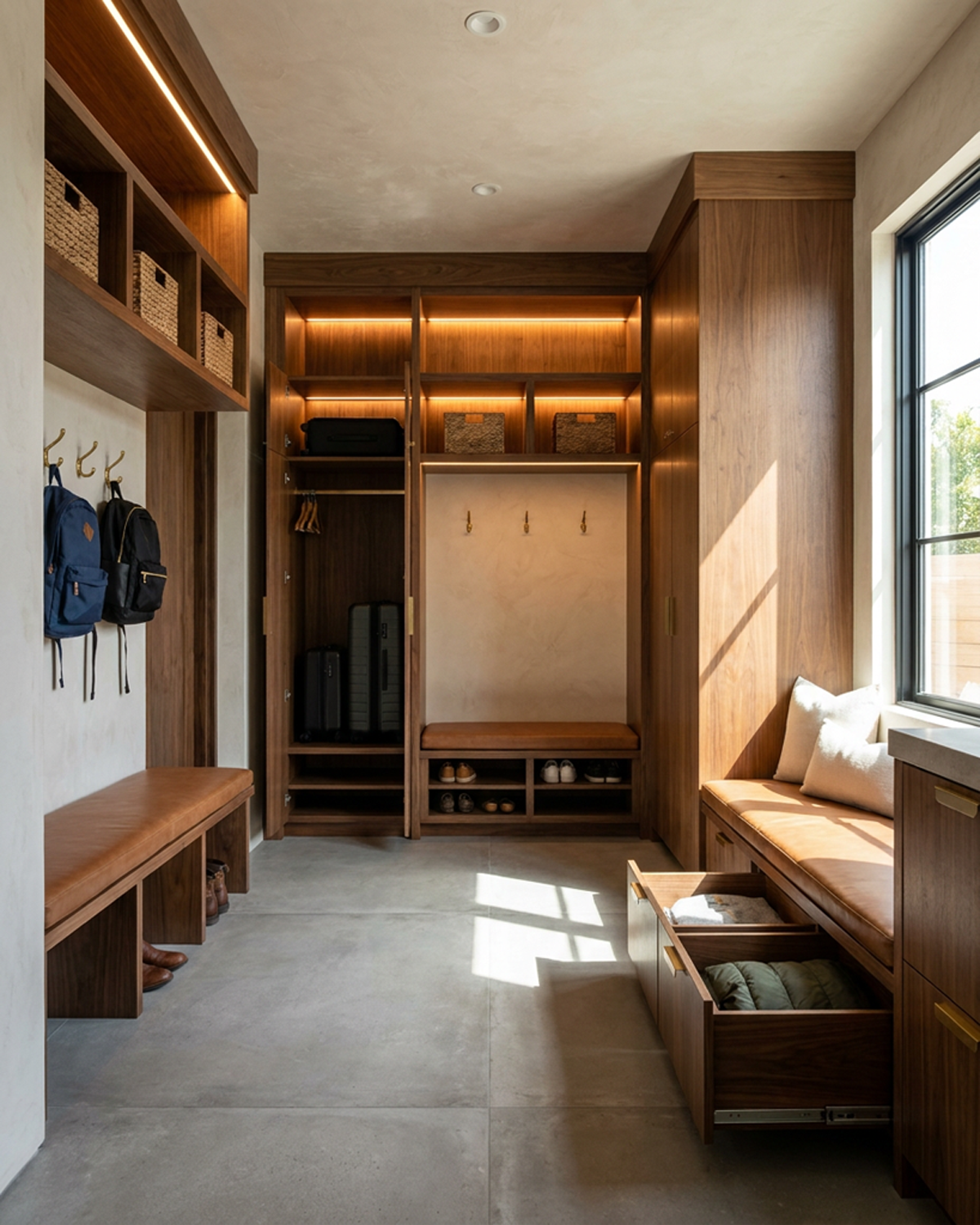
Paired with concealed storage below (drawers or open cubbies)
Upholstered or detailed to match the home’s interior language
If people actually want to sit there, they’ll use the space properly. If not, everything ends up on the floor.
CONCEAL, DON’T EXPOSE
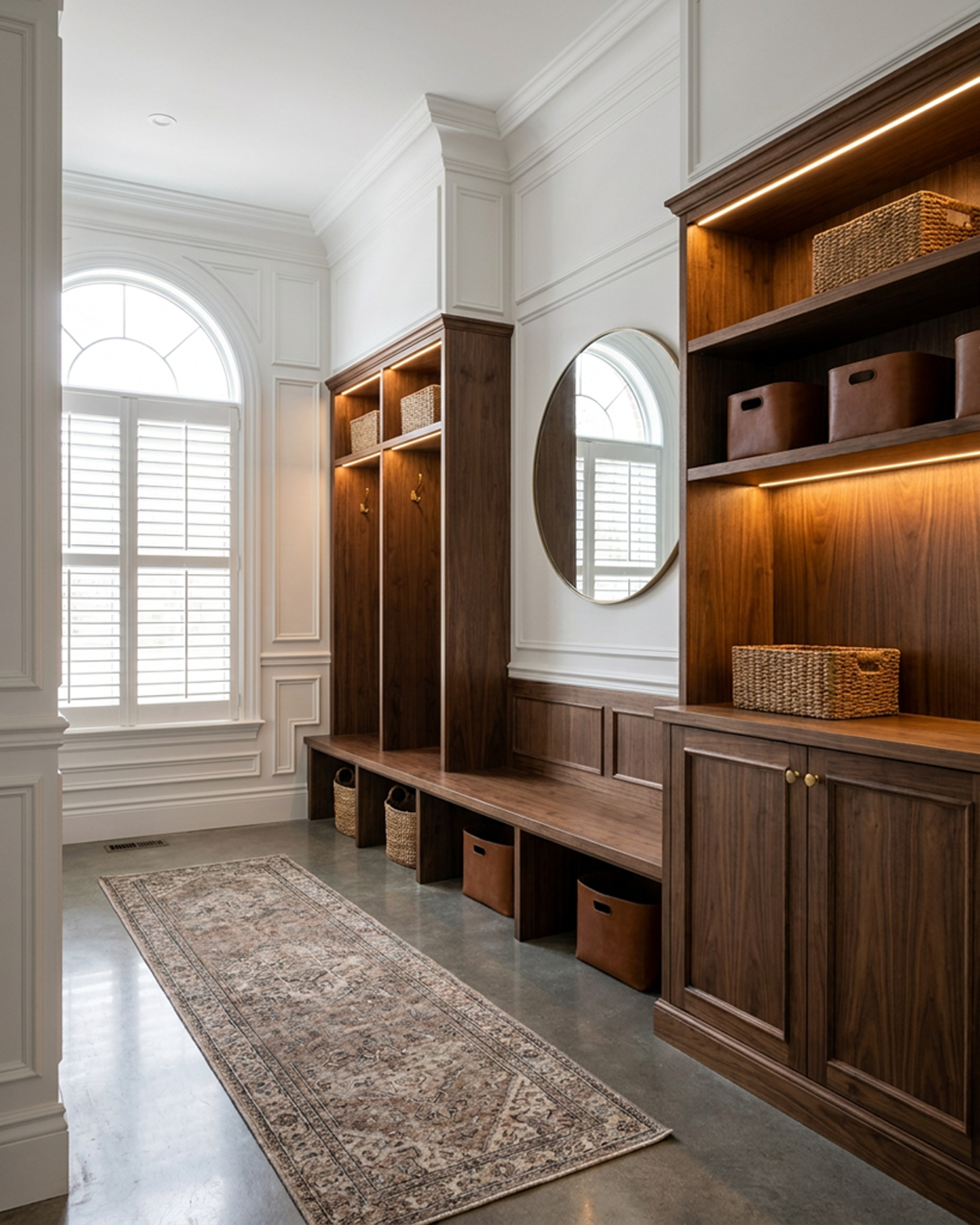
Open cubbies feel practical—until real life hits.
What works better:
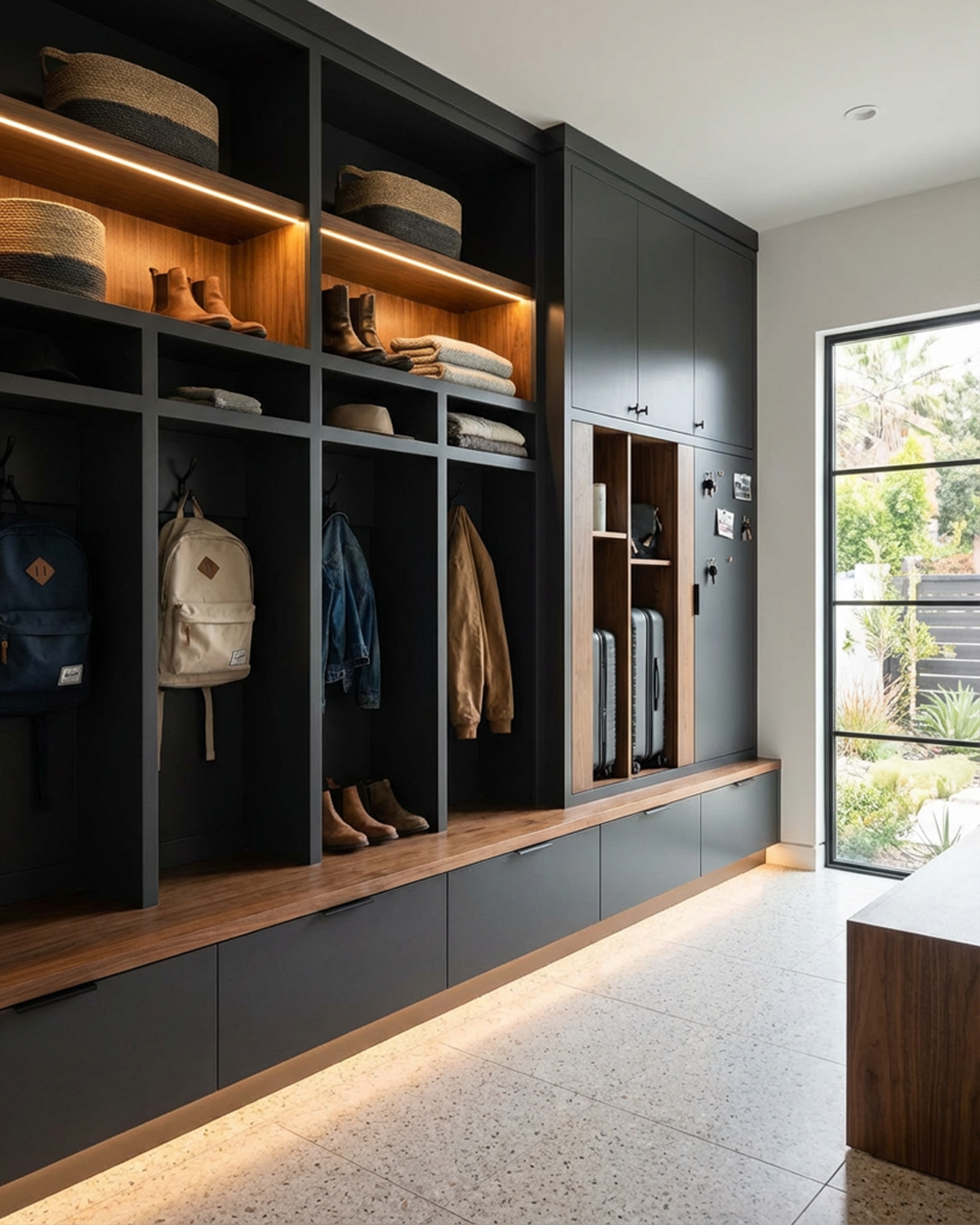
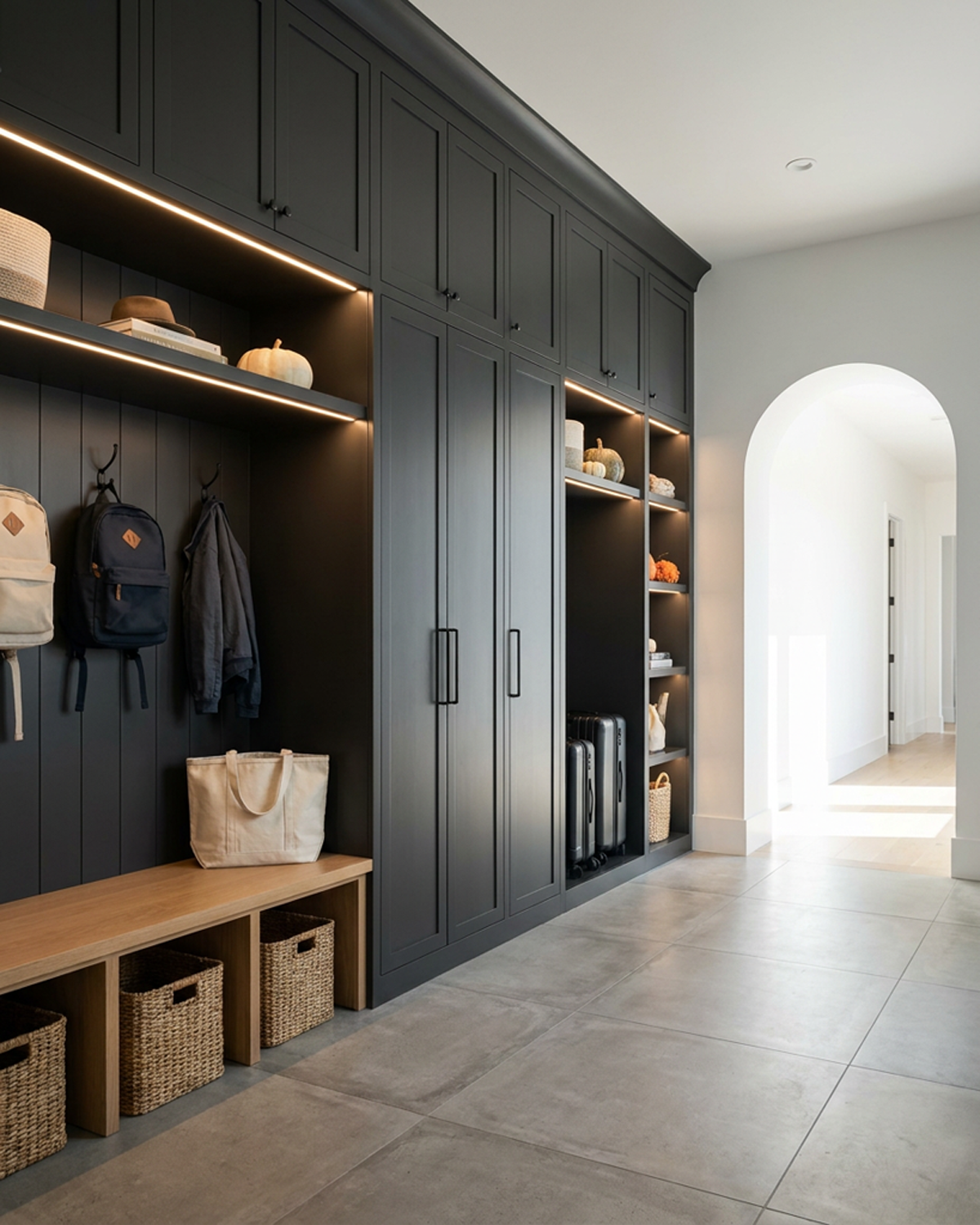
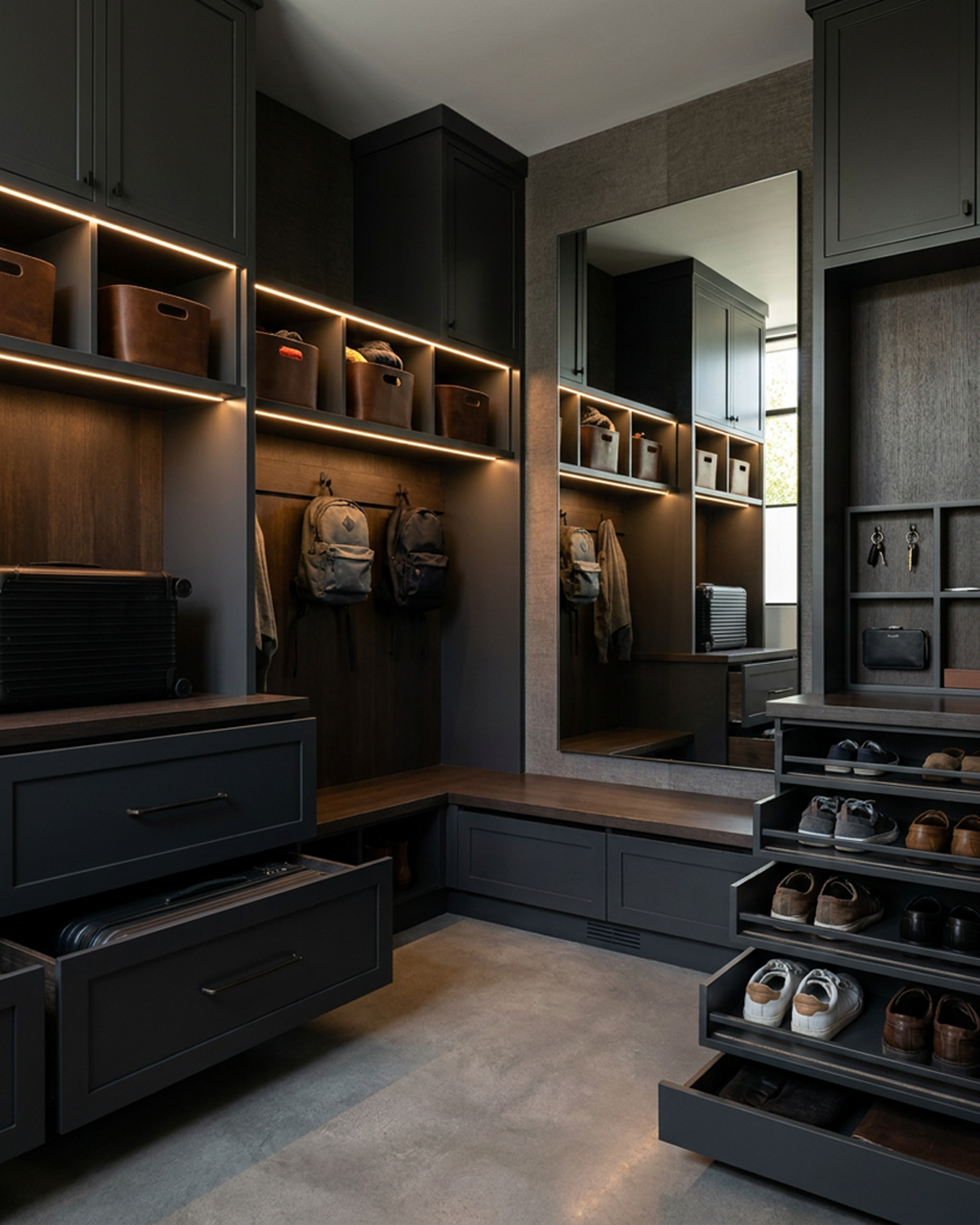
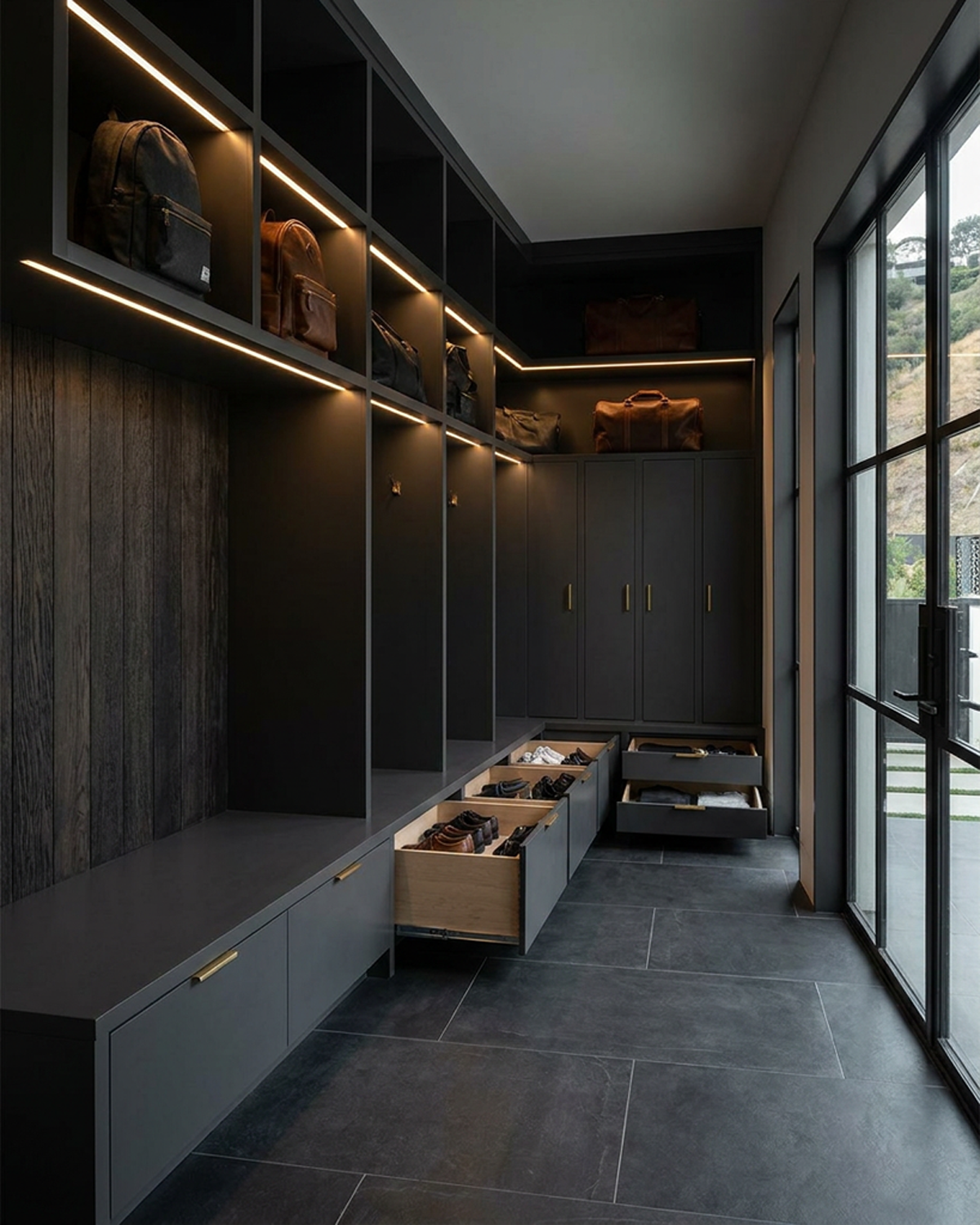
Closed cabinetry for visual calm
Interior organization behind doors
Design that matches adjacent spaces (kitchen, hallway, or closet)
Baskets or boxes for keeping loose items tidy
Think of it like a closet: the best ones don’t show you everything at once.
MATERIALS THAT CAN TAKE IT
This is where performance meets design.
The palette should be:
Durable (stone, sealed wood, performance finishes)
Forgiving (matte over high-gloss where appropriate)
Intentional (not purely utilitarian)
Details we love:
Integrated drip trays for boots
Ventilated shoe drawers
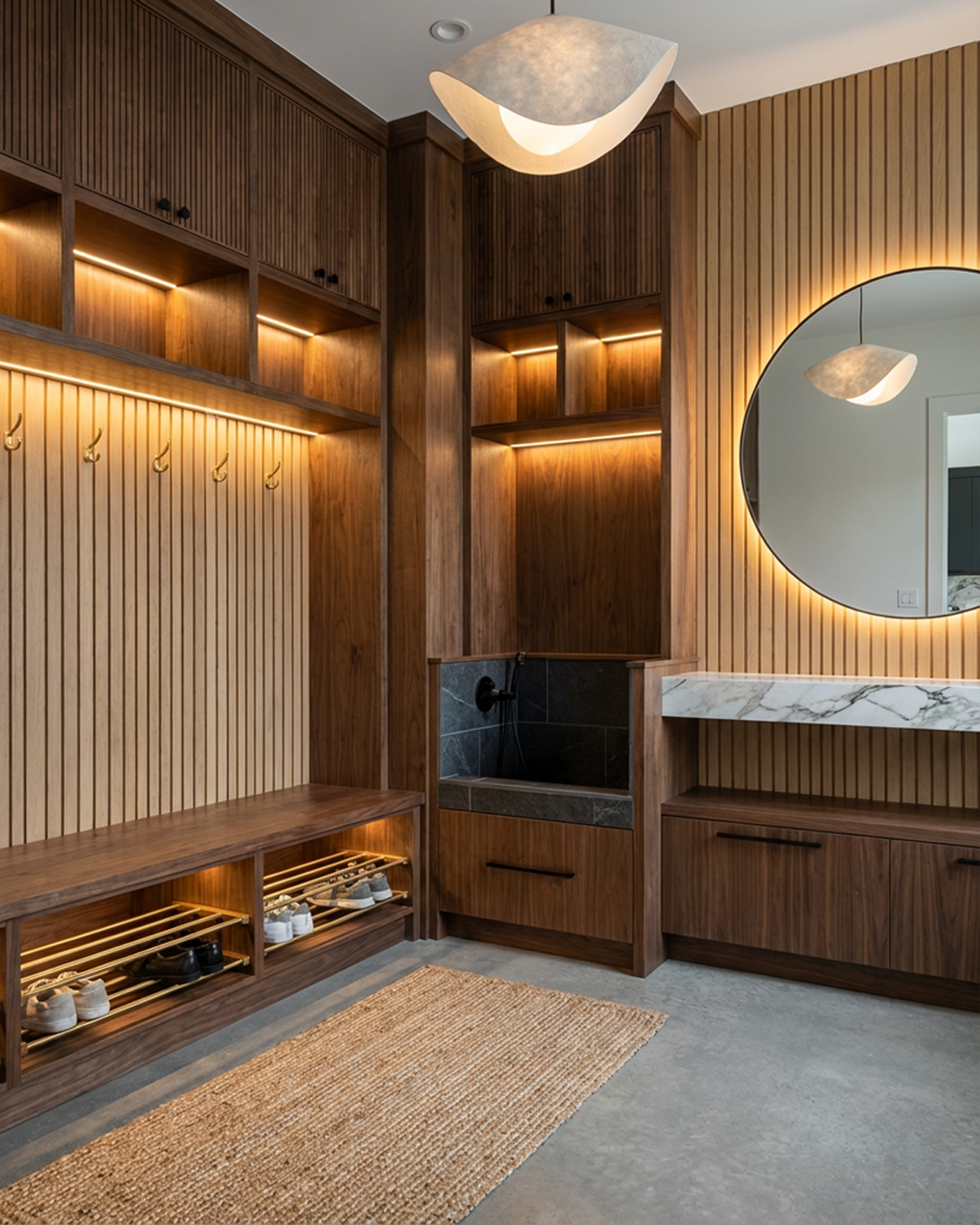
Metal or stone-lined base cabinets
Hooks that feel like hardware—not hardware that feels like an afterthought
LIGHTING SHOULD NEVER COME LAST
Mudrooms are often underlit—which makes them underused.
Approach it like a closet:
Integrated LED within cabinetry
Motion sensors for hands-free activation
Layered lighting (overhead + accent)
Warm, neutral temperature to match the home
If you can’t see it, you won’t use it.
DESIGNING FOR HOW YOU ACTUALLY LIVE
The most successful mudrooms aren’t the most beautiful—they’re the most honest.
Do you enter through the garage or front door?
Do you change shoes immediately or later?
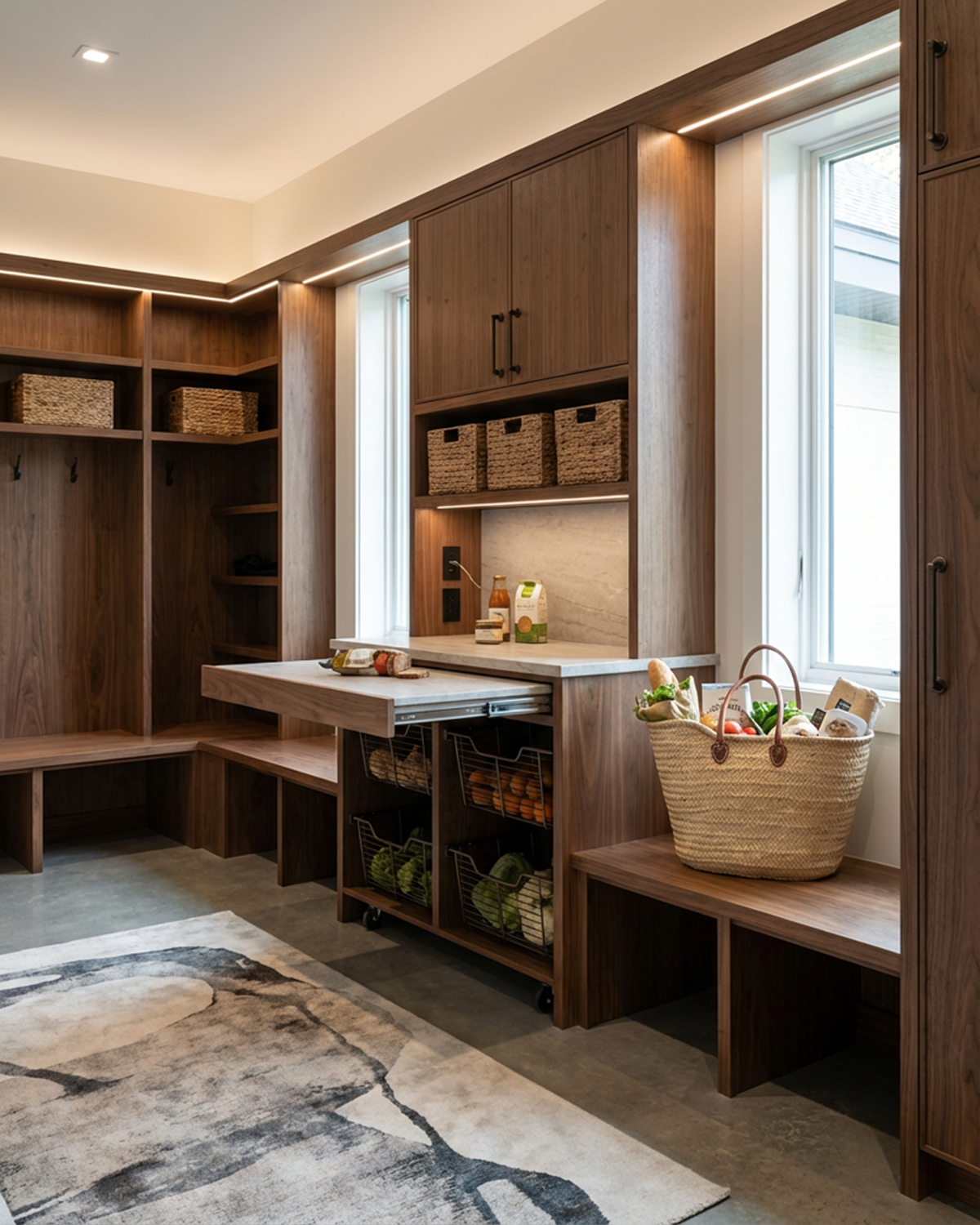
Are you carrying a bag, groceries, a dog leash?
Do you need space for dry cleaning, returns, packages?
We design these spaces the same way we design wardrobes: around real habits, not ideal ones.
THE TAKEAWAY
A mudroom is not a secondary space. It’s one of the most important systems in the home.
When it’s designed with the same level of intention as a luxury dressing room—zoned, concealed, material-driven, and tailored to real life—it stops being a place where things pile up.
And starts becoming a place where everything lands exactly where it should.