Small Space, High Design
The City Walk-In Closet
City living asks more from every square foot — and nowhere is that more apparent than the walk-in closet. In places like New York, London, and Paris, closet design becomes an exercise in precision: balancing storage, circulation, and visual calm within a tightly defined footprint.
When thoughtfully executed, a small walk-in doesn’t feel limited. It feels intentional.
At LA Closet Design, compact closets are approached less as scaled-down versions of larger rooms and more as highly edited environments where proportion, materiality, and layered functionality do the work.
Editing the Architecture
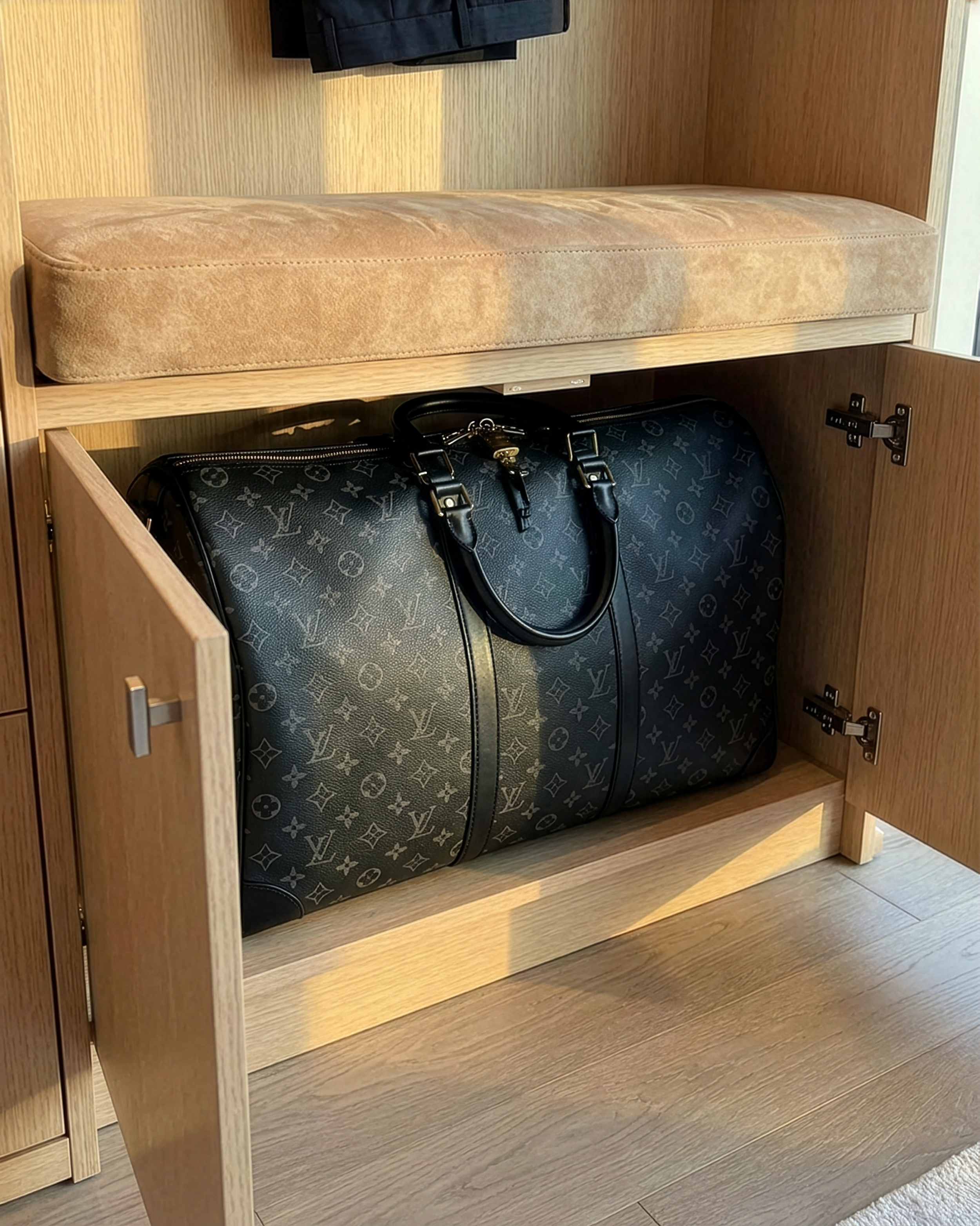
In smaller closets, the layout matters more than the volume. Depths are calibrated carefully — shallower shelving where possible, double hanging positioned strategically, and corner conditions resolved with custom solutions rather than wasted voids.
Every inch is purposeful, but never crowded.

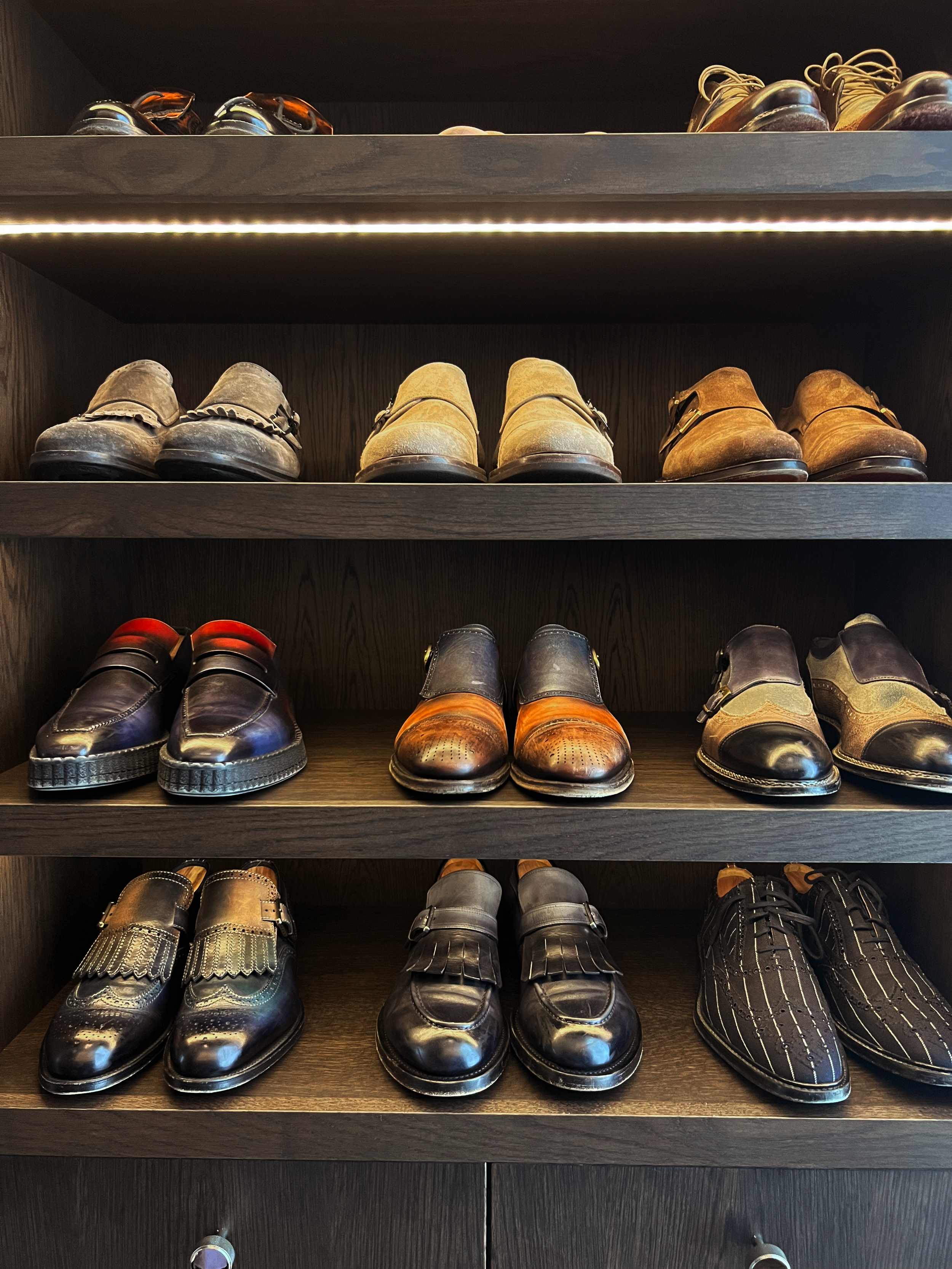
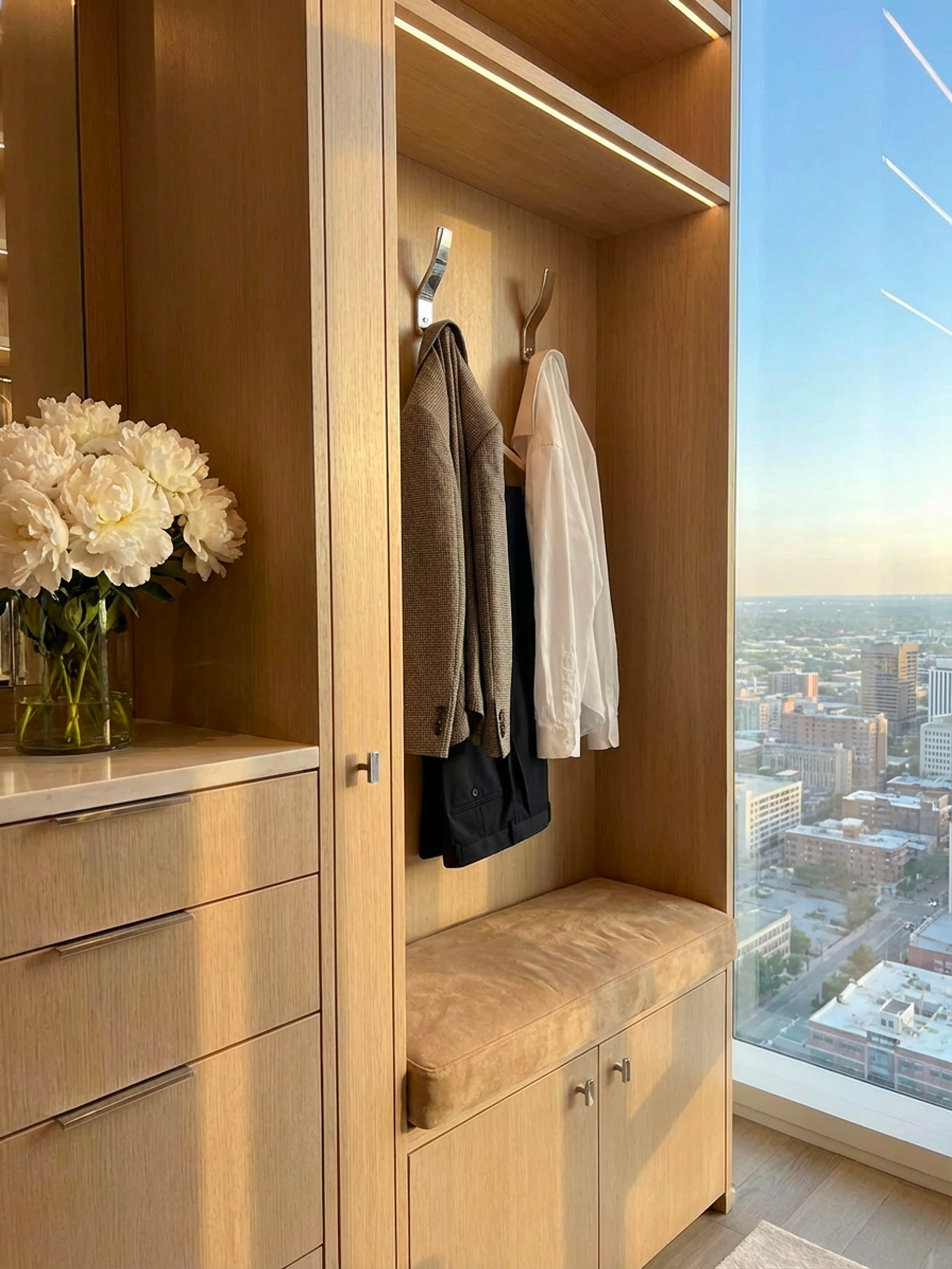
Material CONTINUITY
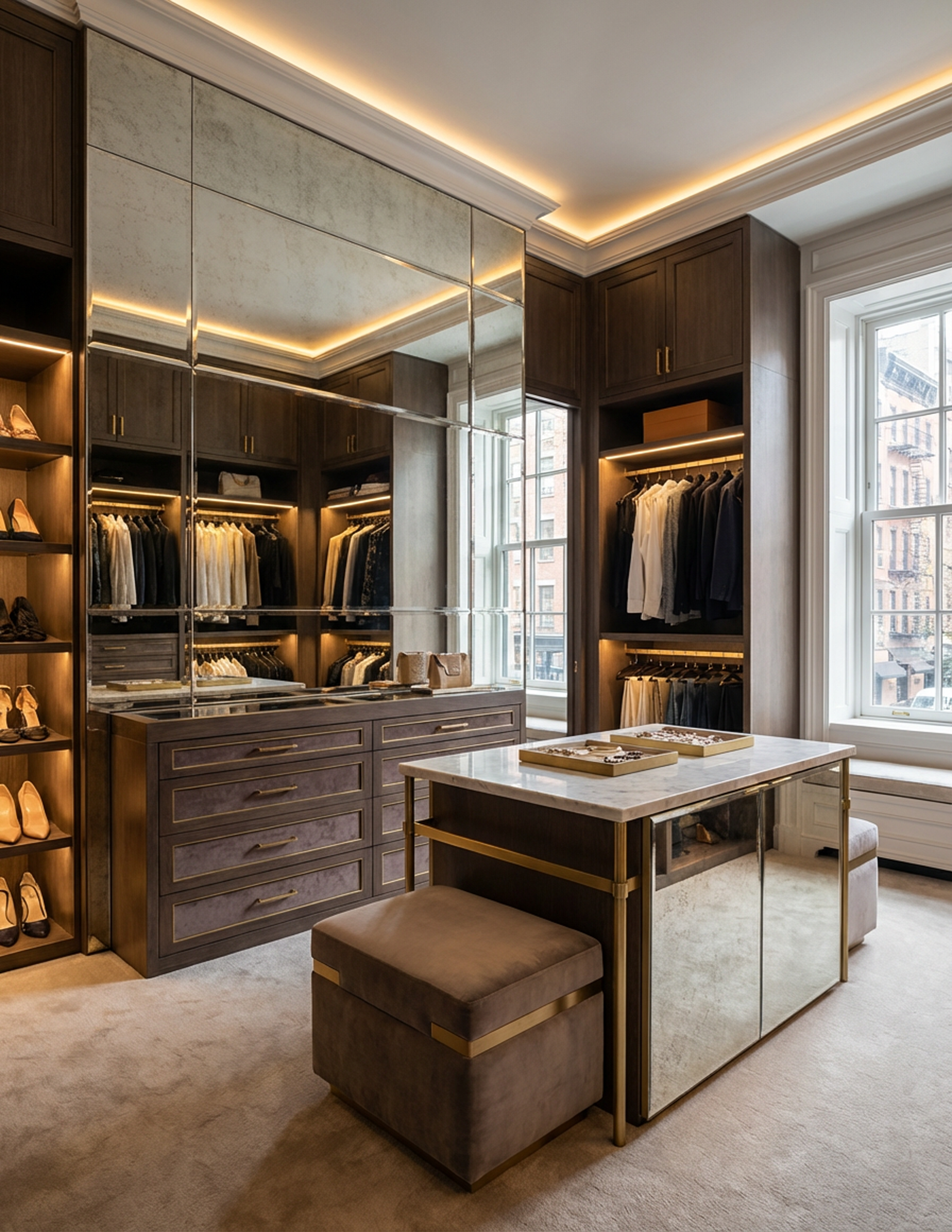
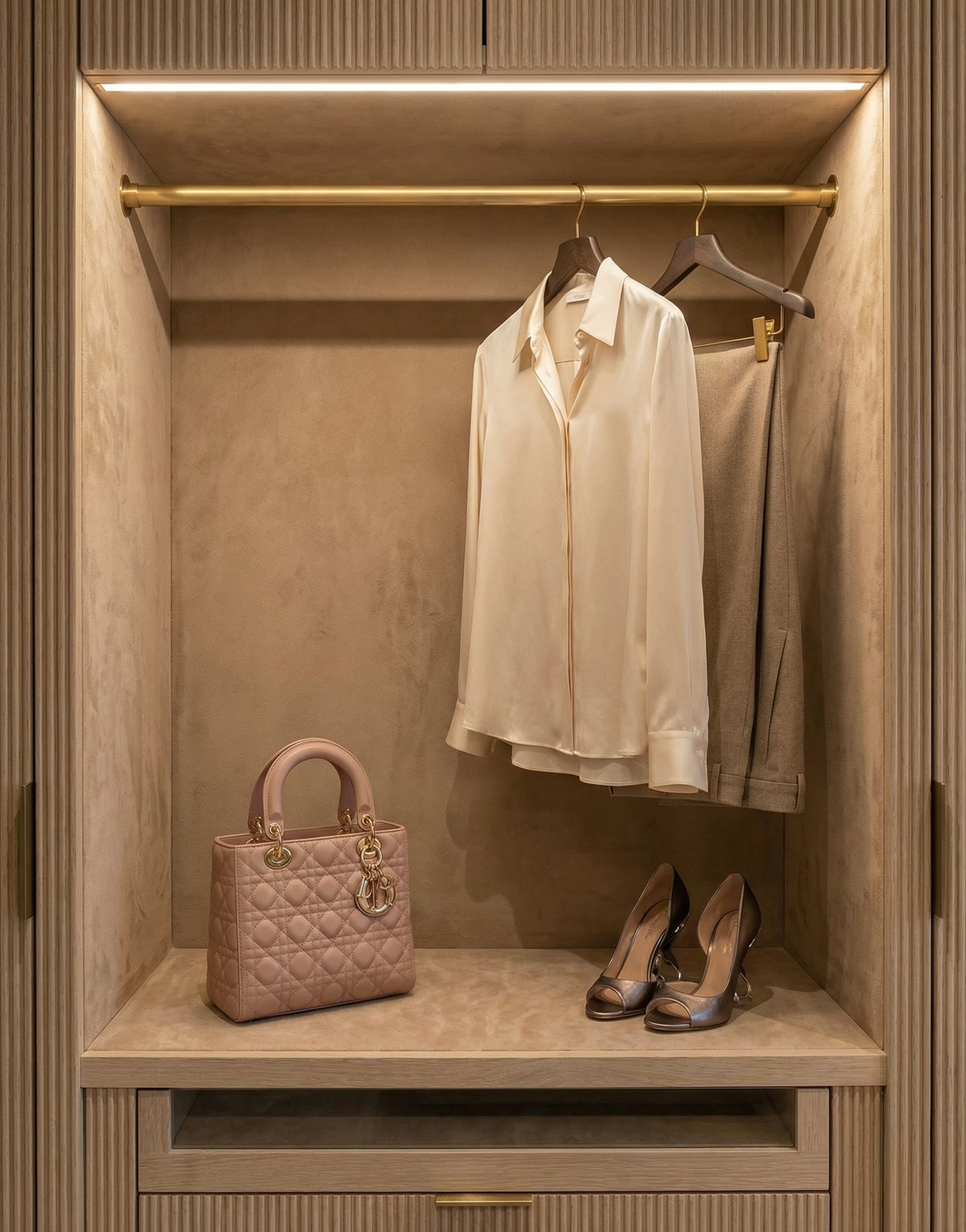
High-end materials can visually expand a compact space. Pale woods, lacquered finishes, tonal upholstery, and integrated mirrors create continuity that reduces visual noise.
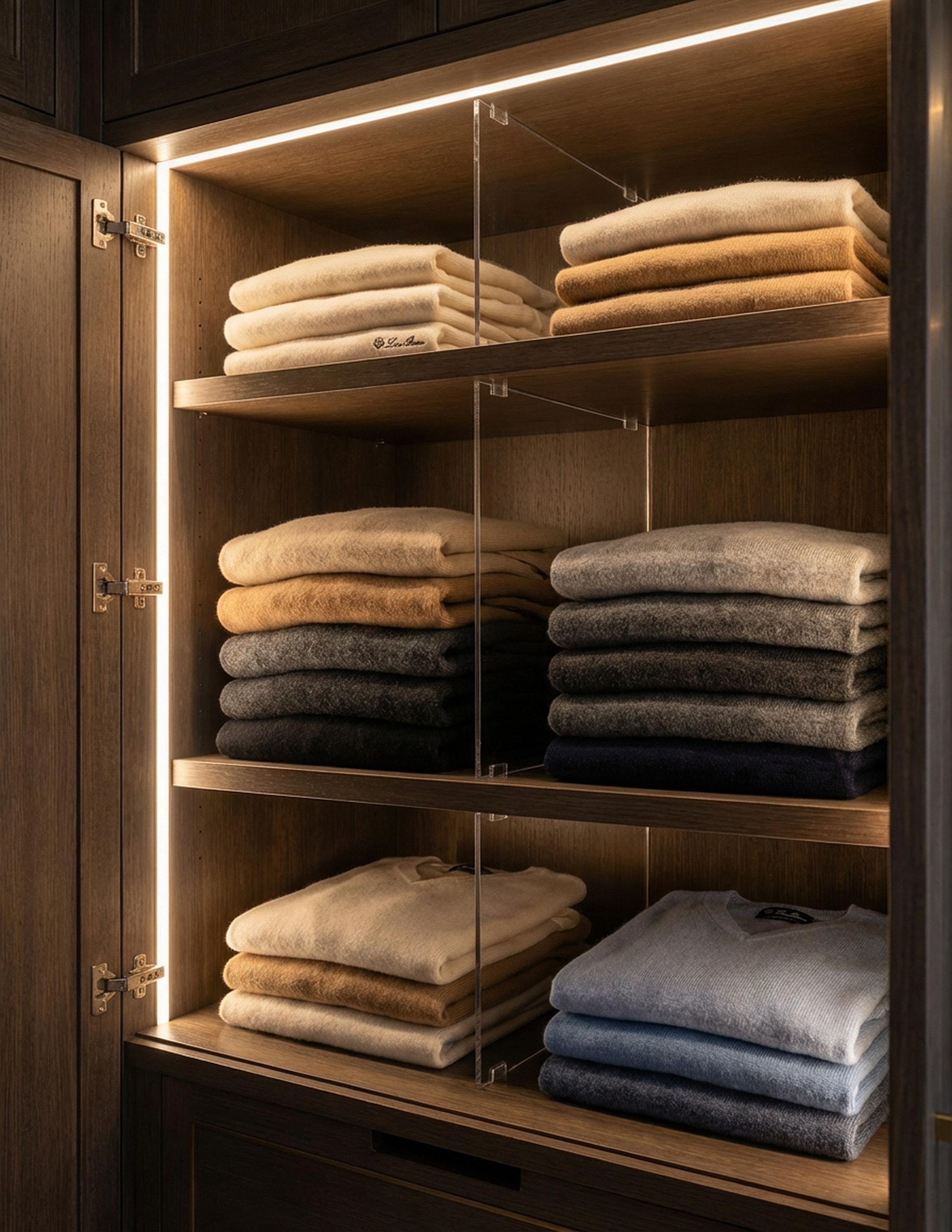
Glass drawer fronts, slim metal hardware, and consistent color palettes allow storage to recede rather than compete.
The result is calm — not compression.
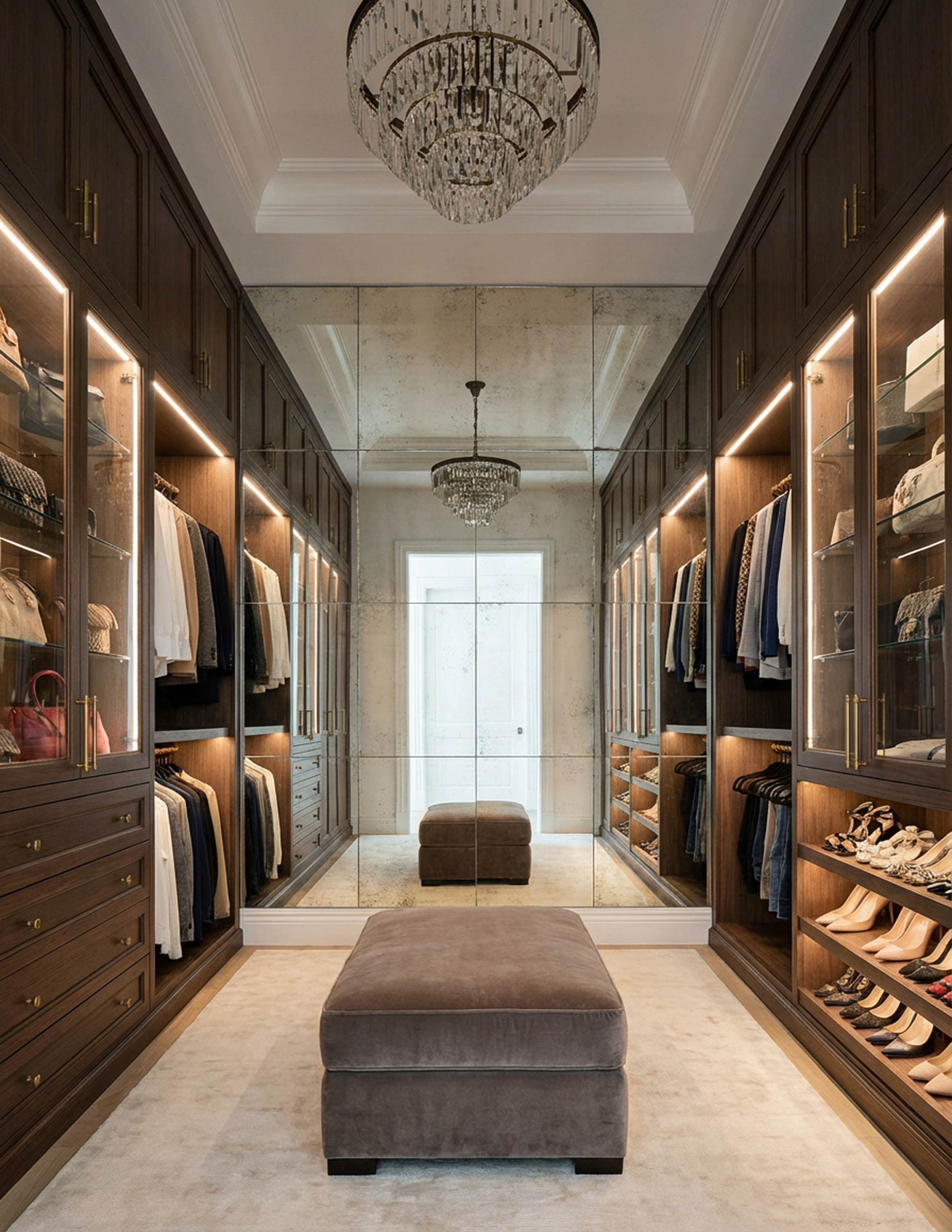
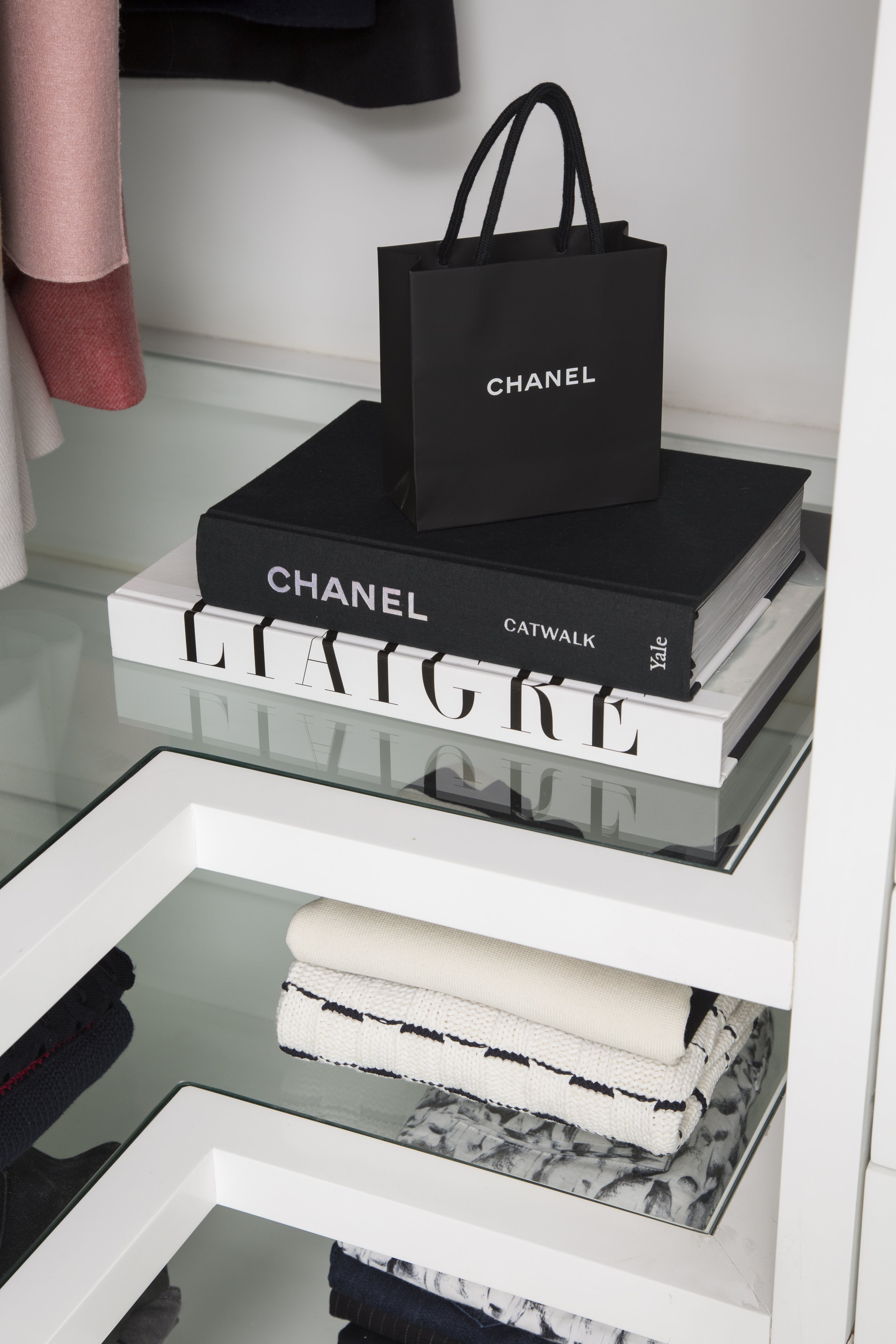
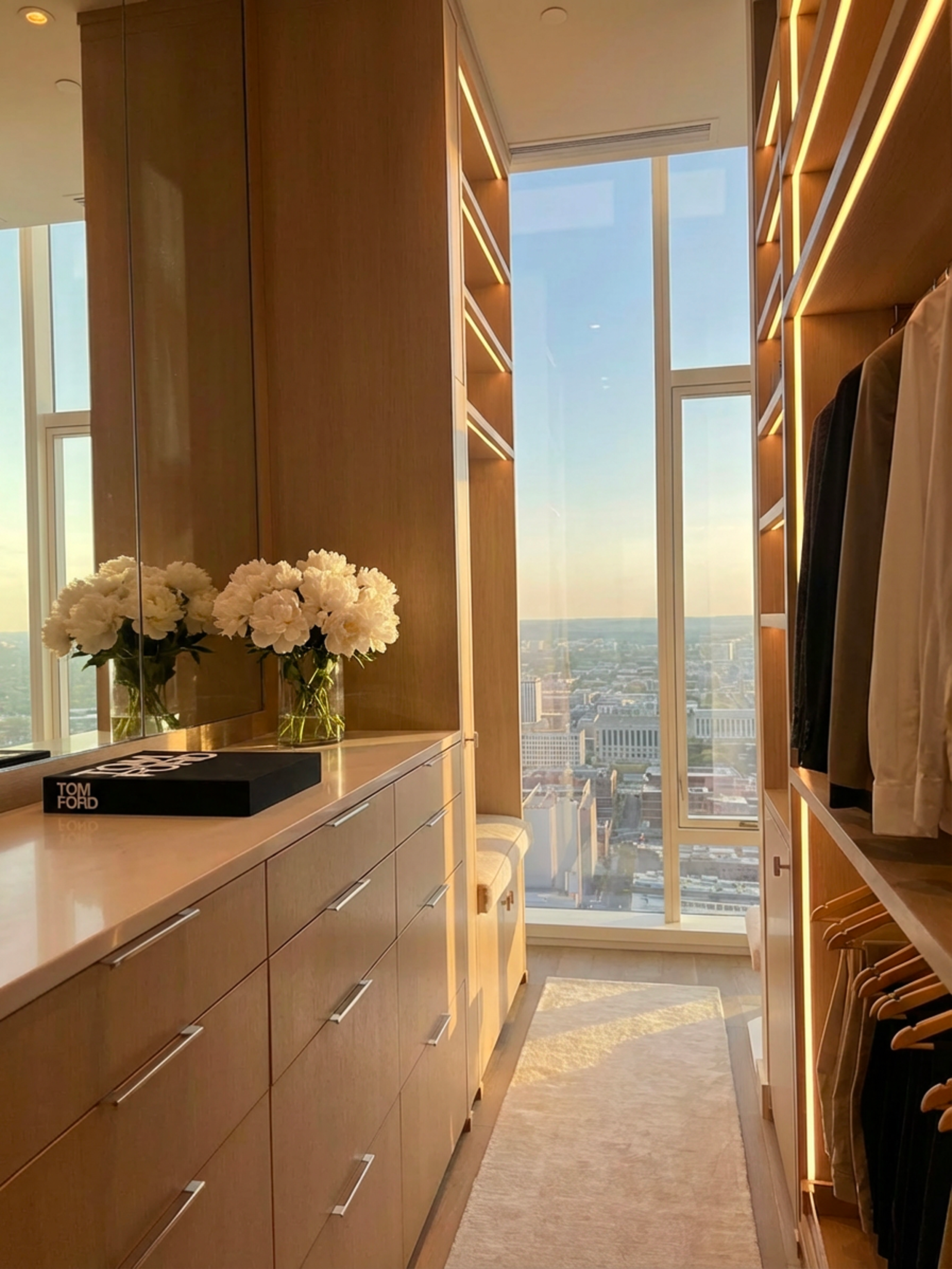

Vertical Thinking
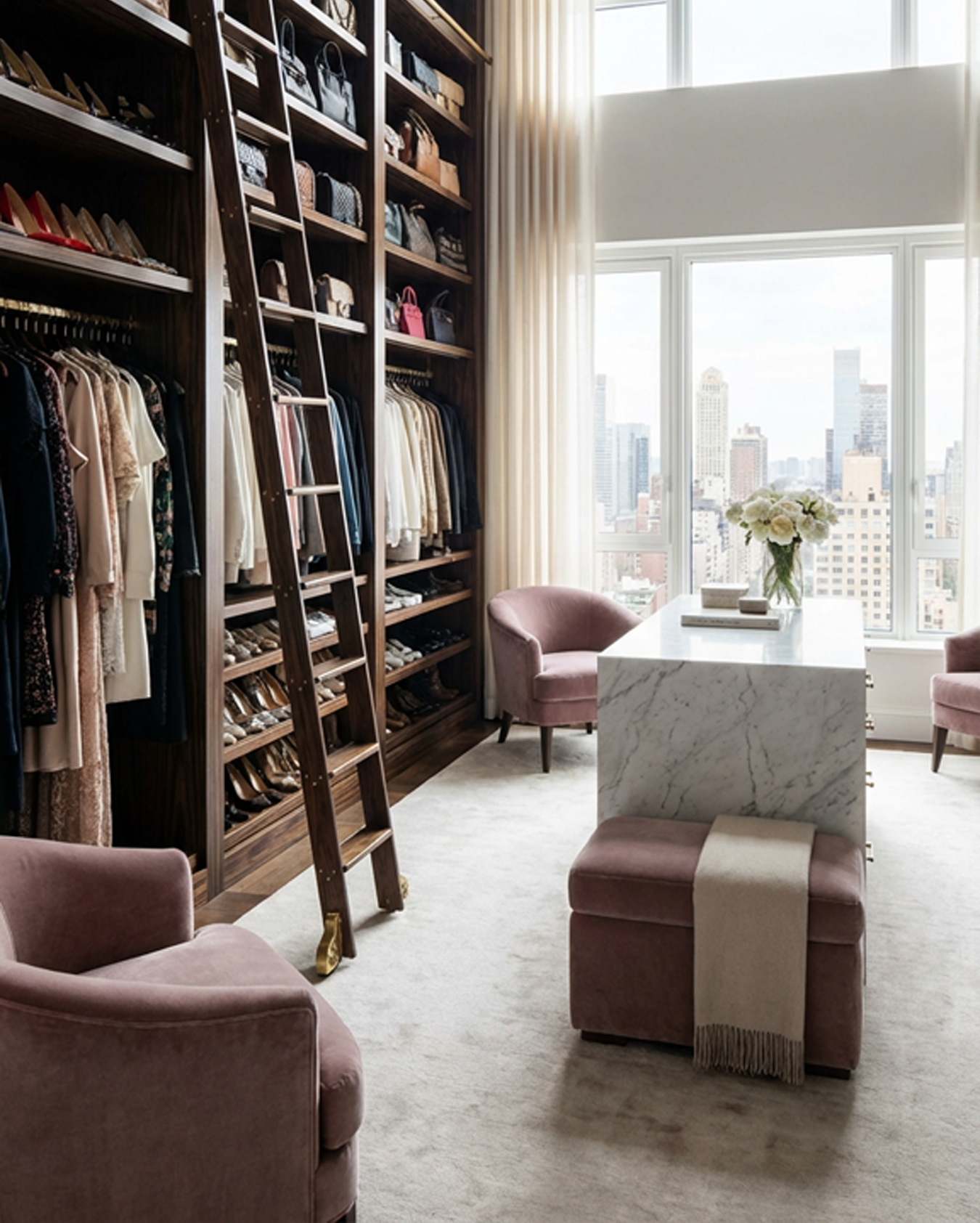
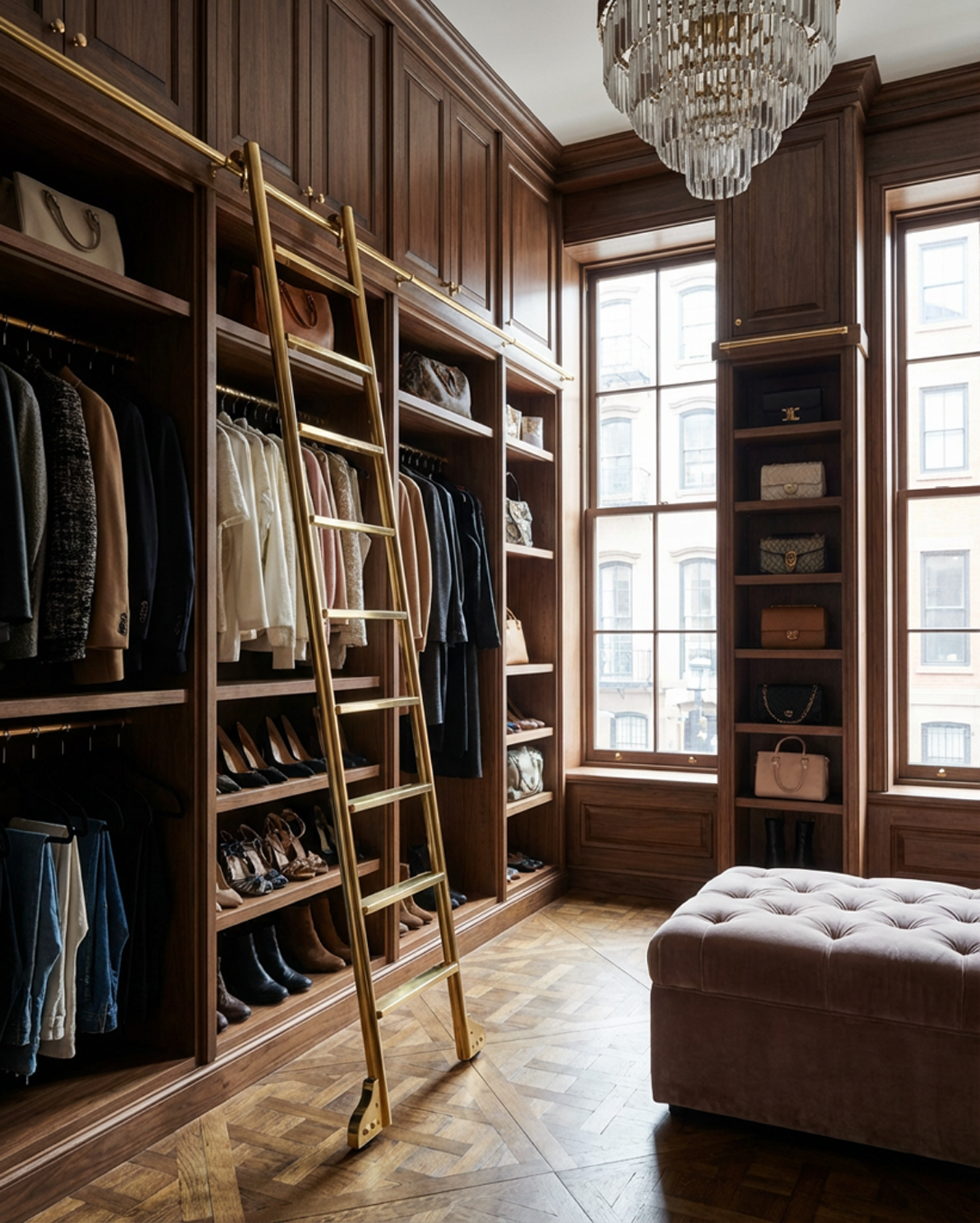
City closets rely on height. Seasonal pieces move upward, daily rotation remains within reach, and layered hanging creates density without chaos.
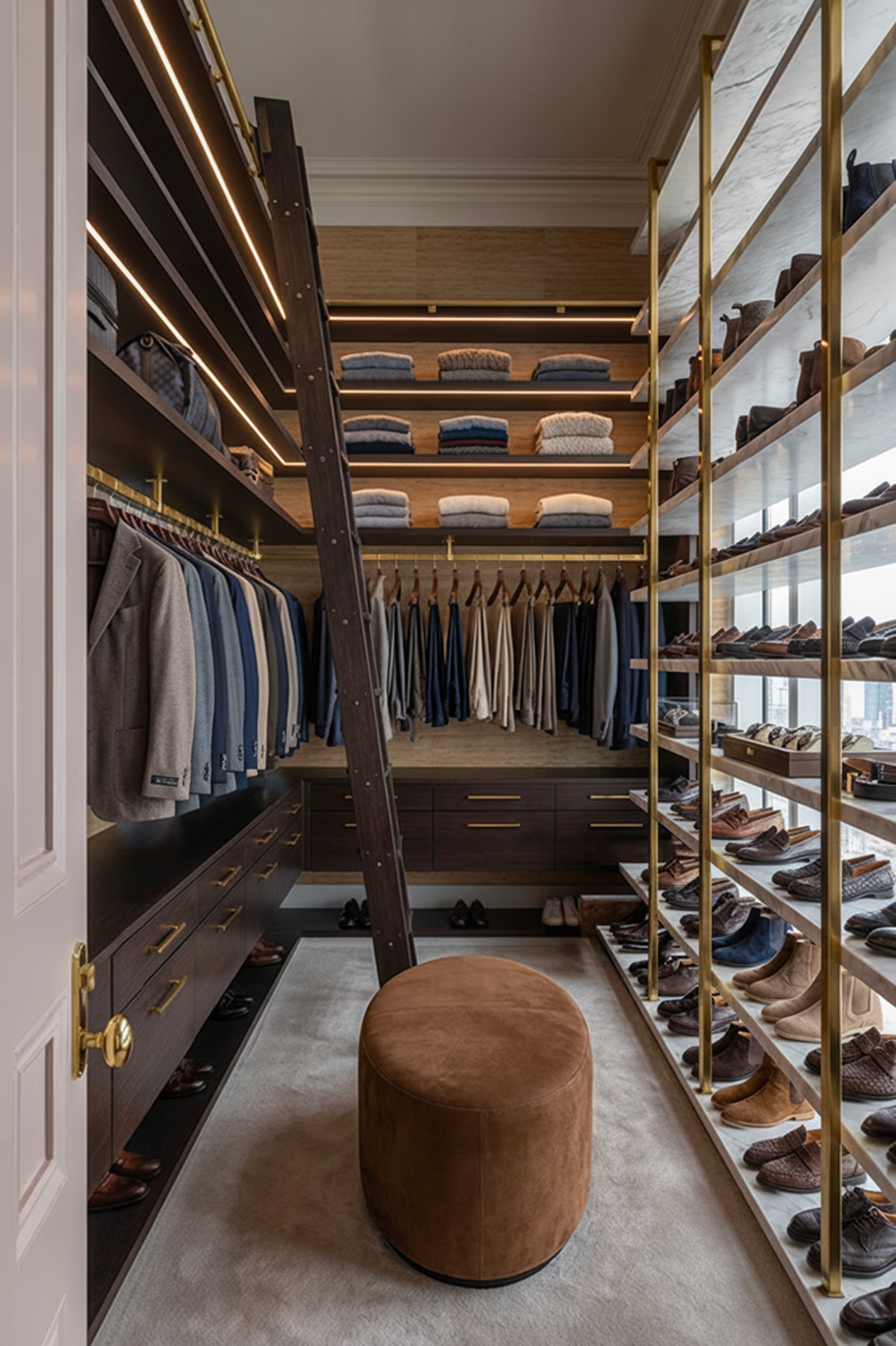
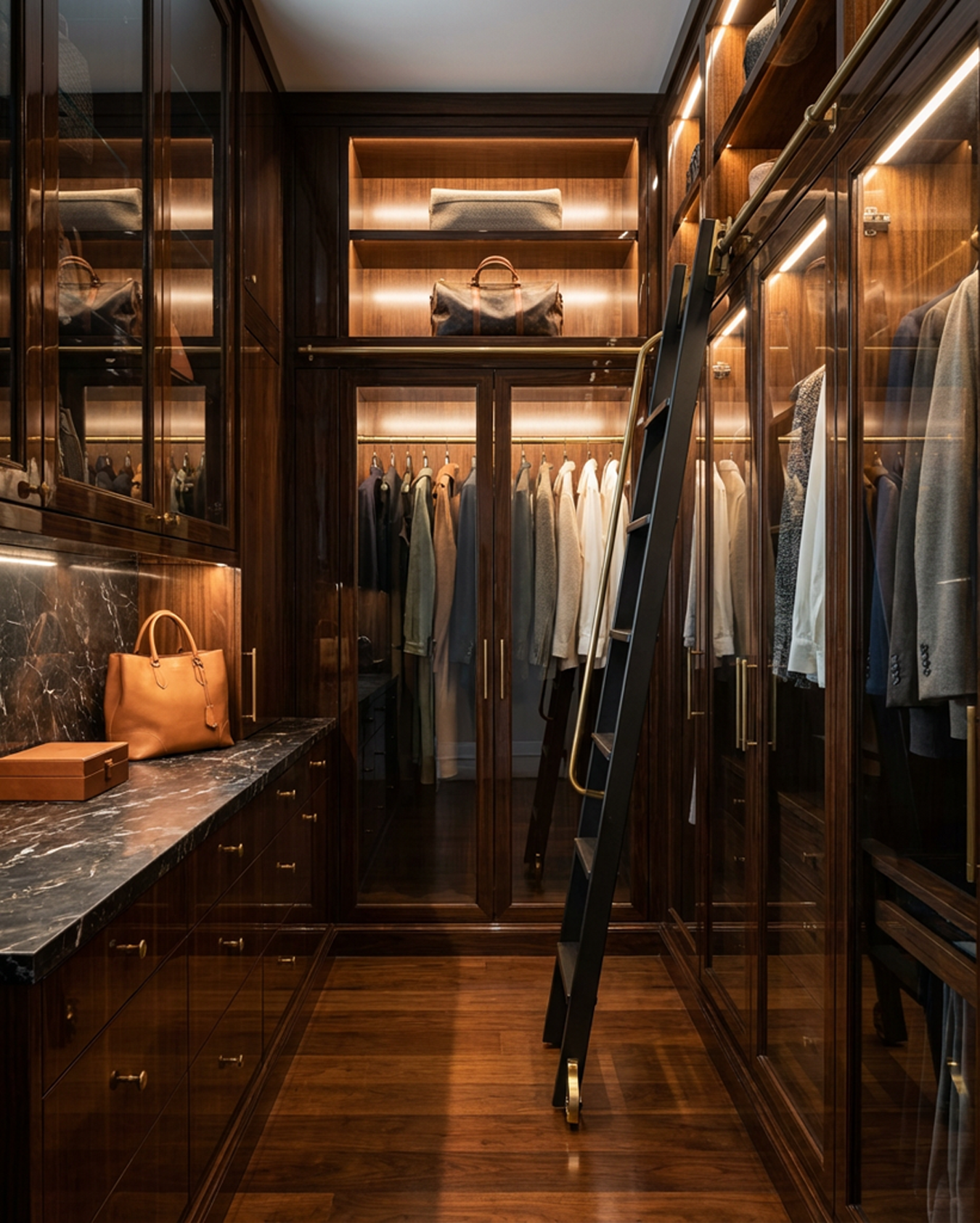
Integrated ladders, pull-down rods, and lift systems allow small closets to function like larger ones while maintaining elegance.
Lighting as A DESIGN ELEMENT
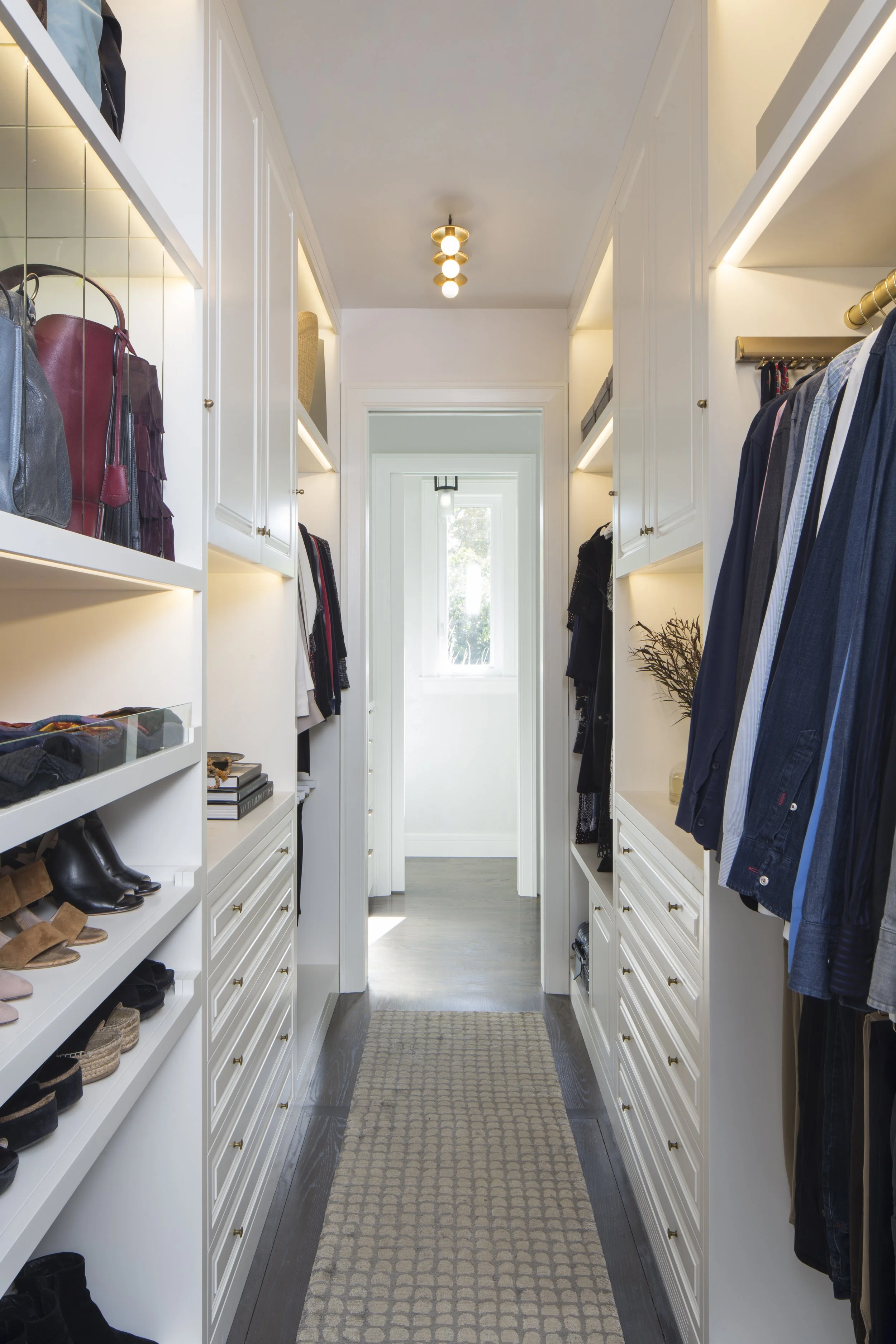
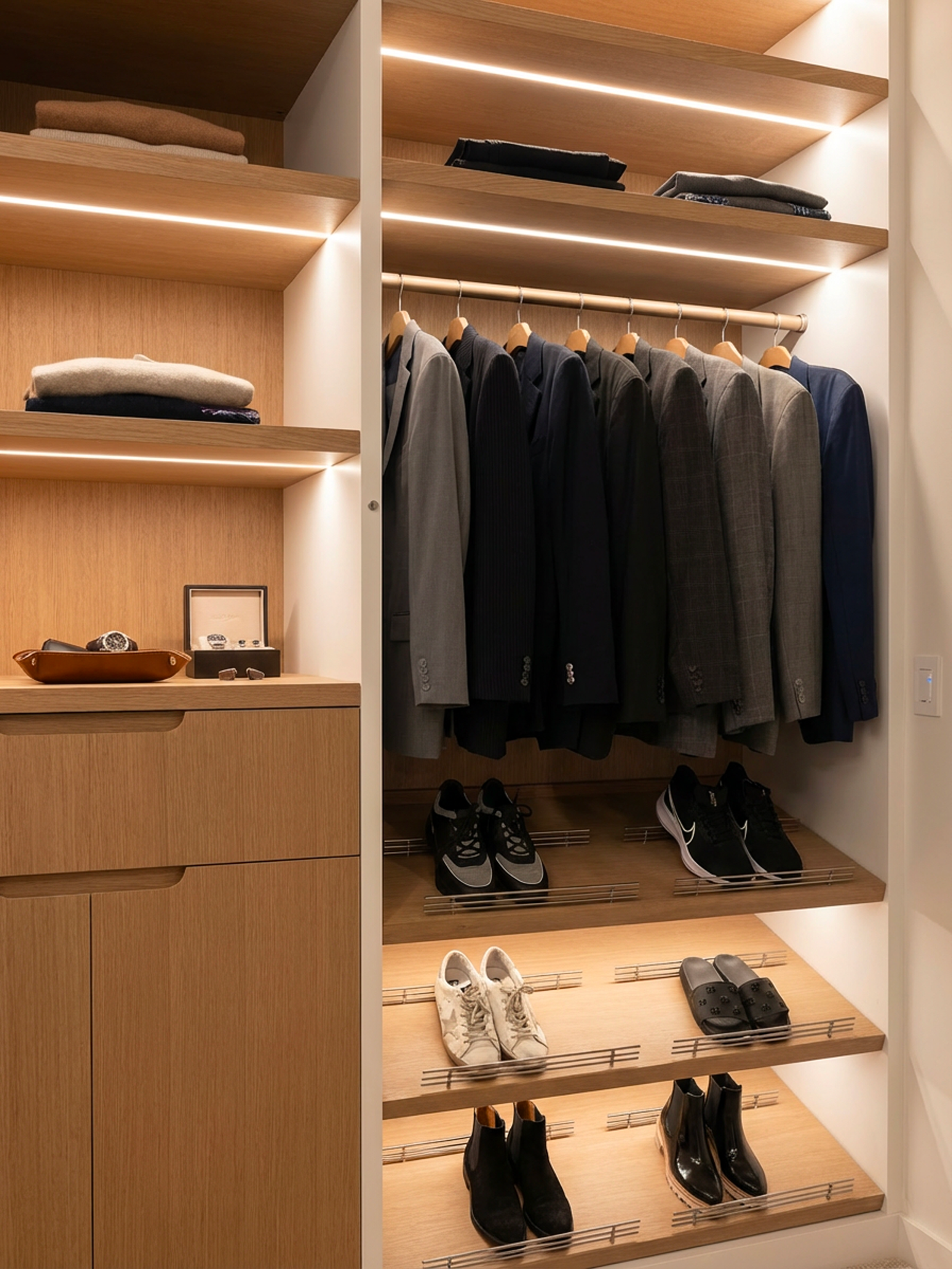
In compact spaces, lighting becomes architectural. Concealed LED channels define zones, illuminate interiors, and prevent shadows that can make closets feel smaller.
Warm, consistent lighting creates depth and reinforces the sense of a designed environment rather than a storage utility.
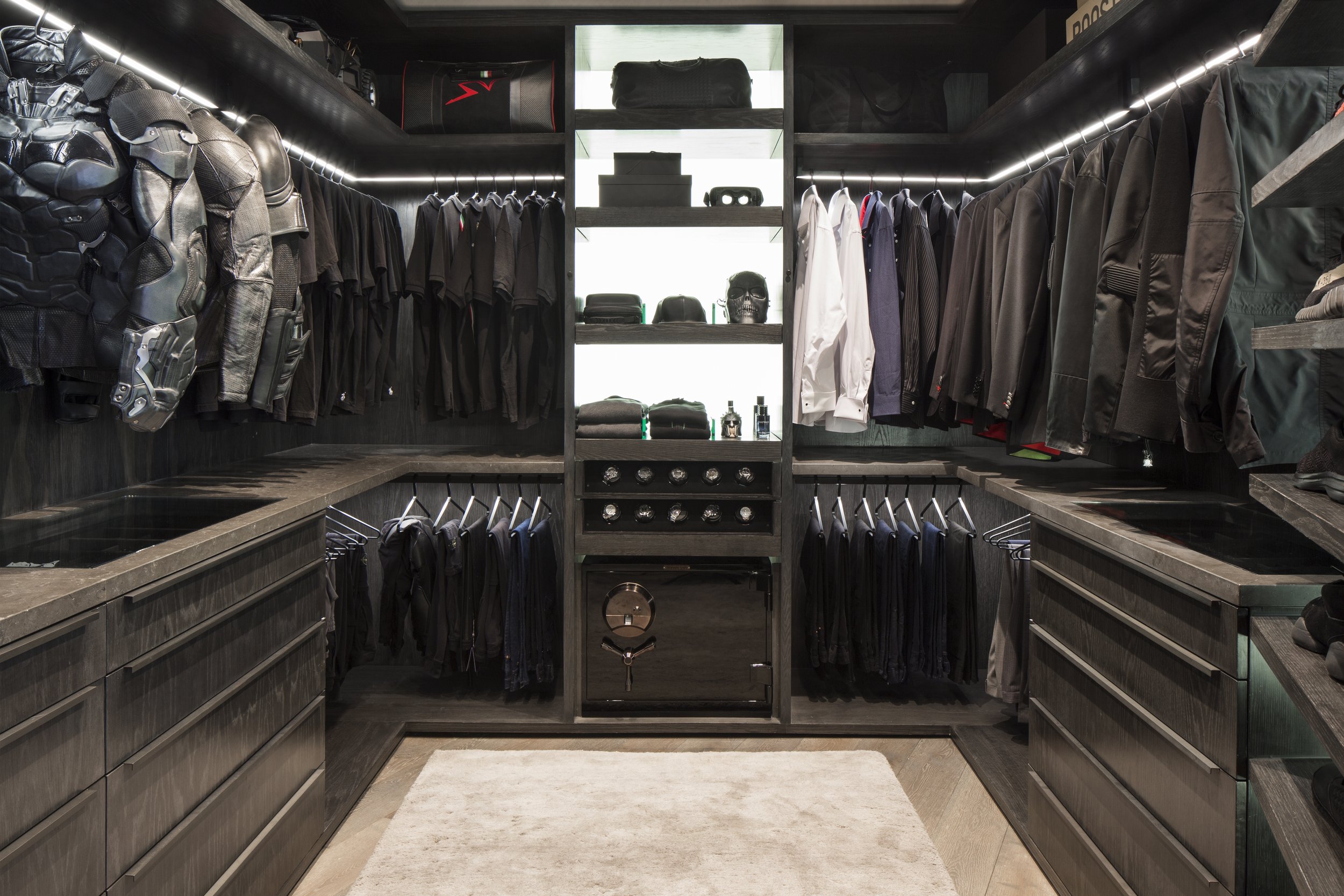
The Power of Fewer, Better Compartments
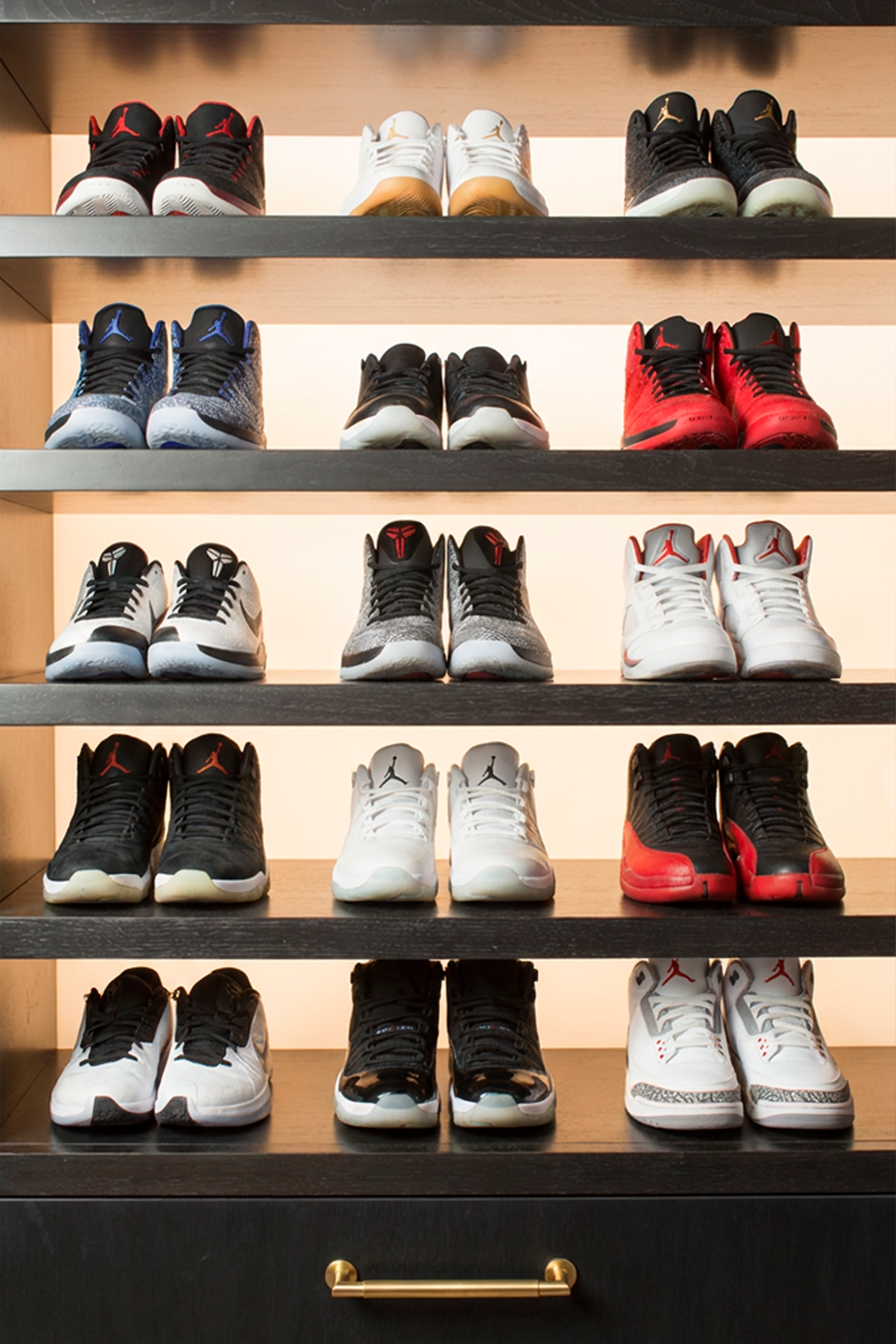
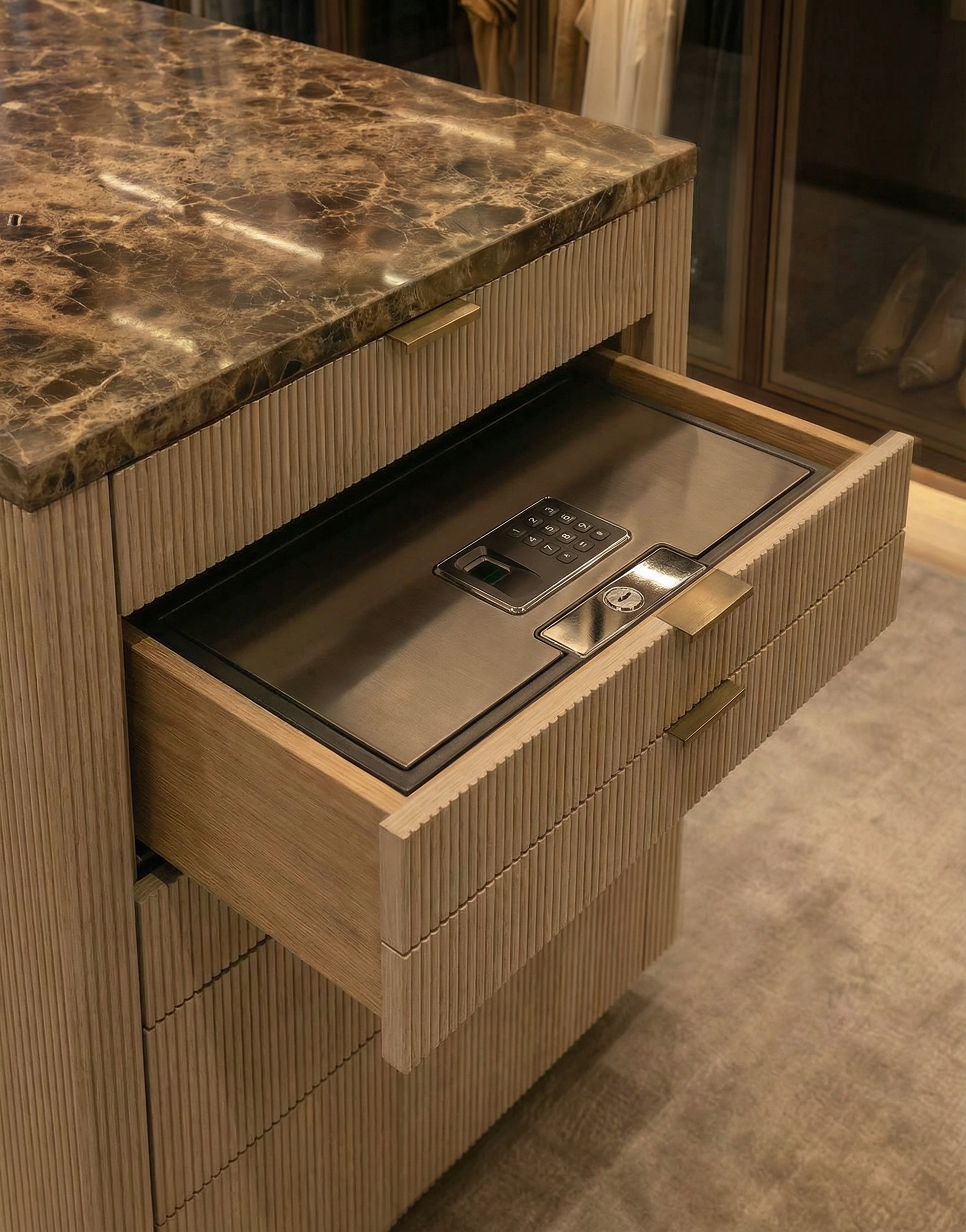
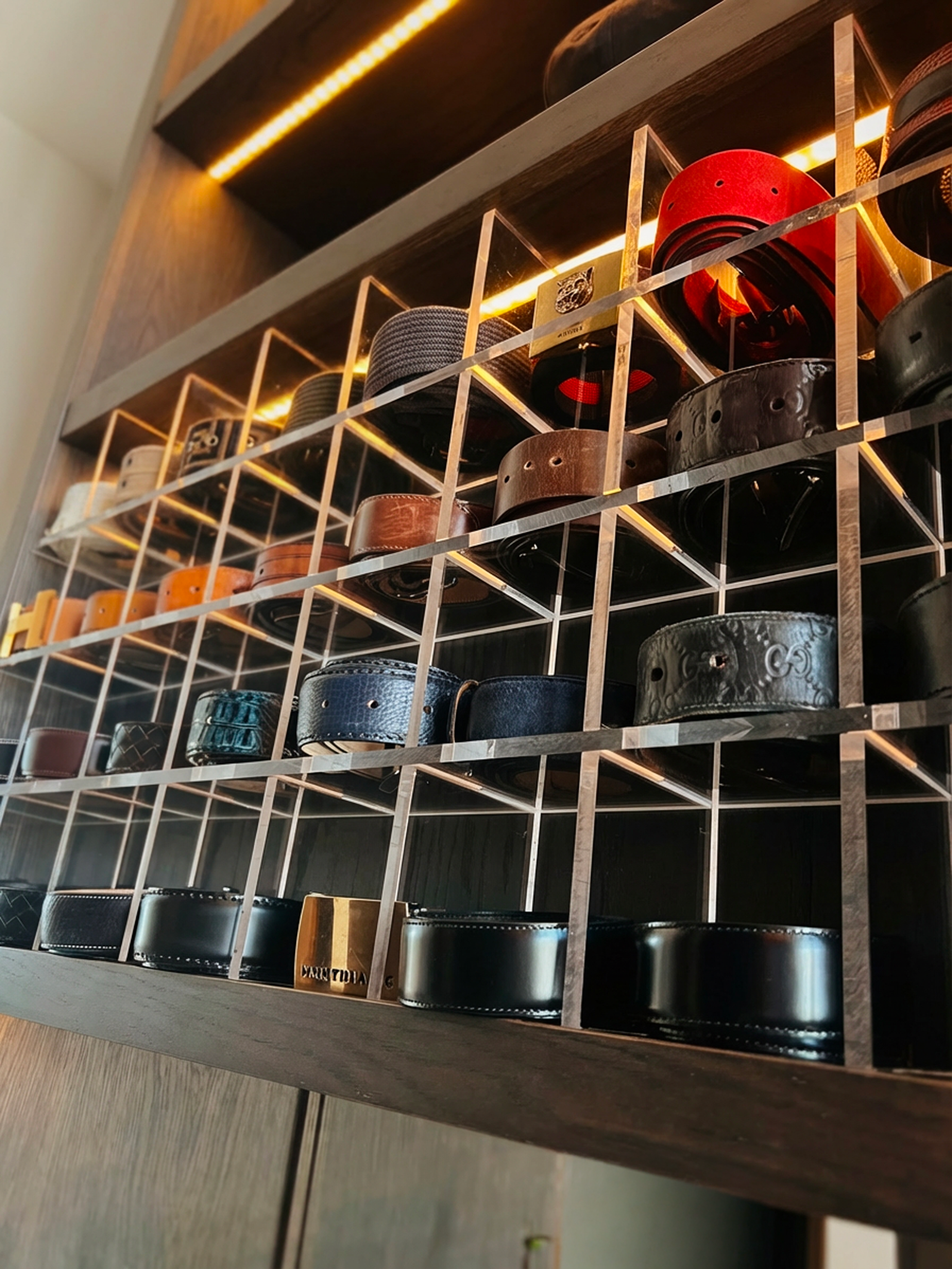
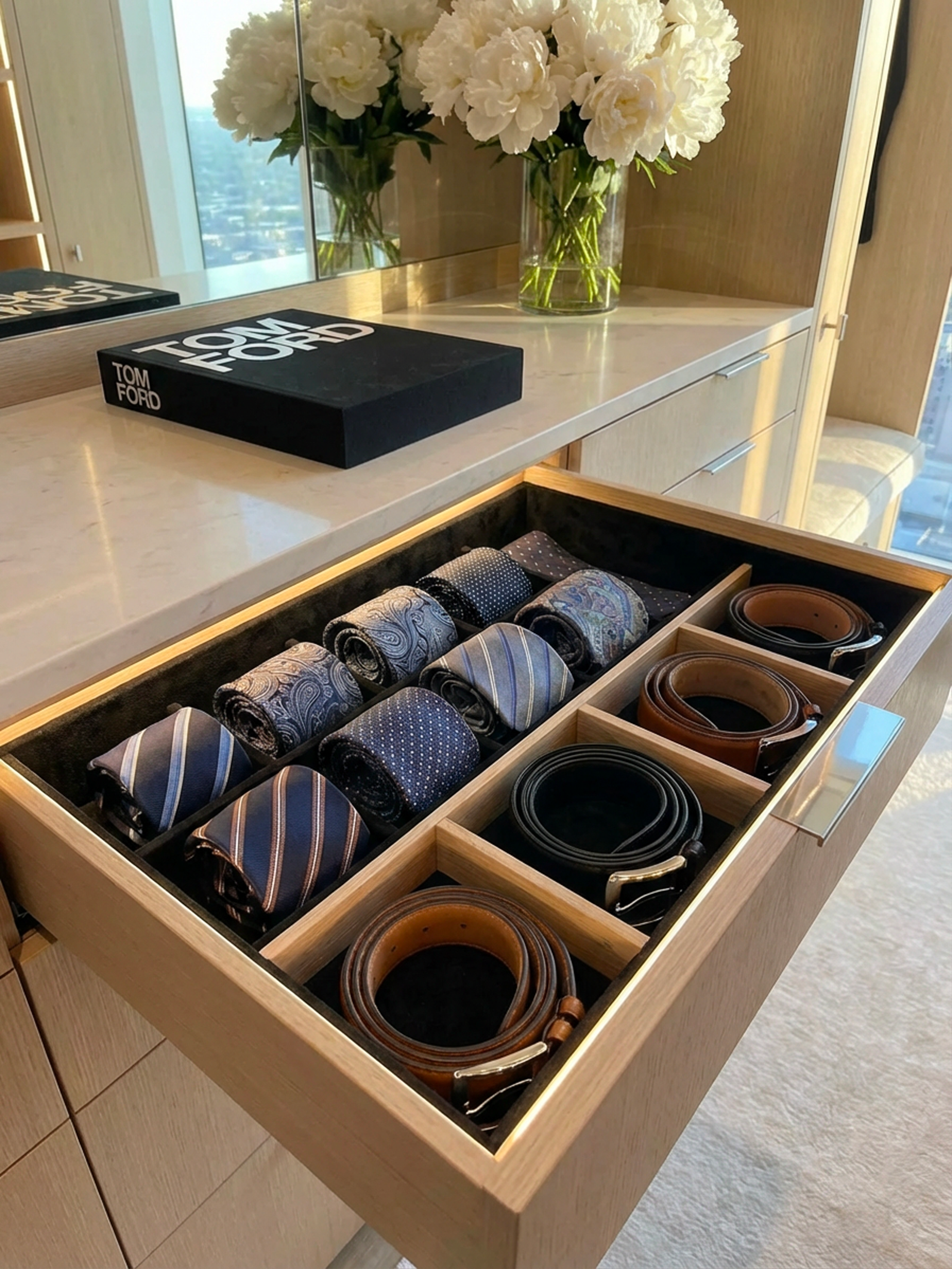
Rather than many small organizers, we favor fewer, highly considered compartments — drawers sized to specific categories, pull-outs designed for accessories, and concealed solutions that reduce visual fragmentation.
Small spaces benefit from restraint.
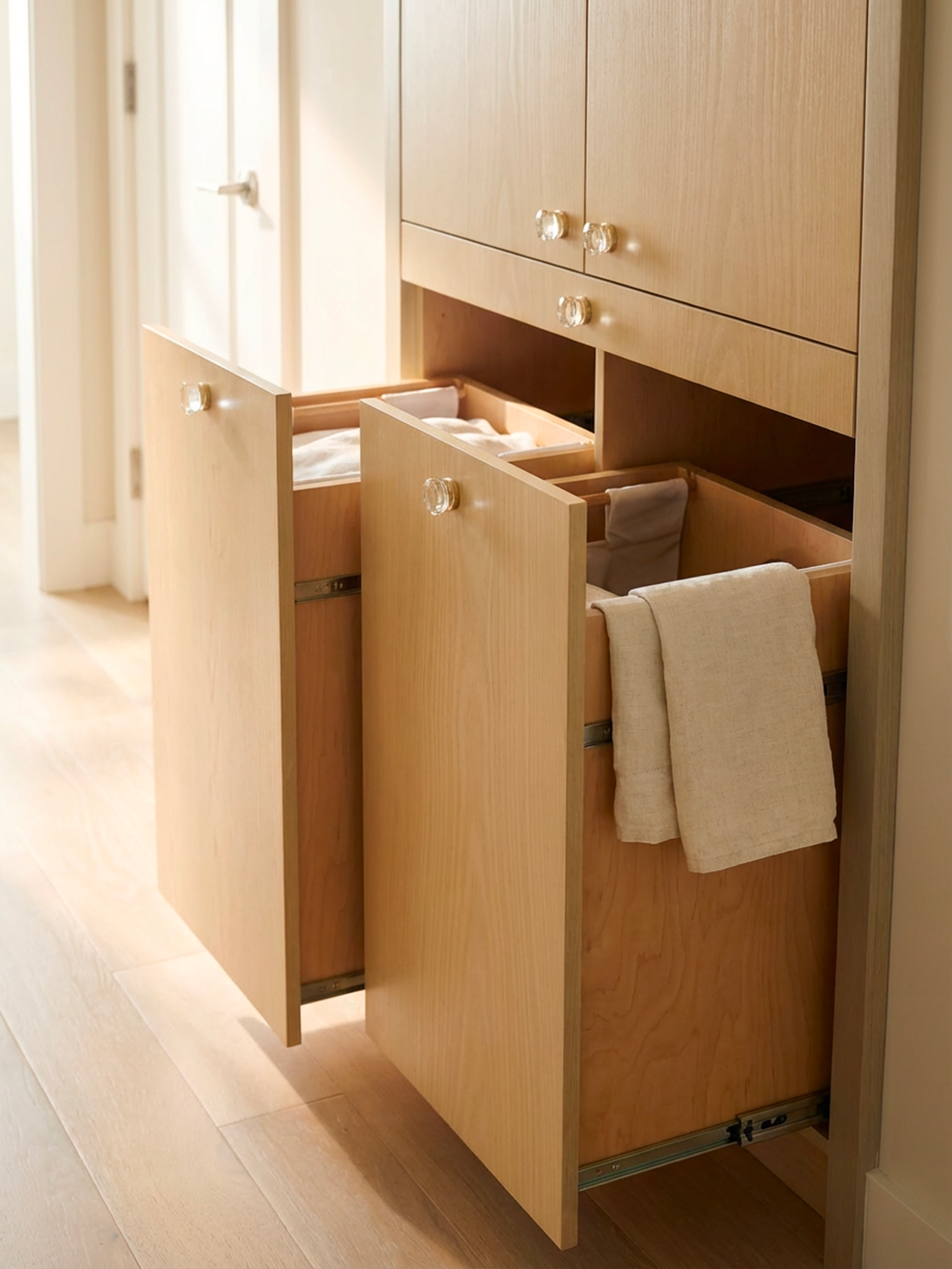
Designing for Rotation
Urban wardrobes often rely on seasonal editing. Integrated storage for off-season pieces, secondary closets, and concealed upper cabinetry allow the primary walk-in to remain focused on current use.
The closet stays dynamic without feeling overfilled.
Luxury in this context isn’t about space — it’s about intention.