
Winter Closet Essentials
Storage that works harder when temperatures drop
Winter wardrobes demand more of our closets. Heavier layers, delicate materials, bulky accessories, and travel gear all arrive at once—and suddenly the closet needs to perform like a well-organized retreat rather than a catch‑all. The most successful winter closets are not just larger; they’re more intentional.
Below, we’re breaking down a few of our favorite winter‑specific closet moments—from fur storage to cedar‑lined cashmere drawers and dedicated luggage rooms—designed to protect, preserve, and elevate the way you live with your wardrobe.
Fur Storage:
Properly Stored, Beautifully Displayed
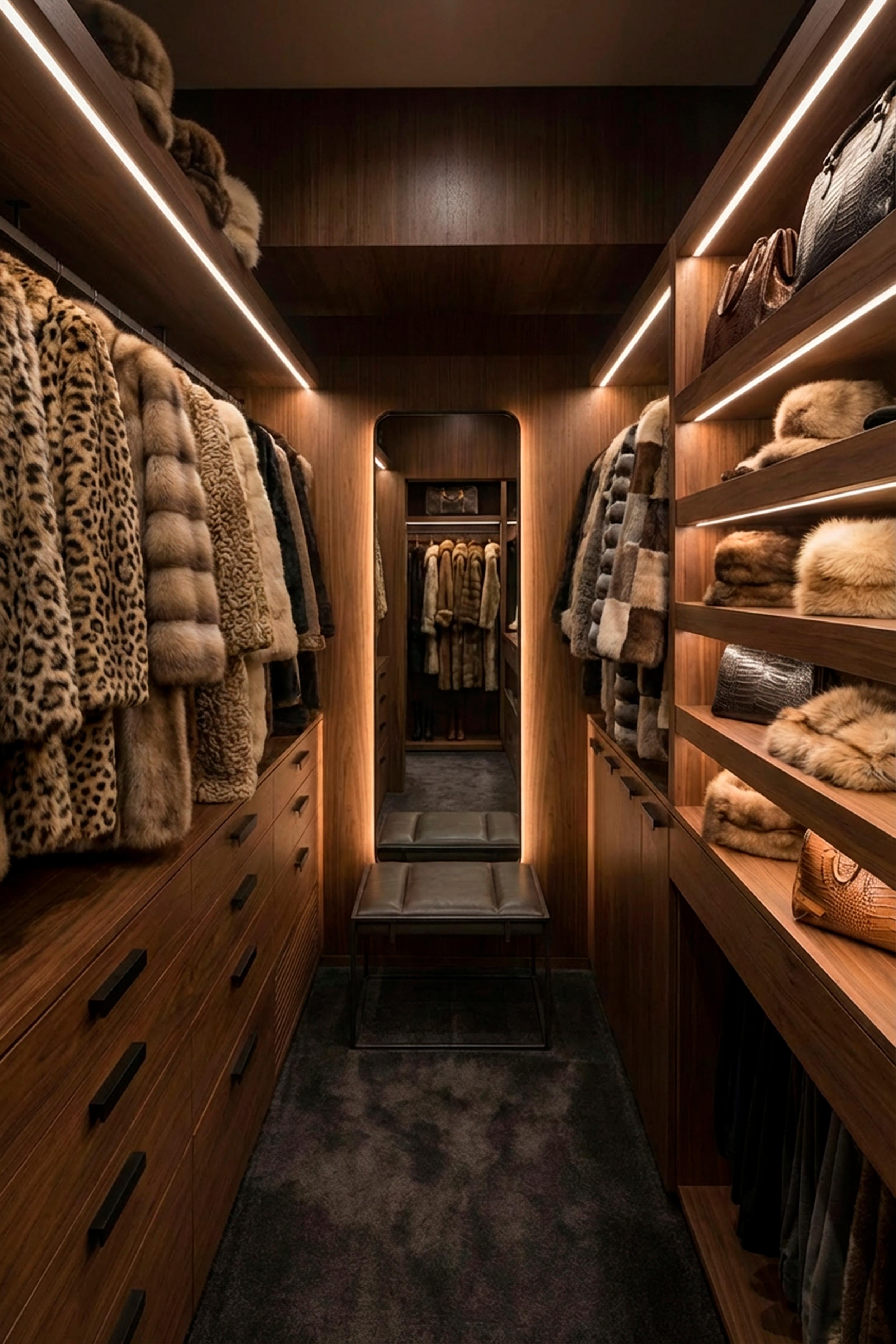
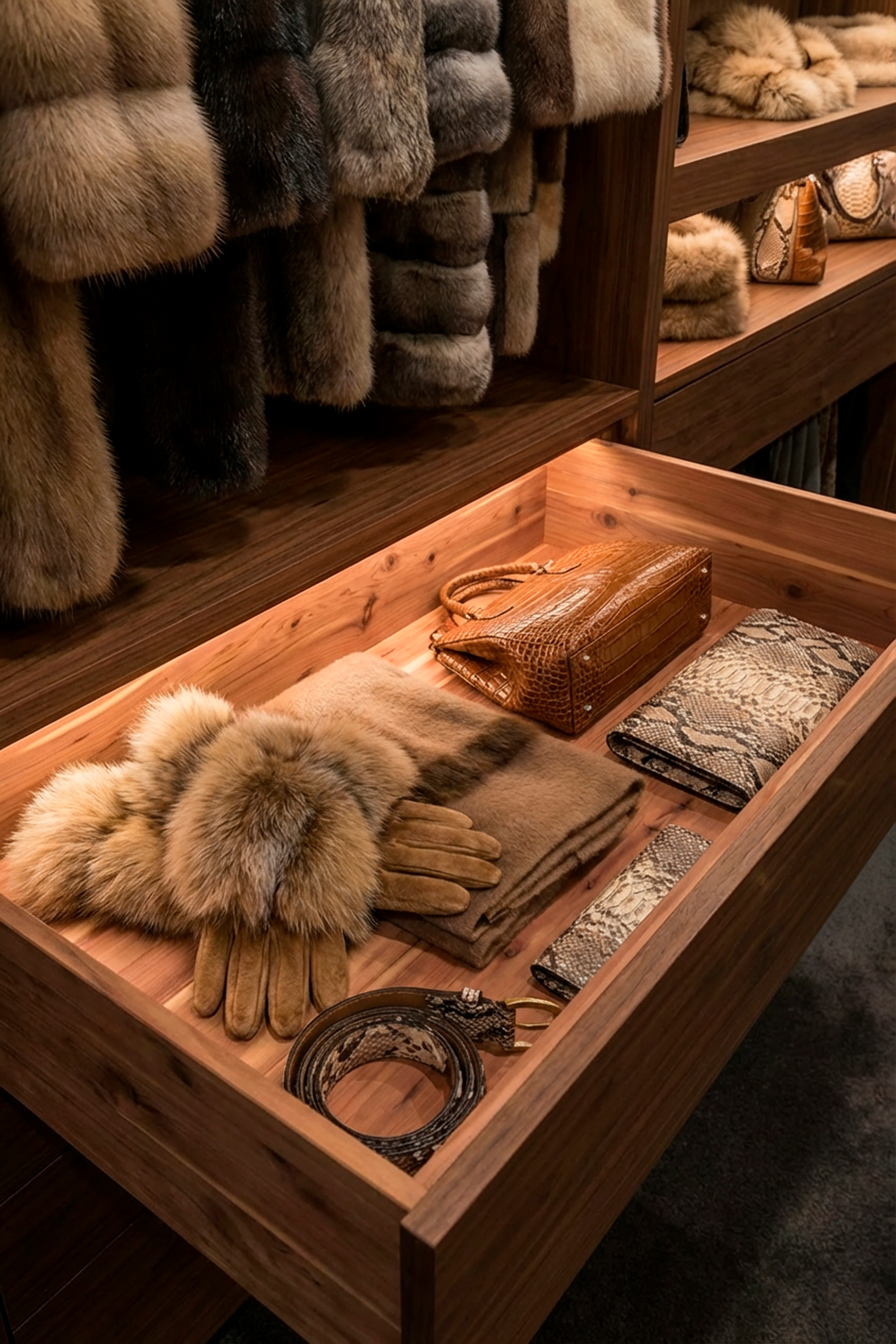
Fur coats are both investment pieces and heirlooms, and they deserve storage that respects that. Dedicated fur closets prioritize breathability, spacing, and gentle lighting. Wide hanging bays prevent crushing, while consistent climate control helps maintain the integrity of the pelts.
Visually, fur storage benefits from restraint: darker woods, soft integrated lighting, and minimal visual noise allow texture and tone to take center stage. When done right, a fur closet feels more like a private gallery than a utility space.


Cedar‑Lined
Cashmere & Knitwear Storage
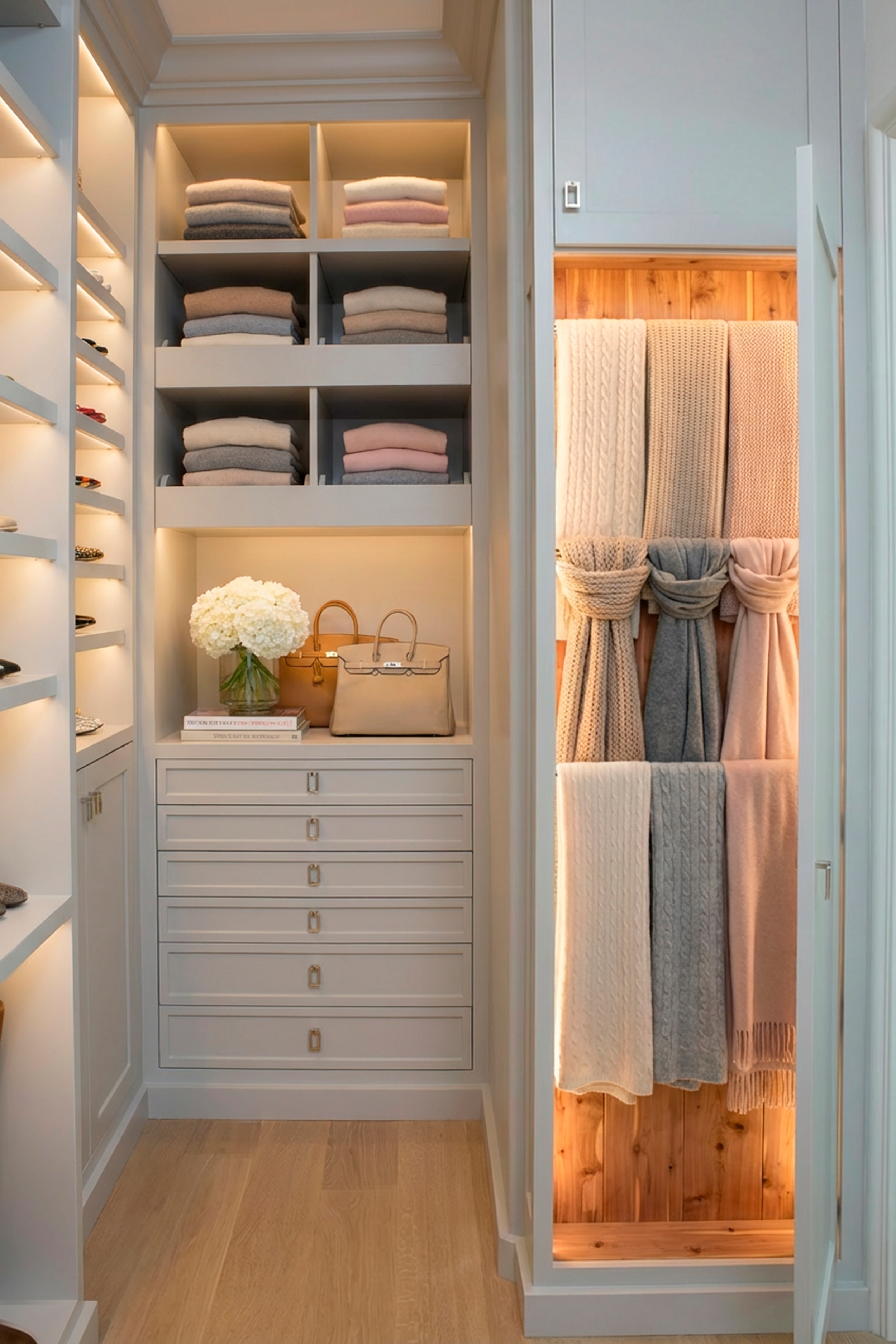
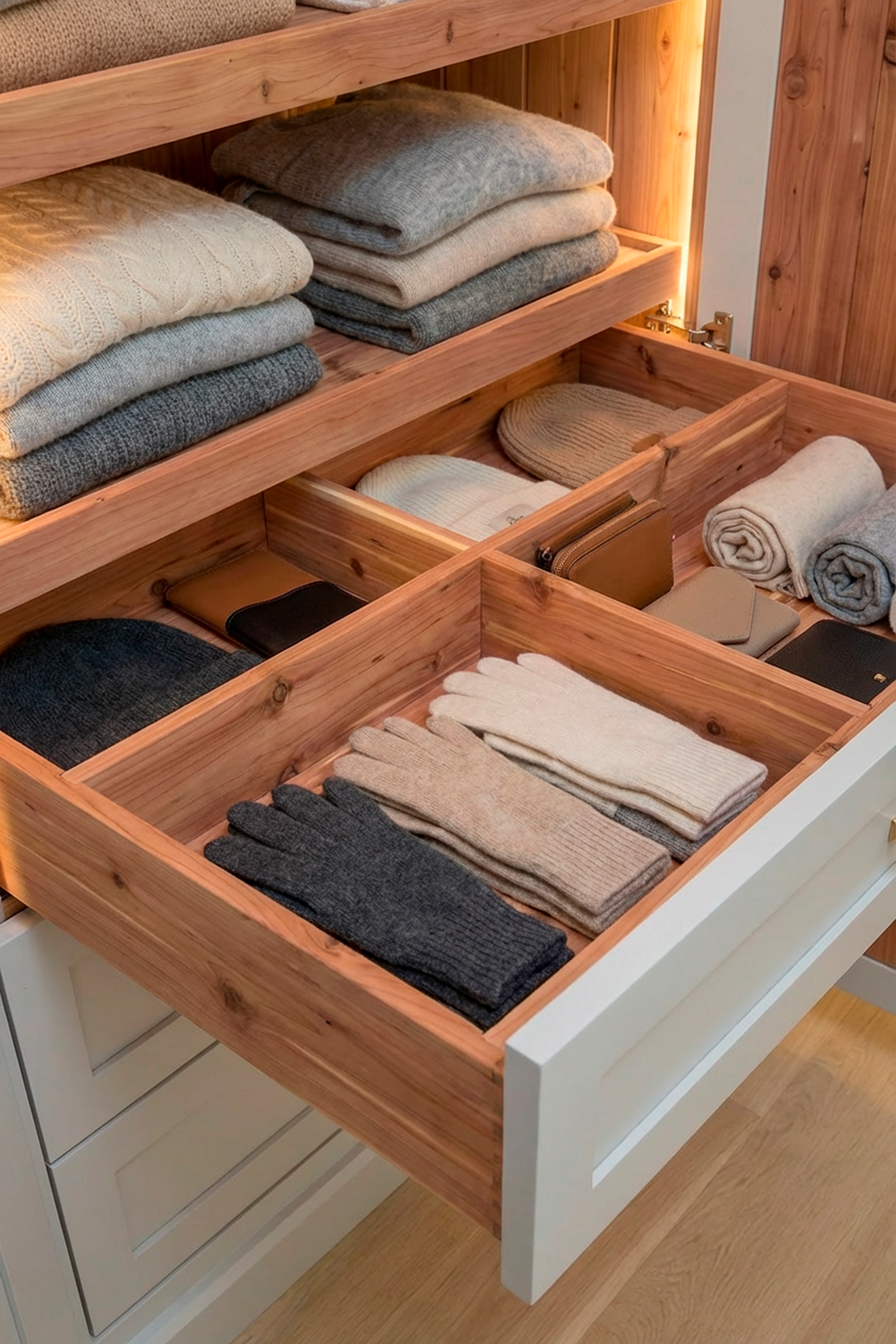
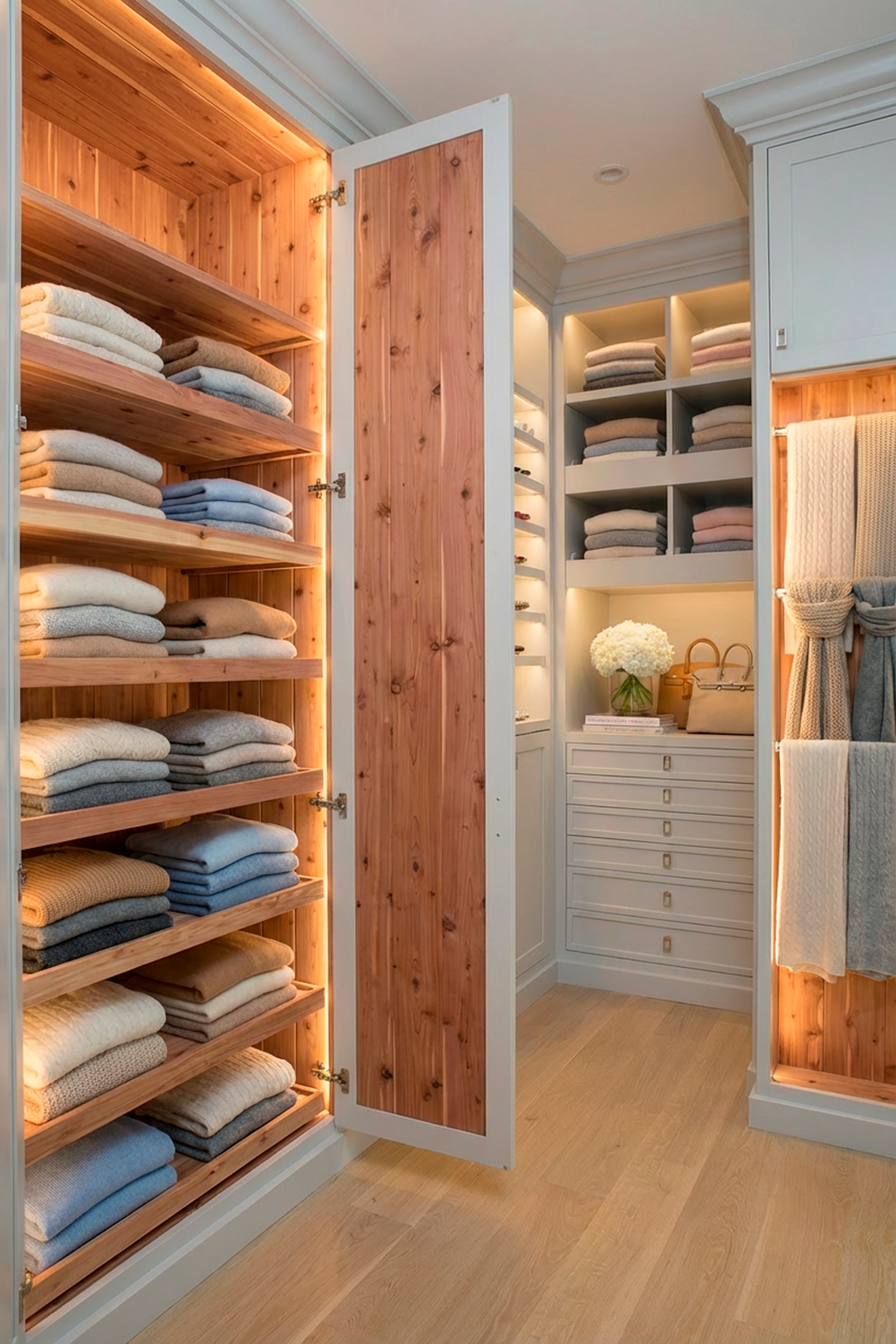
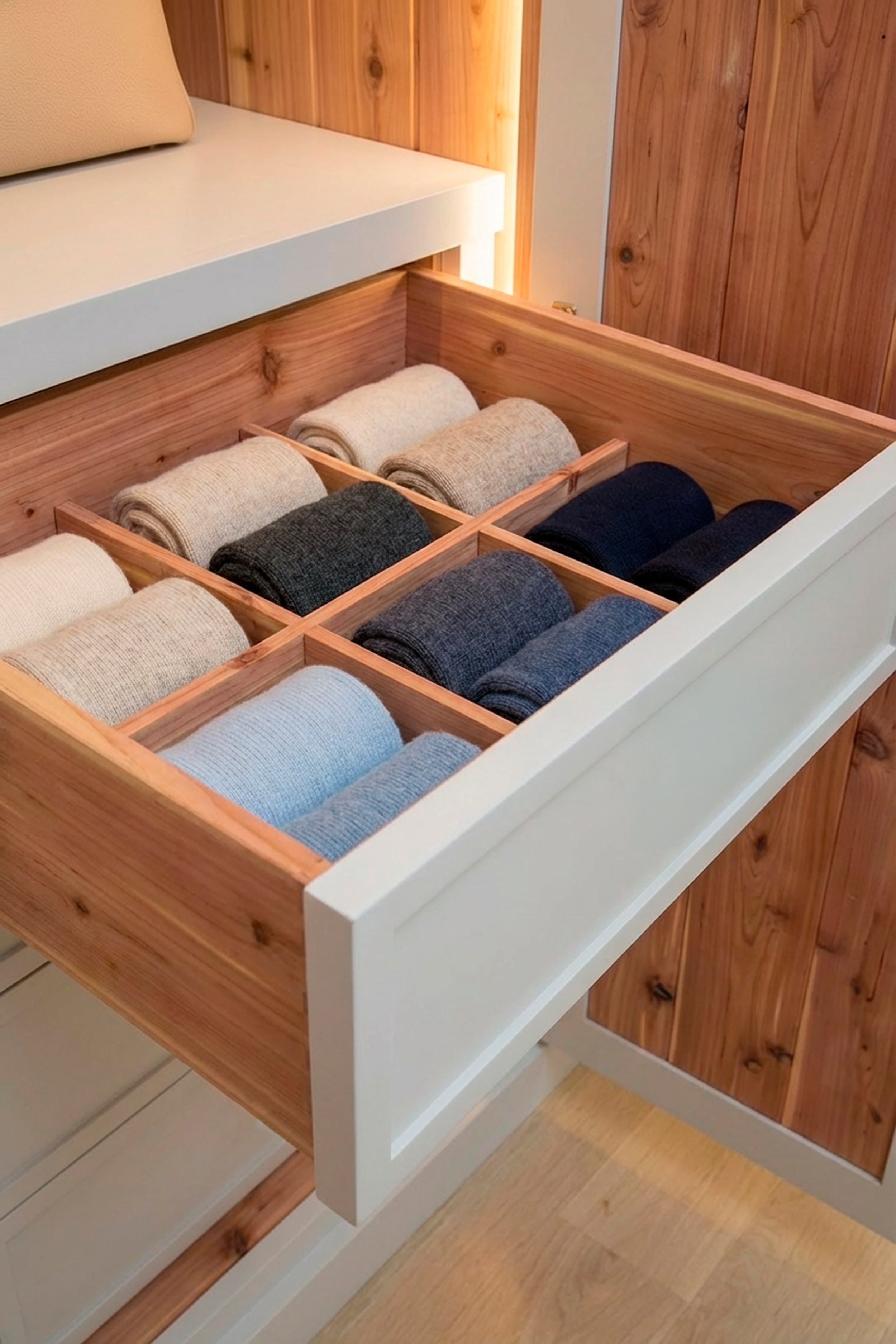
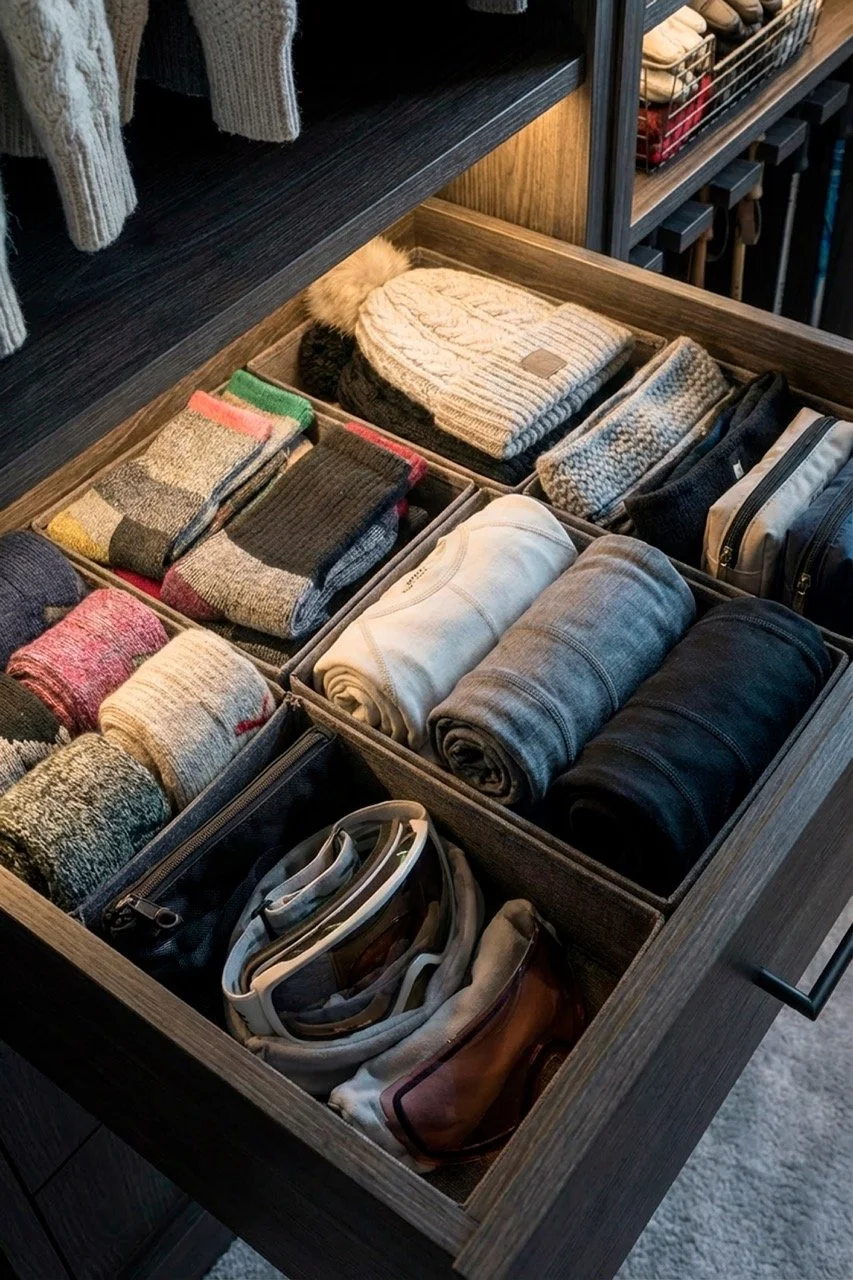
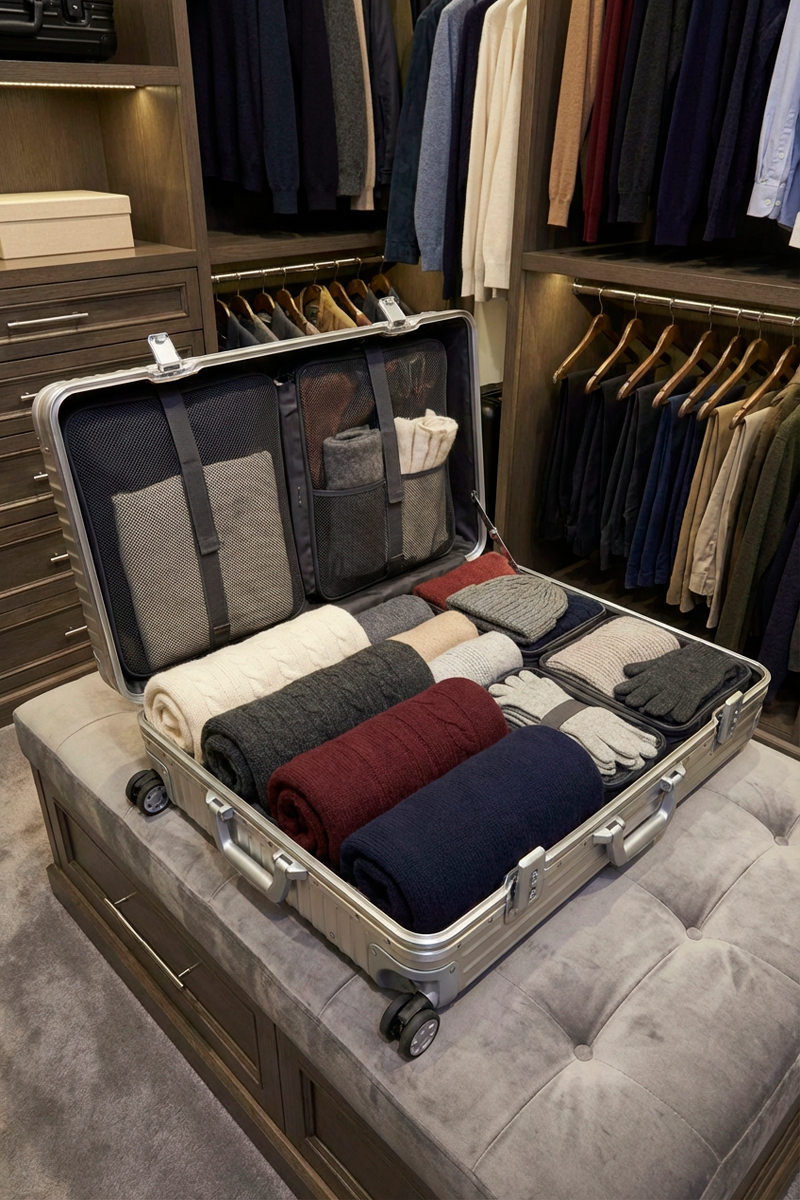
Cashmere, wool, and fine knits require a different approach than everyday folded clothing. Cedar‑lined drawers and cabinets naturally deter moths while regulating humidity—without relying on sachets or chemicals.
We love deep drawers with suede or wood dividers that allow sweaters, scarves, gloves, and hats to live flat and undisturbed. Layered lighting within these cabinets adds warmth and visibility, turning practical storage into a tactile, sensory experience.
Ski Closets:
Designed for the Season
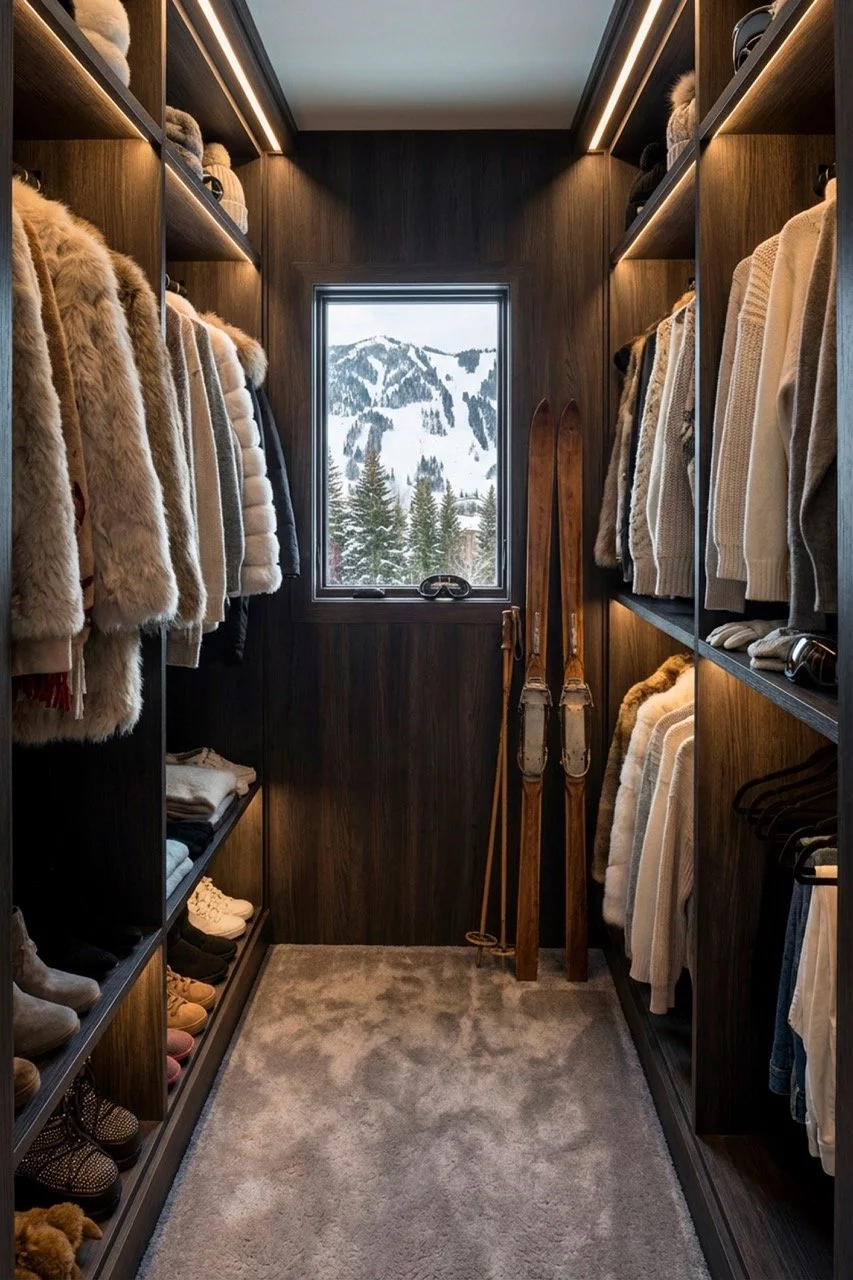
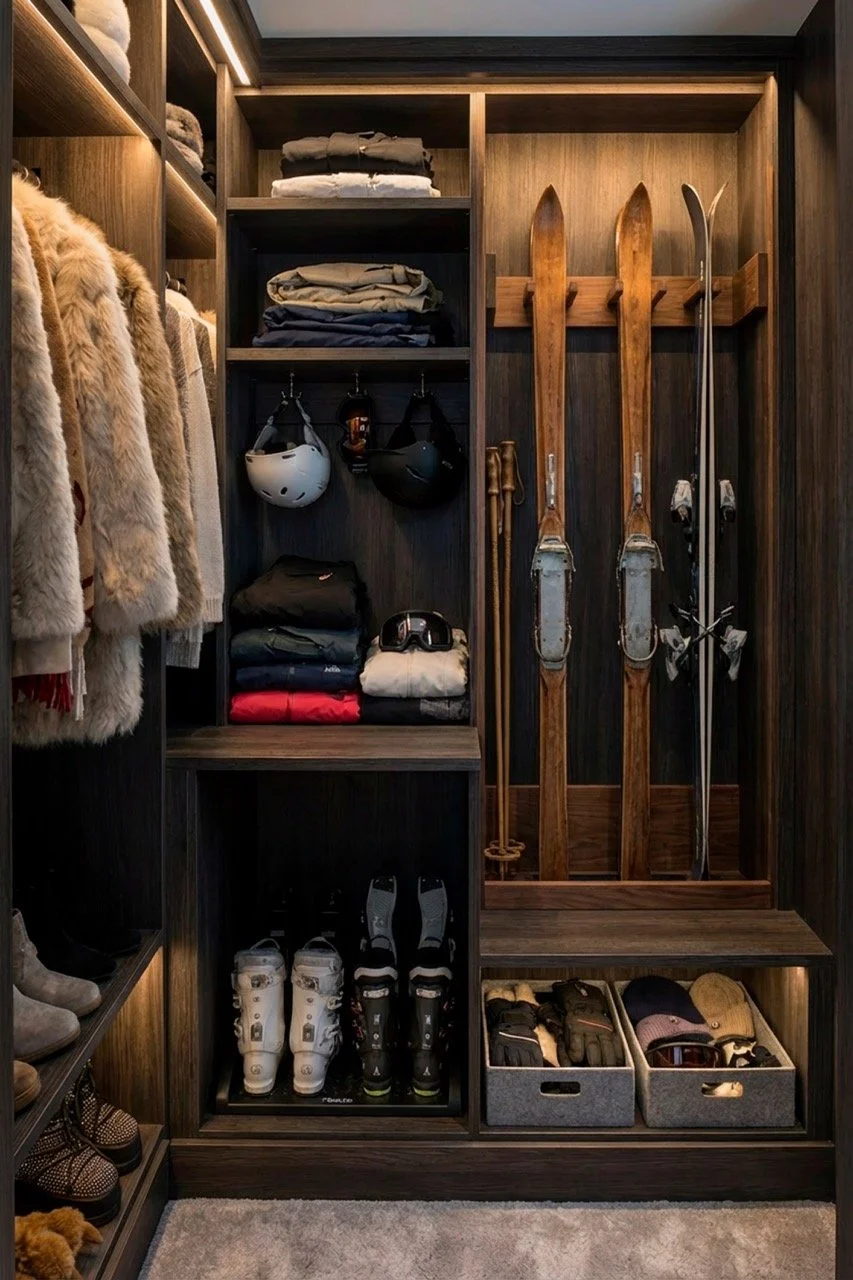
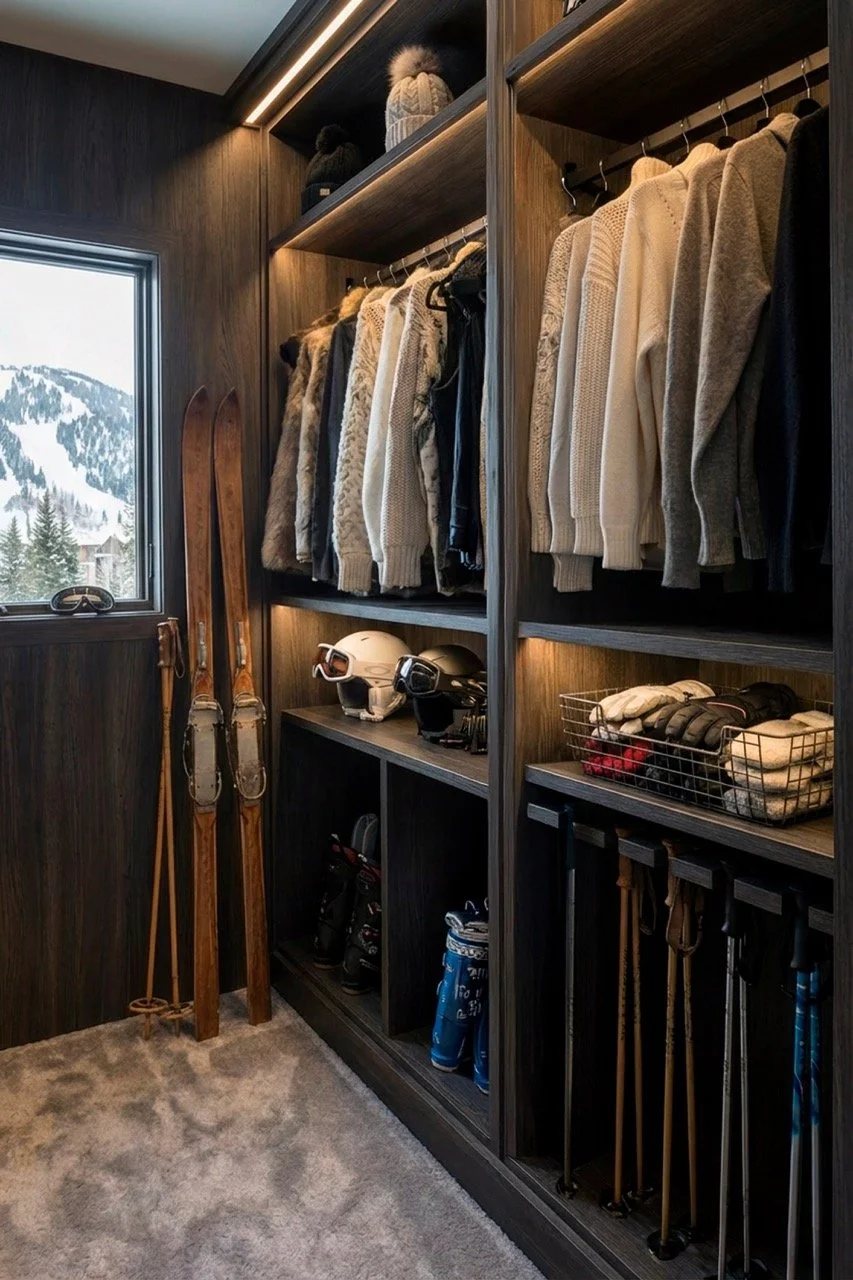
A well-designed ski closet bridges wardrobe storage and gear room—equal parts functional and atmospheric. These spaces are built to handle volume and weight while still feeling elevated and intentional.
Key elements include vertical storage for skis and poles, ventilated cubbies for boots and helmets, and generous hanging for après layers and insulated knits. Integrated lighting is essential here, not only for visibility but to offset darker wood tones and heavier materials typical of winter gear.
What elevates a ski closet from utilitarian to luxurious is cohesion: matching finishes to adjacent closets, concealed hardware, and thoughtful spacing so everything has a place—even mid‑season. When executed properly, the ski closet becomes part of the daily ritual of winter living, not an afterthought tucked away in a mudroom.
Luggage Closets:
Travel‑Ready by Design
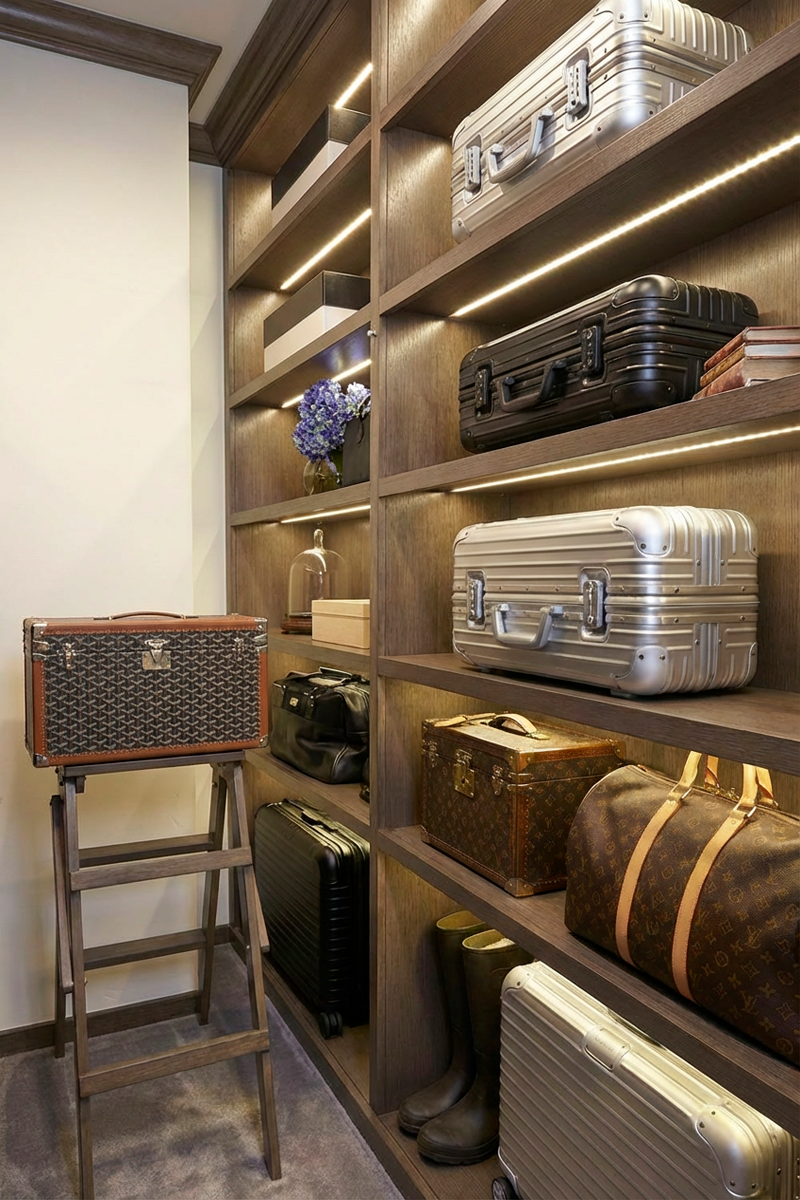
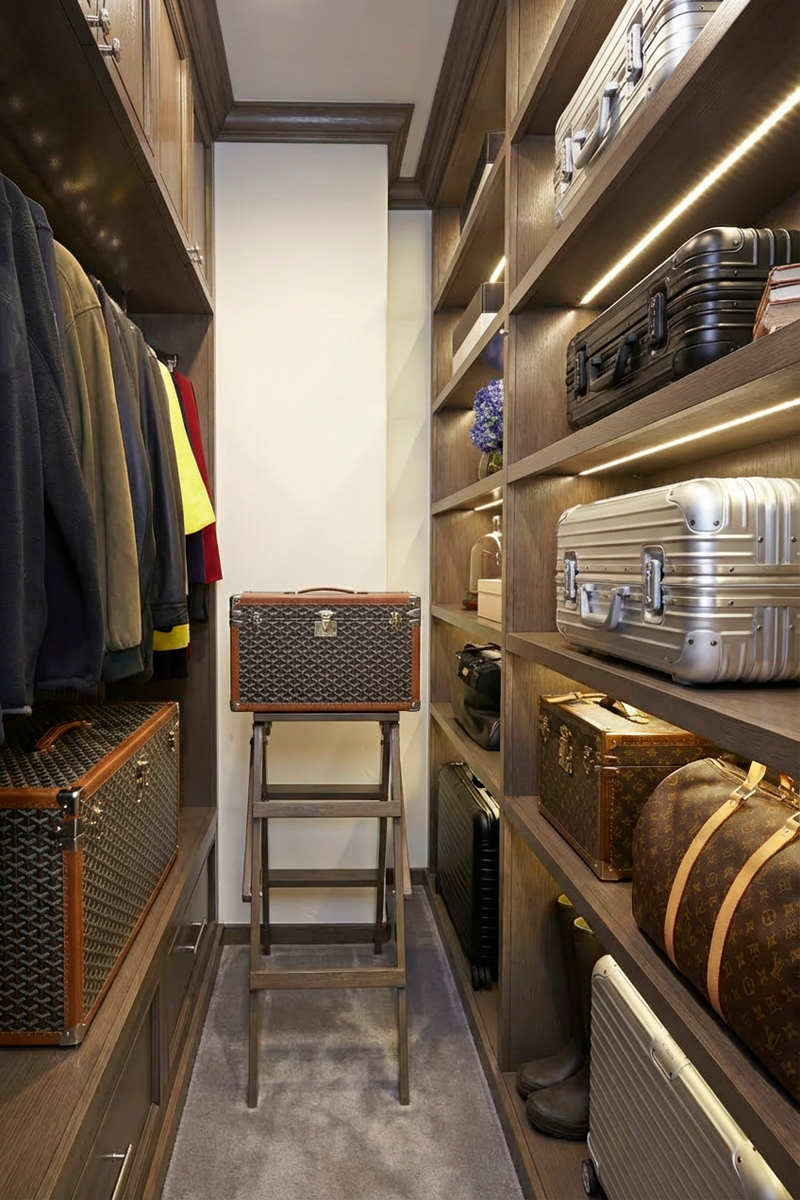
Winter often brings heavier travel schedules—holidays, ski weekends, extended stays—and a luggage closet keeps that process seamless. Rather than stacking suitcases in attics or garages, a well‑designed luggage room treats travel pieces as part of the home’s architecture.
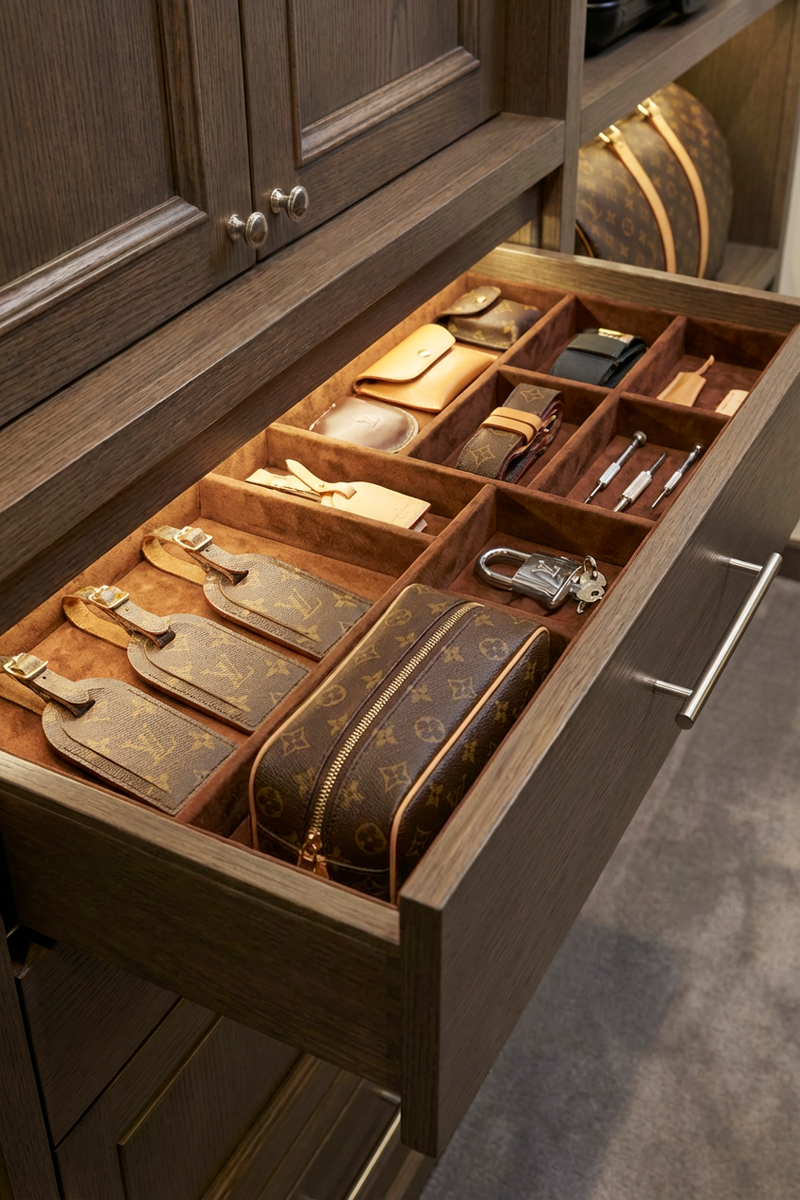
Open shelving sized specifically for carry‑ons, trunks, and hard‑sided cases keeps everything visible and accessible. Lower cubbies accommodate boots and accessories, while integrated lighting ensures even the back corner shelves feel intentional.
The result is a closet that supports movement and spontaneity—packed, unpacked, and ready to go at a moment’s notice.
The Takeaway
The best winter closets are about anticipation. They’re designed for what the season brings—layers, textures, travel—not just for what looks good year‑round. When storage is tailored to the realities of winter living, the closet becomes calmer, more luxurious, and infinitely more functional.